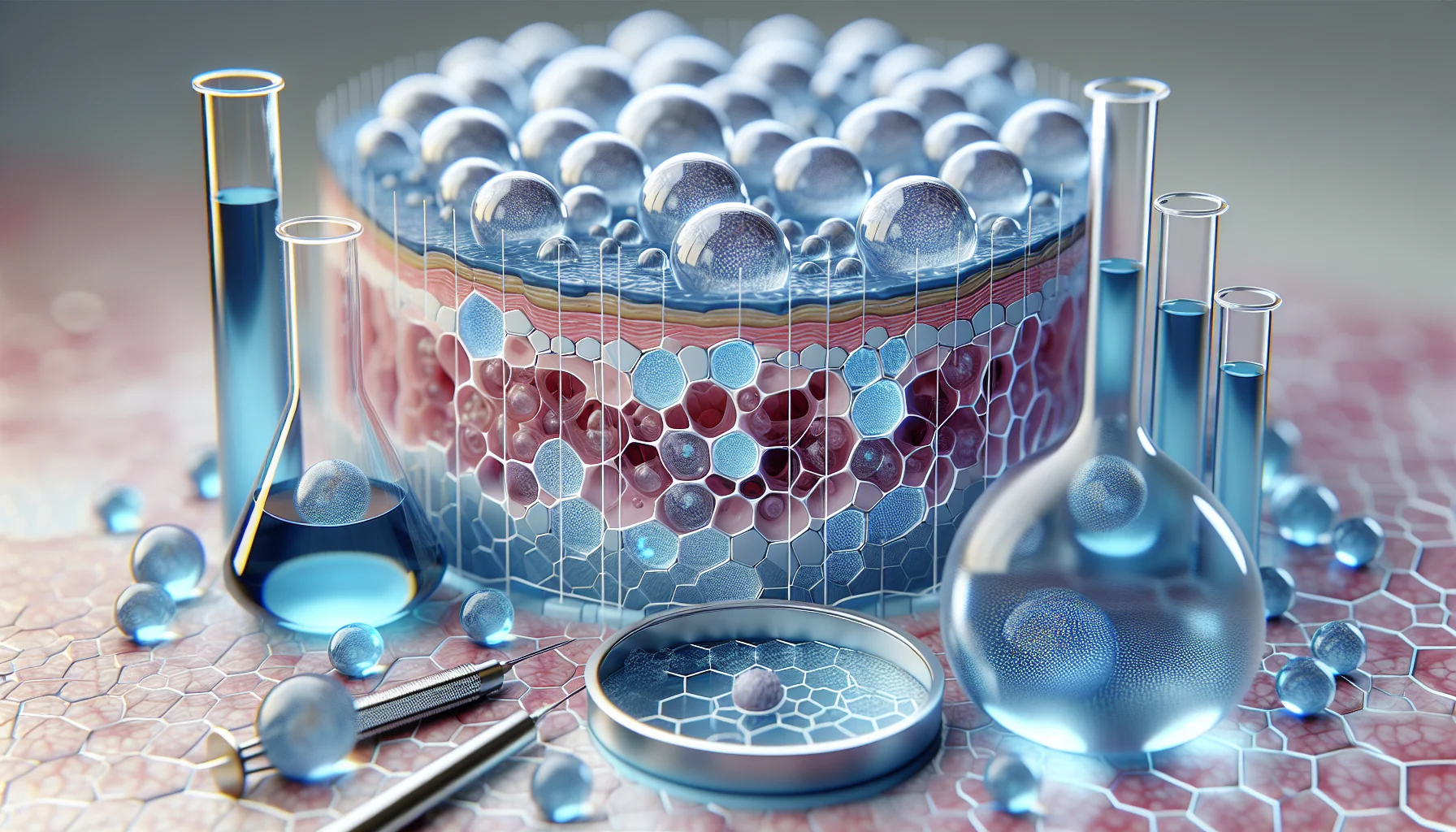

Perilla essential oil, delivered via a nanoemulsion and combined with curcumin, improved anti-inflammatory and barrier-repair effects in a murine psoriasis model, overcoming poor skin penetration and compound instability.1
Psoriasis affects roughly 2 to 3 percent of the global population. It is a complex disease, driven by keratinocyte hyperproliferation, dysregulated cytokine signalling, and epidermal barrier breakdown.
Existing topical agents, including corticosteroids and vitamin D analogues, carry well-documented limitations in long-term use. Side effects include skin atrophy, telangiectasias, and tachyphylaxis with corticosteroids. Vitamin D analogues can cause irritation or hypercalcemia risk. This is particularly true when applied to large body surface areas.
Interest in naturally derived compounds has grown. But most candidates suffer from chemical instability or inadequate dermal penetration. Perilla essential oil (PO), from Perilla frutescens, contains anti-inflammatory fatty acids. Its volatility limited practical use.1
The chronic, relapsing nature of psoriasis significantly impacts patients' quality of life. Psychological distress, social stigma, and substantial healthcare burdens often follow. Topical treatments remain key for milder forms, even with systemic therapies and biologics available. New agents are needed.
Researchers developed perilla essential oil (PO)-based nanoemulsions (PO-NEs). They used gas chromatography-mass spectrometry (GC-MS) to characterise the oil's composition, confirming a fatty acid-dominant profile relevant to cutaneous inflammation and epidermal repair.1 The nanoemulsion formulation aimed to overcome PO's volatility and poor dermal penetration, enhancing stability and bioavailability.
In vitro work in keratinocytes showed PO-NEs inhibited cell proliferation. It also reduced key proinflammatory cytokine expression and lowered intracellular reactive oxygen species (ROS) accumulation.1 These cellular effects point to a multi-pronged mechanism, targeting both hyperproliferative and inflammatory components of psoriasis pathophysiology.
The team then applied 5% PO-NE topically to an imiquimod-induced psoriasis mouse model. This widely used model mimics human plaque psoriasis, showing erythema, scaling, epidermal thickening, and inflammatory cell infiltration.
Treated animals showed marked improvements in erythema and scaling scores. They also had reduced epidermal hyperplasia and decreased inflammatory cell infiltration compared with controls.1 RNA sequencing confirmed broad transcriptional reprogramming, with enrichment in extracellular matrix organisation, epidermal differentiation, and immune regulation.1
Of particular mechanistic interest, PO-NE suppressed Wnt/beta-catenin signalling. This pathway is implicated in keratinocyte proliferation, and the finding was validated by targeted qRT-PCR.1 This modulation provides a molecular basis for the observed anti-proliferative effects. It works at the cell level.
The team then encapsulated curcumin into PO-NE (Cur@PO-NE). They ran a head-to-head comparison against a curcumin suspension and curcumin in medium-chain triglyceride (MCT) nanoemulsions. Curcumin, a natural polyphenol, has anti-inflammatory properties but poor solubility and bioavailability. This encapsulation aimed to boost its therapeutic potential.
Cur@PO-NE produced superior skin permeation and intradermal deposition. It also generated the most pronounced improvements across clinical scores, histopathology, and inflammatory readouts.1 Local and systemic safety assessments indicated good tolerability and biocompatibility. Still, the study did not specify monitoring duration or frequency.1
The murine imiquimod model is the obvious caveat. It approximates but does not fully replicate human plaque psoriasis pathophysiology. Mouse immune responses and cytokine profiles can differ from humans, and this model induces an acute response, not chronic human psoriasis.
Also, no quantitative effect sizes, p-values, or confidence intervals are in the abstract. This prevents independent appraisal. The team did not compare PO-NE against any licensed topical therapy, like a corticosteroid or calcipotriol. That comparison would provide crucial context.
Human pharmacokinetic, tolerability, and efficacy data are entirely absent. The leap from this model to clinical application will require substantial further work, including rigorous dose-ranging studies, long-term safety assessments, and eventual human clinical trials in diverse patient populations. When will the first human trials begin?
Despite these limitations, the study offers a compelling proof-of-concept for perilla oil nanoemulsions as a novel topical therapeutic strategy for psoriasis. The multi-targeted mechanism, addressing both hyperproliferation and inflammation, positions PO-NEs as potentially more comprehensive than single-target agents. The enhanced delivery of curcumin further underscores the potential of this nanoemulsion platform for improving the efficacy of other challenging natural compounds.
Future research should prioritize head-to-head comparisons with standard-of-care topical treatments to establish relative efficacy. Detailed pharmacokinetic and pharmacodynamic studies in larger animal models, followed by well-designed human clinical trials, are essential to translate these promising preclinical findings into a viable therapeutic option for patients suffering from psoriasis.
This paper changes no clinical practice; it only highlights the vast gap between an interesting preclinical result and a usable topical therapy. Wnt/beta-catenin suppression is a credible psoriasis target, and delivering a tolerable natural-oil nanoemulsion to the dermis is a legitimate challenge. But this study provides no p-values, no effect sizes, no comparator data, and no human evidence. The abstract's quantitative silence is a quality signal clinicians should note.
This preclinical work often feeds a pipeline of cosmeceutical and nutraceutical-adjacent products, which frequently bypass rigorous IND pathways. Companies developing topical biologics and small molecules, like tapinarof or roflumilast cream, will watch this research with commercial curiosity, but competitive anxiety remains low. Real pressure only begins if a Phase II trial demonstrates non-inferiority to a licensed agent. This paper does not claim or test that, and NICE and EMA have no basis to act here.
Patients seeking steroid alternatives will encounter this research amplified on forums, long before human testing. That translation lag vexes GPs and dermatologists, who will field questions about OTC perilla oil products. The honest answer: the mechanistic rationale is plausible, mouse data are directionally encouraging, but no clinical evidence supports recommending or dismissing these formulations. Holding that line, politely and repeatedly, remains the clinical task.
- The Pivot Perilla essential oil, previously limited by volatility and poor stability, was stabilised in a nanoemulsion formulation that retained its anti-inflammatory and barrier-modulating activity in a mouse psoriasis model.
- The Data Topical 5% perilla oil nanoemulsion (PO-NE) markedly improved erythema and scaling scores, reduced epidermal hyperplasia, and suppressed Wnt/beta-catenin signalling in imiquimod-induced psoriatic mice; curcumin-loaded PO-NE (Cur@PO-NE) outperformed both curcumin suspension and curcumin-in-MCT nanoemulsion on clinical, histological, and inflammatory readouts.1
- The Action No practice change is warranted. This is preclinical data only. Clinicians managing psoriasis should continue to follow established topical and systemic therapy guidelines pending human trial evidence.
ART-2026-66
06/26
Cite This Article
Team TLSFE. Perilla oil nanoemulsion improves psoriasis scores in mouse model. The Life Science Feed. Published May 17, 2026. Updated June 28, 2026. Accessed June 29, 2026. https://thelifesciencefeed.com/articles/perilla-oil-nanoemulsion-improves-psoriasis-scores-in-mouse-model.
Editorial & AI Standards
All content is researched from peer-reviewed, open-access sources — published trial data, clinical guidelines, and regulatory filings. AI tools are used solely to structure and summarise that evidence; no AI-generated conclusions appear without editor verification against the primary source.
Every article is reviewed by a named editor before publication. Source citations are listed in the References section. This content does not represent the views of any pharmaceutical company, medical device manufacturer, or healthcare provider.
Licence & Rights
© 2026 The Life Science Feed. All rights reserved. Unless otherwise indicated, all content is the property of The Life Science Feed and may not be reproduced, distributed, or transmitted in any form or by any means without prior written permission.
Medical Disclaimer
The information provided on The Life Science Feed is for educational and informational purposes only. It is not intended as a substitute for professional medical advice, diagnosis, or treatment. Always seek the advice of your physician or other qualified healthcare provider regarding any medical condition or treatment decision. Never disregard professional medical advice or delay in seeking it because of something you have read on this website.
References
1. Zhang Z, Mu J, Tao S. Development of perilla essential oil-based nanoemulsions as anti-psoriatic and dermal delivery platforms for topical therapy. Int J Pharm X.
2026. PMID:42023067.