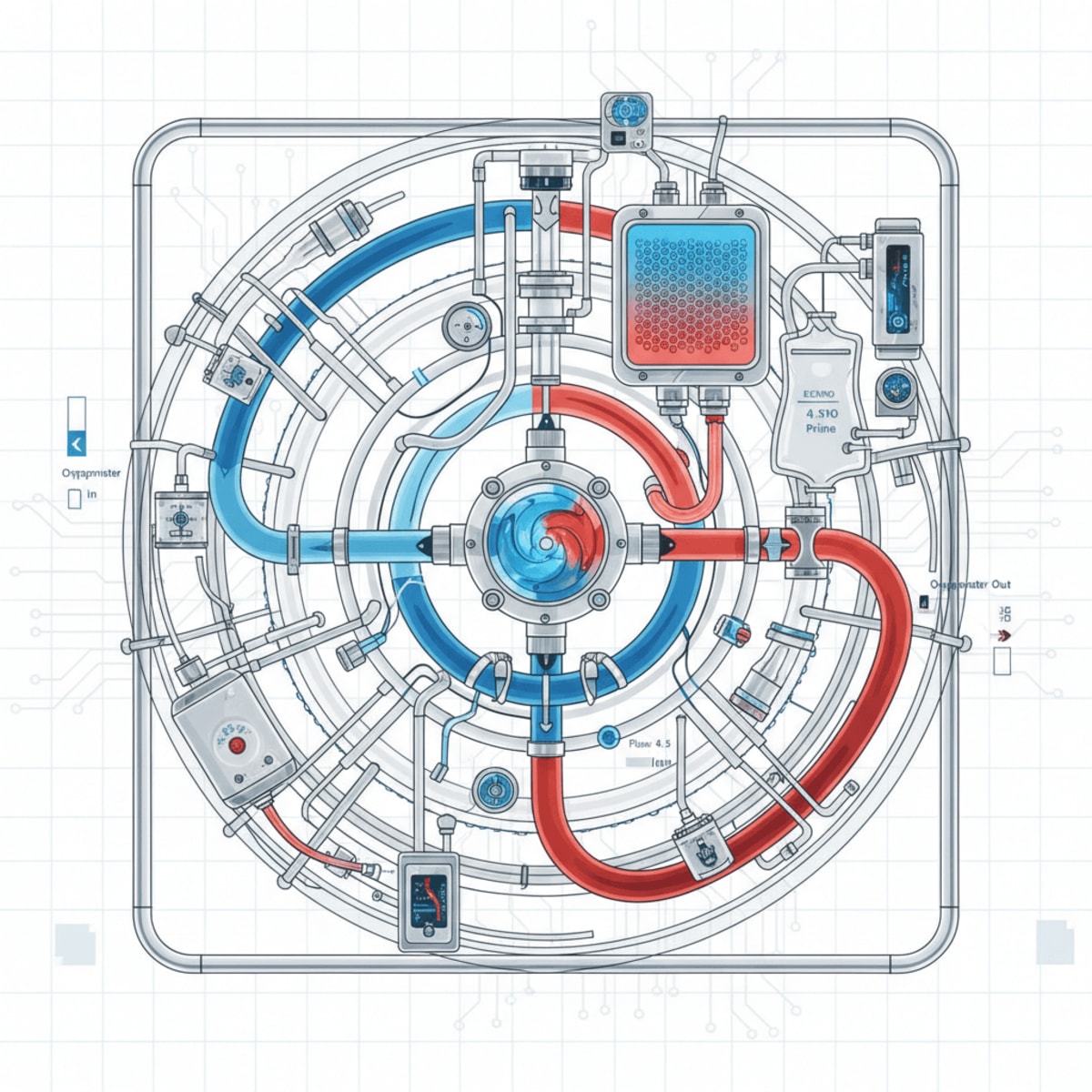
Severe hypothermia leading to cardiac arrest presents a significant clinical challenge, often with poor outcomes, especially when complicated by hemorrhaging. However, a recent case reported in Critical Care details an unexpected neurological recovery following extracorporeal cardiopulmonary resuscitation (ECPR) rewarming. This case pushes the boundaries of resuscitation technology, showcasing the potential of ECPR in managing extreme physiological conditions. The success underscores the importance of considering ECPR even in seemingly hopeless scenarios.
Clinical Key Takeaways
Study Snapshot
- Patient Presentation:Severe hypothermia with cardiac arrest and multiple hemorrhagic complications.
- Intervention:ECPR rewarming protocol.
- Outcome:Unexpected neurological recovery post-rewarming.
Extracorporeal cardiopulmonary resuscitation (ECPR) is increasingly utilized in cases of cardiac arrest, particularly when conventional methods fail. The physiological rationale for ECPR in hypothermia centers on its ability to provide circulatory support while rewarming the body, preventing further ischemic damage. A recent case report highlights a remarkable instance of neurological recovery following ECPR rewarming in a patient with severe hypothermic cardiac arrest complicated by multiple hemorrhagic events.
ECPR Rewarming and Neurological Recovery
The patient, presenting with a core temperature of 25°C, had suffered prolonged cardiac arrest and developed significant hemorrhagic complications, creating a complex clinical picture that would typically indicate a poor prognosis. Despite these challenges, the medical team initiated ECPR, carefully managing the rewarming process and addressing the bleeding. What followed was an unexpected yet profound neurological recovery.
The authors stated, "This case highlights that even in patients with severe hypothermia, prolonged cardiac arrest, and multiple hemorrhagic complications, ECPR can be a life-saving intervention with the potential for good neurological outcome."
Technical Considerations and Resource Implications
ECPR is a resource-intensive intervention, requiring specialized equipment and a highly trained team. This includes perfusionists, critical care physicians, and specialized nursing staff. The successful implementation of ECPR also necessitates a well-coordinated critical care infrastructure and robust protocols for managing complications such as bleeding and infection. Beyond the immediate technical aspects, ethical considerations also play a significant role in deciding when and how to deploy ECPR, particularly in cases with multiple complicating factors.
Moreover, the mechanism of action relies on the precise control of blood flow and temperature. Rapid rewarming can lead to reperfusion injury, while inadequate anticoagulation can result in thrombotic events. Managing these risks requires continuous monitoring and adjustment of ECPR parameters, demanding a high level of expertise from the clinical team.
Clinical Impact and Future Directions
This case adds to the growing body of evidence supporting the use of ECPR in select cases of severe hypothermia. However, it also emphasizes the need for careful patient selection and meticulous management. The authors suggest that further research is needed to identify specific factors that predict favorable outcomes with ECPR in this challenging patient population.
Future research should focus on refining patient selection criteria, optimizing ECPR protocols, and developing strategies to mitigate the risks of hemorrhagic complications. Furthermore, cost-effectiveness analyses are needed to justify the significant resource investment associated with ECPR programs.
The case underscores the potential for ECPR to extend the boundaries of what is considered survivable in cases of severe hypothermia complicated by cardiac arrest. The development of standardized protocols and training programs is critical to ensure that ECPR is used effectively and safely. Ultimately, this case serves as a reminder of the importance of considering all available options, even in situations that appear to be without hope.
LSF-4090981632 | December 2025

How to cite this article
MacReady R. Ecpr rewarming shows unexpected neurological recovery after hypothermic cardiac arrest. The Life Science Feed. Published February 27, 2026. Updated February 27, 2026. Accessed February 27, 2026. https://thelifesciencefeed.com/critical-care/cardiac-arrest/innovation/ecpr-rewarming-shows-unexpected-neurological-recovery-after-hypothermic-cardiac-arrest.
Copyright and license
© 2026 The Life Science Feed. All rights reserved. Unless otherwise indicated, all content is the property of The Life Science Feed and may not be reproduced, distributed, or transmitted in any form or by any means without prior written permission.
Fact-Checking & AI Transparency
This content was produced with the assistance of AI technology and has been rigorously reviewed and verified by our human editorial team to ensure accuracy and clinical relevance.
References
- Brunkhorst FM, Geerdes-Finnern F, Hesselmann F, et al. HOPE or hopeless? Unexpected neurological recovery after ECPR rewarming in a patient with severely hypothermic cardiac arrest with multiple haemorrhagic complications: a case report. Critical Care. 2024;28(1):229. doi:10.1186/s13054-024-04997-7
- Bartos JA, Rea TD, Carlson J, et al. Extracorporeal cardiopulmonary resuscitation for refractory out-of-hospital cardiac arrest: A systematic review and meta-analysis. Resuscitation. 2020;153:186-193.
- Stub D, Stephenson M, Horton S, et al. Refractory cardiac arrest treated with mechanical CPR, hypothermia, ECMO and early reperfusion (ARREST): A randomised controlled trial. Intensive Care Med. 2023;49(11):1337-1348.