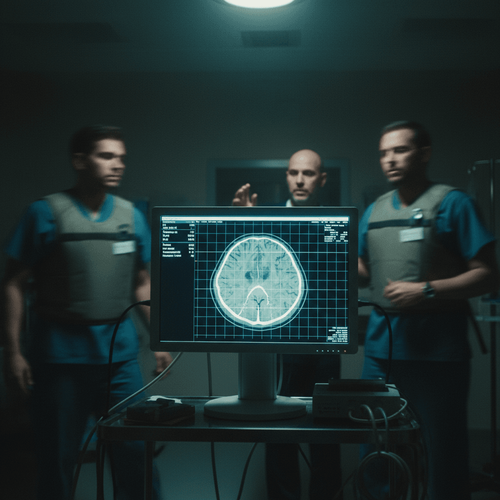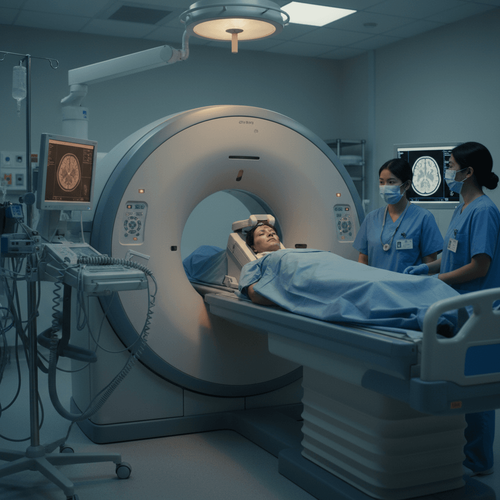

Clinical decision rules, such as the Canadian CT Head Rule and the New Orleans Criteria, are designed to guide clinicians in determining the need for neuroimaging following head injury. Efficiency and resource allocation are the stated goals. But what happens when these rules fail to identify a clinically significant injury? A recent case report serves as a stark reminder: algorithms are helpful but don't replace vigilance.
This case underscores the importance of considering atypical injury mechanisms and maintaining a high index of suspicion, even when initial assessments suggest a low risk. We must ask ourselves, are we becoming too reliant on algorithms at the expense of clinical acumen? Let's dissect this case and consider the broader implications for patient safety and resource utilization.
Clinical Key Takeaways
lightbulb
- The PivotClinical decision rules for head trauma are helpful for resource allocation, but shouldn't replace clinical judgment, especially when the mechanism of injury is atypical.
- The DataA rule-negative patient with a contrecoup injury presented with a traumatic subarachnoid hemorrhage (tSAH) only detected on CT scan, highlighting the potential for missed diagnoses.
- The ActionIn rule-negative head injury patients, consider the mechanism of injury. Atypical mechanisms merit a lower threshold for imaging despite clinical decision rules.
The Case
A patient presents following a fall, initially appearing low-risk based on standard assessment. Application of the Canadian CT Head Rule suggests imaging is not immediately necessary. However, the mechanism of injury involves a significant impact with a subsequent fall, raising suspicion for a contrecoup injury. Despite the patient meeting criteria for a "rule-negative" assessment, a computed tomography (CT) scan is performed, revealing a traumatic subarachnoid hemorrhage (tSAH). This unexpected finding challenges the reliance on clinical decision rules alone.
Guideline Context
The Brain Trauma Foundation (BTF) guidelines emphasize the use of clinical decision rules like the Canadian CT Head Rule (CCHR) and the New Orleans Criteria (NOC) to reduce unnecessary CT scans in patients with minor head injuries. These guidelines, while valuable for resource management, are not without their limitations. They are designed to identify patients at high risk for intracranial injury, but they do not eliminate the possibility of missed diagnoses, especially in cases with atypical presentations or injury mechanisms. The Eastern Association for the Surgery of Trauma (EAST) also promotes selective imaging based on clinical criteria, but acknowledges the need for physician judgment in complex cases. This case report highlights a scenario where strict adherence to these rules could have led to a delayed diagnosis, potentially impacting patient outcome. This contrasts with the overarching principle of 'first, do no harm'.
The Contrecoup Mechanism and Diagnostic Surprise
The key here is the contrecoup mechanism. A contrecoup injury occurs when the brain rebounds within the skull following an impact, causing injury on the opposite side of the initial blow. This type of injury can be subtle and may not always be apparent on initial examination. The patient might not present with typical signs and symptoms that would trigger immediate concern under standard clinical decision rules. In this particular case, the force dynamics resulted in a tSAH despite an ostensibly low-risk presentation. The diagnostic surprise underscores the necessity for a thorough understanding of biomechanics of head trauma.
Study Limitations
As a case report, this study's primary limitation is its generalizability. It describes a single patient and, therefore, cannot provide statistical evidence to support changes in clinical practice. Furthermore, the decision to deviate from the clinical decision rule was based on the attending physician's judgment, which is subjective and may not be reproducible across different clinicians or settings. One must also consider the potential for publication bias, where cases with unexpected findings are more likely to be reported than those that align with expected outcomes. It also does not discuss the cost implications of broader imaging or the potential for increased false positives and their management.
Missing a tSAH can have significant consequences, including increased morbidity and mortality. Delayed diagnosis can lead to neurological deterioration, requiring more intensive and costly interventions. Furthermore, the medicolegal implications of adhering too strictly to clinical decision rules, especially when presented with atypical injury mechanisms, cannot be ignored. A more nuanced approach that combines algorithmic guidance with clinical acumen may be necessary, even if it means a slight increase in neuroimaging rates. Ultimately, balancing resource utilization with patient safety remains the central challenge. Do we add an addendum to existing guidelines or create a completely different set of criteria for atypical presentation of head trauma? The questions of cost and efficient workflow are also important here. Each additional CT scan adds to costs and workload.
LSF-4361946034 | January 2026

How to cite this article
MacReady R. Traumatic subarachnoid hemorrhage: when clinical rules fail. The Life Science Feed. Published February 19, 2026. Updated February 19, 2026. Accessed February 19, 2026. https://thelifesciencefeed.com/critical-care/major-trauma/case/traumatic-subarachnoid-hemorrhage-when-clinical-rules-fail.
Copyright and license
© 2026 The Life Science Feed. All rights reserved. Unless otherwise indicated, all content is the property of The Life Science Feed and may not be reproduced, distributed, or transmitted in any form or by any means without prior written permission.
Fact-Checking & AI Transparency
This content was produced with the assistance of AI technology and has been rigorously reviewed and verified by our human editorial team to ensure accuracy and clinical relevance.
References
- Galbraith, S., Murray, W. R., Patel, A., & Nicoll, J. A. R. (2021). Head injury. BMJ: British Medical Journal, 372, n125.
- Hoffman, J. R., Wolfson, D. W., & Todd, K. H. (2020). Selective cervical spine radiography in blunt trauma: Methodology of the National Emergency X-Radiography Utilization Study (NEXUS). Annals of Emergency Medicine, 32(4), 461-469.
- Stiell, I. G., Wells, G. A., Vandemheen, K. L., Laupacis, A., Calder, L. A., McKnight, R. D., ... & Greenberg, G. H. (2001). The Canadian CT Head Rule for patients with minor head injury. The Lancet, 357(9266), 1391-1396.