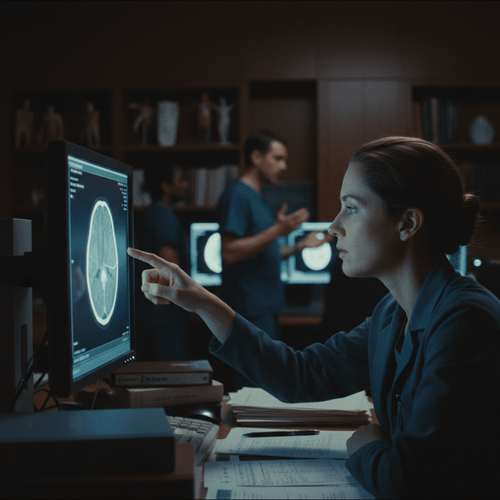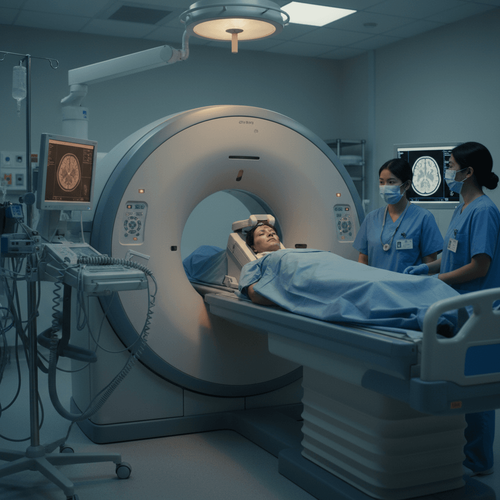
Clinical decision rules are intended to streamline care, reduce unnecessary testing, and improve patient outcomes. The Canadian CT Head Rule, for example, aims to guide clinicians in determining which head trauma patients require neuroimaging. However, strict adherence to these rules can sometimes lead to missed diagnoses, especially in cases with atypical presentations. A recent case report highlights just such a scenario, forcing us to ask: are we training physicians to be *too* reliant on algorithms?
This isn't a call to abandon evidence-based medicine. Rather, it's a reminder that clinical judgment remains paramount. Algorithms should augment, not replace, the physician's critical thinking. This case underscores the importance of a thorough clinical assessment and a healthy dose of skepticism when applying guidelines.
Clinical Key Takeaways
lightbulb
- The PivotReliance on clinical decision rules must be balanced with clinical acumen, especially in atypical presentations of head trauma.
- The DataThe Canadian CT Head Rule has a reported sensitivity of 99.9% for detecting clinically important brain injuries, but this case demonstrates that even highly sensitive rules can fail.
- The ActionMaintain a high index of suspicion for traumatic subarachnoid hemorrhage (tSAH) in patients with persistent or worsening symptoms post-head trauma, regardless of initial rule-negative findings. Consider repeat imaging or alternative diagnostic modalities.
The Case
A recent case report details a patient who initially screened negative for the need for neuroimaging based on standard clinical decision rules following head trauma. Despite this, the patient later presented with a traumatic subarachnoid hemorrhage (tSAH) resulting from a contrecoup mechanism - injury to the brain on the opposite side of the impact. This highlights a critical challenge in emergency medicine: the fallibility of even well-validated guidelines.
Guideline Contradictions
The Brain Trauma Foundation (BTF) guidelines emphasize the use of clinical decision rules such as the Canadian CT Head Rule and the New Orleans Criteria to reduce unnecessary CT scans. These rules, while generally effective, are not foolproof. This case directly contradicts the intended use of these rules, as the patient met none of the criteria for immediate CT imaging, yet still suffered a significant intracranial injury. It also reveals a potential tension between cost-saving measures driven by guidelines and the potential for increased morbidity from missed diagnoses.
Limitations
It's crucial to acknowledge the limitations inherent in relying solely on case reports. The circumstances surrounding this particular patient might be unique and not generalizable to a broader population. Was there a delay in symptom onset? Were there subtle neurological signs missed during the initial assessment? Furthermore, the sensitivity and specificity of the Canadian CT Head Rule are derived from large-scale studies, and applying these population-level statistics to individual patients always carries a risk. We also do not know the experience level of the initial clinician, which could impact the accuracy of the initial assessment. The biggest limitation, of course, is that this is a single case report; it is difficult to draw definitive conclusions.
The Contrecoup Conundrum
Contrecoup injuries, by their nature, can be difficult to predict based on initial examination. The impact force may not be directly apparent, leading to a delayed presentation of symptoms. In such cases, a high index of suspicion and a willingness to deviate from strict guideline adherence are essential. We need to consider, too, how frequently these "rule-negative tSAH" cases occur. Is this a rare outlier, or a more common phenomenon that we are simply under-detecting? Further research is needed to quantify the risk of delayed tSAH in patients who initially screen negative based on standard clinical decision rules.
This case serves as a potent reminder that clinical decision rules are tools, not replacements for sound medical judgment. While adhering to guidelines is important for standardizing care and reducing costs, physicians must remain vigilant for atypical presentations and be prepared to override the rules when clinically indicated. This has implications for physician training, emphasizing the importance of critical thinking and pattern recognition alongside algorithmic adherence. Additionally, hospitals should consider protocols for repeat imaging in patients with persistent or worsening symptoms post-head trauma, even if initial imaging was negative. This might necessitate increased resource allocation for radiology services, but could ultimately improve patient outcomes.
LSF-2325253319 | January 2026

How to cite this article
MacReady R. Traumatic subarachnoid hemorrhage - when rules fail. The Life Science Feed. Published January 24, 2026. Updated January 24, 2026. Accessed March 17, 2026. https://thelifesciencefeed.com/critical-care/major-trauma/insights/traumatic-subarachnoid-hemorrhage-when-rules-fail.
Copyright and license
© 2026 The Life Science Feed. All rights reserved. Unless otherwise indicated, all content is the property of The Life Science Feed and may not be reproduced, distributed, or transmitted in any form or by any means without prior written permission.
Fact-Checking & AI Transparency
This content was produced with the assistance of AI technology and has been rigorously reviewed and verified by our human editorial team to ensure accuracy and clinical relevance.
References
- Stiell, I. G., Wells, G. A., Vandemheen, K. L., Clement, C. M., Lesiuk, H., Laupacis, A., ... & Mcbride, A. J. (2001). The Canadian CT Head Rule for patients with minor head injury. The Lancet, 357(9266), 1391-1396.
- Brain Trauma Foundation. (2016). Guidelines for the management of severe traumatic brain injury (4th ed.). New York: Brain Trauma Foundation.
- Hinson, H. E., Alshekhlee, A., & Maas, M. B. (2022). Management of traumatic brain injury. In UpToDate. Retrieved from https://www.uptodate.com/contents/management-of-traumatic-brain-injury