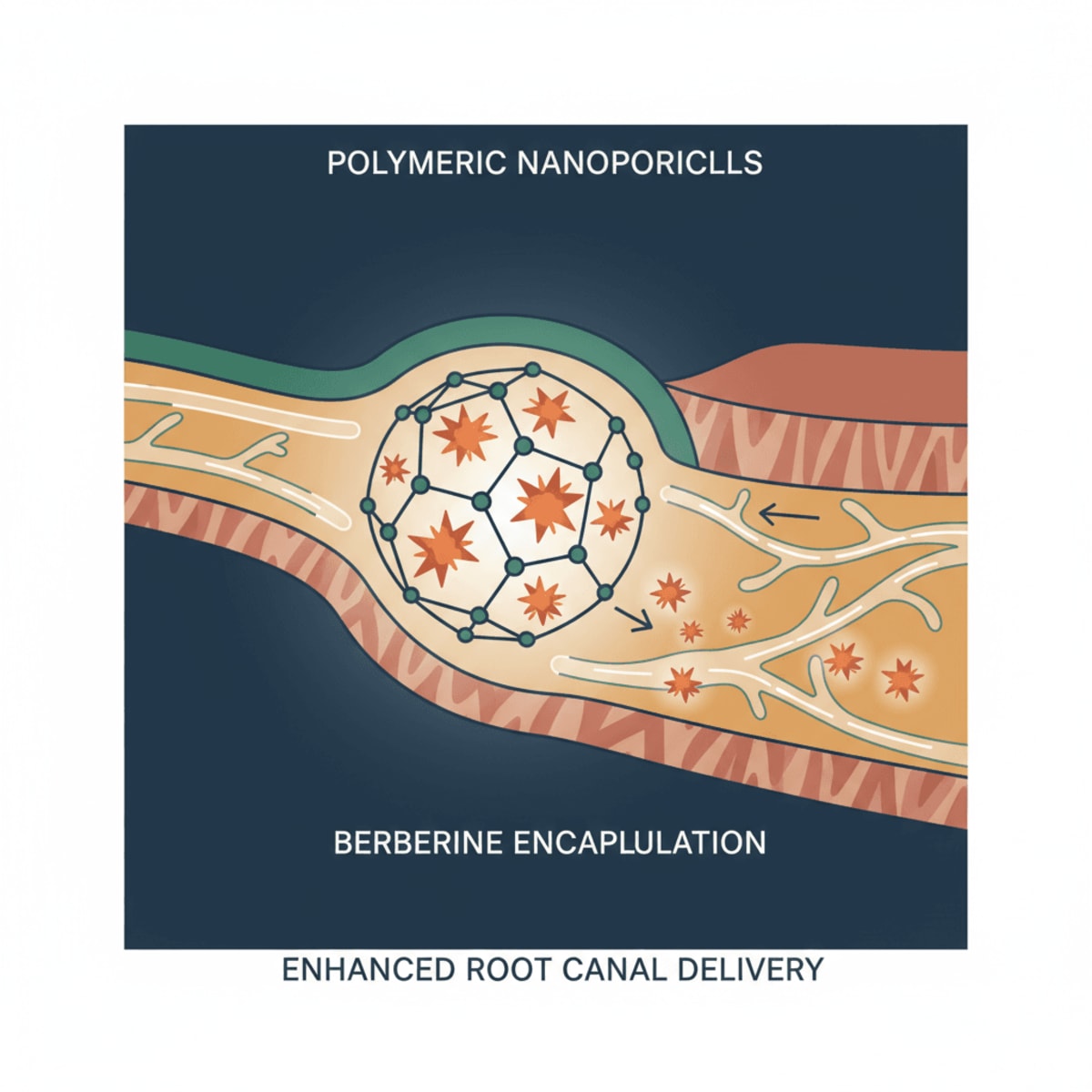
Endodontists face a daily challenge: effectively disinfecting root canals while minimizing damage to surrounding tissues. Current practice suggests sodium hypochlorite, while effective, carries risks of cytotoxicity and potential allergic reactions. Now, research published in ACS Applied Polymer Materials explores enhancing the antimicrobial power of berberine using polymeric nanoparticles, offering a potentially safer alternative. This innovation could represent a significant step toward improved root canal disinfection protocols.
Clinical Key Takeaways
Sys & Biz Intel
- Market Need:The demand for less toxic, yet effective, endodontic irrigants is high. Sodium hypochlorite alternatives are actively sought due to its known drawbacks.
- Competitive Edge:Berberine, a natural compound, offers a potentially biocompatible alternative. Nanoparticle encapsulation enhances its delivery and efficacy, addressing its previous limitations.
- Adoption Hurdle:Widespread adoption hinges on in vivo trials confirming safety and efficacy, alongside data demonstrating long-term stability and cost-effectiveness compared to existing solutions.
For endodontists, achieving thorough disinfection of the root canal system is paramount for successful treatment. However, the go-to irrigant, sodium hypochlorite, presents challenges due to its cytotoxicity and potential for causing tissue damage. This has spurred the search for safer, yet equally effective alternatives. Now, a new avenue of research focuses on enhancing natural compounds like berberine.
Berberine, known for its antimicrobial properties, has limitations in its direct application, including poor solubility and bioavailability. To overcome these hurdles, researchers have explored using polymeric nanoparticles to encapsulate and deliver berberine, aiming to boost its effectiveness within the root canal. The study published in ACS Applied Polymer Materials details this novel approach.
Enhanced Antimicrobial Activity
The research demonstrates that encapsulating berberine in polymeric nanoparticles significantly enhances its antimicrobial activity against common endodontic pathogens. This targeted delivery system allows for a more concentrated and sustained release of berberine, improving its ability to eradicate bacteria within the complex root canal anatomy. The mechanism of action relies on the nanoparticles' ability to adhere to the bacterial cell walls, facilitating the release of berberine directly at the site of infection. According to the study's authors, "The developed nanoparticles exhibited excellent biocompatibility and enhanced antimicrobial activity against Enterococcus faecalis, a common pathogen in failed root canal treatments."
This targeted approach also reduces the risk of exposing periapical tissues to high concentrations of the antimicrobial agent, potentially mitigating cytotoxicity. The authors suggest that the enhanced antimicrobial activity and improved biocompatibility of the berberine-loaded nanoparticles make them a promising candidate for root canal irrigation.
Potential Clinical Impact
What this could mean for your practice is a shift towards more biocompatible root canal irrigation protocols. The polymeric nanoparticle delivery system could offer a way to maintain effective disinfection while minimizing the risks associated with traditional irrigants. However, several hurdles remain before this technology can be integrated into daily practice.
One significant challenge is the need for extensive in vivo trials to validate the safety and efficacy of the nanoparticles in a clinical setting. Furthermore, long-term stability data are crucial to ensure that the berberine-loaded nanoparticles maintain their antimicrobial activity over time. Finally, cost-effectiveness analyses will be necessary to determine the economic feasibility of this approach compared to existing irrigation solutions.
The market opportunity here is substantial. A biocompatible and effective root canal irrigant would address a significant unmet need in endodontics. While regulatory hurdles remain, successful clinical trials could pave the way for commercialization and widespread adoption of this innovative technology, offering endodontists a valuable new tool in their armamentarium.
LSF-4545323203 | January 2026

How to cite this article
Sato B. Boosting berberine's antimicrobial power for root canal irrigation. The Life Science Feed. Published February 13, 2026. Updated February 13, 2026. Accessed February 13, 2026. https://thelifesciencefeed.com/dentistry/endodontic-infections/practice/boosting-berberine-s-antimicrobial-power-for-root-canal-irrigation.
Copyright and license
© 2026 The Life Science Feed. All rights reserved. Unless otherwise indicated, all content is the property of The Life Science Feed and may not be reproduced, distributed, or transmitted in any form or by any means without prior written permission.
Fact-Checking & AI Transparency
This content was produced with the assistance of AI technology and has been rigorously reviewed and verified by our human editorial team to ensure accuracy and clinical relevance.
References
- Khan I, Ur Rehman M, Shahbaz S, et al. Improving the Antimicrobial Potency of Berberine for Endodontic Canal Irrigation Using Polymeric Nanoparticles. ACS Applied Polymer Materials. 2024.
- Haapasalo M, Shen Y, Qian W, Gao Y. Irrigation in endodontics. British Dental Journal. 2014;216(3):159-167.
- পাঠক ও অন্যান্য. Root canal irrigants. Journal of Conservative Dentistry. 2010;13(4):218.
Related Articles