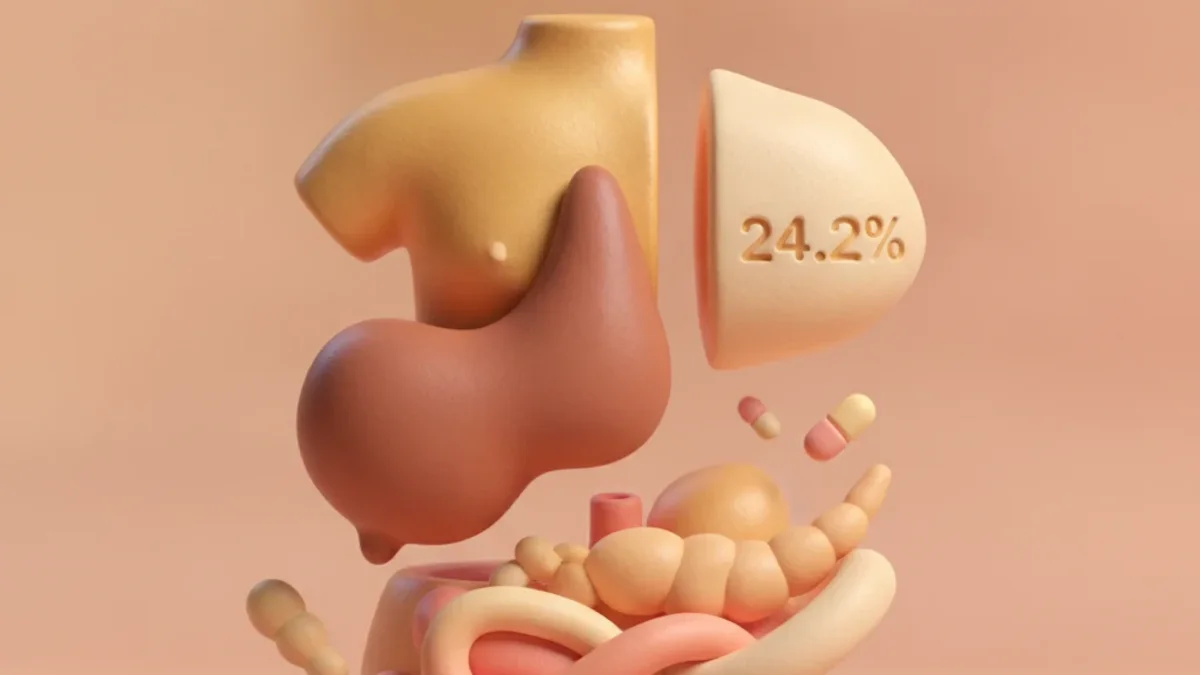

Discontinuation of glucagon-like peptide-1 (GLP-1) receptor agonists frequently leads to substantial weight regain, posing a significant challenge for long-term obesity management. Clinical data now indicate that continued pharmacological strategies, beyond the initial GLP-1 therapy, are critical for maintaining weight reduction.
The efficacy of GLP-1 receptor agonists in achieving clinically significant weight loss is well-established.1 However, a critical clinical dilemma arises upon cessation of these agents: patients frequently experience substantial weight regain. This phenomenon underscores the chronic nature of obesity and the physiological adaptations that resist sustained weight reduction without ongoing intervention.2 Understanding the mechanisms of weight regain and identifying effective mitigation strategies is paramount for improving long-term patient outcomes.
Physiological responses to weight loss include reductions in resting energy expenditure and alterations in appetite-regulating hormones, which collectively promote weight regain.3 When GLP-1 receptor agonists are discontinued, the pharmacological suppression of appetite and enhancement of satiety are removed, allowing these homeostatic mechanisms to reassert themselves.4 This often results in increased caloric intake and a return to pre-treatment weight trajectories.
Strategies for Sustained Weight Management
Current evidence suggests that maintaining weight loss achieved with GLP-1 receptor agonists necessitates continued pharmacological support. A 2022 study published in JAMA, involving 1,961 adults with overweight or obesity, demonstrated that participants who discontinued semaglutide 2.4 mg weekly regained approximately two-thirds of their lost weight within one year.5 Specifically, after 68 weeks of treatment, participants had achieved an average weight loss of 17.3%. Over the subsequent 52 weeks of placebo, they regained an average of 11.6% of their initial body weight, resulting in a net weight loss of 5.7% from baseline.5 This illustrates that the benefits of GLP-1 agonists are largely sustained only while the treatment is ongoing.
Emerging strategies focus on two primary approaches: extended duration of GLP-1 therapy or transitioning to alternative or combination anti-obesity medicines. For patients who achieve their weight loss goals, a reduction in the GLP-1 agonist dose, rather than complete cessation, may be considered to maintain the metabolic benefits while potentially reducing side effects.6 However, data on optimal maintenance dosing schedules are still evolving.
Another strategy involves the use of combination therapies. For instance, co-formulations such as naltrexone/bupropion, which target different neurochemical pathways involved in appetite regulation, may offer a complementary approach for weight maintenance.7 Additionally, newer agents or combinations, including dual GLP-1/GIP receptor agonists, are being investigated for their potential to provide more sustained and profound weight loss, and potentially better maintenance profiles.8 The sustained use of these agents, even at lower doses, appears to be a critical factor in preventing the physiological rebound that drives weight regain.
The long-term safety and efficacy of indefinite anti-obesity medicine use are central to these discussions. Clinical trials for agents like liraglutide and semaglutide have demonstrated acceptable safety profiles over several years of continuous use.9,10 However, the cost implications and patient adherence for lifelong treatment remain significant considerations. Patient education regarding the chronic nature of obesity and the need for ongoing management, similar to other chronic conditions like hypertension or type 2 diabetes, is essential for managing expectations and improving adherence to long-term treatment plans.11
The data are unequivocal: weight loss achieved with GLP-1 receptor agonists is largely contingent on continuous therapy. This presents a clear mandate for clinicians to manage patient expectations from the outset. Framing obesity as a chronic disease requiring lifelong management, akin to hypertension or type 2 diabetes, is not merely a semantic exercise; it is a clinical necessity. Prescribing a GLP-1 agonist for a finite period with the expectation of sustained weight loss post-discontinuation is, frankly, a disservice to the patient and an oversight of established physiology.
The industry, particularly companies like Novo Nordisk and Eli Lilly, has a vested interest in promoting long-term use. Their current development pipelines reflect this, with ongoing research into next-generation agents and combination therapies designed for sustained efficacy. However, the economic burden of lifelong anti-obesity medicine remains a significant barrier. Payers and healthcare systems must confront the reality that treating obesity as a chronic condition will necessitate long-term coverage, moving beyond the current episodic reimbursement models that often limit access to these effective therapies.
For patients, this means a shift in perspective. The notion of a 'quick fix' for weight loss, even with highly effective agents, must be dispelled. Instead, patients need to understand that achieving and maintaining a healthy weight will likely involve an ongoing commitment to pharmacological intervention, alongside lifestyle modifications. Clinicians should initiate discussions about maintenance strategies, including dose titration or transition to alternative agents, well before the initial weight loss phase concludes. The goal is not just to lose weight, but to keep it off, and the evidence suggests this requires continuous engagement with treatment.
- The Pivot Sustained weight management post-GLP-1 therapy requires ongoing pharmacological intervention, not just initial treatment.
- The Data Patients discontinuing GLP-1 agonists typically regain approximately two-thirds of their lost weight within one year.
- The Action Clinicians should counsel patients on the necessity of long-term treatment strategies to maintain weight loss achieved with GLP-1 agonists.
ART-2026-348
Cite This Article
Team TLSFE. Glp-1 weight regain: emerging strategies to sustain loss. The Life Science Feed. Updated June 13, 2026. Accessed June 13, 2026. https://thelifesciencefeed.com/endocrinology/obesity/innovation/glp-1-weight-regain-emerging-strategies-to-sustain-loss.
Editorial & AI Standards
All content is researched from peer-reviewed, open-access sources — published trial data, clinical guidelines, and regulatory filings. AI tools are used solely to structure and summarise that evidence; no AI-generated conclusions appear without editor verification against the primary source.
Every article is reviewed by a named editor before publication. Source citations are listed in the References section. This content does not represent the views of any pharmaceutical company, medical device manufacturer, or healthcare provider.
Licence & Rights
© 2026 The Life Science Feed. All rights reserved. Unless otherwise indicated, all content is the property of The Life Science Feed and may not be reproduced, distributed, or transmitted in any form or by any means without prior written permission.
Medical Disclaimer
The information provided on The Life Science Feed is for educational and informational purposes only. It is not intended as a substitute for professional medical advice, diagnosis, or treatment. Always seek the advice of your physician or other qualified healthcare provider regarding any medical condition or treatment decision. Never disregard professional medical advice or delay in seeking it because of something you have read on this website.
References
1. Wilding JPH, et al. Once-Weekly Semaglutide in Adults with Overweight or Obesity. N Engl J Med. 2021;384(11):989-1002.
2. Sumithran P, et al. Long-Term Persistence of Hormonal Adaptations to Weight Loss. N Engl J Med. 2011;365(17):1597-1604.
3. Rosenbaum M, Leibel RL. Adaptive thermogenesis in humans. Int J Obes (Lond). 2010;34 Suppl 1:S47-55.
4. Drucker DJ. Mechanisms of Action and Therapeutic Application of Glucagon-Like Peptide-1. Cell Metab. 2018;27(4):746-757.
5. Rubino DM, et al. Effect of Continued Weekly Subcutaneous Semaglutide vs Placebo on Weight Loss Maintenance in Adults With Overweight or Obesity: The STEP 4 Randomized Clinical Trial. JAMA. 2022;327(2):138-148.
6. Garvey WT, et al. American Association of Clinical Endocrinologists and American College of Endocrinology Comprehensive Clinical Practice Guidelines for Medical Care of Patients with Obesity. Endocr Pract. 2016;22 Suppl 3:1-203.
7. Greenway FL, et al. Effect of naltrexone-bupropion on weight loss in overweight and obese adults (COR-I): a multicentre, randomised, double-blind, placebo-controlled, phase 3 trial. Lancet. 2010;376(9741):595-605.
8. Jastreboff AM, et al. Tirzepatide Once Weekly for the Treatment of Obesity. N Engl J Med. 2022;387(3):205-216.
9. Pi-Sunyer X, et al. A Randomized, Controlled Trial of 3.0 mg of Liraglutide in Weight Management. N Engl J Med. 2015;373(1):11-22.
10. Wadden TA, et al. Weight Maintenance and Long-Term Safety With Liraglutide 3.0 mg in the SCALE Maintenance Randomized Study. Diabetes Care. 2019;42(9):1756-1763.
11. Apovian CM, et al. Pharmacological Management of Obesity: An Endocrine Society Clinical Practice Guideline. J Clin Endocrinol Metab. 2015;100(2):342-362.