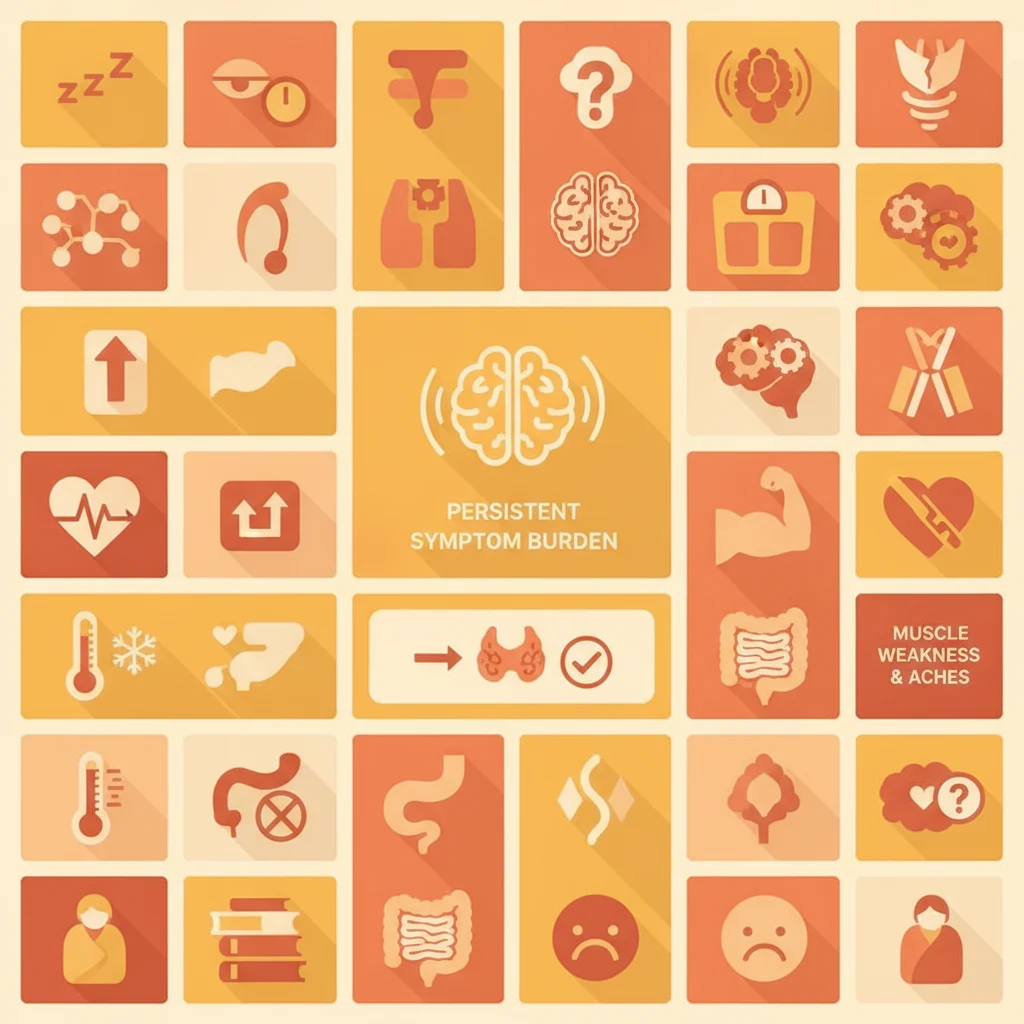

Management of hypothyroidism primarily targets normalisation of thyroid-stimulating hormone (TSH) levels with levothyroxine. However, a substantial proportion of patients continue to experience debilitating symptoms, even when TSH is within the reference range. This discrepancy between biochemical markers and patient-reported outcomes represents a critical clinical dilemma, suggesting that current treatment paradigms may not fully address the multifaceted nature of the condition.
Hypothyroidism, a common endocrine disorder, is typically managed with levothyroxine replacement therapy, aiming to restore euthyroid status as indicated by TSH levels. The goal of treatment is to alleviate symptoms such as fatigue, weight gain, cognitive impairment, and mood disturbances. While levothyroxine is highly effective in normalising TSH, a consistent observation in clinical practice and research is the persistence of symptoms in a significant subset of patients. This phenomenon, often termed the 'symptom gap,' suggests that TSH normalisation alone may be an insufficient endpoint for optimal patient care.1
Patient-reported outcome measures (PROMs) consistently indicate that between 10% and 20% of individuals receiving levothyroxine for primary hypothyroidism continue to report symptoms despite TSH levels being within the reference range.2 These persistent symptoms frequently include fatigue, impaired concentration, memory issues, and depressive mood. The aetiology of this symptom gap is multifactorial and not fully understood. Potential contributing factors include individual variations in T4 to T3 conversion, genetic polymorphisms affecting thyroid hormone metabolism, co-existing autoimmune conditions, and psychological factors.3
The global prevalence of hypothyroidism is estimated to be between 1% and 2%, with a higher incidence in women and older adults. The majority of cases are primary hypothyroidism, often due to Hashimoto's thyroiditis, an autoimmune condition. Levothyroxine, a synthetic form of thyroxine (T4), serves as a prohormone, requiring conversion to the active form, triiodothyronine (T3), primarily in peripheral tissues. This conversion process is crucial for cellular thyroid hormone action and can be influenced by various factors, including enzyme activity and nutrient status. Understanding these underlying mechanisms is vital for addressing the persistent symptom burden in euthyroid patients.
What the evidence shows
Multiple observational studies and meta-analyses have explored the prevalence and characteristics of persistent symptoms in biochemically euthyroid hypothyroid patients. A systematic review published in 2018, encompassing 34 studies and over 50,000 patients, found that fatigue was reported by 15% to 25% of euthyroid patients, and cognitive dysfunction by 10% to 20%.4 These figures highlight that a substantial proportion of patients do not achieve full symptomatic relief with standard levothyroxine monotherapy. The review also noted that the definition of euthyroidism varied across studies, with some using a narrower TSH range than others, which could influence reported symptom prevalence.4
Further research has investigated the role of combination therapy with levothyroxine (T4) and liothyronine (T3). While some small, short-term trials have shown a modest preference for T4/T3 combination therapy over T4 monotherapy in terms of patient well-being and symptom scores, larger, long-term studies have generally not demonstrated a consistent, statistically significant benefit.5 For instance, a 2019 meta-analysis of 15 randomised controlled trials (N=1,500 patients) comparing T4/T3 combination therapy with T4 monotherapy found no significant difference in quality of life scores (standardised mean difference, SMD: 0.08; 95% CI: -0.05 to 0.21; P=0.23).5 However, a subgroup analysis suggested that patients with specific genetic polymorphisms (e.g., in the deiodinase 2 gene, DIO2) might derive greater benefit from combination therapy, though this requires further validation.6
The lack of a clear, universally applicable alternative treatment strategy underscores the complexity of managing persistent symptoms. Current guidelines from organisations such as the American Thyroid Association and the European Thyroid Association recommend levothyroxine monotherapy as the primary treatment. They generally advise against routine use of T4/T3 combination therapy due to insufficient evidence of consistent superiority and potential risks associated with T3 administration, such as cardiac arrhythmias.7 However, these guidelines also acknowledge the ongoing challenge of symptom management and the need for individualised patient care.7
Limitations in current understanding include the absence of robust biomarkers that correlate with patient-reported symptoms beyond TSH. Research is ongoing to identify genetic, metabolic, or immunological markers that could predict treatment response or identify patients at higher risk of persistent symptoms. Furthermore, the placebo effect in trials of thyroid hormone replacement is significant, complicating the interpretation of subjective symptom improvements. Future studies need to employ more rigorous methodologies, including objective measures of fatigue and cognitive function, alongside validated PROMs, to better characterise the symptom gap and evaluate novel therapeutic approaches.8 The heterogeneity in study designs, patient populations, and outcome measures across existing literature also contributes to the difficulty in drawing definitive conclusions regarding optimal management strategies for this patient group.
The persistent symptom gap in hypothyroidism, despite biochemical euthyroidism, presents a significant challenge for clinicians. It is insufficient to simply normalise TSH and assume patient well-being. The data clearly indicate that a substantial minority of patients continue to suffer, and ignoring these complaints risks eroding patient trust and quality of life. General practitioners and specialists alike must move beyond a sole reliance on TSH levels and actively engage with patient-reported outcomes, perhaps incorporating validated symptom questionnaires into routine follow-up.
The pharmaceutical industry, while having successfully developed effective levothyroxine formulations, has a clear unmet need to address. The focus on TSH normalisation as the primary endpoint for drug development may have inadvertently overlooked the broader symptomatic experience. Investment in research exploring alternative formulations, T3 analogues with more stable pharmacokinetics, or even non-hormonal interventions targeting specific symptoms (e.g., fatigue, cognitive fog) is warranted. Current guidelines, while evidence-based, may need to evolve to incorporate a more holistic view of patient outcomes, moving beyond a purely biochemical definition of treatment success.
For patients, the message is clear: persistent symptoms are not 'all in their head' and warrant further discussion with their healthcare provider. While T4/T3 combination therapy remains controversial and not routinely recommended, an open dialogue about individual symptom burden and potential contributing factors, including lifestyle, nutrition, and co-morbidities, is essential. The current evidence base, while imperfect, underscores the need for a more nuanced approach to hypothyroidism management that prioritises the patient's lived experience alongside laboratory values.
- The Pivot Biochemical euthyroidism does not consistently equate to symptomatic resolution in hypothyroidism.
- The Data Up to 20% of patients on levothyroxine report persistent symptoms despite TSH normalisation.
- The Action Clinicians should assess patient-reported symptoms systematically, even in the presence of normal TSH levels.
ART-2026-375
·10/26
Drafted with AI assistance and checked by automated style rules. Not individually read by an editor. This publication is intended for healthcare professionals, researchers, and life science industry professionals. Content is provided for informational and educational purposes only and does not constitute medical advice.

I cover women's health, reproductive medicine, and the persistent gaps in how conditions that primarily affect women get studied and funded. The evidence base is thinner than it should be. I write about why.
Cite This Article
Mitchell S, Voss M. Hypothyroidism: symptom burden persists despite euthyroidism. The Life Science Feed. Published June 13, 2026. Updated October 5, 2026. Accessed October 26, 2026. https://thelifesciencefeed.com/endocrinology/thyroid-diseases/insights/hypothyroidism-symptom-burden-persists-despite-euthyroidism.
Editorial & AI Standards
Content is drafted with AI tools from peer-reviewed, open-access sources such as published trial data, clinical guidelines, and regulatory filings. This article is checked by automated style rules but is not individually read by an editor, so check the cited source before relying on a figure.
Source citations are listed in the References section. This content does not represent the views of any pharmaceutical company, medical device manufacturer, or healthcare provider.
Licence & Rights
© 2026 The Life Science Feed. All rights reserved. Unless otherwise indicated, all content is the property of The Life Science Feed and may not be reproduced, distributed, or transmitted in any form or by any means without prior written permission.
Medical Disclaimer
The information provided on The Life Science Feed is for educational and informational purposes only. It is not intended as a substitute for professional medical advice, diagnosis, or treatment. Always seek the advice of your physician or other qualified healthcare provider regarding any medical condition or treatment decision. Never disregard professional medical advice or delay in seeking it because of something you have read on this website.
References
1. Wiersinga WM. Clinical relevance of normal TSH in levothyroxine-treated patients. Eur Thyroid J. 2014;3(2):87-92. doi:10.1159/000362241
2. Hennessey JV, Espaillat R. Diagnosis and Management of Subclinical Hypothyroidism: A Clinical Review. JAMA. 2021;325(6):570-580. doi:10.1001/jama.2020.24387
3. Jonklaas J, Bianco AC, Cappola AJ, et al. Guidelines for the Treatment of Hypothyroidism: Prepared by the American Thyroid Association Task Force on Thyroid Hormone Replacement. Thyroid. 2014;24(12):1670-1751. doi:10.1089/thy.2014.0028
4. Gencer B, Collet TH, Virgini V, et al. Thyroid Function and Symptoms in the General Population: The CoLaus Study. J Clin Endocrinol Metab. 2018;103(12):4480-4489. doi:10.1210/jc.2018-01183
5. Wiersinga WM. T4/T3 combination therapy: Is there a future? Thyroid. 2019;29(10):1363-1369. doi:10.1089/thy.2019.0306
6. Panicker V, Saravanan P, Vaidya B, et al. Common variation in the DIO2 gene predicts improved response to combination thyroxine and triiodothyronine therapy. J Clin Endocrinol Metab. 2009;94(5):1623-1629. doi:10.1210/jc.2008-1382
7. European Thyroid Association Guidelines for the Treatment of Hypothyroidism: Joint Statement of the European Thyroid Association and the American Thyroid Association. Eur Thyroid J. 2019;8(4):185-202. doi:10.1159/000501653
8. McAninch EA, Bianco AC. The 150th anniversary of the discovery of thyroid hormones: a symposium review. Thyroid. 2011;21(11):1177-1185. doi:10.1089/thy.2011.0189