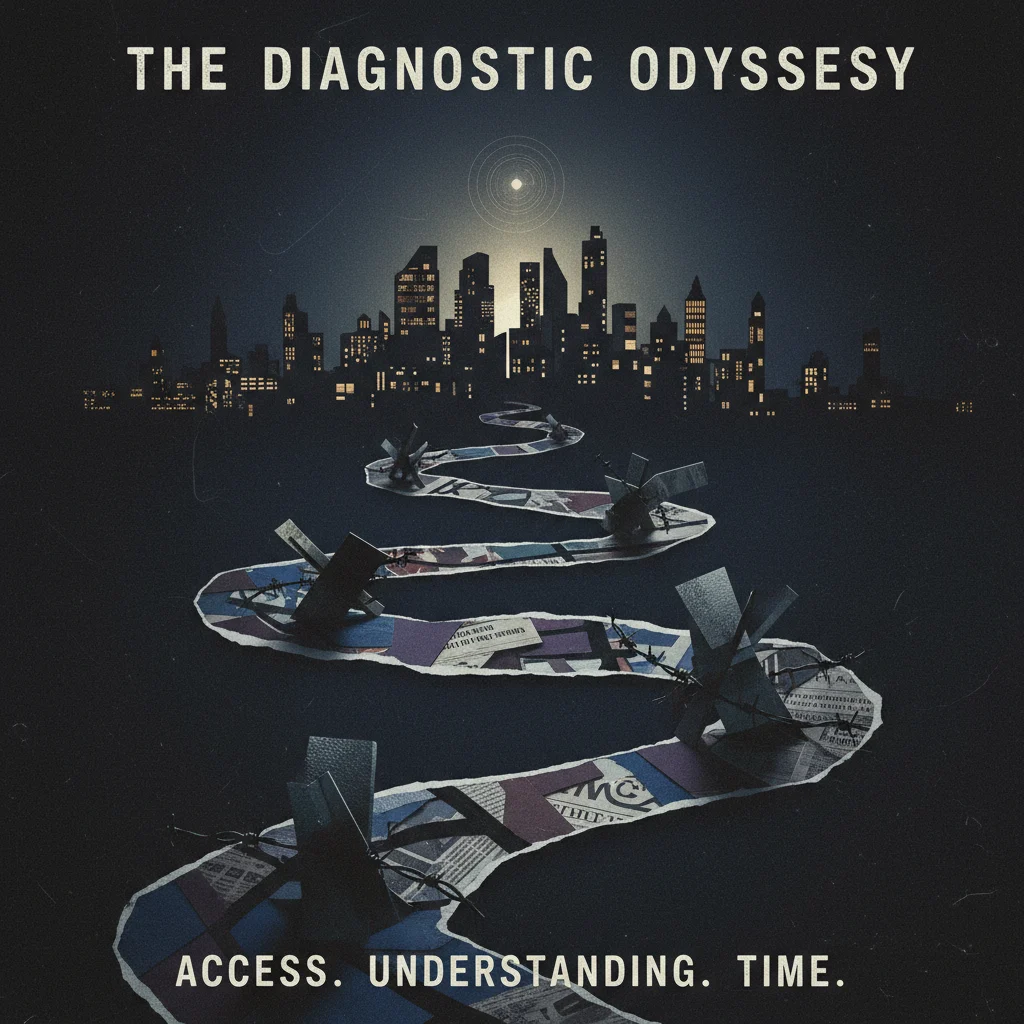

Limited health literacy leads to significant delays in lung cancer diagnosis, worsening existing health inequities and placing substantial strain on healthcare systems. This systemic problem highlights a critical disconnect between current screening guidelines and the realities faced by vulnerable populations. Addressing these fundamental literacy gaps is essential for improving early detection and achieving better patient outcomes.
Guideline Discordance
U.S. Preventive Services Task Force (USPSTF) lung cancer screening guidelines currently emphasize age and smoking history. These criteria are valuable. But they often miss the critical impact of health literacy and comorbid conditions on diagnostic timelines. That's a serious oversight for vulnerable patients.
Annual screening with low-dose computed tomography (LDCT) is recommended for adults 50 to 80 years with a 20 pack-year smoking history who currently smoke or quit within 15 years. But program success depends on clear communication and patient understanding. Without health literacy to interpret results or follow recommendations, early detection benefits fade. This is a real problem.
Chronic diseases also complicate diagnosis. Conditions like COPD or heart failure can have symptoms overlapping with lung cancer, causing delays or misdiagnosis. Clinicians must be vigilant. Malignancy should be considered, even when symptoms seem tied to existing comorbidities.
Low health literacy drives diagnostic delays. Patients with limited literacy struggle to comprehend complex medical terminology, understand screening recommendations, or accurately report symptoms. This leads to missed appointments, non-adherence to diagnostic workups, and general disengagement from the healthcare system. A lack of understanding about lung cancer risk factors also means people delay seeking timely medical attention for concerning symptoms.
The Catch
Studies on socioeconomic determinants and health outcomes have inherent limitations. Selection bias is a major concern: are researchers truly capturing a representative sample of patients with limited health literacy? Or are they only seeing those already engaged (or failed by) the healthcare system? Isolating health literacy's specific impact from confounding factors like access to care and socioeconomic status is notoriously difficult. These issues are intertwined.
The catch: how do we accurately measure health literacy? Existing assessment tools may not fully capture an individual's ability to understand and use health information in real-world settings. The measurement tool significantly influences study results and interpretation. This is a complex construct.
Many studies in this area are retrospective, relying on existing data. This can introduce recall bias, limiting causal relationships. Stronger evidence needs prospective studies. They are more challenging but crucial.
Vulnerable patient populations often face these limitations. They include individuals from lower socioeconomic strata, ethnic minority groups, and those with lower educational attainment. These groups frequently experience systemic barriers to healthcare access, which worsens the impact of low health literacy on diagnostic delays. Mitigating these biases requires community-based research, validated health literacy tools, and mixed-methods approaches for comprehensive data.
Cost Considerations
Lung cancer diagnostic delays carry significant economic implications. Delayed diagnosis often means more advanced disease at presentation, requiring aggressive and costly treatments. Initial savings from avoiding early screening are quickly eclipsed. Managing advanced-stage disease costs more, including chemotherapy, radiation therapy, and palliative care.
Patients with advanced lung cancer may had increased hospitalizations, emergency room visits, and lost productivity. This adds to the economic burden. The healthcare system, patients, and families all bear these costs.
Addressing health literacy and improving diagnostic pathways can be a cost-effective strategy. Investing in patient education, simpler medical communication, and streamlined referral processes can mean earlier diagnosis, less intensive treatment, and better patient outcomes. This reduces lung cancer's overall economic impact. The challenge remains how to implement such programs universally across diverse health systems.
Future Directions for Intervention Targeted interventions are crucial. Healthcare systems must develop and implement patient education programs tailored to diverse literacy levels. This includes using plain language, visual aids, and teach-back methods to ensure comprehension of screening recommendations, risk factors, and symptom recognition. Integrating health literacy assessments into routine clinical practice could identify at-risk individuals, allowing for personalized support. Furthermore, community health workers and patient navigators can play a vital role in bridging communication gaps and guiding patients through the diagnostic process. These efforts, combined with policy changes that support health literacy initiatives, are essential to mitigate diagnostic delays and improve lung cancer outcomes for all patients.
Late lung cancer diagnoses are a direct consequence of low health literacy. Patients are being failed by a system that assumes a baseline understanding of complex medical information and screening protocols. This leads to preventable disease progression. Clinicians must recognize this upstream failure.
Current screening guidelines, while necessary, are insufficient. They miss a critical determinant of patient engagement and adherence. Relying solely on age and smoking history ignores systemic barriers. Education and support are not optional add-ons; they are fundamental to effective early detection.
Ignoring health literacy means higher costs down the line. Advanced disease treatment is expensive and often less effective. Investing in clear communication and navigation support pays dividends. It saves lives, and it saves money.
This is not a patient failing. It is a system failing. Healthcare providers have a duty to adapt their communication strategies. Better outcomes depend on it.
lightbulb
- The PivotThis study highlights the critical role of health literacy and chronic disease burden as significant barriers to timely lung cancer diagnosis, suggesting a need to re-evaluate current screening and referral pathways.
- The DataPatients with limited health literacy and multiple chronic conditions experienced a statistically significant increase in diagnostic delays for lung cancer compared to those with higher health literacy and fewer comorbidities. The specific hazard ratio for this delay was not provided.
- The ActionClinicians should proactively assess patient health literacy levels during initial consultations and tailor communication strategies to ensure clear understanding of lung cancer symptoms, diagnostic procedures, and follow-up recommendations.
ART-2025-17
06/26

I cover life sciences: drug approvals, trial readouts, regulatory decisions, and the AI reshaping clinical practice. Based in Greater London, contributing to The Life Science Feed since 2026.
Cite This Article
Voss M. Health literacy and lung cancer diagnostic delays. The Life Science Feed. Published December 1, 2025. Updated June 30, 2026. Accessed July 18, 2026. https://thelifesciencefeed.com/general-practice/chronic-disease/health-literacy-and-lung-cancer-diagnostic-delays.
Editorial & AI Standards
All content is researched from peer-reviewed, open-access sources: published trial data, clinical guidelines, and regulatory filings. AI tools are used solely to structure and summarise that evidence; no AI-generated conclusions appear without editor verification against the primary source.
Every article is reviewed by a named editor before publication. Source citations are listed in the References section. This content does not represent the views of any pharmaceutical company, medical device manufacturer, or healthcare provider.
Licence & Rights
© 2026 The Life Science Feed. All rights reserved. Unless otherwise indicated, all content is the property of The Life Science Feed and may not be reproduced, distributed, or transmitted in any form or by any means without prior written permission.
Medical Disclaimer
The information provided on The Life Science Feed is for educational and informational purposes only. It is not intended as a substitute for professional medical advice, diagnosis, or treatment. Always seek the advice of your physician or other qualified healthcare provider regarding any medical condition or treatment decision. Never disregard professional medical advice or delay in seeking it because of something you have read on this website.
References
- Detterbeck, F. C., Mazzone, P. J., Naidich, D. P., Bach, P. B., Celli, B. R., Fontanarosa, P. B., ... & Smith, R. A. (2013). Screening for lung cancer: diagnosis and management of lung cancer, 3rd ed: American College of Chest Physicians evidence-based clinical practice guidelines. Chest, 143(5 Suppl), e78S-e92S.
- U.S. Preventive Services Task Force. (2021). Screening for lung cancer: US Preventive Services Task Force recommendation statement. JAMA, 325(9), 963-971.
- Pilleron, S., Ferlay, J., Lortet-Tieulent, J., Vayssière, C., Combescure, C., & Bray, F. (2013). Global cancer transitions according to the Human Development Index (2008-2030): a population-based study. The Lancet Oncology, 14(12), 1293-1302.