
The landscape of gene editing has been a battleground of innovation and intellectual property, with companies vying for dominance over foundational technologies that promise to revolutionise disease treatment. Control over these core platforms dictates not only future drug development but also the financial trajectory of entire biopharmaceutical entities.
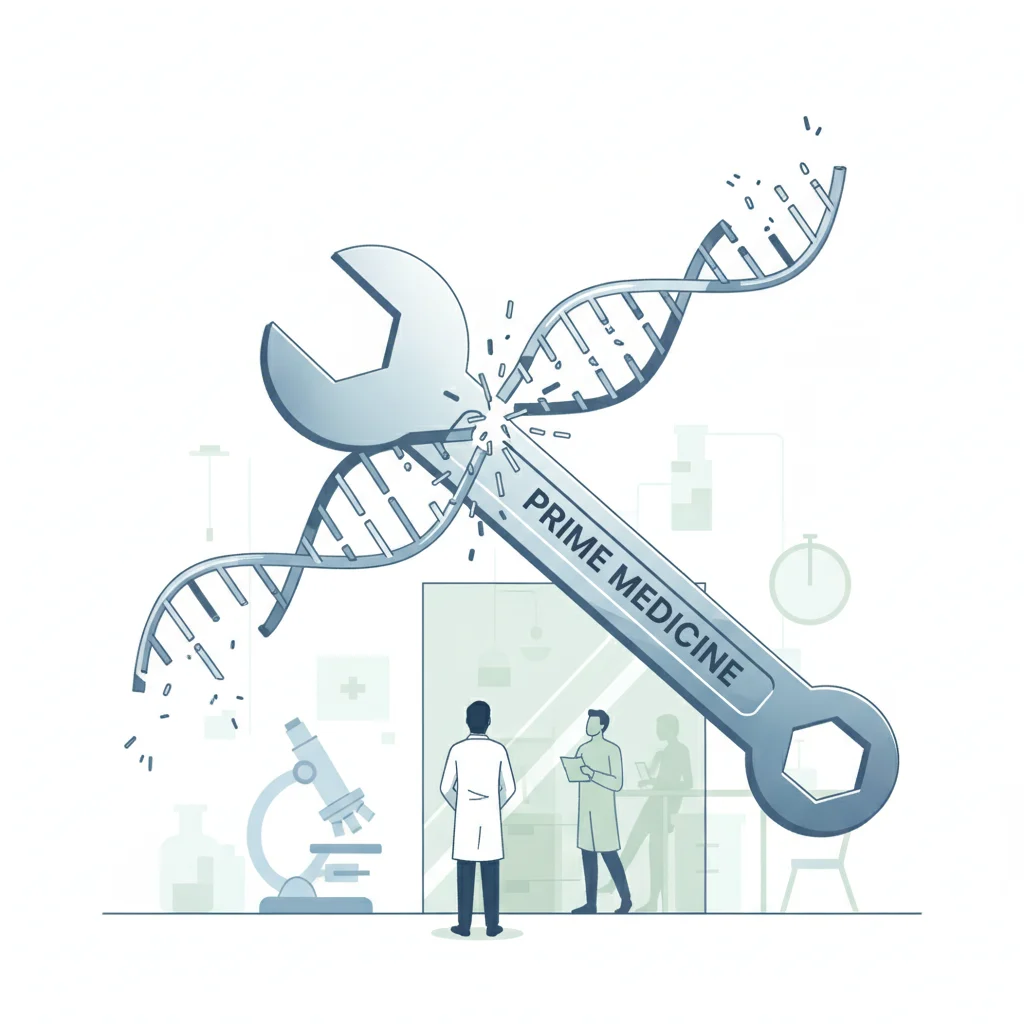
Prime Medicine recently announced a favourable outcome in its dispute with Beam Therapeutics, solidifying its position regarding key aspects of prime editing technology. This decision clarifies the ownership of critical intellectual property, impacting the development pathways for a new generation of genetic therapies.
The ability to precisely edit the human genome holds immense potential for treating a vast array of genetic diseases, from single-gene disorders like sickle cell disease and cystic fibrosis to more complex conditions. For years, CRISPR-Cas9 dominated the conversation, offering a relatively straightforward method to cut DNA at specific locations. But CRISPR's reliance on double-strand breaks carries inherent risks, including potential off-target edits and chromosomal rearrangements, which have prompted a search for more refined editing tools.
Prime editing emerged as a promising alternative, offering a 'search-and-replace' functionality for DNA that avoids creating double-strand breaks. This technology, developed by David Liu and Andrew Anzalone at the Broad Institute, uses a prime editing guide RNA (pegRNA) that both specifies the target DNA sequence and carries the new genetic information to be inserted. A reverse transcriptase enzyme then synthesises the new DNA sequence directly into the target site. This mechanism allows for all 12 possible base-to-base changes, as well as targeted insertions and deletions of up to dozens of base pairs, with potentially greater precision and fewer unintended consequences than earlier CRISPR methods.
The Patent Office's Verdict
The dispute between Prime Medicine and Beam Therapeutics centered on the inventorship of this prime editing technology. Both companies licensed intellectual property from the Broad Institute, but the specific claims and inventorship of the foundational patents became a point of contention. The U.S. Patent and Trademark Office's Patent Trial and Appeal Board (PTAB) conducted an interference proceeding, a complex administrative process designed to determine who invented a particular technology first when multiple parties claim the same invention. This process involved extensive review of laboratory notebooks, experimental data, and testimony from the inventors.
The PTAB ultimately ruled in favour of Prime Medicine, confirming that the foundational claims related to prime editing technology were invented by the team whose rights are now held by Prime Medicine. This decision specifically affirmed the inventorship of David Liu and Andrew Anzalone for the core aspects of prime editing, including the use of a fusion protein comprising a Cas9 nickase and a reverse transcriptase, guided by a pegRNA, to achieve targeted genetic modifications. The ruling provides Prime Medicine with a clearer path forward for developing therapies based on this technology, reducing the legal uncertainty that often plagues nascent biotechnologies.
Prime editing's potential applications are broad, particularly for diseases caused by single-base pair mutations or small insertions/deletions. For example, it could theoretically correct the G>A mutation responsible for sickle cell disease, or the F508del mutation in cystic fibrosis. The precision offered by prime editing means it could address approximately 89% of known pathogenic human genetic variants, which are often single nucleotide variants (SNVs) or small indels. This capability positions prime editing as a versatile tool, potentially surpassing the scope of base editing, which is limited to specific base conversions (e.g., C>T or A>G).
Still, the technology is relatively new, and its clinical translation faces hurdles. Delivery remains a significant challenge, as with all gene-editing tools. Adeno-associated virus (AAV) vectors, a common delivery method, have limitations in cargo capacity, which can be an issue for the larger prime editor components. Lipid nanoparticles (LNPs) are also under investigation, but their tissue tropism and safety profile in humans for systemic gene editing are still being established. The immunogenicity of the Cas9 protein and the reverse transcriptase also requires careful consideration, as an immune response could limit the efficacy or safety of repeated dosing.
The trial was not a clinical trial, but an intellectual property dispute. Therefore, no patient data or clinical endpoints were measured. The outcome, however, directly influences which company can advance specific prime editing therapies without infringing on others' patents. This clarity is essential for attracting investment and accelerating the development of new treatments. Without a clear resolution, companies often face protracted legal battles that divert resources from research and development.
The open-label nature of patent interference proceedings is the obvious caveat. All evidence presented is scrutinised publicly, but the focus is on inventorship and priority dates, not clinical efficacy or safety. The ruling does not validate the clinical utility of prime editing, only the ownership of the underlying technology. Whether Prime Medicine can translate this legal victory into successful clinical programs remains the ultimate test.
The PTAB's decision in favour of Prime Medicine provides much-needed clarity in the rapidly evolving gene-editing space. For clinicians, this means a potentially accelerated pipeline of prime editing therapies, particularly for the vast number of genetic disorders driven by single-base changes or small indels. The reduction in legal ambiguity should allow Prime Medicine to focus resources on preclinical and clinical development rather than litigation.
But the victory is purely intellectual property based; it does not guarantee clinical success. Prime editing, while elegant in its mechanism, still faces significant challenges in delivery, efficiency, and potential off-target effects in a living organism. The promise of correcting nearly 90% of pathogenic human genetic variants is compelling, but translating that into safe and effective treatments for patients requires rigorous clinical trials.
The competitive landscape remains intense. While Prime Medicine now has a stronger hand in prime editing, other gene-editing modalities, including improved CRISPR systems and base editors, continue to advance. Clinicians should view this as a step towards a more defined therapeutic future, but not a definitive answer to the complexities of genetic disease. The real work, the clinical validation, still lies ahead.
- The Pivot Prime Medicine now holds a stronger intellectual property position for prime editing, a gene-editing technology.
- The Data The U.S. Patent and Trademark Office's Patent Trial and Appeal Board (PTAB) ruled in Prime Medicine's favour, confirming inventorship.
- The Action Clinicians should monitor the accelerated development of prime editing therapies, particularly for single-base pair and small insertion/deletion disorders.
ART-2026-799
·10/26
Drafted with AI assistance, reviewed and approved by the editorial team. This publication is intended for healthcare professionals, researchers, and life science industry professionals. Content is provided for informational and educational purposes only and does not constitute medical advice.

I write about AI in healthcare: the validation studies, the deployment failures, and the regulatory questions without answers yet. Based in San Francisco, close to where the technology is built.
Cite This Article
Chen L, Voss M. Prime medicine wins gene-editing dispute against beam therapeutics. The Life Science Feed. Published July 16, 2026. Updated October 7, 2026. Accessed October 15, 2026. https://thelifesciencefeed.com/genetics/gene-therapy/news/prime-medicine-wins-gene-editing-dispute-against-beam-therapeutics.
Editorial & AI Standards
All content is researched from peer-reviewed, open-access sources: published trial data, clinical guidelines, and regulatory filings. AI tools are used solely to structure and summarise that evidence; no AI-generated conclusions appear without editor verification against the primary source.
Every article is reviewed by a named editor before publication. Source citations are listed in the References section. This content does not represent the views of any pharmaceutical company, medical device manufacturer, or healthcare provider.
Licence & Rights
© 2026 The Life Science Feed. All rights reserved. Unless otherwise indicated, all content is the property of The Life Science Feed and may not be reproduced, distributed, or transmitted in any form or by any means without prior written permission.
Medical Disclaimer
The information provided on The Life Science Feed is for educational and informational purposes only. It is not intended as a substitute for professional medical advice, diagnosis, or treatment. Always seek the advice of your physician or other qualified healthcare provider regarding any medical condition or treatment decision. Never disregard professional medical advice or delay in seeking it because of something you have read on this website.
References
1. Anzalone AV, et al. Search-and-replace genome editing without double-strand breaks or donor DNA. Nature. 2019;576(7785):149-157. doi:10.1038/s41586-019-1711-4
2. Anzalone AV, et al. Genome editing with CRISPR-Cas nucleases, base editors, transposases and prime editors. Nat Biotechnol. 2020;38(7):824-844. doi:10.1038/s41587-020-0561-9