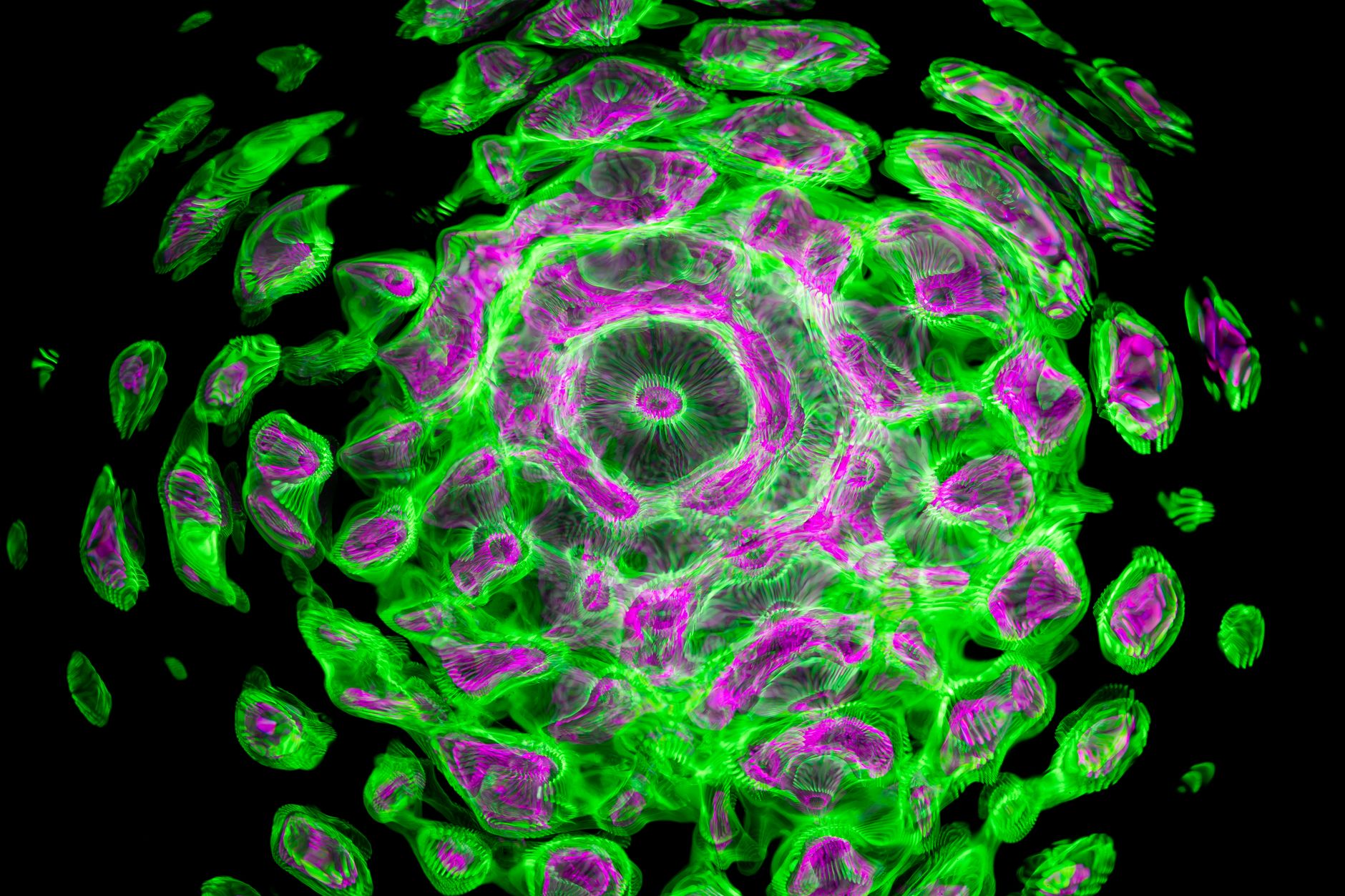

Neural tube defects, particularly those affecting the anterior brain region, represent a significant burden in congenital anomalies, with limited understanding of their precise genetic drivers. Human embryonic morphogenesis remains challenging to study directly due to inherent ethical and practical constraints, leaving clinicians with an incomplete picture of early developmental mechanisms. A new platform, detailed in eLife, leverages human pluripotent stem cell (hPSC)-derived organoids to overcome these limitations, offering a high-throughput method for genetic screening of embryonic development.1
This innovative approach integrates reproducible organoid morphogenesis with uniform single-gene perturbations, enabling scaled CRISPR interference screening. The platform identified specific transcription factors critical for anterior neural tube closure, providing mechanistic insights into a complex developmental process.1
Human embryonic development, particularly the intricate process of neural tube formation, is a highly orchestrated event. Failures in this process lead to neural tube defects (NTDs), a group of severe birth anomalies that include anencephaly and spina bifida. While folate supplementation has reduced the incidence of some NTDs, the underlying genetic architecture for many anterior neural tube closure defects remains poorly understood. This knowledge gap stems largely from the ethical and practical difficulties of studying human embryogenesis directly, pushing researchers to seek alternative models that can faithfully recapitulate early developmental stages.1
Researchers at the University of California, San Francisco, led by Dr. Rebecca Huang, developed a platform to address these challenges. They utilized hPSC-derived organoids, which offer a powerful in vitro model for studying human embryonic morphogenesis. The team specifically focused on creating a reproducible organoid model of anterior neurulation, the process by which the anterior part of the neural tube closes to form the forebrain. This model allowed for the systematic perturbation of single genes, a critical step for identifying specific genetic drivers of developmental processes.1
Overcoming variability in organoid screening
The primary hurdle in using organoids for high-throughput genetic screening has been their inherent variability and the high cost associated with performing scaled tissue-wide single-gene perturbations. Huang and colleagues engineered a platform that integrates reproducible organoid morphogenesis with uniform single-gene perturbations, making arrayed CRISPR interference (CRISPRi) screening feasible in hPSC-derived organoids. This innovation allowed for the simultaneous assessment of multiple genetic targets in a controlled and scalable manner.1
The platform’s design focused on minimizing batch-to-batch variability, a common issue in organoid research. They optimized culture conditions and differentiation protocols to ensure consistent formation of anterior neural tube-like structures. This consistency was crucial for accurately interpreting the effects of genetic perturbations, as it reduced confounding factors related to inherent differences in organoid development. The ability to generate uniform organoids meant that observed phenotypic changes could be more confidently attributed to the targeted gene knockdown.1
Identifying key transcription factors
To demonstrate the utility of their platform, the researchers screened 77 transcription factors known or suspected to play roles in neural development. They applied CRISPRi to systematically repress the expression of each target gene within the hPSC-derived anterior neural organoids. The primary endpoint for this screen was the assessment of neural tube closure morphology, specifically looking for defects or abnormalities in the formation of the anterior neural tube structures.1
The screen successfully identified three essential regulators of neural tube closure: ZIC2, SOX11, and ZNF521. These transcription factors emerged as critical players in the complex genetic program governing forebrain development. The identification of these specific genes provides concrete targets for further investigation into the etiology of anterior neural tube defects.1
Distinct roles in neural tube formation
The study elucidated the distinct, yet interconnected, roles of these identified transcription factors. ZIC2 and SOX11 were found to be required for neural tube closure. When the expression of either ZIC2 or SOX11 was suppressed using CRISPRi, the organoids consistently exhibited severe defects in neural tube closure, failing to form the characteristic closed structures. This indicates that both genes are indispensable for the physical process of the neural tube fusing.1
Conversely, ZNF521 played an opposing role, actively preventing ectopic closure points. When ZNF521 expression was knocked down, the organoids displayed aberrant, premature, or multiple closure points, suggesting that ZNF521 acts as a crucial brake on the closure process, ensuring it occurs at the correct time and location. This regulatory balance between promoting and inhibiting closure is vital for proper morphogenesis.1
Transcriptomic insights into gene regulation
To further dissect the molecular mechanisms, the team performed single-cell transcriptomic analysis on perturbed organoids. This allowed them to identify co-regulated gene targets of ZIC2 and SOX11, revealing a shared gene regulatory program. The analysis showed that ZIC2 and SOX11 likely work in concert to activate a network of genes essential for the cellular processes underlying neural tube fusion. This includes genes involved in cell adhesion, migration, and proliferation, all critical for the dynamic changes required during closure.1
The transcriptomic data also reinforced the opposing role of ZNF521. Its knockdown led to a distinct gene expression profile, consistent with its function in preventing ectopic closure. This suggests that ZNF521 might repress genes that, if overexpressed, would drive premature or mislocalized closure events. The intricate interplay between these three transcription factors highlights a finely tuned genetic circuit governing anterior neural tube development.1
Implications for developmental biology and clinical practice
This single-gene perturbation platform represents a significant advance for high-throughput genetic screening in human embryonic morphogenesis models. The ability to systematically identify genetic drivers in a controlled in vitro environment opens new avenues for understanding congenital disorders. For clinicians, this research provides a deeper mechanistic understanding of anterior neural tube defects, moving beyond descriptive epidemiology to specific genetic pathways.1
The identification of ZIC2, SOX11, and ZNF521 as key regulators offers potential diagnostic markers for NTDs. Future research could explore whether mutations or dysregulation in these genes correlate with specific types of anterior neural tube defects observed in patients. This could lead to improved genetic counseling and prenatal diagnostic strategies. The Oxford Handbook of Genetics provides a comprehensive overview of how such genetic insights translate into clinical practice.1
Caveats and future directions
While the organoid model offers unparalleled access to human embryonic processes, it is still an in vitro system and does not fully recapitulate the complexity of the whole embryo. The absence of maternal-fetal interactions, vascularization, and systemic signaling pathways means that some regulatory nuances might be missed. Still, the model's reproducibility and scalability make it an invaluable tool for initial gene discovery.1
The study focused on 77 transcription factors, a targeted but not exhaustive list. Future screens could expand to include a broader range of genetic elements, including non-coding RNAs or epigenetic regulators, to uncover additional drivers of neural tube closure. The current findings establish a strong foundation, but the full genetic landscape of NTDs is undoubtedly more complex. Further validation in animal models or human genetic cohorts will be essential to confirm the clinical relevance of these findings.1
The platform's utility extends beyond neural tube closure. It could be adapted to study other aspects of human embryonic morphogenesis, such as heart development, limb formation, or craniofacial patterning. This versatility makes it a powerful tool for developmental biology, potentially accelerating the discovery of genetic causes for a wide range of congenital anomalies. The ability to precisely perturb single genes and analyze their effects at a single-cell level represents a significant leap forward in understanding early human development.1
The identification of ZIC2, SOX11, and ZNF521 as direct regulators of anterior neural tube closure provides a much-needed mechanistic anchor for understanding these devastating congenital defects. For clinicians managing pregnancies, particularly those with a family history of NTDs, this research offers a glimpse into the specific genetic vulnerabilities that could contribute to these conditions. It moves us closer to a future where genetic screening might pinpoint individual risk factors with greater precision.
The ability to model human embryonic development with such fidelity in organoids is a significant step. While not immediately translatable to the clinic as a diagnostic tool, this platform lays the groundwork for identifying novel biomarkers. Imagine a scenario where specific gene expression profiles in early pregnancy could flag a heightened risk for anterior NTDs, allowing for more targeted counseling or intervention strategies.
But the immediate impact on clinical practice remains indirect. This is foundational science, illuminating the 'how' behind a complex biological process. It will take time for these genetic insights to translate into actionable clinical guidelines or therapies. Still, understanding the precise roles of these transcription factors offers a rational basis for exploring new avenues in prevention and treatment, beyond the current standard of folate supplementation.
- The Pivot A new high-throughput CRISPR interference screening platform in hPSC-derived organoids allows for systematic identification of genetic drivers in human embryonic morphogenesis, previously infeasible due to organoid variability and cost.
- The Data ZIC2 and SOX11 are required for neural tube closure, while ZNF521 prevents ectopic closure points, jointly governing a gene regulatory program in the anterior forebrain region.
- The Action Clinicians should recognize that this research provides a foundational understanding of specific genetic pathways in anterior neural tube development, potentially informing future diagnostic strategies and therapeutic targets for neural tube defects.
ART-2026-990
·07/26
Drafted with AI assistance, reviewed and approved by the editorial team. This publication is intended for healthcare professionals, researchers, and life science industry professionals. Content is provided for informational and educational purposes only and does not constitute medical advice.

I cover women's health, reproductive medicine, and the persistent gaps in how conditions that primarily affect women get studied and funded. The evidence base is thinner than it should be. I write about why.
Cite This Article
Mitchell S, Voss M. New CRISPR screen identifies key regulators of anterior neural tube closure. The Life Science Feed. Published July 27, 2026. Updated July 27, 2026. Accessed July 27, 2026. https://thelifesciencefeed.com/genetics/genetic-diseases-inborn/research/new-crispr-screen-identifies-key-regulators-of-anterior-neural-tube-closure.
Editorial & AI Standards
All content is researched from peer-reviewed, open-access sources: published trial data, clinical guidelines, and regulatory filings. AI tools are used solely to structure and summarise that evidence; no AI-generated conclusions appear without editor verification against the primary source.
Every article is reviewed by a named editor before publication. Source citations are listed in the References section. This content does not represent the views of any pharmaceutical company, medical device manufacturer, or healthcare provider.
Licence & Rights
© 2026 The Life Science Feed. All rights reserved. Unless otherwise indicated, all content is the property of The Life Science Feed and may not be reproduced, distributed, or transmitted in any form or by any means without prior written permission.
Medical Disclaimer
The information provided on The Life Science Feed is for educational and informational purposes only. It is not intended as a substitute for professional medical advice, diagnosis, or treatment. Always seek the advice of your physician or other qualified healthcare provider regarding any medical condition or treatment decision. Never disregard professional medical advice or delay in seeking it because of something you have read on this website.
References
1. Huang RE, Anand GM, Megale HC. Arrayed single-gene perturbations identify drivers of human anterior neural tube closure. Elife. 2026;15:108224. doi:10.7554/eLife.108224