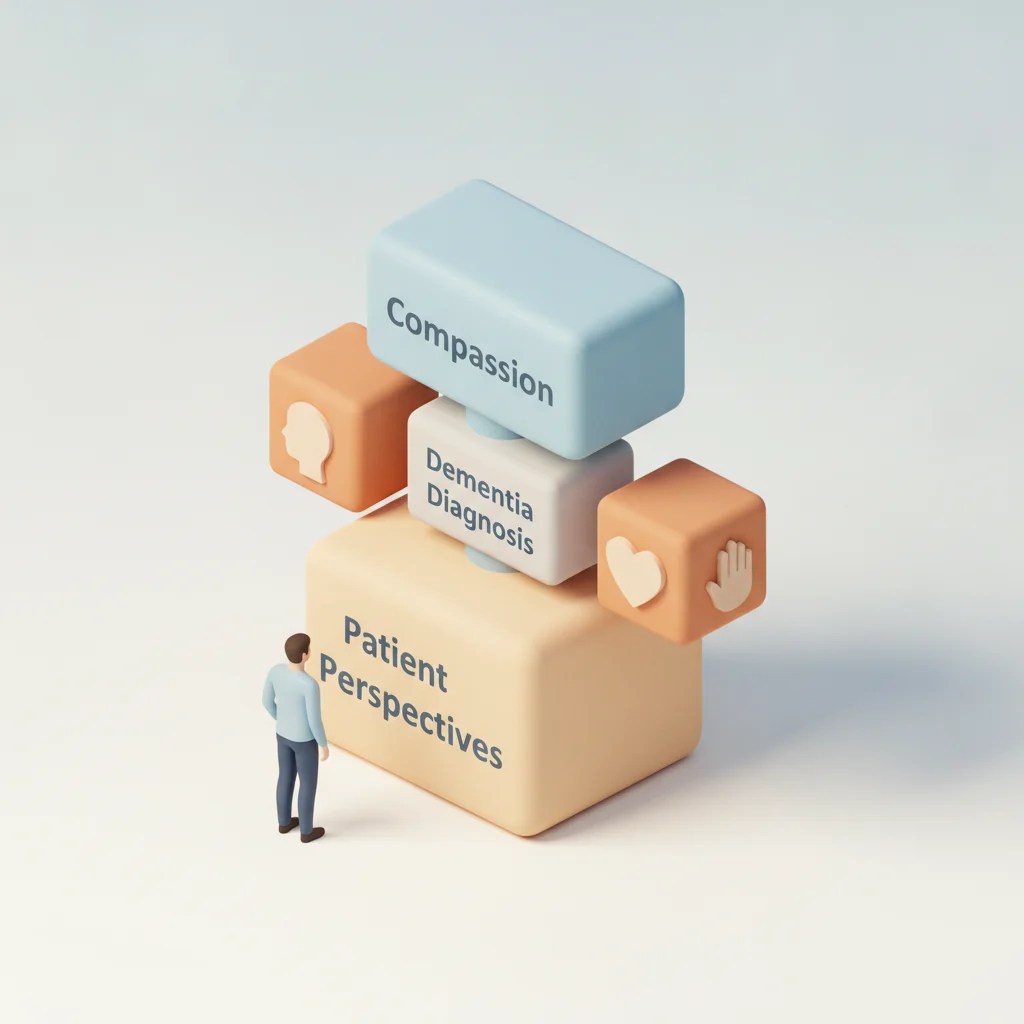

The process of receiving a dementia diagnosis is often fraught with emotional complexity for patients and their families. Clinicians face the challenge of delivering life-altering news while navigating individual patient needs and anxieties. A recent perspective piece in the BMJ highlights the essential role of compassion throughout this diagnostic journey, advocating for a patient-centered approach to improve patient experience.1
The journey to a dementia diagnosis is described as a period of significant emotional distress for patients, often beginning with subtle cognitive changes and progressing through various stages of medical evaluation. Shepherd (2026) argues that the manner in which clinicians engage with patients during this period profoundly influences their psychological well-being and their ability to cope with the diagnosis.1 The author emphasizes that while diagnostic accuracy is paramount, the human element of care, specifically compassion, is equally vital.1
The Patient's Perspective
The paper outlines several key areas where compassion can be integrated more effectively. Firstly, it highlights the initial consultation, where patients often present with vague symptoms or concerns about memory loss.1 At this stage, clinicians have an opportunity to validate patient concerns without immediately jumping to definitive conclusions, thereby fostering trust and reducing anxiety.1 The author suggests that empathetic listening and acknowledging the patient's fears are critical first steps.1
Secondly, the diagnostic process itself, which can involve multiple appointments, cognitive assessments, and imaging, is identified as a period requiring sustained compassionate engagement.1 Patients may experience frustration, confusion, or denial as they undergo various tests.1 The paper advocates for clear, consistent communication about the purpose of each test and what the patient can expect.1 This transparency, coupled with reassurance, can mitigate feelings of being overwhelmed or depersonalized by the medical system.1
Thirdly, the delivery of the diagnosis is presented as a pivotal moment where compassion is indispensable.1 Shepherd (2026) stresses that the news should be delivered in a private, unhurried setting, allowing ample time for the patient and their family to process the information and ask questions.1 The language used should be clear, avoiding medical jargon, and tailored to the patient's level of understanding.1 Crucially, the author notes that providing information about available support services and resources immediately after diagnosis can help patients feel less isolated and more empowered to manage their condition.1
Finally, the paper extends the concept of compassion beyond the initial diagnosis, advocating for ongoing support.1 This includes regular follow-up appointments, access to dementia support groups, and information on lifestyle adjustments that may help manage symptoms.1 The author posits that a compassionate approach throughout the entire continuum of care can significantly improve the quality of life for individuals living with dementia and their caregivers.1 The paper does not present quantitative data or trial outcomes, but rather offers a qualitative argument based on clinical experience and patient advocacy, underscoring the ethical imperative of compassionate care in neurology.1
Shepherd (2026) also delves into the critical role of caregiver involvement, recognizing that a dementia diagnosis impacts not only the patient but their entire support network. Compassionate care, therefore, extends to educating caregivers about the disease progression, potential behavioral changes, and strategies for effective communication. Providing resources for caregiver support groups and respite care is highlighted as an essential component of a holistic, compassionate approach, preventing caregiver burnout and promoting sustained patient well-being. The paper implicitly argues that empowering caregivers is an indirect yet powerful way to enhance the patient's quality of life post-diagnosis.
Clinical Implications and Future Directions
The insights presented by Shepherd (2026) carry significant clinical implications for neurology and primary care practices. Integrating structured communication training programs for clinicians, focusing on empathetic listening and sensitive information delivery, could be a tangible step towards improving patient experiences. Furthermore, the paper suggests that healthcare systems should review their diagnostic pathways to ensure they are patient-centric, minimizing delays and maximizing opportunities for compassionate engagement at each stage. Future research could quantitatively assess the impact of these compassionate interventions on patient anxiety levels, adherence to treatment plans, and overall satisfaction with care.
While the paper provides a compelling qualitative argument, a limitation acknowledged by the author is the absence of empirical data directly linking specific compassionate behaviors to measurable patient outcomes. Future studies could employ mixed-methods approaches, combining patient and caregiver interviews with validated psychological scales to quantify the benefits of compassionate care. This would strengthen the evidence base and provide a clearer roadmap for implementing these recommendations across diverse clinical settings, ultimately fostering a more humane and effective approach to dementia diagnosis and ongoing management.
The perspective piece by Shepherd serves as a timely reminder that while diagnostic tools for dementia continue to advance, the human element of care must not be overlooked. For general practitioners and specialists alike, the emphasis on compassionate communication from the first patient concern through post-diagnostic support is not merely a soft skill, but a clinical imperative. It suggests that the current focus on efficiency in consultations, while understandable given caseloads, may inadvertently compromise the patient's emotional journey, potentially leading to poorer engagement with care plans.
This qualitative argument underscores the need for healthcare systems to allocate sufficient time and resources for clinicians to engage empathetically. It is not enough to simply deliver a diagnosis; the manner of delivery and the subsequent support structure are equally critical. Perhaps this means re-evaluating consultation lengths for suspected dementia cases or integrating dedicated dementia navigators into primary care networks, rather than relying solely on specialist referrals that can feel impersonal and fragmented.
From an industry perspective, the implications extend to how patient support programs are designed. Pharmaceutical companies developing new treatments for Alzheimer's disease or other dementias should consider integrating robust, compassionate support services as part of their market entry strategies, not just as an afterthought. A patient who feels understood and supported from the outset is more likely to adhere to complex treatment regimens and engage with follow-up care, ultimately benefiting both the patient and the efficacy of the intervention. This paper, while not presenting new data, reinforces the foundational principles of medical practice that can sometimes be overshadowed by technological advancements.
- The Pivot The diagnostic journey for dementia should prioritize compassionate, patient-centered communication.
- The Data The paper emphasizes the qualitative impact of clinician empathy on patient well-being, rather than quantitative metrics.
- The Action Clinicians should integrate empathetic communication and support systems from initial concerns through post-diagnostic care.
ART-2026-536
06/26
Cite This Article
Team TLSFE. Compassion in dementia diagnosis: patient perspectives highlighted. The Life Science Feed. Updated June 23, 2026. Accessed June 24, 2026. https://thelifesciencefeed.com/geriatrics/dementia/insights/compassion-in-dementia-diagnosis-patient-perspectives-highlighted.
Editorial & AI Standards
All content is researched from peer-reviewed, open-access sources — published trial data, clinical guidelines, and regulatory filings. AI tools are used solely to structure and summarise that evidence; no AI-generated conclusions appear without editor verification against the primary source.
Every article is reviewed by a named editor before publication. Source citations are listed in the References section. This content does not represent the views of any pharmaceutical company, medical device manufacturer, or healthcare provider.
Licence & Rights
© 2026 The Life Science Feed. All rights reserved. Unless otherwise indicated, all content is the property of The Life Science Feed and may not be reproduced, distributed, or transmitted in any form or by any means without prior written permission.
Medical Disclaimer
The information provided on The Life Science Feed is for educational and informational purposes only. It is not intended as a substitute for professional medical advice, diagnosis, or treatment. Always seek the advice of your physician or other qualified healthcare provider regarding any medical condition or treatment decision. Never disregard professional medical advice or delay in seeking it because of something you have read on this website.
References
1. Shepherd D. What Your Patient is Thinking: Compassion on the journey to a dementia diagnosis. BMJ. 2026.