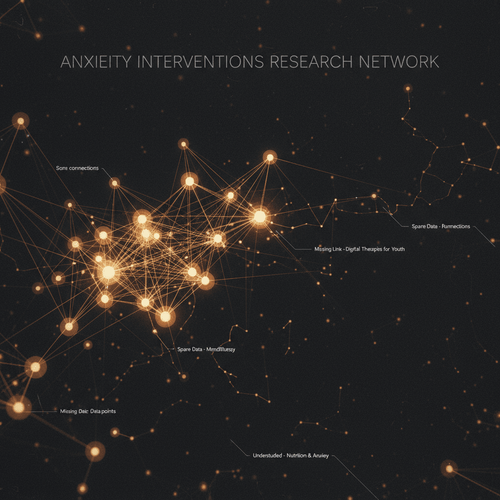
Anxiety disorders are not monolithic; generalized anxiety differs significantly from social anxiety, and both respond differently than panic disorder. Clinicians often grapple with selecting the most appropriate psychosocial intervention for each patient's specific anxiety profile. A recent evidence mapping and guideline appraisal attempts to clarify this selection process, offering a pragmatic overview of available therapies and their demonstrated efficacy. This isn't about reinventing the wheel, but rather, using the best available evidence to ensure we're applying the right tool for the job.
The goal is to translate high-level evidence into actionable steps. Which therapy shows the most promise, and how do we initiate it effectively? Let's unpack the findings and consider their implications for everyday practice.
Clinical Key Takeaways
lightbulb
- The PivotEvidence mapping reinforces the need for tailored approaches to anxiety, moving away from generic treatment algorithms.
- The DataCBT and exposure therapy consistently demonstrate efficacy across various anxiety disorders, though specific benefits vary by diagnosis.
- The ActionWhen initiating psychosocial intervention, carefully assess the patient's specific anxiety profile and prioritize therapies with the strongest evidence base for that particular disorder.
Evidence Mapping and Guideline Appraisal
Anxiety disorders represent a significant burden, impacting not only individual well-being but also contributing to broader societal costs. A crucial aspect of managing these disorders involves psychosocial interventions, which encompass a range of therapeutic approaches. However, with numerous options available, clinicians often face the challenge of selecting the most appropriate intervention for a given patient. An evidence mapping and guideline appraisal offers a systematic overview of the current state of knowledge, helping to guide clinical decision-making. The key is understanding what works best, for whom, and under what circumstances.
The appraisal examines a multitude of psychosocial interventions, including cognitive behavioral therapy (CBT), exposure therapy, mindfulness-based therapies, and relaxation techniques. It synthesizes data from various studies, providing a comprehensive view of the efficacy of each approach across different anxiety disorders. While CBT consistently emerges as a front-line option, the nuances of specific anxiety profiles often necessitate a more tailored approach.
Comparing to Existing Guidelines
How does this evidence map align with established clinical guidelines? Many guidelines, such as those from the American Psychiatric Association (APA) and the National Institute for Health and Care Excellence (NICE), already recommend CBT as a first-line treatment for many anxiety disorders. However, the evidence map digs deeper, clarifying the specific types of CBT that are most effective for particular conditions. For instance, exposure therapy is strongly recommended for specific phobias and obsessive-compulsive disorder (OCD), whereas mindfulness-based approaches may be more beneficial for generalized anxiety disorder. This granular detail is often lacking in broader guideline statements.
Moreover, the evidence map highlights areas where the evidence base remains less robust. This is particularly relevant for less common anxiety disorders or for specific subpopulations of patients. Clinicians must remain vigilant in these areas, relying on clinical judgment and shared decision-making with patients to navigate treatment options.
The Catch: Study Limitations
As with any synthesis of evidence, it is crucial to acknowledge the limitations. One common issue is the heterogeneity of study designs and outcome measures, which can make direct comparisons challenging. Furthermore, many studies are conducted in highly controlled research settings, which may not fully reflect real-world clinical practice. Are the results reproducible outside of academic centers? That remains the critical question.
Another limitation is the potential for publication bias, where studies with positive results are more likely to be published than those with negative or null findings. This can skew the overall perception of treatment efficacy. Additionally, many studies focus on short-term outcomes, leaving the long-term effectiveness of psychosocial interventions less clear. We need more data on sustained remission and relapse prevention.
Implementation Strategies
Translating evidence into practice requires careful planning and attention to detail. The first step is a thorough assessment of the patient's anxiety profile, including specific symptoms, triggers, and functional impairments. This assessment should inform the selection of the most appropriate psychosocial intervention. But, is it covered?
It's also essential to consider patient preferences and values. Shared decision-making can enhance treatment adherence and improve outcomes. Clinicians should explain the rationale for different treatment options, discuss potential benefits and risks, and involve patients in the selection process. Furthermore, addressing barriers to access, such as cost and availability, is crucial for ensuring equitable care. Teletherapy, if available, can reduce these barriers.
Regular monitoring of treatment progress is essential. This allows clinicians to track changes in symptoms and adjust the intervention as needed. Standardized outcome measures can facilitate this process and provide valuable data for ongoing quality improvement efforts. Be specific. Don't just monitor if they are "feeling better". Quantify the changes.
Implementing these strategies may require changes to existing clinical workflows. Practices may need to invest in training for clinicians, develop standardized assessment protocols, and establish referral pathways to ensure patients have access to appropriate psychosocial interventions. The billing realities also come into play. Is there appropriate reimbursement for the specific therapies being offered? Clinicians need to be aware of the coding and documentation requirements to ensure sustainable service delivery.
Moreover, the financial toxicity associated with mental healthcare cannot be ignored. Many patients face significant out-of-pocket costs for therapy, which can limit access to care. Addressing these economic barriers is crucial for ensuring equitable access to evidence-based psychosocial interventions.
LSF-0404153448 | January 2026

How to cite this article
El-Sayed H. Optimizing psychosocial interventions for adult anxiety. The Life Science Feed. Published March 5, 2026. Updated March 5, 2026. Accessed March 6, 2026. https://thelifesciencefeed.com/mental-health/anxiety/practice/optimizing-psychosocial-interventions-for-adult-anxiety.
Copyright and license
© 2026 The Life Science Feed. All rights reserved. Unless otherwise indicated, all content is the property of The Life Science Feed and may not be reproduced, distributed, or transmitted in any form or by any means without prior written permission.
Fact-Checking & AI Transparency
This content was produced with the assistance of AI technology and has been rigorously reviewed and verified by our human editorial team to ensure accuracy and clinical relevance.
References
- Bandelow, B., Michaelis, S., & Wedekind, D. (2017). Treatment of anxiety disorders. Dialogues in clinical neuroscience, 19(2), 93–107.
- National Institute for Health and Care Excellence. (2011). Generalised anxiety disorder and panic disorder in adults: management. NICE guideline CG113.
- American Psychiatric Association. (2013). Diagnostic and statistical manual of mental disorders (5th ed.).
- Hofmann, S. G., Asnaani, A., Vonk, I. J., Sawyer, A. T., & Fang, A. (2012). The efficacy of cognitive behavioral therapy: a review of meta-analyses. Cognitive Therapy, 36(5), 427–440.
Related Articles