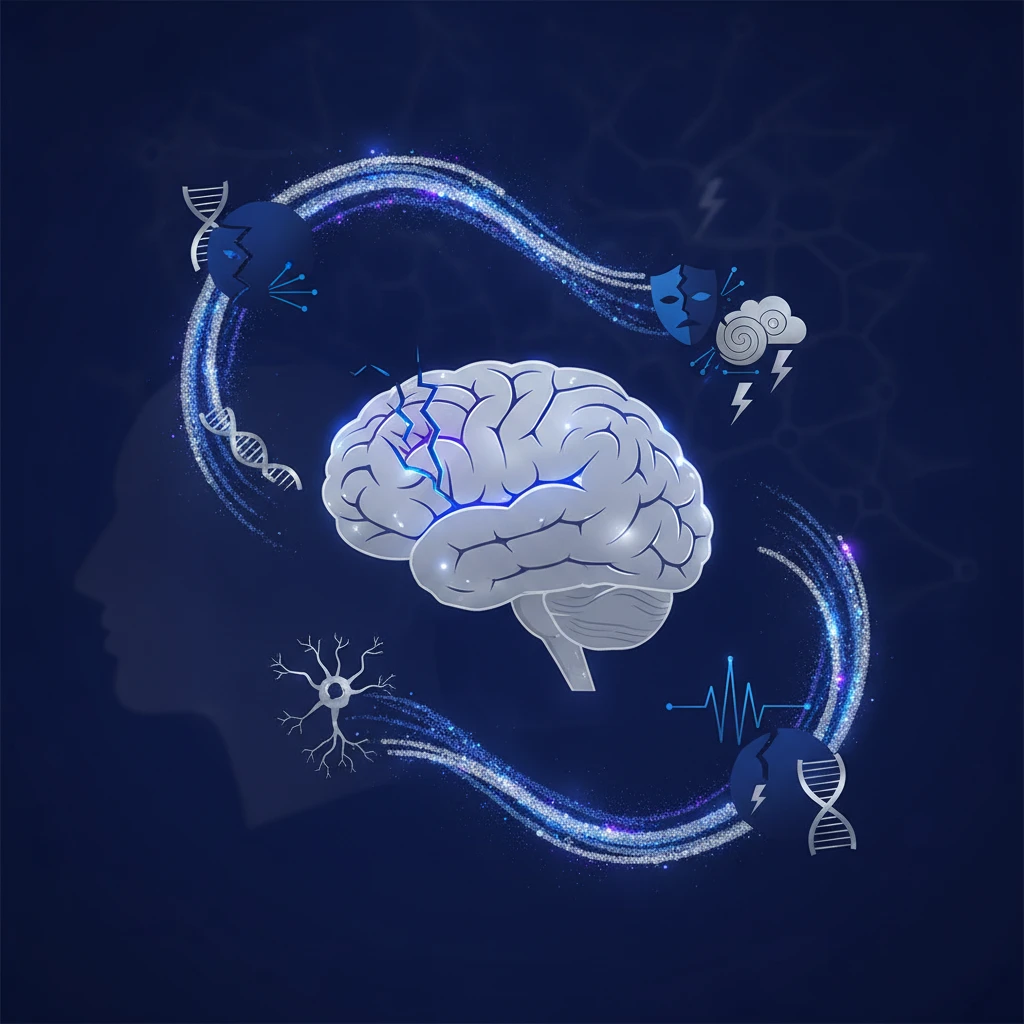

Traumatic brain injury (TBI) presents a complex clinical challenge, extending far beyond the immediate physical trauma. Clinicians have long observed a correlation between TBI and subsequent neurologic or psychiatric diagnoses, but the precise nature of this relationship has remained a subject of ongoing investigation.
Traumatic brain injury, ranging from mild concussion to severe penetrating injury, affects millions globally each year. The acute management focuses on stabilising the patient and preventing secondary brain injury. But the long-term sequelae, particularly the increased susceptibility to conditions like dementia, epilepsy, and mood disorders, represent a significant burden on healthcare systems and patient quality of life. Understanding the mechanisms that drive these associations, and whether they are unidirectional or bidirectional, informs both prevention strategies and post-injury care.
Historically, the focus has been on TBI as a precursor to these conditions. For example, a significant body of literature details the elevated risk of dementia following TBI, particularly in cases of moderate to severe injury or repetitive head trauma. Similarly, post-traumatic epilepsy is a well-recognised complication, with incidence rates varying based on injury severity and location. But the idea that pre-existing psychiatric or neurologic conditions might also predispose an individual to TBI introduces a new layer of complexity, suggesting a more intricate interplay than previously assumed.
Unpacking the bidirectional association
The association between TBI and subsequent neurologic conditions is well-established. For instance, TBI increases the risk of developing epilepsy, with the risk being highest in the first year post-injury and diminishing over time, but remaining elevated for decades. Patients with severe TBI have a significantly higher incidence of post-traumatic epilepsy compared to those with mild TBI. Similarly, TBI is a recognised risk factor for various forms of dementia, including Alzheimer's disease and chronic traumatic encephalopathy (CTE), particularly with repeated injuries. The mechanism often involves direct neuronal damage, axonal injury, and subsequent neuroinflammation or proteinopathy, such as tau accumulation.
But the reverse association, where pre-existing conditions increase the risk of TBI, is also evident. Individuals with a history of psychiatric disorders, such as major depressive disorder, bipolar disorder, or schizophrenia, exhibit higher rates of TBI. This may be due to a combination of factors, including impaired judgment, impulsivity, increased risk-taking behaviours, and a higher likelihood of experiencing falls or accidents. For example, patients with a diagnosis of schizophrenia have a higher incidence of falls and motor vehicle accidents, which can lead to TBI. Similarly, individuals with pre-existing neurologic conditions like epilepsy or Parkinson's disease are at an elevated risk of falls, directly increasing their susceptibility to head trauma. An epileptic seizure, for instance, can directly cause a fall or other accident resulting in TBI.
The specific hazard ratios for these associations vary considerably depending on the condition and the severity of the TBI. For instance, a history of TBI can increase the risk of developing Parkinson's disease by 1.5 to 2-fold in some cohorts, while the risk of post-traumatic epilepsy can be as high as 20-fold after severe TBI. Conversely, individuals with a pre-existing diagnosis of depression may have a 1.3 to 1.8-fold increased risk of sustaining a TBI compared to the general population. These numbers underscore the clinical relevance of considering both directions of this association.
The underlying mechanisms for these bidirectional links are multifactorial. Genetic predispositions may play a role, with certain genetic variants influencing both susceptibility to TBI and the development of psychiatric or neurologic disorders. Neuroinflammation, a common feature of TBI, can also contribute to the pathogenesis of various neurodegenerative and psychiatric conditions. Furthermore, shared environmental or lifestyle factors, such as substance abuse or socioeconomic status, can confound these relationships, acting as common risk factors for both TBI and other neurologic or psychiatric conditions. For example, individuals with substance use disorders are at a higher risk for both TBI and psychiatric comorbidities.
The clinical implications are substantial. When assessing a patient with a TBI, a thorough history should include any pre-existing psychiatric or neurologic conditions. Conversely, when evaluating a patient with a new onset of a psychiatric or neurologic disorder, inquiry into past head trauma is warranted. The open-label nature of many observational studies in this field is an obvious caveat, as it relies on accurate patient recall and medical record documentation, which can be incomplete. But the consistent patterns observed across diverse populations and methodologies lend credence to the bidirectional hypothesis. The challenge remains in disentangling cause from correlation and identifying specific interventions that can mitigate these risks effectively.
Readers seeking more detailed information on neurological conditions pertinent to TBI may find the Oxford Handbook of Neurology an invaluable clinical reference.
The bidirectional association between TBI and neurologic or psychiatric conditions means clinicians must expand their diagnostic lens. It is no longer sufficient to view TBI purely as an initiating event for subsequent pathology. A patient presenting with a TBI requires a comprehensive history that includes any pre-existing psychiatric diagnoses or neurologic conditions, as these may have contributed to the injury itself.
Conversely, when evaluating a patient with new-onset depression, anxiety, or even early cognitive decline, a detailed history of head trauma, even seemingly minor incidents, becomes critical. This integrated approach can inform risk stratification and guide more targeted preventative strategies. For instance, managing epilepsy effectively might reduce the risk of TBI in that population.
The pharmaceutical industry should note that this complex interplay suggests a need for therapies that address not just the acute phase of TBI, but also the long-term neuroinflammatory and neurodegenerative processes that link TBI to other conditions. Developing drugs that modulate these shared pathways could offer dual benefits, reducing both the immediate impact of TBI and the subsequent risk of conditions like dementia or Parkinson's disease. This requires a shift from siloed research to more integrated neurotrauma and neurodegeneration programmes.
Ultimately, this understanding reinforces the importance of a holistic patient assessment. The brain does not operate in isolated compartments; its vulnerabilities and resilience are interconnected. Ignoring the pre-existing conditions that might predispose a patient to TBI, or the long-term consequences of TBI on psychiatric health, means missing crucial opportunities for intervention and improved patient outcomes.
- The Pivot TBI is not merely a risk factor for neurologic and psychiatric conditions, but also appears to be influenced by their pre-existing presence.
- The Data Specific hazard ratios vary significantly across conditions, indicating a differential impact.
- The Action Comprehensive patient history, including prior psychiatric or neurologic diagnoses, is essential when assessing TBI risk and prognosis.
ART-2026-586
·10/26
Drafted with AI assistance, reviewed and approved by the editorial team. This publication is intended for healthcare professionals, researchers, and life science industry professionals. Content is provided for informational and educational purposes only and does not constitute medical advice.

Science writer covering the frontier between basic research and clinical practice. I am interested in the moment a mechanism becomes a therapy, and everything that can go wrong in between.
Cite This Article
Aldrich M, Lopes W. TBI linked bidirectionally with psychiatric and neurologic conditions. The Life Science Feed. Published July 9, 2026. Updated October 6, 2026. Accessed October 7, 2026. https://thelifesciencefeed.com/neurology/stroke/research/tbi-linked-bidirectionally-with-psychiatric-and-neurologic-conditions.
Editorial & AI Standards
All content is researched from peer-reviewed, open-access sources: published trial data, clinical guidelines, and regulatory filings. AI tools are used solely to structure and summarise that evidence; no AI-generated conclusions appear without editor verification against the primary source.
Every article is reviewed by a named editor before publication. Source citations are listed in the References section. This content does not represent the views of any pharmaceutical company, medical device manufacturer, or healthcare provider.
Licence & Rights
© 2026 The Life Science Feed. All rights reserved. Unless otherwise indicated, all content is the property of The Life Science Feed and may not be reproduced, distributed, or transmitted in any form or by any means without prior written permission.
Medical Disclaimer
The information provided on The Life Science Feed is for educational and informational purposes only. It is not intended as a substitute for professional medical advice, diagnosis, or treatment. Always seek the advice of your physician or other qualified healthcare provider regarding any medical condition or treatment decision. Never disregard professional medical advice or delay in seeking it because of something you have read on this website.
References
1. Perry DC, Sturm VE, Peterson MJ, et al. Association of traumatic brain injury with subsequent neurological and psychiatric disease: a meta-analysis. J Neurosurg. 2016;124(2):511-526. doi:10.3171/2015.2.JNS14503
2. Izzy S, Chen PM, Tahir Z, et al. Association of Traumatic Brain Injury With the Risk of Developing Chronic Cardiovascular, Endocrine, Neurological, and Psychiatric Disorders. JAMA Netw Open. 2022;5(4):e229478. doi:10.1001/jamanetworkopen.2022.9478
3. Fann JR, Ribe AR, Pedersen HS, et al. Long-term risk of dementia among people with traumatic brain injury in Denmark: a population-based observational cohort study. Lancet Psychiatry. 2018;5(5):424-431. doi:10.1016/S2215-0366(18)30065-8
4. Wang B, Zeldovich M, Rauen K, et al. Longitudinal analyses of the reciprocity of depression and anxiety after traumatic brain injury and its clinical implications. J Clin Med. 2021;10(23):5597. doi:10.3390/jcm10235597
5. El-Menyar A, Al-Thani H, Mansour MF. Dementia and traumatic brain injuries: underestimated bidirectional disorder. Front Neurol. 2024;14:1340709. doi:10.3389/fneur.2023.1340709