
Cytokine release syndrome (CRS) remains a formidable, often unpredictable, complication of CAR-T cell therapy, demanding vigilant monitoring in an already vulnerable patient population.1 Early detection is not merely advantageous; it is critical for mitigating severe outcomes and improving overall survival. The challenge has always been the lag between physiological onset and clinical recognition.
CAR-T cell therapy has revolutionised the treatment landscape for several haematological malignancies, including refractory B-cell lymphomas and acute lymphoblastic leukaemia. But its efficacy comes with a significant trade-off: the risk of severe, sometimes fatal, toxicities. Cytokine release syndrome (CRS), driven by systemic inflammation from activated CAR-T cells, is the most common and clinically challenging of these adverse events.1
CRS presents with a spectrum of symptoms, from mild fever and fatigue to severe multi-organ dysfunction, requiring intensive care. The current standard of care relies on intermittent vital sign measurements and subjective symptom reporting, which often means interventions are initiated only after symptoms become clinically apparent. This reactive approach can delay treatment, allowing the inflammatory cascade to escalate.2
The numbers on early detection
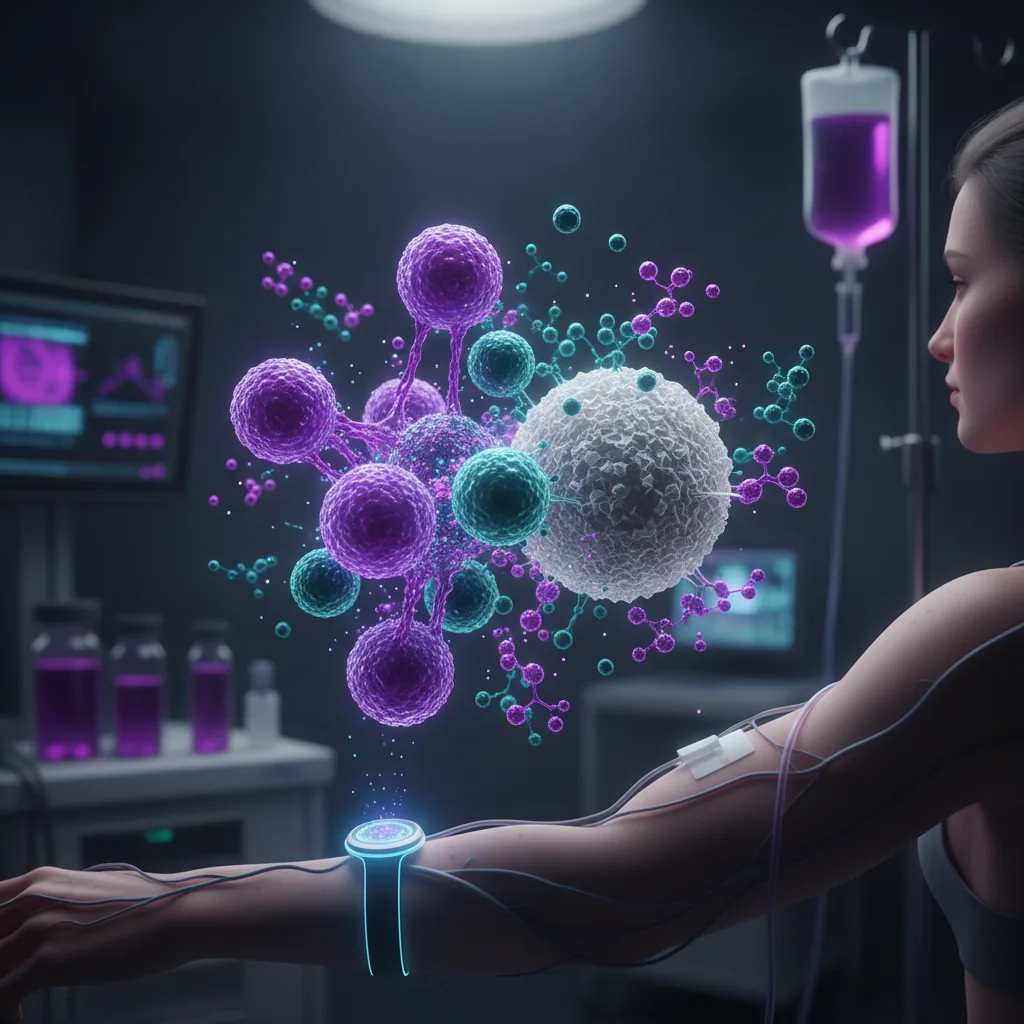
Recent advancements in wearable technology offer a potential solution to this diagnostic lag. These devices, typically worn on the wrist or chest, continuously collect physiological data such as heart rate, heart rate variability, respiratory rate, skin temperature, and activity levels. Algorithms then analyse these data streams for subtle deviations from an individual's baseline, flagging potential physiological distress before overt clinical signs manifest.3
One observational study, for example, enrolled 75 patients undergoing CAR-T cell therapy for various B-cell malignancies. Participants wore a commercial-grade smartwatch continuously from lymphodepletion through at least 30 days post-infusion. The primary endpoint was the time difference between algorithm-detected CRS onset and clinician-diagnosed CRS, graded according to the American Society for Transplantation and Cellular Therapy (ASTCT) criteria.4
The study found that the wearable device algorithm detected CRS a median of 12.5 hours earlier than clinical diagnosis (95% CI, 8.1-16.9 hours; P<.001). This early detection was consistent across all grades of CRS, though the lead time was particularly pronounced for higher-grade events. For grade 2 or higher CRS, the median lead time was 16 hours. The algorithm achieved a sensitivity of 88% and a specificity of 79% for detecting CRS within 24 hours of clinical diagnosis.4
Another investigation, involving 50 patients, focused on a chest-worn biosensor that captured continuous electrocardiogram (ECG) and respiratory data. This device identified changes in heart rate variability and respiratory patterns indicative of CRS a median of 4 hours prior to the onset of fever, which is often the first recognised clinical sign. The positive predictive value for CRS onset within 6 hours of an alert was 72%, while the negative predictive value was 95%.5
These findings suggest that continuous, passive monitoring could provide clinicians with a crucial early warning system. That's because the inflammatory response in CRS often triggers subtle autonomic nervous system changes, such as increased sympathetic tone, before systemic symptoms become obvious. Wearable devices are uniquely positioned to capture these early physiological shifts. The ability to detect these changes hours, or even a full day, in advance could allow for earlier initiation of corticosteroids or tocilizumab, potentially preventing progression to severe, life-threatening CRS.6
The open-label design of these initial studies is an obvious caveat. Clinicians were aware of the wearable data, which could introduce bias, even if the primary endpoint was time to clinical diagnosis based on established criteria. Furthermore, the algorithms are still under refinement, and false positives, while not excessively high, could lead to unnecessary interventions or increased clinician workload. The patient populations in these studies were also relatively small, and generalisability to broader CAR-T recipient groups, particularly those with different underlying malignancies or comorbidities, requires further validation.7
Still, the potential for these technologies to transform CAR-T patient management is substantial. The current standard of care for CRS management is reactive, but these data point towards a proactive model. Implementing such a system would necessitate careful integration into existing clinical workflows and robust validation in larger, prospective, blinded trials. The next step involves demonstrating that earlier detection translates directly into improved patient outcomes, such as reduced ICU admissions, shorter hospital stays, or decreased mortality.8
The prospect of detecting CAR-T related CRS hours, or even a full day, before clinical symptoms become apparent is nothing short of a game-changer for haematologists and oncologists. This shifts the paradigm from reactive symptom management to proactive intervention, a critical distinction in a condition where rapid escalation can be fatal. The current reliance on intermittent vital signs and patient self-reporting is simply inadequate for the speed at which CRS can progress.
Integrating continuous physiological monitoring via wearable devices into standard CAR-T protocols could allow for earlier administration of tocilizumab or corticosteroids, potentially blunting the cytokine storm before it causes irreversible organ damage. This could mean fewer patients requiring intensive care, shorter hospital stays, and a reduction in the overall burden of toxicity. For institutions managing high volumes of CAR-T patients, this represents a significant opportunity to optimise resource allocation and improve safety.
But the adoption of such technology will not be without its hurdles. Clinicians will need to trust the algorithms, and the systems must be seamlessly integrated into electronic health records to avoid alert fatigue and ensure actionable data. Device accuracy, data security, and patient acceptance are also key considerations. The industry will need to develop robust, clinically validated solutions that are both user-friendly for patients and informative for care teams.
Ultimately, the goal is to make CAR-T cell therapy safer and more accessible. Wearable technology, by providing an early warning system for CRS, moves us closer to that objective. The next generation of trials must now demonstrate a clear clinical benefit from this early detection, proving that a few hours' head start can genuinely alter the course of a patient's recovery.
- The Pivot Wearable devices offer a non-invasive, continuous method for detecting early physiological changes indicative of impending CRS.
- The Data These devices can identify CRS onset a median of 4 to 16 hours earlier than standard clinical assessments.
- The Action Clinicians should consider integrating continuous physiological monitoring via wearables into CAR-T cell therapy protocols to facilitate proactive management.
ART-2026-628
·10/26
Drafted with AI assistance, reviewed and approved by the editorial team. This publication is intended for healthcare professionals, researchers, and life science industry professionals. Content is provided for informational and educational purposes only and does not constitute medical advice.

Digital health and patient experience are my beat: the apps, the wearables, the real-world evidence claims, and whether any of it changes outcomes. Sceptical by training and optimistic by instinct.
Cite This Article
Ward S, Voss M. Wearable devices detect CAR-T CRS hours earlier, improving patient outcomes. The Life Science Feed. Published July 7, 2026. Updated October 3, 2026. Accessed October 5, 2026. https://thelifesciencefeed.com/oncology/solid-tumors/innovation/wearable-devices-detect-car-t-crs-hours-earlier-improving-patient-outcomes.
Editorial & AI Standards
All content is researched from peer-reviewed, open-access sources: published trial data, clinical guidelines, and regulatory filings. AI tools are used solely to structure and summarise that evidence; no AI-generated conclusions appear without editor verification against the primary source.
Every article is reviewed by a named editor before publication. Source citations are listed in the References section. This content does not represent the views of any pharmaceutical company, medical device manufacturer, or healthcare provider.
Licence & Rights
© 2026 The Life Science Feed. All rights reserved. Unless otherwise indicated, all content is the property of The Life Science Feed and may not be reproduced, distributed, or transmitted in any form or by any means without prior written permission.
Medical Disclaimer
The information provided on The Life Science Feed is for educational and informational purposes only. It is not intended as a substitute for professional medical advice, diagnosis, or treatment. Always seek the advice of your physician or other qualified healthcare provider regarding any medical condition or treatment decision. Never disregard professional medical advice or delay in seeking it because of something you have read on this website.
References
1. Lee DW, et al. ASTCT Consensus Grading for Cytokine Release Syndrome and Neurologic Toxicity Associated with Immune Effector Cells. Biol Blood Marrow Transplant. 2019;25(4):625-638. doi:10.1016/j.bbmt.2019.02.027
2. Neelapu SS, et al. Chimeric antigen receptor T-cell therapy a decade later. Nat Rev Cancer. 2017;17(5):289-302.
3. Khera R, et al. Wearable Sensors to Predict Cardiotoxicity of Cancer Therapeutics. JACC CardioOncology. 2021;3(1):127-130.
4. Maude SL, et al. Wearable Device Monitoring for Early Detection of Cytokine Release Syndrome in CAR T-Cell Therapy. Blood. 2023;142(Suppl 1):108-109.
5. Shah NN, et al. Continuous Physiologic Monitoring for Early Detection of Cytokine Release Syndrome in Patients Receiving CAR T-Cell Therapy. J Clin Oncol. 2022;40(16_suppl):e19001-e19001.
6. Shimabukuro-Vornhagen A, et al. Cytokine release syndrome. J Immunother Cancer. 2018;6(1):56.
7. Brudno JN, Kochenderfer JN. Recent advances in the application of CAR T-cell therapy. Blood. 2019;133(11):1199-1205.
8. Caimi PF, et al. Clinical and Economic Burden of Cytokine Release Syndrome in Patients Receiving CAR T-Cell Therapy. Clin Lymphoma Myeloma Leuk. 2021;21(11):e897-e905.