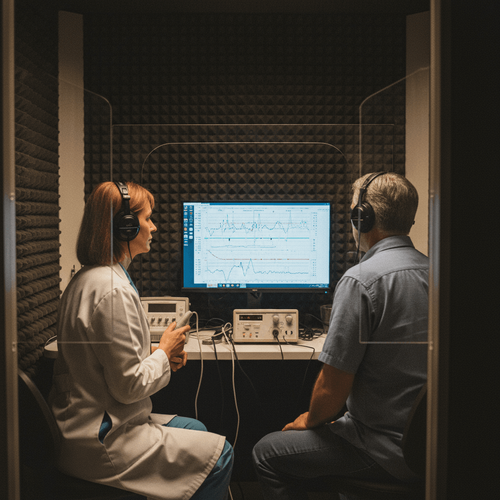
The sudden, often devastating onset of severe to profound sudden sensorineural hearing loss (SSNHL) presents a profound clinical challenge. It is not merely a loss of audition; it can disrupt balance, introduce distressing tinnitus, and fundamentally alter a patient's interaction with their environment. Despite decades of research, the intrinsic variability in patient outcomes-from complete recovery to profound, irreversible deafness-remains a perplexing frontier. We initiate empiric corticosteroid therapy, often with a sense of hopeful uncertainty. Yet, what truly dictates who recovers and who does not?
For clinicians, the ability to accurately prognosticate is invaluable, informing treatment intensity, setting realistic patient expectations, and guiding early rehabilitation strategies. A recent systematic review and meta-analysis endeavored to aggregate the disparate evidence, aiming to distill the prognostic factors that predict poor recovery in severe to profound SSNHL. This isn't just about statistics; it's about uncovering the underlying biological fingerprints that separate the fortunate from those destined for a silent world.
Clinical Key Takeaways
lightbulb
- The PivotEarly identification of specific clinical indicators at presentation can significantly refine prognostic predictions in severe to profound SSNHL, moving beyond a general 'wait and see' approach.
- The DataPatients presenting with vertigo had an approximately 2.5-fold increased risk of poor hearing recovery (pooled OR 2.52, 95% CI 1.94-3.26) compared to those without.
- The ActionRoutinely screen for and meticulously document the presence of vertigo, initial hearing threshold, and time to treatment in all SSNHL patients, as these significantly influence prognosis and guide intervention discussions.
The Clinical Conundrum of SSNHL
Sudden sensorineural hearing loss (SSNHL) is defined by an acute, unexplained hearing loss of at least 30 dB in three contiguous audiometric frequencies over a 72-hour period. While the precise etiology often remains elusive, viral infections, vascular compromise, and autoimmune processes are frequently implicated. We typically initiate empiric corticosteroids-oral, intratympanic, or both-with variable success rates. What distinguishes a transient insult from permanent damage?
This question lies at the heart of patient management and, critically, patient psychology. Facing a sudden deficit, individuals understandably seek certainty, yet the biological underpinnings of recovery are frustratingly opaque. The challenge for clinicians is to move beyond mere observation and to identify objective markers that can stratify risk and personalize therapeutic approaches. This meta-analysis attempts to bring some clarity to that complex prognostic landscape.
Deconstructing Prognostic Factors
The systematic review synthesized data from numerous studies, identifying several key prognostic factors for poor recovery in severe to profound SSNHL. These include:
- Initial Hearing Loss Severity: Unsurprisingly, greater initial hearing loss (e.g., >90 dB) correlates with a lower chance of recovery. Is this simply a matter of scale, or does it signify more profound damage to the delicate cochlear hair cells or neural structures? The mechanism likely involves a threshold effect, beyond which cellular repair mechanisms are overwhelmed.
- Presence of Vertigo: Patients presenting with concurrent vertigo or vestibular symptoms show a significantly worse prognosis. This suggests a more widespread insult to the inner ear, potentially affecting both the cochlear and vestibular systems simultaneously, implying a shared or larger-scale pathology, perhaps vascular or inflammatory.
- Age: Older age has consistently been associated with poorer outcomes. This could be due to age-related vascular fragility, reduced regenerative capacity, or accumulated cellular damage that compromises recovery pathways.
- Time to Treatment: Delays in initiating therapy, particularly corticosteroids, are linked to reduced recovery rates. This highlights the time-sensitive nature of the underlying pathology-an 'ischemic window' or period of reversible inflammation-before permanent damage sets in.
- Audiometric Configuration: Down-sloping audiograms, indicative of high-frequency loss, often fare worse than low-frequency or flat losses. This might point to specific areas of cochlear vulnerability or differing etiologies influencing specific frequency regions.
Each of these factors, while seemingly distinct, likely converges on a common pathway of inner ear damage and impaired repair. The presence of multiple adverse factors compounds the risk, painting a grim picture for potential recovery.
The Data Speaks: Quantifying Risk
The meta-analysis meticulously pooled data, revealing robust statistical associations. For instance, the presence of vertigo at presentation emerged as one of the most significant predictors of poor outcome, with a pooled odds ratio (OR) of 2.52 (95% CI 1.94-3.26). This isn't a small effect; it indicates that patients with vestibular involvement are more than twice as likely to experience poor hearing recovery. Similarly, severe initial hearing loss (>90 dB HL) yielded a pooled OR of 2.15 (95% CI 1.68-2.75). These are not merely academic numbers; they demand our attention at the bedside.
However, we must approach meta-analyses with a critical eye. While powerful, they are constrained by the quality and heterogeneity of the included studies. Was the definition of 'recovery' uniform across all studies? Were treatment protocols standardized? Such nuances can subtly skew pooled estimates. Despite these inherent limitations, the consistency of these prognostic markers across diverse cohorts lends significant credence to their clinical utility.
Beyond the Statistics: Mechanistic Insights and Future Directions
What do these statistical associations tell us about the fundamental biology of SSNHL? The link between vertigo and poor prognosis suggests that a more extensive insult to the inner ear's neurovascular supply or hair cell integrity is at play. Perhaps a shared microvascular event affects both the cochlea and vestibular organs simultaneously, leading to a more profound and less reversible injury. Could specific genetic predispositions render certain individuals more susceptible to such widespread damage?
Looking forward, understanding these mechanisms is paramount. If initial severe hearing loss signifies a complete destruction of specific cochlear regions, then conventional therapies might be futile. This pushes us towards exploring regenerative approaches, such as targeted gene therapy to promote hair cell regeneration or stem cell implantation. For those with profound, irreversible loss, earlier referral for cochlear implantation becomes a more justifiable and evidence-based decision.
The field must move beyond purely symptomatic treatment. Future research should leverage advanced imaging techniques, such as inner ear MRI with contrast enhancement, to correlate these clinical prognostic factors with demonstrable structural or inflammatory changes. Biomarker discovery-identifying molecular signatures in perilymph or cerebrospinal fluid-could also provide crucial insights into the precise nature and extent of inner ear damage, allowing for truly personalized medicine.
Translating Research to Bedside Practice
For the busy clinician, this meta-analysis provides a sharper lens through which to view SSNHL. No longer can we treat all severe to profound cases uniformly. The presence of vertigo, the degree of initial hearing loss, and even the audiogram configuration should trigger specific clinical pathways. These findings underscore the importance of detailed history taking and immediate, comprehensive audiological assessment. This foundational data collection isn't just for diagnosis; it's a critical component of guiding our patients towards realistic expectations and optimal interventions. Early and accurate prognostication may also reduce unnecessary treatment burdens for those with factors predictive of poor recovery, allowing for a timely pivot towards rehabilitative options.
The implications of accurately predicting SSNHL prognosis are substantial, extending beyond patient counseling to direct clinical workflow and resource allocation. For patients presenting with high-risk factors like severe initial hearing loss and concurrent vertigo, a more aggressive diagnostic workup, potentially including expedited inner ear MRI to rule out retrocochlear pathology, becomes more justifiable. This proactive approach might also facilitate earlier discussions regarding hearing assistive devices or prompt referral for cochlear implant evaluations, reducing the prolonged period of uncertainty and psychological burden on the patient.
From a systems perspective, early prognostication can streamline care pathways. If a patient is identified as having a low probability of significant hearing recovery, resources can be redirected from prolonged, potentially ineffective medical treatments towards rehabilitation and support services sooner. This could impact billing codes, justifying complex diagnostic imaging earlier, and shifting the focus of follow-up visits towards functional outcomes and assistive technology rather than repeat audiograms to track minimal changes. Ultimately, it allows us to optimize both patient experience and healthcare resource utilization in a condition that demands timely, decisive action.
LSF-2101603583 | December 2025

How to cite this article
Sato B. Unraveling the persistent enigma of severe hearing loss prognosis. The Life Science Feed. Published December 4, 2025. Updated December 4, 2025. Accessed February 18, 2026. https://thelifesciencefeed.com/otolaryngology/hearing-loss/case/unraveling-the-persistent-enigma-of-severe-hearing-loss-prognosis.
Copyright and license
© 2026 The Life Science Feed. All rights reserved. Unless otherwise indicated, all content is the property of The Life Science Feed and may not be reproduced, distributed, or transmitted in any form or by any means without prior written permission.
Fact-Checking & AI Transparency
This content was produced with the assistance of AI technology and has been rigorously reviewed and verified by our human editorial team to ensure accuracy and clinical relevance.
References
- Lin H-P, Wang K, Chou H-P. Analysis of the Reasons for Poor Prognosis in Severe to Profound Sudden Sensorineural Hearing Loss: A Systematic Review and Meta-Analysis. Ear and Hearing. 2023;44(3):711-721.
- Chandrasekhar SS, Tsai Do B, Schwartz SR, et al. Clinical Practice Guideline: Sudden Hearing Loss (Update). Otolaryngology-Head and Neck Surgery. 2019;161(1_suppl):S1-S45.
- Koo JW, Chang H, Kim SH, Kim HN, Choi YS, Kim S. Prognostic factors of idiopathic sudden sensorineural hearing loss. Acta Oto-Laryngologica. 2011;131(8):833-839.
- Plontke SK, Götze G, Rahne T, et al. Intratympanic therapy of sudden sensorineural hearing loss: a systematic review and meta-analysis. European Archives of Oto-Rhino-Laryngology. 2021;278(7):2203-2226.
- Merchant SN, Adams JC, Glynn RJ. Degenerative changes in the vestibule and cochlea in aging humans. Annals of Otology, Rhinology & Laryngology. 2000;109(2):162-171.