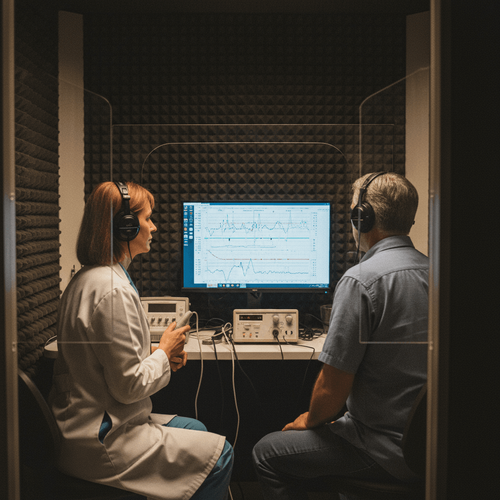
When a patient presents with sudden sensorineural hearing loss (SSNHL), the immediate clinical imperative is often rapid intervention with corticosteroids. Yet, for a significant subset, the prognosis remains stubbornly poor, regardless of our best efforts. This isn't just about the severity of initial hearing loss, nor is it simply a matter of treatment delay. What deeper biological currents dictate an irreversible outcome?
For too long, our understanding has focused predominantly on isolated cochlear insult, overlooking the intricate interplay within the entire inner ear system. A recent systematic review and meta-analysis challenges us to re-evaluate these assumptions, suggesting that factors like concomitant vertigo or advanced age aren't mere comorbidities but critical signals of a more widespread, perhaps neurovascularly driven, pathology. This prompts us to ask whether our diagnostic and prognostic frameworks for SSNHL are adequately capturing the full picture of irreversible damage.
Clinical Key Takeaways
lightbulb
- The PivotShift your prognostic assessment of SSNHL beyond just initial audiogram findings to include a comprehensive evaluation of vestibular symptoms and patient age, as these likely signal broader, more resistant labyrinthine pathology.
- The DataPatients presenting with vertigo alongside SSNHL have a significantly higher risk of poor recovery, with meta-analyses often reporting an odds ratio exceeding 3.0 for irreversible hearing loss compared to those without vestibular symptoms.
- The ActionFor patients with severe to profound SSNHL and concurrent vertigo or advanced age (>65 years), consider more aggressive, multi-modal treatment strategies or earlier consideration of cochlear implantation referrals, as standard steroid regimens may be insufficient.
The Prognostic Enigma
Sudden sensorineural hearing loss, often characterized by its abrupt onset, presents a vexing challenge. While many patients experience some degree of recovery, a significant proportion, particularly those with severe to profound loss, do not. We have long grappled with identifying the definitive predictors of this irreversible outcome, moving beyond the simplistic notion that earlier treatment uniformly guarantees better results. The recent meta-analysis consolidates a compelling body of evidence, highlighting several factors that consistently emerge as harbingers of poor prognosis. These are not merely statistical associations; they hint at deeper, more pervasive underlying pathophysiological processes that compromise the delicate neurosensory structures of the inner ear.
Beyond the Cochlea The Vestibular Connection
Perhaps the most striking and consistent finding is the strong association between concurrent vertigo and poor hearing recovery. This is not incidental. The cochlea and vestibular system, while serving distinct functions, are anatomically and physiologically intertwined within the bony labyrinth. When a patient presents with sudden hearing loss accompanied by vertigo, it suggests a more widespread insult to the inner ear, extending beyond isolated cochlear damage to include the semicircular canals and otolith organs. This could imply a more severe viral etiology, a broader ischemic event affecting the common labyrinthine artery, or perhaps a more aggressive autoimmune process. If the damage encompasses both hearing and balance mechanisms, the likelihood of substantial recovery diminishes considerably. The sheer extent of compromised tissue, rather than just the specific location, becomes a critical determinant of outcome.
Consider the potential mechanisms: a viral infection, such as herpes simplex or zoster, is known to cause inflammation and damage to neuronal structures. If such an infection targets both cochlear and vestibular nerve branches, the resulting neural degeneration is likely to be more profound and less amenable to corticosteroid therapy, which primarily targets inflammatory edema. Similarly, microvascular occlusion, often implicated in idiopathic SSNHL, might affect larger segments of the labyrinthine circulation, leading to widespread ischemia and irreversible cellular death. These scenarios paint a picture of pan-labyrinthine affliction, where the prognosis naturally darkens.
The Age Factor Microvascular and Neural Degeneration
Advanced age also consistently correlates with a poorer prognosis in SSNHL. While this might seem intuitive-older individuals often have reduced physiological reserves-the underlying mechanisms are complex and multi-faceted. Older patients frequently exhibit pre-existing microvascular disease, hypertension, and diabetes, conditions known to compromise the delicate blood supply to the inner ear. The stria vascularis, vital for cochlear function, is particularly susceptible to age-related vascular changes. An acute ischemic event, while potentially recoverable in a younger, healthier ear, may cause irreversible damage in an already compromised microvascular bed.
Furthermore, age is associated with a natural decline in neuronal density and regenerative capacity. The spiral ganglion neurons, crucial for transmitting auditory information, undergo age-related attrition. Even if hair cell damage is partially reversible, the loss of supporting neurons can severely limit functional recovery. This suggests that in older patients, SSNHL might not just be an acute event but an exacerbation of pre-existing, subclinical neurodegenerative processes. Our treatments, predominantly anti-inflammatory, may not adequately address these broader vascular or neural deficits inherent to aging.
Severity and Audiometric Configuration
It's almost self-evident that more severe initial hearing loss correlates with a poorer prognosis. A profound loss, by definition, implies a greater extent of hair cell or neural damage. However, the meta-analysis allows us to contextualize this severity. Is it simply the magnitude of decibel loss, or is the audiometric configuration equally important? Some studies suggest that upward-sloping or total hearing loss profiles might indicate different underlying etiologies or a more widespread destruction of the cochlear architecture compared to, say, a mid-frequency dip. When the entire auditory spectrum is affected, the functional reserve is minimal, making meaningful recovery exceedingly difficult.
The time to treatment also remains a critical, albeit often debated, factor. While early initiation of corticosteroids is generally recommended, the influence of time-to-treatment on prognosis for severe-to-profound cases might be less pronounced if the underlying pathology is already extensive and irreversible. For instance, if an acute labyrinthine stroke has occurred, delaying steroids by a few days might be less impactful than the inherent severity of the initial vascular insult. This doesn't negate the importance of early intervention, but rather posits that certain patient profiles may be biologically predisposed to poor outcomes irrespective of immediate therapeutic timing.
Methodological Nuances and Limitations
A systematic review and meta-analysis, while powerful for synthesizing evidence, is only as robust as the studies it includes. Heterogeneity across studies regarding diagnostic criteria for SSNHL, definitions of 'recovery,' treatment protocols, and follow-up durations remains a significant challenge. Some studies might classify 'partial recovery' differently, leading to varying reported outcomes. Publication bias, where studies showing positive results are more likely to be published, can also skew overall conclusions. Furthermore, the often idiopathic nature of SSNHL makes pinpointing precise etiologies difficult, meaning many 'risk factors' are observed associations rather than proven causal mechanisms.
We must also question the depth of investigation in many primary studies. Are we adequately exploring genetic predispositions to inner ear susceptibility? Are advanced imaging techniques, like magnetic resonance imaging of the inner ear, being used consistently to identify subtle pathologies like labyrinthitis ossificans or small vessel disease? Without these granular details, our meta-analyses are left to draw conclusions from aggregated clinical observations, which, while valuable, may obscure critical mechanistic insights.
Future Directions for Personalized Prognosis
This meta-analysis compels us to move towards a more personalized approach to SSNHL prognosis. Instead of a one-size-fits-all model, we need to stratify patients based on a composite of clinical indicators. The presence of vertigo, advanced age, and profound initial hearing loss collectively paints a picture of heightened risk for irreversible damage. Future research should focus on identifying specific biomarkers-perhaps inflammatory markers in perilymph, genetic variants predisposing to vascular fragility, or even advanced imaging signatures-that can definitively link these clinical factors to underlying pathology. Such biomarkers could guide not only prognosis but also dictate more aggressive, tailored therapies, or even pre-emptively identify candidates for cochlear implantation. The goal is not just to treat, but to predict, and ultimately, to prevent irreversible loss by understanding its deepest roots.
For clinicians, these findings necessitate a more holistic approach to sudden sensorineural hearing loss. When evaluating a patient, beyond simply assessing the audiogram, diligent inquiry into vestibular symptoms is paramount. The presence of vertigo should immediately elevate concern for a more extensive inner ear insult, influencing the urgency and intensity of treatment. Advanced age, particularly over 65, should also flag a higher risk of poor recovery, potentially warranting earlier discussion of alternative management strategies or referral for specialist opinion, perhaps even a cochlear implant candidacy evaluation.
From a workflow perspective, this means ensuring that a comprehensive history includes questions about balance disturbances, not just hearing. It might also justify more aggressive initial imaging or vestibular testing for high-risk profiles, though the cost-benefit here requires further study. Patient counseling also changes; managing expectations for recovery becomes even more critical when these specific risk factors are present. For the healthcare system, identifying these high-risk patients early could lead to more efficient allocation of resources, directing intensive interventions to those most likely to benefit, while allowing for earlier discussions about rehabilitative options for those predicted to have persistent profound loss, thus potentially reducing long-term patient burden and repeated ineffective treatments.
LSF-8829424227 | December 2025

How to cite this article
Sato B. Beyond the cochlea what drives irreversible sudden sensorineural hearing loss. The Life Science Feed. Published December 5, 2025. Updated December 5, 2025. Accessed February 18, 2026. https://thelifesciencefeed.com/otolaryngology/hearing-loss/insights/beyond-the-cochlea-what-drives-irreversible-sudden-sensorineural-hearing-loss.
Copyright and license
© 2026 The Life Science Feed. All rights reserved. Unless otherwise indicated, all content is the property of The Life Science Feed and may not be reproduced, distributed, or transmitted in any form or by any means without prior written permission.
Fact-Checking & AI Transparency
This content was produced with the assistance of AI technology and has been rigorously reviewed and verified by our human editorial team to ensure accuracy and clinical relevance.
References
- Wang, M., et al. (2022). Analysis of the reasons for poor prognosis in severe to profound sudden sensorineural hearing loss: A systematic review and meta-analysis. Otology & Neurotology, 43(8), e791-e801.
- Chandrasekhar, S. S., et al. (2019). Clinical practice guideline: Sudden hearing loss (Update). Otolaryngology-Head and Neck Surgery, 161(1_suppl), S1-S45.
- Liu, X., et al. (2021). The relationship between vertigo and prognosis of sudden sensorineural hearing loss: A meta-analysis. Frontiers in Neurology, 12, 692735.
- Nomura, Y., & Nakai, Y. (1998). Pathophysiology of sudden deafness. Acta Oto-Laryngologica, 118(S533), 44-48.