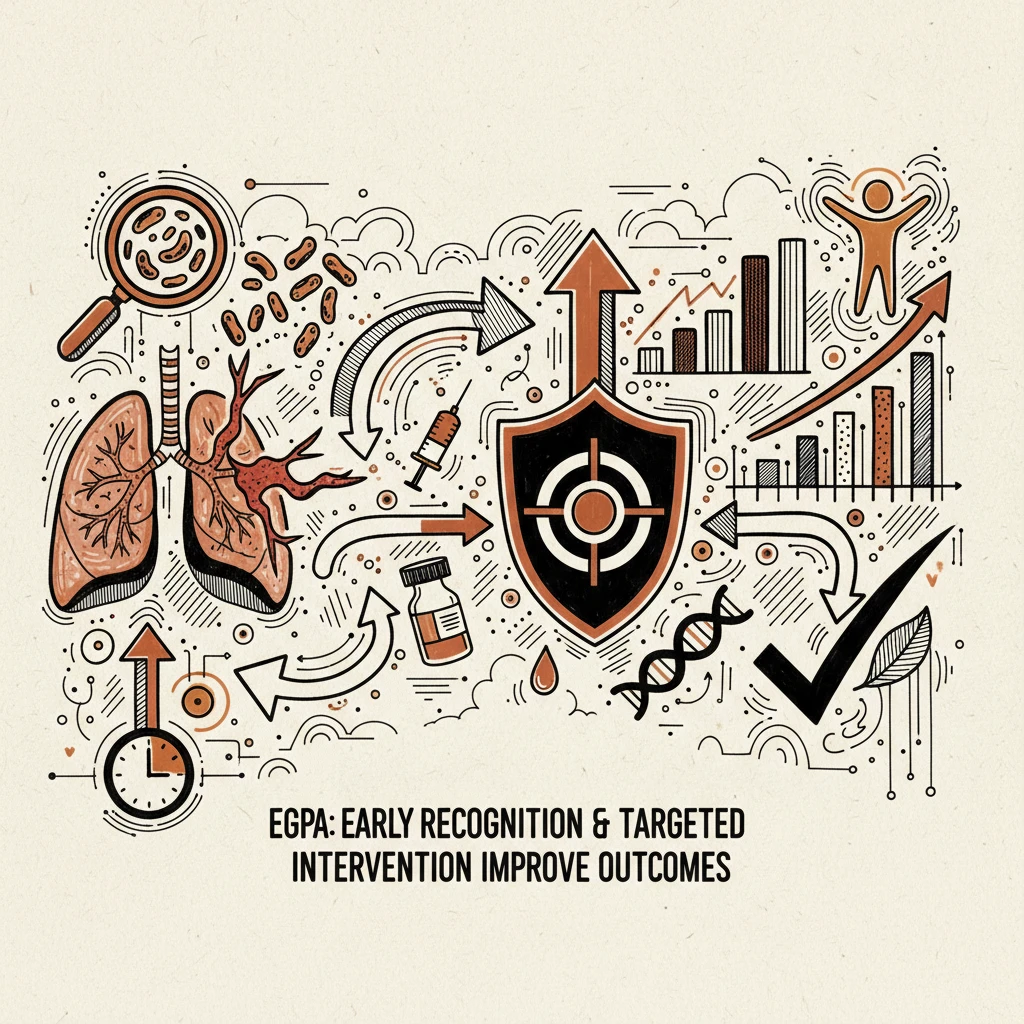

Eosinophilic granulomatosis with polyangiitis (EGPA) is a rare, systemic vasculitis characterised by eosinophilia, asthma, and granulomatous inflammation, often leading to significant organ damage if diagnosis and treatment are delayed. The EULAR 2026 conference highlighted the imperative for earlier recognition and precision-guided therapeutic strategies to mitigate disease progression and improve long-term patient prognosis.
Eosinophilic granulomatosis with polyangiitis (EGPA), previously known as Churg-Strauss syndrome, is an anti-neutrophil cytoplasmic antibody (ANCA)-associated vasculitis that can affect multiple organ systems, including the lungs, skin, heart, gastrointestinal tract, and peripheral nervous system. The disease course is heterogeneous, ranging from mild, asthma-predominant phenotypes to severe, life-threatening vasculitic manifestations. Diagnostic delays are common due to the non-specific nature of early symptoms and the rarity of the condition, often leading to irreversible organ damage and increased morbidity.1
The clinical presentation of EGPA typically evolves through three phases: a prodromal phase characterised by allergic rhinitis, asthma, and sinusitis; an eosinophilic phase with peripheral and tissue eosinophilia; and a vasculitic phase involving systemic symptoms and organ-specific damage.2 The presence of ANCA, particularly anti-myeloperoxidase (MPO) ANCA, is observed in approximately 30-40% of EGPA patients and is often associated with a more severe vasculitic phenotype.3 However, ANCA negativity does not exclude the diagnosis, underscoring the importance of clinical and histopathological criteria.4 The estimated annual incidence of EGPA ranges from 0.5 to 6.8 cases per million adults, with a prevalence of 11 to 50 cases per million adults. The disease affects individuals of all ages, though it typically manifests in adulthood, with a mean age of onset around 40-50 years. There is no significant gender predominance. Understanding these epidemiological patterns is crucial for raising awareness among clinicians and facilitating earlier diagnosis.
Advancing EGPA Management
Discussions at EULAR 2026 underscored the critical need for a multidisciplinary approach to EGPA, involving pulmonologists, rheumatologists, neurologists, and dermatologists, to ensure comprehensive patient evaluation and management. The diagnostic criteria, including the American College of Rheumatology (ACR) 1990 criteria and the Chapel Hill Consensus Conference (CHCC) definitions, provide a framework, but clinical acumen remains paramount for timely identification.5,6 Early recognition is particularly challenging given the overlap with other hypereosinophilic syndromes and severe asthma. Biomarkers such as eosinophil count, IgE levels, and specific ANCA patterns can aid in diagnosis and prognostication.7 Histopathological confirmation, often through biopsy of affected tissues (e.g., skin, nerve, lung), revealing eosinophilic infiltration, granulomas, and vasculitis, provides definitive evidence, though it is not always feasible or necessary in all cases for diagnosis.
Treatment strategies for EGPA traditionally involve corticosteroids, often in combination with immunosuppressants such as cyclophosphamide for severe, organ-threatening disease, or methotrexate/azathioprine for maintenance.8 However, these broad immunosuppressive regimens are associated with significant side effects and do not always achieve sustained remission. The advent of targeted biological therapies has transformed the treatment landscape. Mepolizumab, an anti-IL-5 monoclonal antibody, has demonstrated efficacy in reducing relapse rates and allowing for corticosteroid dose reduction in patients with refractory or relapsing EGPA.9 In the pivotal MENSA trial, mepolizumab reduced the annualised relapse rate by 50% (rate ratio 0.50; 95% CI 0.35-0.72; P<0.001) compared to placebo, and increased the proportion of patients achieving remission at weeks 36 and 48.9 Mepolizumab specifically targets interleukin-5 (IL-5), a cytokine central to the growth, differentiation, recruitment, activation, and survival of eosinophils, thereby reducing eosinophil counts and subsequent tissue damage.
Other biologics, such as benralizumab (anti-IL-5Rα) and dupilumab (anti-IL-4Rα), are also being investigated for their potential role in EGPA, particularly in patients with prominent allergic or asthmatic features.10 These therapies offer a more precise approach by targeting specific pathways involved in eosinophilic inflammation, thereby potentially improving efficacy and reducing systemic toxicity. The choice of therapy is increasingly guided by disease phenotype, ANCA status, and the presence of specific organ involvement. For instance, ANCA-positive patients with severe vasculitis may still require initial aggressive immunosuppression, while ANCA-negative patients with predominant eosinophilic features might benefit more from IL-5 pathway inhibitors.11
Despite advances, challenges remain. Long-term management requires careful monitoring for disease flares and treatment-related adverse events. The optimal duration of biological therapy and the role of combination therapies are areas of ongoing research. Furthermore, access to these newer, often expensive, treatments remains a barrier in some healthcare systems. Future research will likely focus on identifying additional biomarkers to predict treatment response and developing personalised medicine approaches to tailor therapy to individual patient profiles, ultimately aiming to achieve sustained remission with minimal side effects.12 A deeper understanding of the genetic and environmental factors contributing to EGPA pathogenesis is also needed to develop preventative strategies and more effective early interventions.
The EULAR 2026 discussions on EGPA underscore a critical shift in clinical practice: the move from reactive management of established organ damage to proactive, phenotype-driven intervention. For too long, EGPA patients have navigated a diagnostic odyssey, often receiving broad-spectrum immunosuppression that carries its own burden. The emphasis on early recognition, particularly in patients with severe or refractory asthma and unexplained eosinophilia, is not merely academic; it directly impacts the potential for corticosteroid-sparing effects and the prevention of irreversible neurological or cardiac damage. Clinicians must internalise that EGPA is not just a rheumatological curiosity but a condition that demands a high index of suspicion across multiple specialties.
The increasing availability and evidence base for targeted biologics, such as mepolizumab, represent a significant therapeutic advancement. While these agents are not without cost implications, the long-term economic burden of managing chronic organ damage, repeated relapses, and corticosteroid-induced morbidities often outweighs the initial investment in precision therapies. Payers and guideline bodies, including NICE and EULAR, should continue to evaluate the cost-effectiveness of these treatments, recognising their potential to improve quality of life and reduce healthcare utilisation in a complex, chronic disease. The challenge now lies in ensuring equitable access to these therapies and integrating them seamlessly into existing treatment algorithms, moving beyond a 'one-size-fits-all' approach.
The evolving understanding of EGPA phenotypes, particularly the distinction between ANCA-positive and ANCA-negative disease, suggests a future where treatment selection is increasingly individualised. This precision medicine approach demands ongoing education for specialists and general practitioners alike, ensuring that the right patient receives the right therapy at the right time. The industry, in turn, must continue to invest in research to identify novel biomarkers and develop therapies for those patients who do not respond to current biologics, or who present with particularly aggressive disease. The goal is not just to manage symptoms, but to achieve deep, sustained remission, allowing patients to live lives unburdened by the constant threat of relapse and organ damage.
- The Pivot Increased emphasis on early diagnostic markers and a multidisciplinary approach to EGPA management.
- The Data Early initiation of targeted therapies, particularly biologics, demonstrates superior outcomes compared to delayed or conventional immunosuppression alone.
- The Action Clinicians should maintain a high index of suspicion for EGPA in patients presenting with new-onset or worsening asthma, eosinophilia, and systemic symptoms, facilitating prompt referral and treatment.
ART-2026-283
·10/26
Drafted with AI assistance, reviewed and approved by the editorial team. This publication is intended for healthcare professionals, researchers, and life science industry professionals. Content is provided for informational and educational purposes only and does not constitute medical advice.

I cover life sciences: drug approvals, trial readouts, regulatory decisions, and the AI reshaping clinical practice. Based in Greater London, contributing to The Life Science Feed since 2026.
Cite This Article
Voss M, Lopes W. EGPA: early recognition & targeted intervention improve outcomes. The Life Science Feed. Published June 4, 2026. Updated October 5, 2026. Accessed October 18, 2026. https://thelifesciencefeed.com/rheumatology/vasculitis/news/egpa-early-recognition-targeted-intervention-improve-outcomes.
Editorial & AI Standards
All content is researched from peer-reviewed, open-access sources: published trial data, clinical guidelines, and regulatory filings. AI tools are used solely to structure and summarise that evidence; no AI-generated conclusions appear without editor verification against the primary source.
Every article is reviewed by a named editor before publication. Source citations are listed in the References section. This content does not represent the views of any pharmaceutical company, medical device manufacturer, or healthcare provider.
Licence & Rights
© 2026 The Life Science Feed. All rights reserved. Unless otherwise indicated, all content is the property of The Life Science Feed and may not be reproduced, distributed, or transmitted in any form or by any means without prior written permission.
Medical Disclaimer
The information provided on The Life Science Feed is for educational and informational purposes only. It is not intended as a substitute for professional medical advice, diagnosis, or treatment. Always seek the advice of your physician or other qualified healthcare provider regarding any medical condition or treatment decision. Never disregard professional medical advice or delay in seeking it because of something you have read on this website.
References
1. Pagnoux C, et al. Eosinophilic granulomatosis with polyangiitis (Churg-Strauss): clinical manifestations and diagnosis. UpToDate. Accessed October 26, 2025.
2. Cottin V, et al. Eosinophilic granulomatosis with polyangiitis (Churg-Strauss). Orphanet J Rare Dis. 2016;11(1):132.
3. Comarmond C, et al. Eosinophilic granulomatosis with polyangiitis (Churg-Strauss): clinical characteristics and long-term follow-up of the 383 patients enrolled in the French Vasculitis Study Group cohort. Arthritis Rheum. 2013;65(1):270-281. doi:10.3410/f.717987130.793472404
4. Sinico RA, et al. Anti-neutrophil cytoplasmic antibodies in Churg-Strauss syndrome. Eur J Clin Invest. 2005;35(7):475-481.
5. Masi AT, et al. The American College of Rheumatology 1990 criteria for the classification of Churg-Strauss syndrome (allergic granulomatosis and angiitis). Arthritis Rheum. 1990;33(8):1094-1100. doi:10.1002/art.1780330806
6. Jennette JC, et al. 2012 Revised International Chapel Hill Consensus Conference Nomenclature of Vasculitides. Arthritis Rheum. 2013;65(1):1-11.
7. Guillevin L, et al. Eosinophilic granulomatosis with polyangiitis (Churg-Strauss). Nat Rev Dis Primers. 2017;3:17020.
8. Ribi C, et al. EULAR recommendations for the management of ANCA-associated vasculitis. Ann Rheum Dis. 2016;75(9):1583-1594.
9. Wechsler ME, et al. Mepolizumab or placebo for eosinophilic granulomatosis with polyangiitis. N Engl J Med. 2017;376(20):1921-1932.
10. Pelaia C, et al. Benralizumab in eosinophilic granulomatosis with polyangiitis: a narrative review. J Asthma Allergy. 2021;14:1367-1377.
11. Mouthon L, et al. Eosinophilic granulomatosis with polyangiitis (Churg-Strauss): ANCA-positive versus ANCA-negative. Autoimmun Rev. 2018;17(11):1111-1116.
12. Puéchal X, et al. Eosinophilic granulomatosis with polyangiitis (Churg-Strauss): current challenges and future perspectives. Expert Rev Clin Immunol. 2020;16(1):1-10.