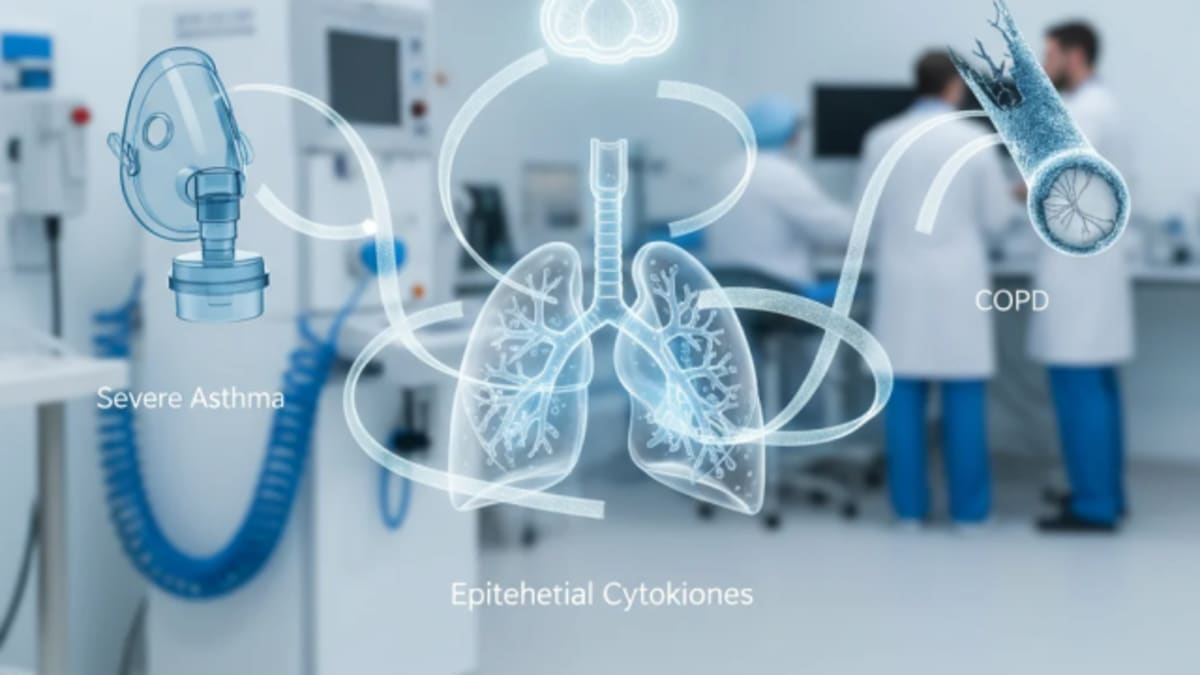

Chronic inflammatory diseases of the upper and lower airways, including allergic rhinitis, chronic rhinosinusitis, asthma, and chronic obstructive pulmonary disease (COPD), present a significant clinical burden due to their high prevalence and impact on patient quality of life. Current management often targets downstream inflammatory mediators, but emerging evidence points to epithelial dysfunction as a foundational, shared pathogenic mechanism. The ATS 2026 conference explored this unifying concept, suggesting a shift towards therapies that restore epithelial barrier integrity and function.
The epithelial lining of the airways serves as the primary interface with the external environment, acting as a physical barrier against pathogens, allergens, and irritants. Beyond its barrier function, the epithelium actively participates in immune regulation, secreting cytokines, chemokines, and antimicrobial peptides that shape the inflammatory response. Disruption of this barrier and its immunomodulatory functions is now understood to be a critical initiating event in the pathogenesis of various airway diseases.1
In allergic rhinitis and asthma, epithelial cells exposed to allergens can release alarmins such as IL-25, IL-33, and thymic stromal lymphopoietin (TSLP), which activate type 2 innate lymphoid cells (ILC2s) and drive T-helper 2 (Th2) inflammation.2 Similarly, in chronic rhinosinusitis with nasal polyps, epithelial barrier defects are associated with increased susceptibility to microbial colonization and persistent inflammation.3 For COPD, chronic exposure to cigarette smoke or environmental pollutants directly damages the airway epithelium, leading to impaired mucociliary clearance, increased permeability, and a sustained inflammatory cascade that contributes to disease progression.4 These diseases collectively affect a significant portion of the global population, with asthma alone impacting over 300 million individuals worldwide, and COPD being a leading cause of morbidity and mortality. The prevalence of allergic rhinitis is also substantial, affecting 10-30% of adults and up to 40% of children. Understanding the common underlying epithelial dysfunction across these conditions offers a unified perspective for therapeutic development.
Evolving Therapeutic Strategies
Given the central role of epithelial dysfunction, therapeutic strategies are evolving beyond broad anti-inflammatory approaches to specifically target epithelial repair and restoration of barrier integrity. Preclinical studies have identified several pathways involved in epithelial repair, including those mediated by growth factors such as epidermal growth factor (EGF) and keratinocyte growth factor (KGF), and specific tight junction proteins.5
One area of focus involves agents that enhance tight junction formation. For example, certain corticosteroids have been shown to improve epithelial barrier function in vitro, independent of their anti-inflammatory effects.6 Furthermore, novel small molecules and biologics are under investigation that aim to directly modulate epithelial cell proliferation, differentiation, and repair processes. For instance, inhibitors of specific proteases, which can degrade tight junction proteins, are being explored as a means to prevent barrier disruption.7 These proteases, such as matrix metalloproteinases and serine proteases, are often upregulated in inflammatory airway conditions and contribute to tissue remodeling and barrier compromise. Targeting their activity could offer a direct mechanism to protect and restore epithelial integrity. Research in this area often involves in vitro models using primary human airway epithelial cells cultured at an air-liquid interface, allowing for the assessment of barrier function through transepithelial electrical resistance (TEER) measurements and permeability assays.
Another approach involves targeting the alarmins released by damaged epithelial cells. Biologics that neutralise TSLP, IL-25, or IL-33 have demonstrated efficacy in reducing type 2 inflammation in asthma and chronic rhinosinusitis. Tezepelumab, an anti-TSLP monoclonal antibody, has shown reductions in asthma exacerbations and improvements in lung function, indicating that upstream targeting of epithelial-derived mediators can have significant clinical benefits.8 While these agents primarily target the downstream consequences of epithelial activation, their success underscores the importance of the epithelium as the initial orchestrator of inflammation. These therapies are typically administered to patients with severe, uncontrolled forms of these diseases, often those who do not respond adequately to conventional treatments like inhaled corticosteroids and long-acting bronchodilators. Patient populations for these biologics are carefully selected based on clinical criteria and often biomarker profiles, such as elevated eosinophil counts or fractional exhaled nitric oxide (FeNO), which indicate underlying type 2 inflammation.
Limitations in current understanding include the precise mechanisms by which various environmental factors induce epithelial damage and the heterogeneity of epithelial responses across different airway diseases. Future research will need to delineate specific epithelial endotypes that may respond differentially to targeted therapies. Furthermore, developing non-invasive biomarkers of epithelial barrier integrity and function will be crucial for identifying patients most likely to benefit from these evolving treatments and for monitoring therapeutic response. The long-term efficacy and safety of epithelial-targeted therapies also require further investigation in larger clinical trials. A deeper understanding of the genetic predispositions and epigenetic modifications that influence epithelial susceptibility and repair capacity is also needed. Current diagnostic tools often rely on indirect measures of inflammation or lung function, rather than direct assessments of epithelial health. Therefore, the development of novel imaging techniques or molecular assays capable of quantifying epithelial barrier integrity in vivo would represent a significant advancement, enabling more precise patient stratification and personalized treatment approaches.
The increasing focus on epithelial dysfunction as a common denominator in airway inflammatory diseases offers a compelling shift in our therapeutic paradigm. For too long, we have been content to manage the symptoms and the downstream inflammatory cascade, often with broad-spectrum immunosuppressants. Recognising the epithelium as the initial orchestrator of inflammation provides a more precise target. This understanding should prompt clinicians to consider the underlying epithelial health in patients with refractory airway disease, particularly those with persistent symptoms despite optimal anti-inflammatory regimens. It suggests that a more holistic view of airway pathology, moving beyond isolated diagnoses of asthma or rhinitis, is warranted, given the shared epithelial vulnerabilities.
The pharmaceutical industry is clearly responding to this evolving understanding. The success of biologics targeting epithelial-derived alarmins, such as TSLP, demonstrates the clinical utility of this approach. We can anticipate further development of agents that directly enhance epithelial repair or restore barrier function, moving beyond mere suppression of inflammation. This could lead to a new class of drugs that not only alleviate symptoms but also address the fundamental pathology, potentially altering disease progression. However, the challenge will be to identify which patients will benefit most from these highly specific therapies, necessitating the development of robust epithelial biomarkers.
For patients, this evolving understanding offers the promise of more effective and potentially disease-modifying treatments. Instead of a lifelong reliance on symptomatic relief, therapies that restore the integrity of their airway lining could lead to sustained improvements in lung function, reduced exacerbations, and a better quality of life. It also underscores the importance of environmental control, as reducing exposure to irritants and allergens directly supports epithelial health. The future of airway disease management appears to be moving towards a more personalised approach, where understanding the specific epithelial defects in an individual patient guides therapeutic choices, ultimately leading to more durable and profound clinical benefits.
- The Pivot Epithelial dysfunction is increasingly recognised as a primary driver, not merely a consequence, of chronic airway inflammation.
- The Data Preclinical and early clinical data indicate that targeting epithelial repair pathways can reduce inflammatory markers and improve barrier function.
- The Action Clinicians should consider the epithelial barrier as a therapeutic target, particularly in patients refractory to conventional anti-inflammatory treatments.
ART-2026-146
·08/26
Drafted with AI assistance, reviewed and approved by the editorial team. This publication is intended for healthcare professionals, researchers, and life science industry professionals. Content is provided for informational and educational purposes only and does not constitute medical advice.

I write about AI in healthcare: the validation studies, the deployment failures, and the regulatory questions without answers yet. Based in San Francisco, close to where the technology is built.
Cite This Article
Chen L, Voss M. Epithelial dysfunction: a unified target in airway disease management. The Life Science Feed. Published May 19, 2026. Updated August 8, 2026. Accessed August 10, 2026. https://thelifesciencefeed.com/pulmonology/asthma/news/epithelial-dysfunction-a-unified-target-in-airway-disease-management.
Editorial & AI Standards
All content is researched from peer-reviewed, open-access sources: published trial data, clinical guidelines, and regulatory filings. AI tools are used solely to structure and summarise that evidence; no AI-generated conclusions appear without editor verification against the primary source.
Every article is reviewed by a named editor before publication. Source citations are listed in the References section. This content does not represent the views of any pharmaceutical company, medical device manufacturer, or healthcare provider.
Licence & Rights
© 2026 The Life Science Feed. All rights reserved. Unless otherwise indicated, all content is the property of The Life Science Feed and may not be reproduced, distributed, or transmitted in any form or by any means without prior written permission.
Medical Disclaimer
The information provided on The Life Science Feed is for educational and informational purposes only. It is not intended as a substitute for professional medical advice, diagnosis, or treatment. Always seek the advice of your physician or other qualified healthcare provider regarding any medical condition or treatment decision. Never disregard professional medical advice or delay in seeking it because of something you have read on this website.
References
1. Georas SN, et al. The airway epithelium: an emerging target for novel therapeutics in asthma. J Allergy Clin Immunol. 2018;141(1):1-10.
2. Lambrecht BN, et al. The airway epithelium in asthma. Nat Med. 2015;21(11):1352-1365.
3. Schleimer RP, et al. Epithelial barrier dysfunction in chronic rhinosinusitis. J Allergy Clin Immunol. 2017;139(6):1749-1756.
4. Hogg JC, et al. The pathology of chronic obstructive pulmonary disease. N Engl J Med. 2004;350(26):2645-2653.
5. Wittekindt OH. The airway epithelium in health and disease. Eur Respir Rev. 2017;26(144):170034.
6. Myou S, et al. Fluticasone propionate improves epithelial barrier function in human bronchial epithelial cells. Am J Respir Cell Mol Biol. 2009;41(4):450-457.
7. Hiemstra PS, et al. Proteases in the lung: from inflammation to tissue remodeling. Eur Respir J. 2012;40(4):1021-1031.
8. Corren J, et al. Tezepelumab in adults with severe uncontrolled asthma. N Engl J Med. 2021;384(19):1800-1810.