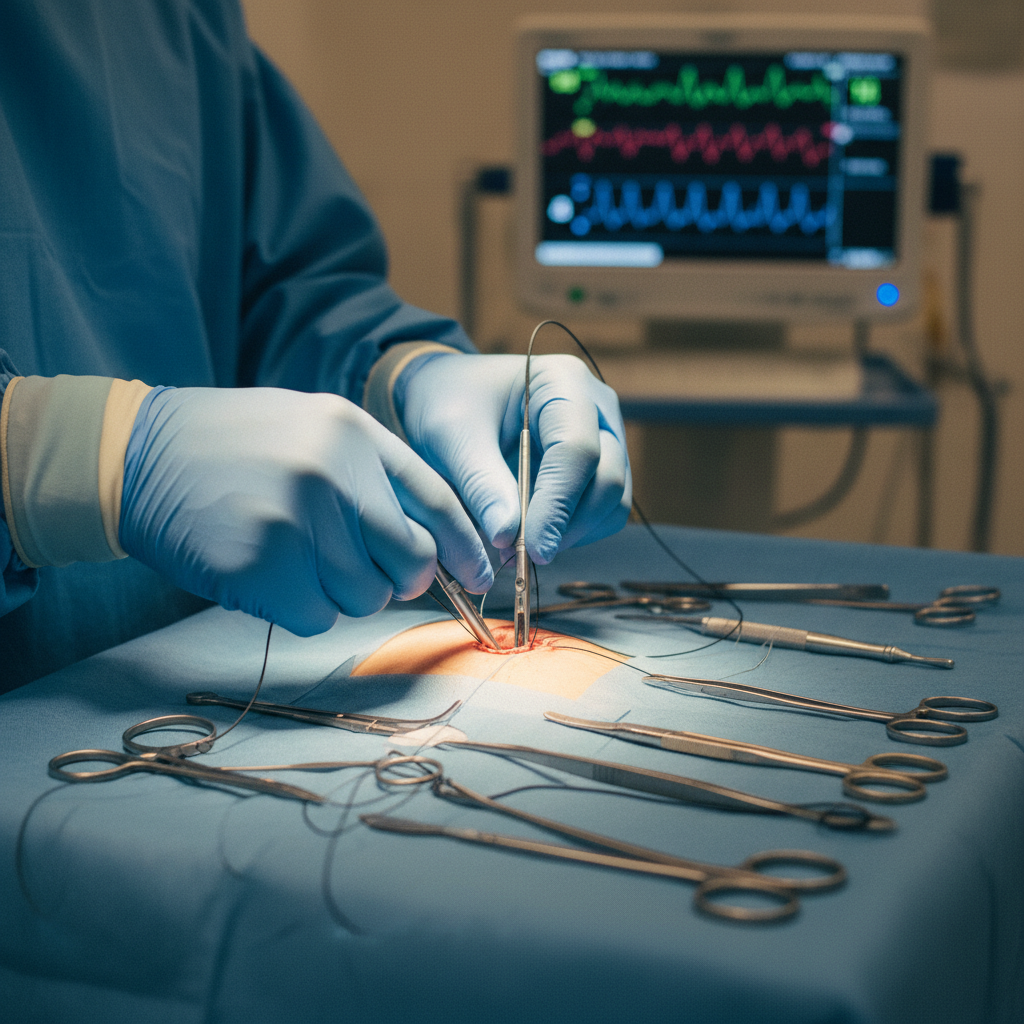

A simple "restoration" technique aims to reduce infected pseudoaneurysms tied to vascular closure devices like the Perclose ProStyle Suture®, as detailed in a recent case study. These devices can create an "umbilical depression" at the puncture site, collecting fluid and debris that fosters bacterial growth and infection. The proposed solution involves a meticulous, layered closure to restore the natural contour of the abdominal wall, eliminating the depression and promoting proper wound healing.
The issue is one of basic biomechanics. The Perclose ProStyle device, while designed for hemostasis, can create an inward depression, or "umbilical depression," at the puncture site. It acts as a reservoir. This collects bodily fluids, blood, and skin flora, fostering bacterial proliferation and raising the risk of surgical site infection (SSI) and infected pseudoaneurysms. Stagnant fluid invites infection.
Vascular closure devices (VCDs) are common in interventional cardiology and radiology. They speed ambulation and discharge. But complications exist. SSIs, though rare, pose significant morbidity, from prolonged hospitalization to limb loss or death. Incidence ranges from 0.1% to 3%. The Perclose ProStyle's unique umbilical depression creates a distinct infection mechanism, demanding specific prevention efforts.
This "restoration" technique directly confronts the biomechanical flaw. It moves beyond just the Perclose suture. Instead, a meticulous, layered closure uses additional sutures to re-approximate subcutaneous tissue, everting skin edges and eliminating the umbilical depression. The goal is simple: restore the natural abdominal wall contour, promoting drainage and stopping fluid accumulation. No pockets for infection.
Mujtaba et al. (2023) detail a multi-layered approach. After Perclose suture deployment and hemostasis confirmation, clinicians inspect the puncture site for invagination. If an umbilical depression exists, absorbable sutures bring subcutaneous tissue layers together, lifting the depression base and everting skin edges. Skin closure, often with a non-absorbable suture, ensures a flat or slightly everted wound margin. This re-approximation aims to eliminate dead space, promote primary intention healing, and reduce fluid collection and bacterial colonization. It optimizes the tissue environment for infection resistance.
Current guidelines, including those from the Society for Vascular Surgery (SVS), stress aseptic technique and prompt surgical site infection treatment. But they overlook biomechanical factors in VCD infection risk. This "restoration" technique, though not explicitly in guidelines, aligns with optimizing wound healing and preventing complications. The 2016 SVS guidelines mention surgical repair for pseudoaneurysms, but this approach aims for prevention (Conte et al., 2016). It's proactive, not reactive.
The Centers for Disease Control and Prevention (CDC) offers broad SSI prevention guidelines. These cover pre-operative, intra-operative, and post-operative measures like patient bathing, hair removal, and antimicrobial prophylaxis. Yet they lack specific recommendations for VCD-related wound morphology. The "restoration" technique offers a targeted intervention. It complements existing SSI prevention, addressing a specific anatomical predisposition. This makes it a relevant consideration for clinicians using Perclose ProStyle devices, even without explicit guideline endorsement.
The obvious caveat: this is a single case report. We cannot draw broad conclusions from one patient. A prospective, randomized controlled trial is needed to prove its benefit. Details on suture types, technique, or long-term outcomes are missing. We also lack the patient's BMI, a critical wound healing risk factor. Without standardization and rigorous evaluation, its superiority over standard methods remains unproven.
Beyond a single case, the most beneficial patient population is undefined. Patients with higher BMI, diabetes, or other comorbidities that impair wound healing might see more relevance from this technique. The report does not stratify risk factors. The lack of comparative data with standard closure also limits assessing its true impact on infection rates or patient outcomes. Still, future research must standardize the "restoration" protocol, including suture materials, knotting, and objective measures for wound contour and healing. Long-term follow-up is crucial for durability and late complications. This technique's generalizability to other VCDs or anatomical sites also needs exploring.
Despite these limitations, the "restoration" technique presents a compelling conceptual framework. It highlights the importance of considering device-specific biomechanical factors in SSI prevention, moving beyond generic aseptic practices. Clinicians should be aware of the potential for umbilical depression with Perclose ProStyle and consider whether a simple, additional step could mitigate a recognized infection risk. This approach encourages a more nuanced understanding of wound healing dynamics, particularly in the context of novel medical devices.
Ultimately, while awaiting robust evidence, the technique serves as a valuable reminder for interventionalists to meticulously inspect puncture sites and consider optimizing wound architecture to prevent fluid accumulation. It underscores the ongoing need for vigilance and innovation in minimizing post-procedural complications, even for commonly used and generally safe devices.
Fewer infected pseudoaneurysms could mean fewer readmissions and lower healthcare costs. That's the striking clinical consequence if this technique proves effective. It could be a significant win for patient care and budgets.
But implementing this technique will demand more time and resources. Surgeons would use more suture material and spend extra time closing the puncture site. Increased procedure time means higher costs, especially where operating room time is precious.
Reimbursement for this "restoration" technique presents a challenge. It is not a separately billable procedure. Hospitals may have to absorb the additional costs, or justify the expense by pointing to reduced readmission rates. The economic reality is stark: infection control is a profit center, and prevention rarely gets you promoted.
lightbulb
- The PivotStandard VCD deployment focuses on immediate hemostasis. This technique shifts the focus to long-term wound biomechanics to prevent infection.
- The DataThe case study demonstrated successful resolution of an infected pseudoaneurysm with the restoration technique, eliminating the umbilical depression and promoting healing. While a single case, it highlights a potential mechanism.
- The ActionWhen using the Perclose ProStyle, consider a layered closure technique to evert the skin edges and eliminate any residual depression at the puncture site. This may require additional sutures beyond the VCD itself.
ART-2026-44
·10/26
Drafted with AI assistance, reviewed and approved by the editorial team. This publication is intended for healthcare professionals, researchers, and life science industry professionals. Content is provided for informational and educational purposes only and does not constitute medical advice.

I cover women's health, reproductive medicine, and the persistent gaps in how conditions that primarily affect women get studied and funded. The evidence base is thinner than it should be. I write about why.
Cite This Article
Mitchell S, Voss M. A simple restoration technique for perclose-related infections. The Life Science Feed. Published January 1, 2026. Updated October 5, 2026. Accessed October 17, 2026. https://thelifesciencefeed.com/cardiology/peripheral-arterial-disease/case/a-simple-restoration-technique-for-perclose-related-infections.
Editorial & AI Standards
All content is researched from peer-reviewed, open-access sources: published trial data, clinical guidelines, and regulatory filings. AI tools are used solely to structure and summarise that evidence; no AI-generated conclusions appear without editor verification against the primary source.
Every article is reviewed by a named editor before publication. Source citations are listed in the References section. This content does not represent the views of any pharmaceutical company, medical device manufacturer, or healthcare provider.
Licence & Rights
© 2026 The Life Science Feed. All rights reserved. Unless otherwise indicated, all content is the property of The Life Science Feed and may not be reproduced, distributed, or transmitted in any form or by any means without prior written permission.
Medical Disclaimer
The information provided on The Life Science Feed is for educational and informational purposes only. It is not intended as a substitute for professional medical advice, diagnosis, or treatment. Always seek the advice of your physician or other qualified healthcare provider regarding any medical condition or treatment decision. Never disregard professional medical advice or delay in seeking it because of something you have read on this website.
References
- Conte, M. S., Pomposelli, F. B., Clair, D. G., Geraghty, P. J., Giangola, G., Goines, T., ... & Society for Vascular Surgery. (2016). Society for Vascular Surgery practice guidelines for management of arterial pseudoaneurysms. Journal of Vascular Surgery, 63(5), 1233-1259.
- Mujtaba, M. A., Lattimer, C. R., Riaz, M. Y., & Cheema, F. T. (2023). Infected Pseudoaneurysm Associated With Umbilical Depression at the Puncture Site Due to Perclose ProStyle Suture®: Restoration for Infection Prevention. Cureus, 15(12). doi:10.7759/cureus.80621
- нацыянальны цэнтр аховы здароўя. (n.d.). Surgical Site Infections. CDC. Retrieved from https://www.cdc.gov/hai/ssi/index.html