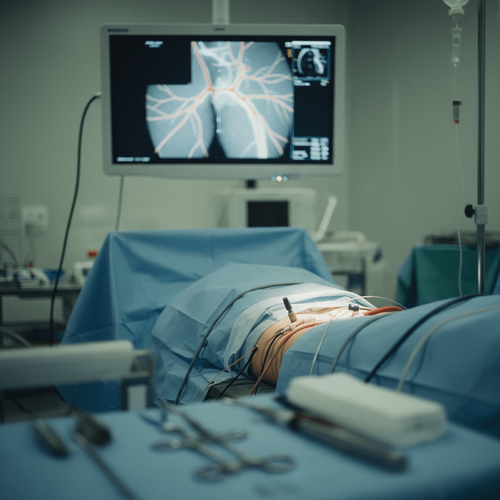
The complexities of peripheral arterial disease (PAD), particularly in its advanced stages, necessitate more than just individual physician expertise. We need a comprehensive, multidisciplinary approach. Establishing a dedicated limb program can significantly improve outcomes, reduce major amputations, and enhance the overall quality of life for patients with chronic limb-threatening ischemia (CLTI). But where do you even begin? What does that 'team' actually *look* like?
This guide addresses the practical considerations of creating a functional limb program. It outlines key personnel, essential infrastructure, patient pathways, and common pitfalls to avoid. Think of this as a checklist for getting your PAD program off the ground and running effectively.
Clinical Key Takeaways
lightbulb
- The PivotMoving beyond siloed vascular care to a collaborative, team-based approach demonstrably improves PAD outcomes and reduces amputation rates.
- The DataPrograms demonstrating adherence to standardized protocols have reported as high as a 20-30% reduction in major amputation rates within the first year.
- The ActionInitiate discussions with hospital administration to secure funding and support for a dedicated limb program, starting with a gap analysis of current services.
Successfully managing peripheral arterial disease, especially in cases of critical limb ischemia, requires a shift from the traditional siloed approach. A multidisciplinary limb program integrates various specialists to optimize patient care, reduce amputations, and improve overall outcomes. Here's a guide to establishing and maintaining such a program.
Key Personnel
The core team should include:
- Vascular Surgeon: Provides surgical and endovascular interventions.
- Interventional Radiologist: Offers expertise in minimally invasive procedures.
- Podiatrist: Specializes in foot care and wound management.
- Wound Care Specialist: Manages complex wounds and ulcers.
- Infectious Disease Specialist: Addresses infections related to wounds and ischemia.
- Cardiologist: Manages cardiovascular risk factors.
- Nephrologist: Manages renal complications.
- Diabetologist/Endocrinologist: Optimizes glucose control.
- Pain Management Specialist: Provides pain relief strategies.
- Physical Therapist: Aids in rehabilitation and mobility.
- Vascular Technologist: Performs non-invasive vascular testing.
- Nurse Coordinator: Manages patient flow and communication.
Infrastructure
Essential infrastructure includes:
- Dedicated Clinic Space: A central location for team meetings and patient evaluations.
- Vascular Lab: Equipped for non-invasive vascular testing (ABI, PVR, duplex ultrasound).
- Operating Room/Interventional Suite: For surgical and endovascular procedures.
- Wound Care Center: For specialized wound management.
- Electronic Health Record (EHR): Integrated system for seamless communication and data sharing.
Patient Pathway
A standardized patient pathway ensures timely and appropriate care:
- Referral: From primary care physicians, cardiologists, or other specialists.
- Initial Evaluation: Comprehensive assessment by the limb program team.
- Diagnostic Testing: Non-invasive and invasive vascular testing.
- Treatment Planning: Multidisciplinary team discussion to determine the optimal treatment strategy.
- Intervention: Medical management, endovascular procedures, surgical bypass, or amputation (when necessary).
- Wound Care: Specialized wound management and offloading.
- Rehabilitation: Physical therapy and lifestyle modifications.
- Follow-up: Regular monitoring and surveillance to prevent recurrence.
Standardized Protocols
Establish clear, evidence-based protocols for:
- Wound Care: Debridement, offloading, and advanced wound dressings.
- Antithrombotic Therapy: Antiplatelet and anticoagulant management.
- Risk Factor Modification: Smoking cessation, lipid management, and blood pressure control.
- Infection Control: Antibiotic selection and wound cultures.
- Pain Management: Pharmacological and non-pharmacological approaches.
These protocols should align with established guidelines, such as those from the Society for Vascular Surgery (SVS) and the American Heart Association (AHA). However, note that the 2016 AHA/ACC guidelines for management of PAD don't explicitly detail the *structure* of a multidisciplinary clinic, focusing more on treatment algorithms. The advantage of a dedicated program is the streamlined implementation of such guidelines.
Data Collection and Analysis
Collect data on key performance indicators (KPIs) to monitor program effectiveness:
- Amputation Rates: Major and minor amputations.
- Limb Salvage Rates: Percentage of limbs saved from amputation.
- Wound Healing Rates: Time to wound closure.
- Patient Satisfaction: Surveys and feedback.
- Cost-Effectiveness: Cost per limb saved.
Regularly analyze the data to identify areas for improvement and optimize program performance. This also allows you to prove the program's value to hospital administration when it comes to resource allocation.
Common Challenges
Expect and plan for:
- Funding Limitations: Securing resources for staffing, equipment, and infrastructure.
- Coordination Difficulties: Ensuring seamless communication and collaboration among team members.
- Patient Compliance: Adherence to treatment plans and lifestyle modifications.
- Referral Delays: Timely referrals from primary care physicians.
- Data Management: Accurate and efficient data collection and analysis.
One major caveat: demonstrating improved outcomes can be difficult without a control group. Establishing historical controls (comparing outcomes before and after program implementation) can be useful, but susceptible to bias. You need to show a clear, statistically significant improvement to justify the investment. The cost of implementing a multidisciplinary clinic has to be offset by tangible, measured gains.
The implementation of a multidisciplinary limb program can lead to several practical implications for clinicians. It can reduce the burden on individual specialists by distributing responsibilities and streamlining patient care. However, it may also require adjustments to existing workflows and referral patterns. Furthermore, establishing such a program could open new avenues for reimbursement, particularly through bundled payment models that incentivize coordinated care and improved outcomes.
Also, be prepared for increased scrutiny from hospital administration. They'll want to see the ROI. Document everything meticulously. Show the cost savings from reduced amputations and readmissions. That's how you keep the program alive.
LSF-8000879191 | January 2026

How to cite this article
MacReady R. Building a multidisciplinary limb program practical guide. The Life Science Feed. Published March 3, 2026. Updated March 3, 2026. Accessed March 3, 2026. https://thelifesciencefeed.com/cardiology/peripheral-arterial-disease/practice/building-a-multidisciplinary-limb-program-practical-guide.
Copyright and license
© 2026 The Life Science Feed. All rights reserved. Unless otherwise indicated, all content is the property of The Life Science Feed and may not be reproduced, distributed, or transmitted in any form or by any means without prior written permission.
Fact-Checking & AI Transparency
This content was produced with the assistance of AI technology and has been rigorously reviewed and verified by our human editorial team to ensure accuracy and clinical relevance.
References
- Conte, M. S., Pomposelli, F. B., Clair, D. G., Gerhard-Herman, M. D., Hines, G. L.,ার্জ্হজIII, J. L., ... & Schneider, P. A. (2015). Society for Vascular Surgery practice guidelines for atherosclerotic occlusive disease of the lower extremities: management of asymptomatic disease and claudication. Journal of Vascular Surgery, 61(3 Suppl), 2S-41S.
- Gerhard-Herman, M. D., Gornik, H. L., Barrett, C., Rymer, J. A., Walsh, M. E., & Treat-Jacobson, D. (2016). 2016 AHA/ACC guideline on the management of patients with lower extremity peripheral artery disease: executive summary: a report of the American College of Cardiology/American Heart Association Task Force on Clinical Practice Guidelines. Circulation, 135(12), e686-e725.
- Mills, J. L., Conte, M. S., Armstrong, D. G., Pomposelli, F. B., Schanzer, A., Sidawy, A. N., ... & Society for Vascular Surgery. (2014). The Society for Vascular Surgery Lower Extremity Threatened Limb Classification System: improving uniform standards of clinical assessment, documentation, and communication. Journal of Vascular Surgery, 59(2), 548-561. e1-e2.
Related Articles