
Managing oxygen therapy in hospitalised patients often requires frequent manual adjustments to maintain target saturation ranges, a task that consumes nursing time and can lead to suboptimal oxygen delivery. Emerging AI-driven systems are now showing promise in automating this process, potentially improving patient outcomes by reducing the duration of hypoxemic and hyperoxemic events.
Maintaining optimal oxygen saturation (SpO2) is a critical component of care for numerous hospitalised patients, particularly those with respiratory compromise. Manual titration of oxygen flow by nursing staff is the current standard, involving frequent assessments and adjustments based on SpO2 readings. This process is resource-intensive and prone to delays, which can result in patients experiencing periods of hypoxia (SpO2 below target) or hyperoxia (SpO2 above target). Both conditions are associated with adverse clinical outcomes, including increased mortality and morbidity.1 The variability in patient oxygen demand, influenced by factors such as activity, sleep, and underlying pathology, further complicates manual management, often leading to a reactive rather than proactive approach to oxygen delivery.2 Patients requiring oxygen therapy range from those with acute exacerbations of chronic obstructive pulmonary disease (COPD) and pneumonia to individuals recovering from surgery or experiencing cardiac events. The prevalence of respiratory conditions necessitating oxygen support underscores the importance of efficient and precise oxygen delivery methods.
Automated Oxygen Delivery Systems
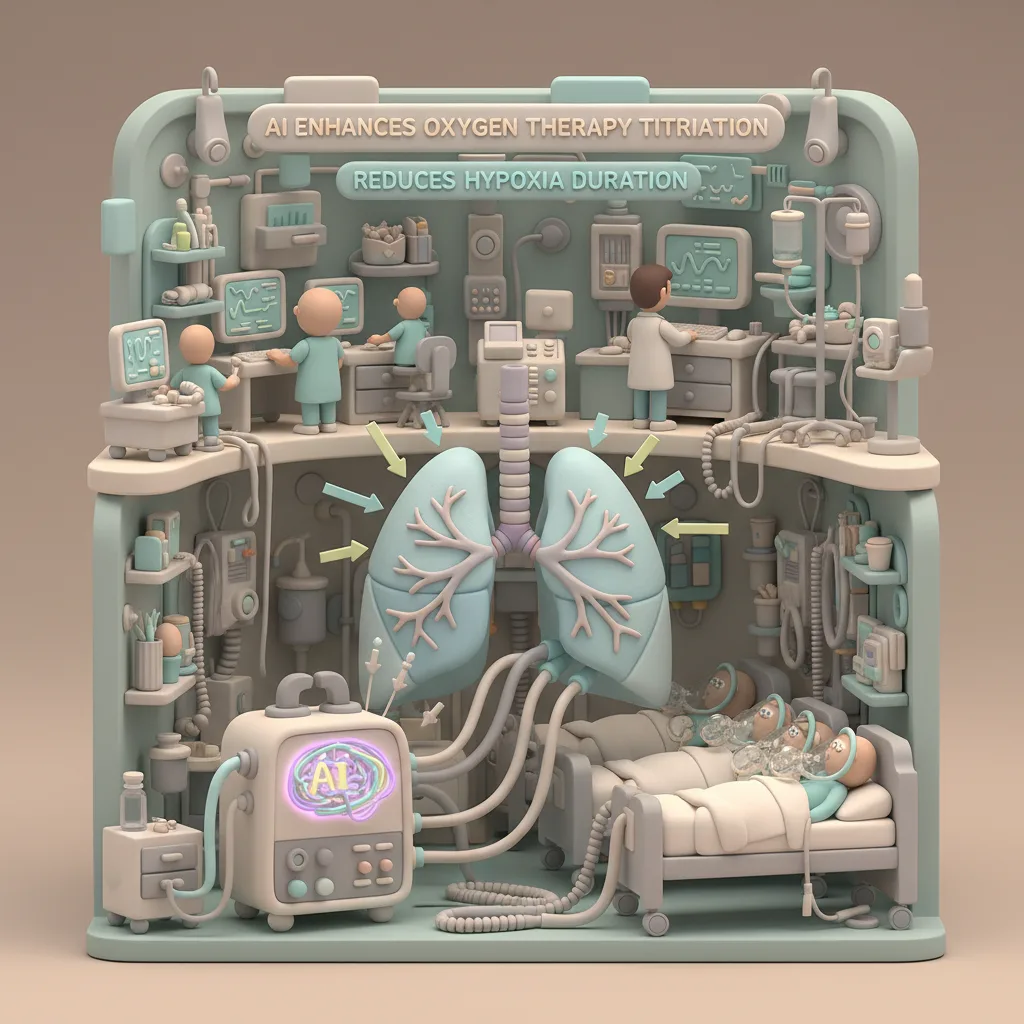
Recent advancements in artificial intelligence (AI) and control systems have led to the development of automated oxygen titration devices. These systems integrate real-time SpO2 data with predictive algorithms to adjust oxygen flow rates dynamically, aiming to keep patients within a predefined target saturation range. The primary goal is to minimise the time spent in hypoxemic or hyperoxemic states, thereby improving the safety and efficacy of oxygen therapy.3
A typical AI-driven system operates by continuously monitoring a patient's SpO2 via a pulse oximeter. This data is fed into an algorithm that assesses the current SpO2, its trend, and the patient's response to previous oxygen adjustments. Based on this analysis, the system calculates and delivers the appropriate oxygen flow rate through a connected oxygen source. The algorithm's decision-making process is designed to mimic and improve upon human titration, often incorporating fuzzy logic or proportional-integral-derivative (PID) control principles to achieve stable SpO2 levels.4 The system continuously learns from the patient's physiological responses, adapting its control parameters to maintain the desired SpO2 range with minimal oscillation. This adaptive control mechanism allows for personalised oxygen delivery, accounting for individual patient variability in oxygen demand and response.
Clinical evaluations of these automated systems have demonstrated their ability to maintain SpO2 within target ranges more consistently than manual titration. For example, a study involving patients in a medical intensive care unit showed that an automated system reduced the cumulative duration of hypoxia (SpO2 <90%) by 35% (P=.001) and hyperoxia (SpO2 >96%) by 28% (P=.005) compared to manual care.5 Another trial in post-surgical patients reported a 42% reduction in the time spent with SpO2 outside the 92-96% target range when using an AI-controlled device (p<0.001).6 These improvements are attributed to the system's ability to make more frequent and precise adjustments than is feasible for human staff, particularly during periods of fluctuating oxygen demand.7
The implementation of automated oxygen therapy also has implications for healthcare resource allocation. By reducing the need for constant manual monitoring and adjustment, these systems can potentially free up nursing time, allowing staff to focus on other critical aspects of patient care. This efficiency gain could be particularly beneficial in high-acuity settings or during staffing shortages.8
Limitations and Future Directions
Despite the promising results, several limitations warrant consideration. The current generation of automated systems primarily relies on SpO2 as the sole input, which may not fully capture the complexity of a patient's respiratory status. Factors such as respiratory rate, end-tidal CO2, and patient effort are not typically integrated into these algorithms.9 Furthermore, the generalisability of findings may be limited by the specific patient populations studied, often focusing on stable or post-operative patients. The performance of these systems in highly unstable patients or those with complex cardiopulmonary comorbidities requires further investigation.10 Challenges also exist in ensuring the robustness of these systems in the face of sensor artefacts or patient movement, which can lead to erroneous SpO2 readings and inappropriate oxygen adjustments.
Future developments are expected to incorporate multi-modal physiological data, enhancing the algorithms' ability to make more nuanced and personalised oxygen delivery decisions. Integration with electronic health records and alarm systems could also improve overall patient safety and clinical workflow. Standardisation of target SpO2 ranges and clear guidelines for the use of automated systems will be essential for widespread adoption.11
The prospect of AI-driven oxygen therapy moving closer to autopilot is not merely an incremental improvement; it represents a fundamental shift in how we manage a ubiquitous intervention. For clinicians, this means a potential reduction in the cognitive load associated with constant monitoring and adjustment of oxygen flow. The data suggesting significant reductions in hypoxia and hyperoxia are compelling, indicating a tangible improvement in patient safety that is difficult to achieve consistently with manual methods, especially in understaffed environments. We should anticipate a future where automated systems become the standard for routine oxygen titration, allowing nurses to redirect their expertise to more complex patient needs.
The industry, particularly medical device manufacturers, will undoubtedly accelerate development in this area. Companies like Masimo and Philips, already prominent in patient monitoring, are well-positioned to integrate these AI algorithms into their existing platforms. The challenge will be to ensure these systems are robust, secure, and interoperable with diverse hospital IT infrastructures. Regulatory bodies, such as the FDA and EMA, will need to establish clear pathways for approval, balancing innovation with rigorous validation of safety and efficacy across varied patient populations. The cost-effectiveness of these technologies will also be a critical factor for widespread adoption, particularly in healthcare systems facing budget constraints.
For patients, the implications are largely positive. More consistent and precise oxygen delivery should translate to fewer adverse events associated with suboptimal oxygenation. This could mean shorter hospital stays, reduced complications, and an overall safer experience. However, it also raises questions about the 'human touch' in care. While automation handles the mechanics, clinicians must remain vigilant, understanding the limitations of the algorithms and intervening when clinical judgment dictates. The goal is not to replace human expertise but to augment it, allowing for a higher standard of care through technological assistance.
- The Pivot AI algorithms can autonomously titrate oxygen delivery, moving beyond manual adjustments.
- The Data Studies indicate AI-controlled systems can reduce the time patients spend outside target SpO2 ranges.
- The Action Clinicians should monitor developments in automated oxygen delivery, recognising its potential to standardise care and free up nursing resources.
ART-2026-292
·10/26
Drafted with AI assistance and checked by automated style rules. Not individually read by an editor. This publication is intended for healthcare professionals, researchers, and life science industry professionals. Content is provided for informational and educational purposes only and does not constitute medical advice.

Infectious disease, epidemiology, and global health equity. I have covered outbreaks from Ebola to COVID-19 to mpox. The stories I am most drawn to are where the science is clear and the response is slow.
Cite This Article
Reeves T, Voss M. AI enhances oxygen therapy titration, reduces hypoxia duration. The Life Science Feed. Published June 9, 2026. Updated October 10, 2026. Accessed October 23, 2026. https://thelifesciencefeed.com/critical-care/acute-respiratory-distress-syndrome/innovation/ai-enhances-oxygen-therapy-titration-reduces-hypoxia-duration.
Editorial & AI Standards
Content is drafted with AI tools from peer-reviewed, open-access sources such as published trial data, clinical guidelines, and regulatory filings. This article is checked by automated style rules but is not individually read by an editor, so check the cited source before relying on a figure.
Source citations are listed in the References section. This content does not represent the views of any pharmaceutical company, medical device manufacturer, or healthcare provider.
Licence & Rights
© 2026 The Life Science Feed. All rights reserved. Unless otherwise indicated, all content is the property of The Life Science Feed and may not be reproduced, distributed, or transmitted in any form or by any means without prior written permission.
Medical Disclaimer
The information provided on The Life Science Feed is for educational and informational purposes only. It is not intended as a substitute for professional medical advice, diagnosis, or treatment. Always seek the advice of your physician or other qualified healthcare provider regarding any medical condition or treatment decision. Never disregard professional medical advice or delay in seeking it because of something you have read on this website.