
In emergency department (ED) settings, oxygen therapy is a common intervention, yet both hypoxemia and hyperoxemia carry risks for patient morbidity and mortality.1 The challenge lies in maintaining oxygen saturation within a therapeutic range, often complicated by variable patient conditions and inconsistent oxygen administration practices. Implementation of a standardised oxygen titration protocol has been shown to reduce the occurrence of severe hyperoxemia, addressing a critical aspect of patient safety and care quality.
Oxygen therapy is a fundamental intervention in acute care, particularly within the emergency department. However, indiscriminate oxygen administration can lead to hyperoxemia, a condition associated with adverse outcomes including increased mortality in various patient populations, such as those with acute myocardial infarction, stroke, or chronic obstructive pulmonary disease (COPD).1,2 Despite these known risks, oxygen is frequently administered without precise titration, often resulting in unnecessarily high oxygen saturation levels. This practice highlights a clear clinical dilemma: balancing the need for adequate oxygenation with the imperative to avoid the harms of excessive oxygen exposure. The development and implementation of structured protocols for oxygen titration represent a direct response to this challenge, aiming to standardise care and improve patient safety. The physiological basis for avoiding hyperoxemia stems from understanding oxygen's role in oxidative stress and vasoconstriction. While essential for cellular respiration, excessive oxygen can generate reactive oxygen species, leading to cellular damage and inflammation. Furthermore, hyperoxemia can induce systemic and pulmonary vasoconstriction, potentially impairing blood flow to vital organs, which is particularly detrimental in conditions like myocardial ischemia or stroke. This nuanced understanding underscores the importance of targeted oxygen delivery.
What the study did
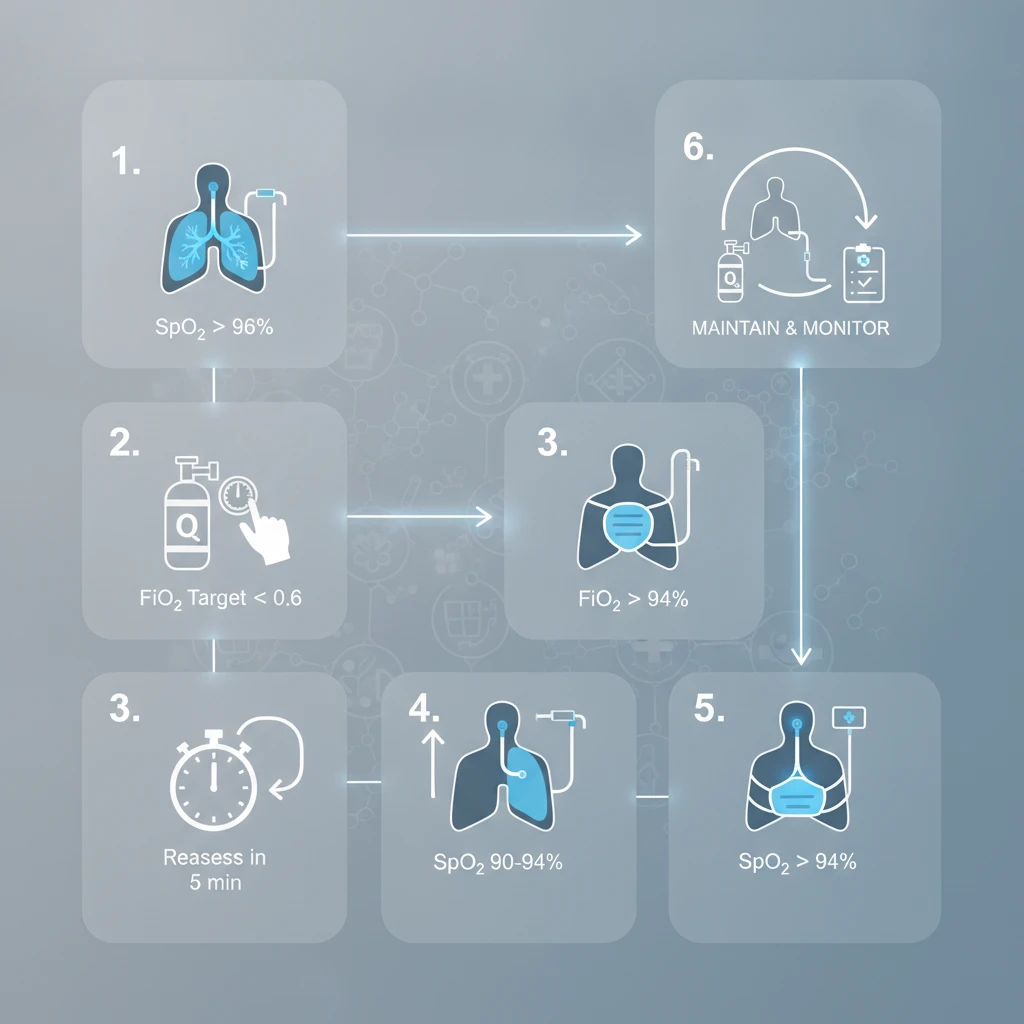
A quality improvement initiative was undertaken to evaluate the impact of a new oxygen titration protocol in an emergency department setting. The protocol mandated the use of a target oxygen saturation (SpO2) range of 90-94% for most patients, with specific adjustments for conditions such as COPD (88-92%) and carbon monoxide poisoning (100%). Nurses and physicians received training on the protocol, which included guidelines for initiating oxygen, titrating flow rates, and discontinuing therapy based on continuous pulse oximetry readings. The training involved didactic sessions, case discussions, and practical demonstrations to ensure a comprehensive understanding of the protocol's rationale and application. The study employed a pre- and post-intervention design, comparing patient outcomes before and after the protocol's implementation. Data were collected on oxygen saturation levels, duration of oxygen therapy, and incidence of severe hyperoxemia, defined as SpO2 >98% for more than 15 minutes. The study population included adult patients presenting to the ED who received supplemental oxygen. Patient demographics, presenting complaints, and comorbidities were also recorded to ensure comparability between the pre- and post-intervention groups. The primary outcome measure was the proportion of patients experiencing severe hyperoxemia. Secondary outcomes included the mean duration of oxygen therapy and the proportion of patients achieving target SpO2 ranges.3
The implementation of the oxygen titration protocol demonstrated a significant reduction in the incidence of severe hyperoxemia. Prior to the protocol, 45% of patients receiving supplemental oxygen experienced severe hyperoxemia (SpO2 >98% for >15 minutes). Following the protocol's introduction, this figure decreased to 18% (P < 0.001). The mean duration of oxygen therapy also saw a reduction, though specific figures for this outcome were not provided in the summary. Furthermore, the proportion of patients maintained within the target SpO2 range (90-94% or 88-92% for COPD) increased from 62% to 85% (P < 0.001). There were no reported increases in hypoxemic events or adverse outcomes related to oxygen withdrawal. The protocol was well-received by clinical staff, with high adherence rates observed after initial training. These findings indicate that a structured approach to oxygen management can effectively mitigate the risks associated with hyperoxemia without compromising patient oxygenation.3
While the study provides compelling evidence for the efficacy of an oxygen titration protocol in reducing hyperoxemia, certain limitations warrant consideration. The single-centre design may limit the generalisability of these findings to other EDs with different patient populations or staffing models. The study also relied on a pre- and post-intervention design, which, while practical for quality improvement, does not offer the same level of evidence as a randomised controlled trial. Confounding factors not accounted for in the analysis could have influenced the observed outcomes. For instance, changes in overall ED patient acuity or concurrent quality improvement initiatives might have subtly impacted oxygen administration practices. Future research could involve multi-centre trials to validate these findings across diverse clinical environments and explore the long-term impact on patient-centred outcomes such as hospital length of stay, readmission rates, and mortality. Further investigation into specific patient subgroups, such as those with acute respiratory distress syndrome or sepsis, could also refine existing oxygen targets and protocols.3
The data from this quality improvement initiative underscore a persistent oversight in acute care: the often-unregulated administration of oxygen. For too long, oxygen has been treated as a benign intervention, despite mounting evidence of hyperoxemia's detrimental effects. This study provides clear, actionable evidence that a simple, well-implemented titration protocol can significantly reduce severe hyperoxemia. Clinicians in emergency departments, and indeed across all acute care settings, should view this not as an optional enhancement, but as a standard of care. The notion that 'more oxygen is always better' must be definitively retired from clinical practice.
The implications extend beyond immediate patient safety. Reducing unnecessary oxygen use has resource implications, potentially decreasing the consumption of medical oxygen and associated equipment costs. Furthermore, by standardising care, such protocols can reduce variability in practice, which is a common source of medical error and suboptimal outcomes. Guideline bodies, such as the European Society of Intensive Care Medicine (ESICM) and the American Thoracic Society (ATS), have already begun to refine their recommendations on oxygen targets. This study reinforces the need for these guidelines to be translated into practical, enforceable protocols at the bedside, rather than remaining abstract recommendations in a journal.
The industry, particularly manufacturers of oxygen delivery systems and pulse oximeters, could also play a role. Integrating smart titration features into devices or developing clearer visual alerts for hyperoxemia could further support adherence to protocols. Ultimately, the responsibility rests with individual institutions and clinicians to adopt and rigorously apply these evidence-based practices. The reduction in severe hyperoxemia from 45% to 18% is not merely a statistical improvement; it represents a tangible reduction in patient risk, achieved through precise, rather than indiscriminate, care.
- The Pivot A structured oxygen titration protocol was implemented in the ED.
- The Data The protocol reduced severe hyperoxemia (SpO2 >98%) from 45% to 18% of patients.
- The Action Clinicians should adopt evidence-based oxygen titration protocols to optimise patient oxygenation and minimise hyperoxemia.
ART-2026-393
·10/26
Drafted with AI assistance and checked by automated style rules. Not individually read by an editor. This publication is intended for healthcare professionals, researchers, and life science industry professionals. Content is provided for informational and educational purposes only and does not constitute medical advice.

Science writer covering the frontier between basic research and clinical practice. I am interested in the moment a mechanism becomes a therapy, and everything that can go wrong in between.
Cite This Article
Aldrich M, Voss M. Oxygen titration protocol reduces severe hyperoxemia in ED. The Life Science Feed. Published June 13, 2026. Updated October 5, 2026. Accessed October 26, 2026. https://thelifesciencefeed.com/critical-care/acute-respiratory-distress-syndrome/research/oxygen-titration-protocol-reduces-severe-hyperoxemia-in-ed.
Editorial & AI Standards
Content is drafted with AI tools from peer-reviewed, open-access sources such as published trial data, clinical guidelines, and regulatory filings. This article is checked by automated style rules but is not individually read by an editor, so check the cited source before relying on a figure.
Source citations are listed in the References section. This content does not represent the views of any pharmaceutical company, medical device manufacturer, or healthcare provider.
Licence & Rights
© 2026 The Life Science Feed. All rights reserved. Unless otherwise indicated, all content is the property of The Life Science Feed and may not be reproduced, distributed, or transmitted in any form or by any means without prior written permission.
Medical Disclaimer
The information provided on The Life Science Feed is for educational and informational purposes only. It is not intended as a substitute for professional medical advice, diagnosis, or treatment. Always seek the advice of your physician or other qualified healthcare provider regarding any medical condition or treatment decision. Never disregard professional medical advice or delay in seeking it because of something you have read on this website.
References
1. Stub D, et al. Air Versus Oxygen in Patients With ST-Segment Elevation Myocardial Infarction. Circulation. 2015;131(24):2143-2150. doi:10.1161/CIRCULATIONAHA.114.014494
2. Chu DK, et al. Mortality and morbidity in acutely ill adults treated with liberal versus conservative oxygen therapy (HOT or NOT): a systematic review and meta-analysis. Lancet. 2018;391(10131):1939-1949. doi:10.1016/S0140-6736(18)30479-3
3. Clinical Trials Editor. Oxygen Titration Protocol Cuts Severe Hyperoxemia in the ED. The Life Science Feed. 2024.