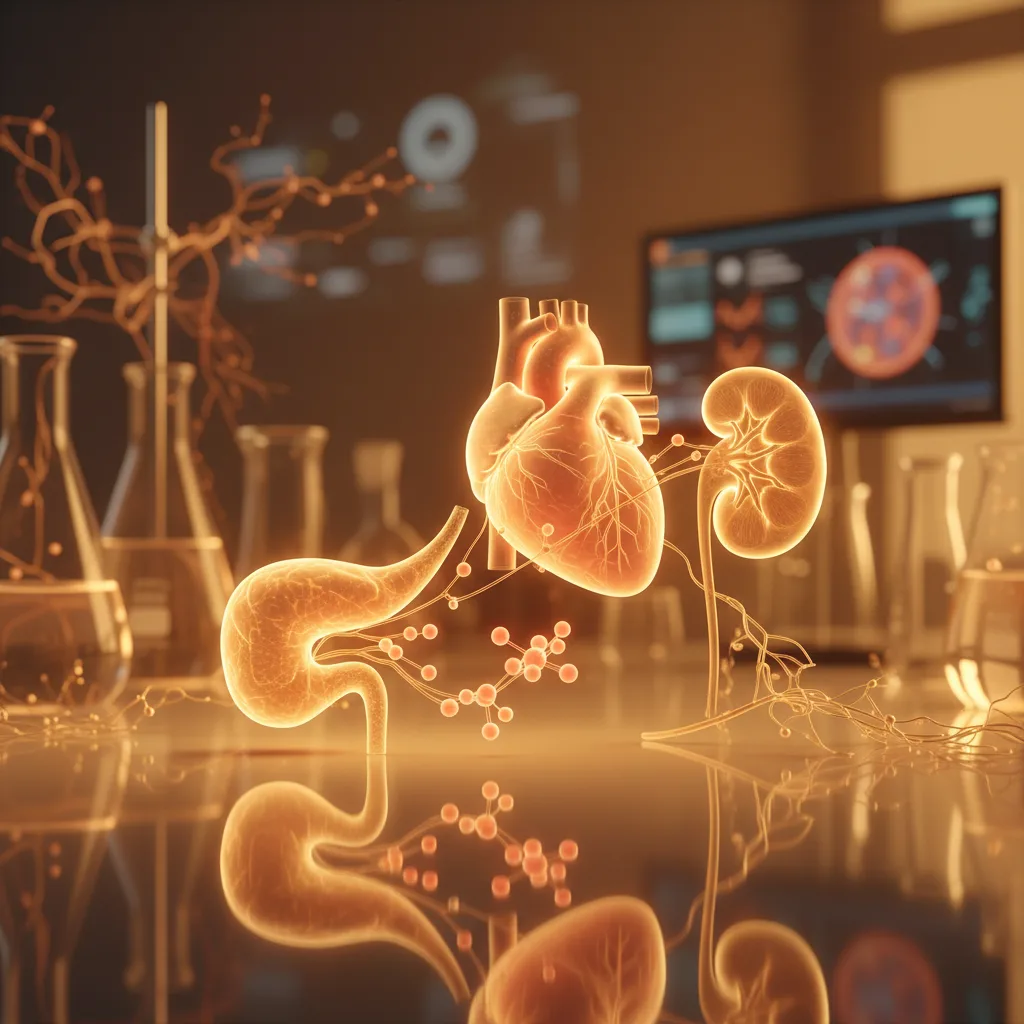

Hosted by James Carter & Sarah Mitchell

Transcription
Welcome to today's deep dive. Um, what if I told you that the absolute most effective heart medication of the decade was, you know, hiding inside a weight loss pen?
CO-HOST: It sounds like an exaggeration, but, uh, it really isn't.
Right. Because you've likely heard the endless chatter in your newsfeed about GLP-1s shrinking waistlines. Drugs like semaglutide and tirzepatide have, well, they've completely dominated the cultural conversation lately.
CO-HOST: Oh, absolutely. Everyone is talking about them.
Yeah, but today, we're throwing the scale away. We're looking beyond weight loss entirely.
CO-HOST: Because we're actually looking at a massive evolution in medicine right now. What started as, um, a treatment for type two diabetes and then obviously evolved into this highly publicized intervention for obesity, is now stepping into this whole new realm.
A realm of life-saving multi-organ protection, right?
CO-HOST: Exactly. It's truly unprecedented.
And that is the mission for today's deep dive. We have a fascinating stack of sources in front of us. Specifically, this really comprehensive clinical evidence review that covers all the most recent major outcomes data.
CO-HOST: The outcomes data is just phenomenal, to be honest.
It is. The true story of GLP-1 agonists right now isn't just about changing how we fit into our clothes, right? It's about fundamentally altering the trajectory of heart and kidney disease.
CO-HOST: Yeah, the conversation is completely shifted.
So we're going to guide you through three landmark clinical trials to really understand the mechanics of this shift. We're looking at SELECT, FLOW, and SUMMIT.
CO-HOST: Three trials that are basically rewriting the textbooks as we speak.
Right. We want to uncover why these uh metabolic therapies are suddenly becoming the absolute most exciting tools for cardiologists and nephrologists.
CO-HOST: And not just for endocrinologists anymore.
Exactly. So, let's start with the most immediate life-threatening consequence of metabolic disease, major cardiovascular events.
CO-HOST: The heart.
The heart. For years, the assumption in medicine was that, well, if you wanted to protect the heart, you had to treat the underlying diabetes first. Was that an accurate picture of what was actually happening?
CO-HOST: Well, that was the operating assumption for a very long time, actually. Before this recent data came out, we had these older trials.
Like which ones?
CO-HOST: Uh, names like LEADER, SUSTAIN 6, REWIND, and they showed that in patients with type two diabetes, GLP-1 agonists actually reduced heart attacks and strokes.
Okay, so that sounds like a good thing.
CO-HOST: It was a great thing, but the cardiology community was like hitting a brick wall when it came to interpreting that data.
Why?
CO-HOST: Because they couldn't isolate the mechanism. I mean, was the heart getting healthier simply because the drug was lowering the patient's blood glucose?
Oh, I see.
CO-HOST: Or was it because the patient was shedding 20 or 30 pounds? Or, and this is the big question, was the drug doing something directly to the cardiovascular system itself?
Right, because when you treat a diabetic patient and they lose a significant amount of weight, their blood sugar naturally improves, right?
CO-HOST: Yeah, immediately.
And their blood pressure drops, their lipid profiles change. You basically have all these massive physiological variables shifting at the exact same time.
CO-HOST: Exactly. So it seems totally impossible to know who actually gets the credit for the healthier heart.
And that brings us to the first trial on our list today, the SELECT trial.
CO-HOST: Right. And this trial was designed specifically to strip all of that confusion away. It's brilliant.
How many people were in it?
CO-HOST: It enrolled over 17,000 adults. And these were patients with preexisting cardiovascular disease.
Meaning what exactly?
CO-HOST: Clinicians call established atherosclerotic cardiovascular disease, which basically means they already had plaque buildup in their arteries.
Okay, so these are high-risk patients.
CO-HOST: Very high risk. And they had a BMI of 27 or above, placing them in the overweight or obesity category. But here is the really critical detail that makes this trial a complete landmark.
None of them had type two diabetes.
CO-HOST: Exactly. Not a single one.
Okay, let's unpack this. We have 17,000 people, they already have established heart disease, they are dealing with obesity, but their blood sugar is relatively normal.
CO-HOST: Right, there is no diabetes to treat here.
So they were given 2.4 milligrams of semaglutide weekly for, I think the median was 39 months.
CO-HOST: Yeah, just over three years.
So what actually happened?
CO-HOST: The results were, uh, they were definitive and honestly paradigm-shifting. Semaglutide reduced major adverse cardiovascular events by 20% relative to the placebo group.
Wow. And the medical community calls those events MACE, right?
CO-HOST: Yes, MACE.
Okay, what's a MACE?
CO-HOST: We are talking about a 20% reduction in a composite of non-fatal heart attacks, non-fatal strokes, and cardiovascular death. The hazard ratio was 0.80.
Which is huge.
CO-HOST: In clinical terms, seeing a statistically significant risk reduction of that magnitude in a strictly non-diabetic population is a massive breakthrough.
A 20% reduction in major cardiac events just from a weekly injection. But okay, I need to throw an analogy at you to understand the actual mechanics here.
CO-HOST: Sure, go for it.
If I'm walking around all day carrying a 50-pound backpack, my knees are going to ache terribly.
CO-HOST: Obvious.
Yeah.
If I take that backpack off, my knees naturally feel much better. They just aren't carrying as much physical load. So is the heart simply experiencing fewer dramatic events because it literally just has less body mass to pump blood to?
CO-HOST: It's a great question, but no.
Or is this drug actually going in and fixing the biological plumbing?
CO-HOST: What's fascinating here is that the timeline actually contradicts that whole backpack theory.
Really? How so?
CO-HOST: Well, if the cardiovascular benefit was purely the result of taking off that 50-pound backpack, you wouldn't see any drop in heart attacks or strokes until the weight was actually gone.
Oh, that makes sense. You have to lose the weight first.
CO-HOST: Exactly. But in the SELECT trial, the separation in the data, like the actual reduction in those cardiovascular events, it appeared in the first few months.
Wait, really? That fast?
CO-HOST: Yeah, it happened long before substantial weight loss could have possibly occurred.
So the drug is doing something else entirely while the weight is just starting to slowly come off.
CO-HOST: Exactly. It's working ahead of the scale.
So what is it doing?
CO-HOST: It points directly to active vascular effects. See, we know that there are GLP-1 receptors located in the cardiac tissue itself, and critically, in the endothelial tissue.
The endothelial tissue, that's the inner lining, right?
CO-HOST: Yeah, the endothelium is that very delicate inner lining of your blood vessels. So when semaglutide binds to those receptors on the endothelial lining, it essentially sends a chemical stand down order to the immune system.
Stand down order?
CO-HOST: Basically, it stops white blood cells, specifically macrophages, from rushing into the artery walls, which is, uh, the primary driver of inflammation.
Oh, wow.
CO-HOST: And by calming that inflammation, it improves the overall function of the blood vessels and actually stabilizes existing plaque, making it far less likely to rupture and cause a heart attack.
So it's not just a passive benefit from weighing less.
CO-HOST: Yeah.
The drug is actually actively interacting with the walls of the arteries.
CO-HOST: Right. Turning down the dial on the systemic inflammation that leads to catastrophic blockages.
That's incredible.
CO-HOST: It is. It's operating in parallel with the metabolic benefits. But I should mention, there is a nuanced physiological tradeoff here that doctors have to balance.
Okay, what kind of tradeoff?
CO-HOST: It's important to understand the full picture. Across the board with this class of GLP-1 drugs, we see a very consistent drop in systolic blood pressure.
By how much?
CO-HOST: Usually by about 3 to 5 millimeters of mercury.
Which is good, right? A drop in pressure means less stress on the pipes.
CO-HOST: That makes complete sense.
It's incredibly protective, especially in a high-risk cardiovascular patient. It absolutely reduces the mechanical stress on the artery walls.
CO-HOST: But you said tradeoffs. So what's the catch?
Well, at the exact same time, there is a consistent slight increase in heart rate.
CO-HOST: Really?
Yeah. Typically, a patient's resting heart rate will go up by about 3 to 5 beats per minute.
CO-HOST: Is that dangerous?
Now, in the SELECT trial, this slight elevation in heart rate did not translate into any harm for the patients. I mean, the overall cardiovascular outcomes were overwhelmingly positive, as we saw with that 20% MACE reduction.
CO-HOST: Right.
But, it's just a physiological reality of how the drug interacts with the autonomic nervous system. Doctors need to be aware of it, especially if, you know, a patient has specific pre-existing cardiac electrical conditions.
CO-HOST: Got it.
So when you look at all of those factors, we have a medication that lowers blood pressure, rapidly reduces inflammation in the blood vessels, prevents plaque rupture, and ultimately stops heart attacks in non-diabetic patients.
CO-HOST: It's a lot.
It seems like we have to completely recategorize what these drugs even are.
CO-HOST: Oh, definitely. For this specific population, like patients with obesity and existing cardiovascular disease, GLP-1s are now officially cardiovascular drugs.
Not just weight loss drugs anymore.
CO-HOST: No, they are foundational treatments for vascular health, not just cosmetic or metabolic weight management tools.
Okay, so we're seeing the drug literally calm the inflamed walls of the heart's arteries. But if it's doing that in the main pump, it naturally begs the question, what is it doing to the rest of the cardiovascular system?
CO-HOST: That's the million-dollar question.
So let's move away from the main pump and you know, follow the plumbing down to the body's most delicate, easily damaged vessels, the kidney filters.
CO-HOST: Yes. Because vascular health and kidney health are deeply, deeply intertwined. If you have damaged blood vessels in your heart, you very likely have damaged blood vessels in your kidneys. And this brings us to the FLOW trial.
Okay, FLOW. This is the second one on our list.
CO-HOST: Right. This trial also looked at semaglutide, but it was specifically designed to track kidney outcomes.
Who exactly was enrolled in this trial?
CO-HOST: FLOW enrolled over 3,500 adults. And these patients had both type two diabetes and chronic kidney disease.
Like severe kidney disease?
CO-HOST: Yeah, meaningful severe kidney disease. To give you the clinical picture from the data, they had an EGFR between 50 and 75, coupled with a UACR above 300.
Okay, let me stop you right there.
CO-HOST: Yeah.
Let's pause, because EGFR and UACR sound like total clinical alphabet soup to most of us.
CO-HOST: Fair enough.
In plain English, EGFR is the estimated glomerular filtration rate, right? It's a measure of how well the kidneys are filtering waste.
CO-HOST: Exactly. And UACR is the urine albumin creatinine ratio.
Right. So in plain English, their kidney filters were so damaged that vital proteins like albumin were physically leaking out of their blood and into their urine.
CO-HOST: That is exactly what's happening. A healthy kidney filter shouldn't let protein slip through like that.
So these are patients whose internal filtration system is fundamentally breaking down.
CO-HOST: Yes. Significantly compromised and actively declining. And they were given 1 milligram of semaglutide.
Okay. And looking through the notes on the FLOW trial, here's where it gets really interesting. I actually had to do a double take. They stopped the trial early.
CO-HOST: They did.
Usually, when you hear about a clinical trial being halted, it's a massive red flag, right? Like safety concerns or side effects. But here, it was the exact opposite. Why did they halt it?
CO-HOST: Because it was working almost too well.
Wait, really?
CO-HOST: Yeah. The interim data crossed a pre-specified statistical boundary for success. Meaning, it actually became unethical to continue giving the control group a placebo when the active drug was clearly saving lives.
Wow. It became unethical to withhold it.
CO-HOST: Right. The magnitude of the benefit is just staggering. Semaglutide reduced the primary kidney composite endpoint by 24% relative to the placebo. That's a hazard ratio of 0.76.
And what exactly does that composite endpoint include? I mean, when you say it was saving lives, what physical realities were they actually preventing?
CO-HOST: We are talking about preventing a sustained 40% decline in kidney function.
That's huge.
CO-HOST: And preventing complete kidney failure, which basically means preventing a patient from needing a kidney transplant or being strapped to a dialysis machine multiple times a week.
Right.
CO-HOST: It also included preventing death related to kidney disease and preventing cardiovascular death. A 24% reduction in all of those catastrophic events combined.
That's incredible.
CO-HOST: And on top of that specific kidney data, there was a 20% relative reduction in all cause mortality. Meaning, people taking the drug simply lived longer across the board.
Okay, I have to challenge this a little bit from a clinical perspective.
CO-HOST: Sure.
Because if you're a nephrologist, you might be listening to this and saying, well, hold on, we already have incredible drugs for this exact problem.
CO-HOST: Ah, yes. You're talking about SGLT2 inhibitors.
Exactly. We have this entire class of medications. We've seen massive trials in the past like CREDENCE and DAPA-CKD that proved SGLT2 inhibitors do a fantastic job of protecting the kidneys in this exact population of diabetics.
CO-HOST: They absolutely do.
So why do we care about adding semaglutide? I mean, isn't giving them a GLP-1 just totally redundant at that point?
CO-HOST: It's actually not redundant at all. If we connect this to the bigger picture, it's highly complementary.
Oh, so.
CO-HOST: To understand why, you kind of have to think of the kidney as a highly complex filtration factory. SGLT2 inhibitors are primarily fixing the factory's pressure systems.
Okay.
CO-HOST: They work on the hemodynamics, adjusting the flow and the pressure of the fluids entering and exiting the delicate microfilters of the kidney.
So the SGLT2 inhibitors are basically adjusting the water pressure so the tiny vascular pipes don't burst under the strain.
CO-HOST: That's a great way to visualize it. SGLT2 inhibitors relieve that mechanical pressure. But, if you only fix the water pressure, and the pipes themselves are still inflamed, structurally damaged, and like rotting from the inside.
The system will eventually fail anyway.
CO-HOST: Exactly. It will fail. GLP-1 agonists like semaglutide are tackling entirely different pathways. They're metabolic and anti-inflammatory. They reduce the inflammatory burden on the kidney tissue itself, essentially putting out the chemical fires inside the walls of those pipes.
Oh, I see. So you have one drug fixing the hemodynamics, the water pressure, and the other drug coming in to chemically repair the inflamed tissue.
CO-HOST: Right. Together, they offer this additive synergistic shield for these high-risk patients. You're attacking the chronic kidney disease from multiple structural and chemical angles.
Which is amazing for patients.
CO-HOST: For clinicians, too. It means we now have another incredibly powerful evidence-based tool in our toolkit to slow down disease progression and keep people off dialysis.
So we've seen how GLP-1s protect the vascular pipes in the heart with the SELECT trial.
CO-HOST: Right.
And we've seen how they protect the delicate vascular filters in the kidneys with the FLOW trial.
CO-HOST: But there's a third major trial we need to cover. We've talked about the plumbing and the filters, but what happens when the actual mechanical pump of the heart gets stiff and starts to fail?
CO-HOST: Uh, yes. This brings us to perhaps one of the most stubborn and just frustrating conditions in modern cardiology.
Which is?
CO-HOST: It's called heart failure with preserved ejection fraction or HFpEF.
HFpEF.
CO-HOST: Right. And to understand the impact of metabolic therapies here, we have to look at the SUMMIT trial, which focused on a different drug in this class, tirzepatide.
Okay, let's break down HFpEF for a second. Because when the average person hears heart failure, they usually think of, you know, a weak, enlarged heart that can't squeeze hard enough to pump blood out to the body.
CO-HOST: Yeah, that's the classic understanding.
But this is a very different mechanical problem, right?
CO-HOST: Very different. With HFpEF, the heart muscle can actually still squeeze and pump blood out just fine. That's what the preserved ejection fraction part means.
Okay, so the squeezing mechanism works.
CO-HOST: It works perfectly. The problem happens in the split second before the squeeze. The heart muscle has become thick and stiff and rigid. It cannot relax properly between beats to actually fill up with enough blood in the first place.
Wow.
CO-HOST: And if the pump can't fill, blood backs up into the lungs, causing severe shortness of breath and fatigue. And obesity is actually one of the massive primary drivers of this specific type of heart failure.
And historically, it's been hard to treat.
CO-HOST: Incredibly difficult. We just haven't had great pharmacological options to force a stiff heart to relax.
So what does this all mean to use a mechanical analogy? If it's not a weak pump, is it like, um, like trying to soak up water with a dried-out stiff sponge, the muscle is just too rigid to expand and draw the blood in?
CO-HOST: That captures the mechanical dysfunction perfectly. The ventricle is just too stiff to act as a proper reservoir. And in the SUMMIT trial, they wanted to see if tirzepatide could change that dynamic in patients who had both HFpEF and obesity.
And what happened?
CO-HOST: The results were astonishing, honestly. Patients taking tirzepatide saw a 38% reduction in a composite of cardiovascular death or worsening heart failure events compared to the placebo group.
A 38% reduction?
CO-HOST: Yes. That is a hazard ratio of 0.62. A 38% reduction in a condition that has notoriously defied almost everything else modern medicine has thrown at it.
A 38% reduction in worsening heart failure is a massive number. But I want to push back on the mechanism here.
CO-HOST: Okay, let's hear it.
Because the source data notes that these patients lost about 15% of their body weight on average, right?
CO-HOST: That's right.
So did the drug actually do anything to the heart itself, or did it just melt away the chest fat? Like if the heart is suffocating under pericardial fat, does shedding 15% of your body mass simply give the pump physical room to expand and fill with blood?
CO-HOST: This raises an important question, and it's actually one of the most heavily debated topics in cardiology right now.
Is it the weight loss or is it the drug?
CO-HOST: Exactly. Is it the weight loss, or is it the cellular action of the drug? The emerging consensus is that it is very likely a combination of both mechanical unburdening and direct cellular protection.
Okay, so a bit of both.
CO-HOST: Yeah, you are absolutely right that shedding 15% of body mass improves the mechanical dynamics. There is less visceral fat restricting the heart, intercardiac pressures go down, and the stiff ventricle simply doesn't have to work as hard to push blood through a smaller body mass.
Right. You physically unburden the pump.
CO-HOST: Exactly.
But it can't just be the physical unburdening, right? Because we saw in the SELECT trial that the drug acts directly on the tissue.
CO-HOST: And that is the second half of the equation. We absolutely cannot ignore the cellular level here. Tirzepatide is slightly different from semaglutide. It's a dual agonist.
Meaning it targets two things.
CO-HOST: Right. It acts on both GIP and GLP-1 receptors. And both of those receptor types are expressed right there in the myocardial tissue, the actual heart muscle itself.
Wow, okay.
CO-HOST: Animal models and cellular studies strongly suggest that these drugs have direct cardioprotective effects. They alter the metabolism of the heart muscle cells, helping them handle structural stress and inflammation much better on a microscopic level.
So it is treating the heart failure from the outside in and the inside out.
CO-HOST: That's a great way to put it.
You mechanically free the heart by reducing the body weight, and you chemically treat the heart muscle to be more resilient and less inflamed.
CO-HOST: Exactly that combination. And the real world impact was measured by something called the Kansas City Cardiomyopathy Questionnaire.
What does that track?
CO-HOST: It tracks physical function and quality of life. The patients on tirzepatide saw massive improvements. They could walk further, breathe easier, and literally return to normal daily activities that their heart failure had previously stolen from them.
That's life-changing.
CO-HOST: It is. For cardiologists, the SUMMIT trial is an absolute breakthrough for a patient population that desperately needed a win.
It is truly staggering when you step back and look at the whole picture we've painted today.
CO-HOST: It really is.
By looking at these three massive clinical trials, we have SELECT calming the vascular inflammation to prevent heart attacks, FLOW protecting the delicate filters to stop kidney failure, and SUMMIT improving the mechanics of a stiff failing heart. We are literally watching a medical classification change in real time.
CO-HOST: Yeah, we are. These drugs have completely transcended being single indication weight loss injections.
They really have.
CO-HOST: They have forced the medical community to adopt an entirely new vocabulary. We are now looking at a cardiorenal metabolic class of drugs.
Cardiorenal metabolic.
CO-HOST: Yes. They're treating the underlying shared pathology of our interconnected vital organs.
And for you, listening to this, this fundamentally reshapes preventative health literacy. Whether you are advocating for your own care, or maybe talking to older relatives about their heart or kidney health, or just trying to understand the science behind the headlines, you have to look beyond the scale.
CO-HOST: The weight loss is just a byproduct at this point.
Right. The shrinking waistline is just the surface level symptom of a much deeper cellular repair process. The real revolution is happening invisibly in the endothelial lining of the arteries, the glomeruli of the kidneys, and the microscopic muscle tissue of the heart itself.
CO-HOST: It is an incredibly empowering shift in how we practice medicine. I mean, we are moving away from merely treating the physical symptom of excess weight and moving toward fundamentally altering the inflammatory and metabolic disease pathways that actually drive mortality.
Which leaves us with a final, slightly provocative thought to chew on.
CO-HOST: Oh, I like those.
It makes you wonder about the structural future of medicine itself. Right now, our health care system is strictly siloed.
CO-HOST: Very true.
You see the endocrinologist to manage your blood sugar, you go down the hall to the cardiologist for your blood pressure and heart failure, you take the elevator up to see the nephrologist when your kidney starts spilling protein.
CO-HOST: Right. They all have their own floors, their own conferences, their own distinct toolkits.
Exactly. But if one single therapy treats the underlying metabolic root of all three failing systems at the exact same time, will those walls eventually have to come down?
CO-HOST: That's a great question.
Are we going to see the hospital of the future reorganize, not around isolated organs, but around the holistic metabolic connections that these drugs have just exposed? It's something to think about next time you see these medications dominating the news. Until next time, keep digging deeper.
Free Clinical Resources
Episode Infographic
Key data, mechanisms, and clinical takeaways distilled into a single shareable page. Save it for reference or use it in your next team discussion.
Clinical Flashcards
Core concepts from this episode in flashcard format, structured for spaced repetition, pre-consultation review, or CPD reflection with your team.
More from: GLP-1 Deep Dive Series

Rewiring The Brain To Silence Food Noise
GLP-1 receptor agonists do far more than lower blood glucose: they reshape the brain's reward response to food, suppress appetite at the hypothalamic level, and slow gastric emptying. Sarah Mitchell and James Carter explain the neuroscience behind the most transformative class of drugs in a generation.

The Velvet Rope Of Weight Loss Drugs
Semaglutide and tirzepatide produce results that obesity medicine has never seen before, but demand vastly outstrips supply, cost remains prohibitive for many, and prescribing criteria vary widely between health systems. Sarah Mitchell and James Carter examine who is getting GLP-1 therapy and why equity matters.

The GLP-1 Muscle Loss Dilemma
GLP-1 receptor agonists drive significant lean mass loss alongside fat loss, a concern that may undermine long-term metabolic health and physical function. Sarah Mitchell and Matt Aldrich examine the muscle loss evidence, the role of resistance training, and emerging strategies to preserve lean tissue during weight loss.
ART-2026-190
·08/26
Drafted with AI assistance, reviewed and approved by the editorial team. This publication is intended for healthcare professionals, researchers, and life science industry professionals. Content is provided for informational and educational purposes only and does not constitute medical advice.

Thirty years in health journalism, the last fifteen in life sciences. I have reported from every major medical congress and watched blockbuster drugs get revised after approval. I cover what the data says.
Cite This Podcast
Carter J, Mitchell S. GLP-1 drugs protect hearts and kidneys. The Life Science Feed. Published May 28, 2026. Updated August 3, 2026. Accessed August 27, 2026. https://thelifesciencefeed.com/endocrinology/obesity/news/glp-1-drugs-protect-hearts-and-kidneys.
Editorial & AI Standards
All content is researched from peer-reviewed, open-access sources: published trial data, clinical guidelines, and regulatory filings. AI tools are used solely to structure and summarise that evidence; no AI-generated conclusions appear without editor verification against the primary source.
Every article is reviewed by a named editor before publication. Source citations are listed in the References section. This content does not represent the views of any pharmaceutical company, medical device manufacturer, or healthcare provider.
Licence & Rights
© 2026 The Life Science Feed. All rights reserved. Unless otherwise indicated, all content is the property of The Life Science Feed and may not be reproduced, distributed, or transmitted in any form or by any means without prior written permission.
Podcast Disclaimer
This podcast is produced for educational and informational purposes only. The conversation between hosts represents a discussion of published clinical evidence and is not intended as clinical advice, a substitute for professional medical judgment, or a recommendation for any specific treatment. Healthcare professionals should rely on their own clinical training, current guidelines, and individual patient assessment when making treatment decisions. The views expressed are those of the hosts and do not constitute endorsement of any specific therapy, product, or manufacturer.
References
Bhatt DL, Szarek M, Steg PG, et al. Sotagliflozin on cardiovascular and renal events in type 2 diabetes and chronic kidney disease. *N Engl J Med*. 2021;384(2):129–139. https://doi.org/10.1056/NEJMoa2030186
Figtree GA, Bhatt DL, Lincoff AM, et al. Tirzepatide in heart failure with preserved ejection fraction and obesity (SUMMIT). *N Engl J Med*. 2024;391(18):1717–1727. https://doi.org/10.1056/NEJMoa2410027
Kosiborod MN, Abildstrøm SZ, Borlaug BA, et al. Semaglutide in patients with heart failure with preserved ejection fraction and obesity (STEP-HFpEF). *N Engl J Med*. 2023;389(12):1069–1084. https://doi.org/10.1056/NEJMoa2306963
Lincoff AM, Brown-Frandsen K, Colhoun HM, et al. Semaglutide and cardiovascular outcomes in obesity without diabetes (SELECT). *N Engl J Med*. 2023;389(24):2221–2232. https://doi.org/10.1056/NEJMoa2307563
Marso SP, Bain SC, Consoli A, et al. Semaglutide and cardiovascular outcomes in patients with type 2 diabetes (SUSTAIN-6). *N Engl J Med*. 2016;375(19):1834–1844. https://doi.org/10.1056/NEJMoa1607141
Marso SP, Daniels GH, Brown-Frandsen K, et al. Liraglutide and cardiovascular outcomes in type 2 diabetes (LEADER). *N Engl J Med*. 2016;375(4):311–322. https://doi.org/10.1056/NEJMoa1603827
Perkovic V, Tuttle KR, Rossing P, et al. Effects of semaglutide on chronic kidney disease in patients with type 2 diabetes (FLOW). *N Engl J Med*. 2024;391(2):109–121. https://doi.org/10.1056/NEJMoa2403347
Sattar N, McGuire DK. Understanding and treating cardiovascular risk with semaglutide: insights from SELECT. *Lancet*. 2024;403(10427):607–609. https://doi.org/10.1016/S0140-6736(23)02504-1