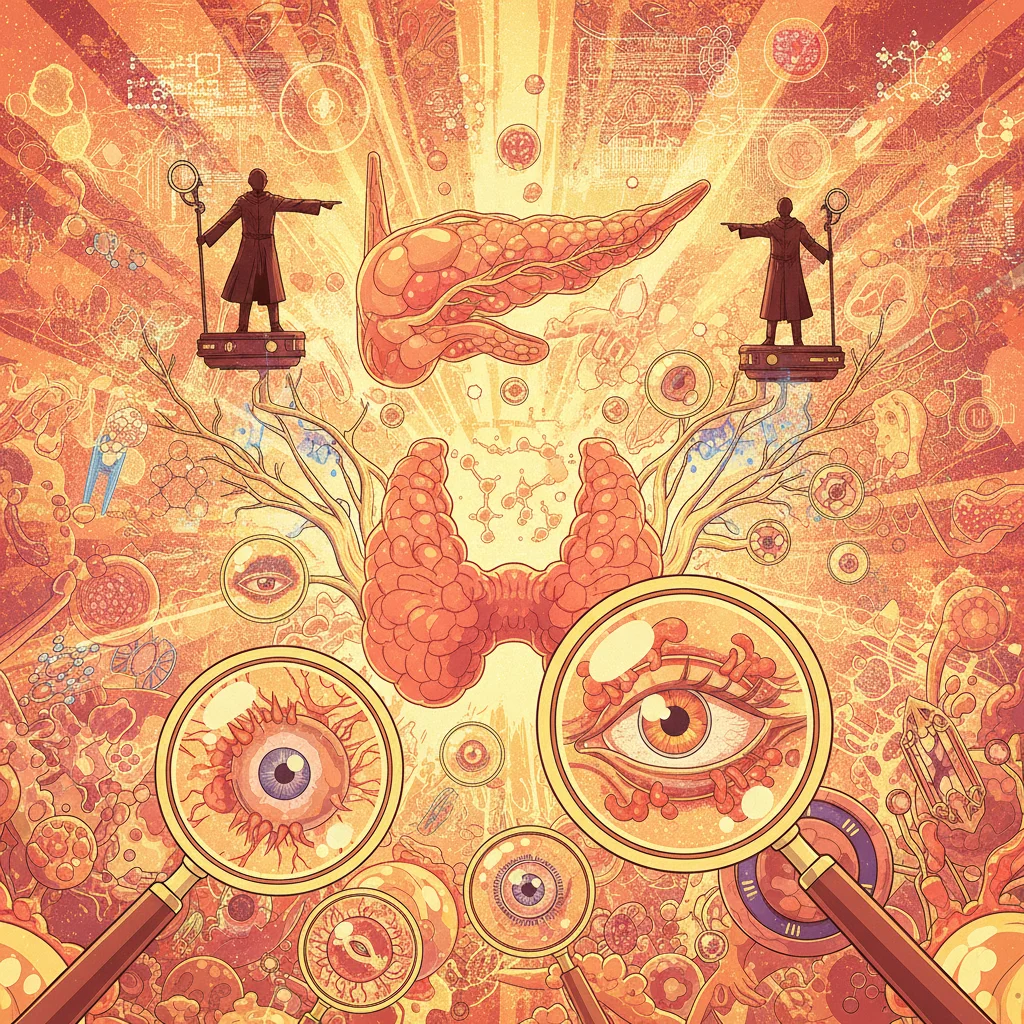

Thyroid eye disease (TED) often presents insidiously, with initial symptoms frequently overlooked or misattributed, delaying specialist referral. Endocrinologists, managing the underlying thyroid dysfunction, are positioned to identify early ocular manifestations, thereby facilitating prompt management and potentially mitigating disease progression.
Thyroid eye disease (TED), also known as Graves' ophthalmopathy, is an autoimmune inflammatory disorder affecting the orbit and periorbital tissues. It is strongly associated with Graves' disease, though it can occur in euthyroid or hypothyroid individuals. The pathogenesis involves autoantibodies, primarily against the TSH receptor, leading to fibroblast activation and subsequent inflammation, oedema, and adipogenesis within the orbit. This process can result in proptosis, diplopia, restrictive myopathy, and, in severe cases, optic neuropathy, which can lead to permanent vision loss. The natural history of TED typically involves an active inflammatory phase followed by a quiescent, fibrotic phase. Intervention during the active phase is crucial for disease modification and prevention of irreversible structural changes. However, early symptoms such as ocular irritation, tearing, or mild proptosis may be subtle and not immediately recognised as TED, leading to diagnostic delays. The average time from onset of ocular symptoms to diagnosis of TED can be substantial, impacting the efficacy of disease-modifying therapies.1
The Endocrinologist's Vantage Point
Endocrinologists are frequently the first and often the primary clinicians managing patients with Graves' disease, the most common underlying cause of TED. This consistent patient contact provides a unique opportunity for early detection of ocular changes. Current guidelines emphasise the importance of a comprehensive assessment for TED in all patients with Graves' disease, irrespective of thyroid hormone status. This includes a detailed history regarding ocular symptoms and a focused physical examination. Key symptoms to inquire about include changes in vision, diplopia, ocular pain, redness, tearing, photophobia, and a sensation of grittiness or foreign body in the eye. Physical examination should include inspection for lid retraction, proptosis, periorbital oedema, and assessment of extraocular muscle motility. Subtle signs, such as mild lid lag or conjunctival injection, may be the earliest indicators of active disease.2
The clinical activity score (CAS) is a widely used tool to quantify inflammatory activity in TED. A CAS of 3 or more indicates active disease, warranting consideration for immunosuppressive therapy. Regular screening by endocrinologists can identify patients with a low CAS who are progressing, or those with early signs of active disease who may benefit from timely referral to an ophthalmologist with expertise in TED. For instance, a patient presenting with new onset diplopia or increasing proptosis, even without significant pain or redness, should trigger an immediate referral. Early referral to a specialist ophthalmologist, particularly within six months of symptom onset, has been shown to correlate with improved long-term outcomes, including reduced need for surgical intervention and better preservation of visual function. This is largely due to the ability to initiate immunomodulatory treatments, such as teprotumumab, during the active inflammatory phase, when they are most effective.3
The role extends beyond initial screening to ongoing monitoring. Patients with Graves' disease, even those without overt TED at diagnosis, remain at risk for developing ocular manifestations. Therefore, periodic re-evaluation for ocular symptoms and signs is essential during follow-up appointments. Education of patients about the potential for TED and encouragement to report any new or worsening ocular symptoms is also a critical component of comprehensive care. This proactive approach by endocrinologists can significantly shorten the diagnostic interval, allowing for earlier intervention and potentially preventing the progression to severe, sight-threatening forms of TED.4
The data underscores a clear imperative for endocrinologists: integrate routine, meticulous ocular screening into every consultation for patients with Graves' disease. The current practice, where TED diagnosis often follows significant symptom progression, is suboptimal. Waiting for overt proptosis or debilitating diplopia before considering an ophthalmology referral means missing the critical window for disease modification. Therapies like teprotumumab, while effective, are most impactful during the active inflammatory phase. Delayed diagnosis pushes patients towards the quiescent, fibrotic stage where surgical interventions become the primary, often less satisfactory, option.
This shift demands a recalibration of clinical priorities. It is not sufficient to simply ask if a patient has 'eye problems'; a structured inquiry into specific symptoms and a focused examination for subtle signs are necessary. The argument that endocrinologists lack the time or specialised equipment for a full ophthalmological assessment is a red herring. Basic inspection for lid retraction, proptosis, and assessment of extraocular movements requires minimal additional time and no specialised tools beyond a penlight. Furthermore, patient education on TED symptoms should be standard. Empowering patients to recognise and report early changes can significantly aid in timely intervention.
From an industry perspective, earlier diagnosis could expand the eligible patient population for targeted immunomodulatory therapies, potentially increasing their market penetration. However, this also places a greater onus on pharmaceutical companies to ensure access and affordability, particularly given the high cost of such treatments. Guideline bodies, such as the American Thyroid Association and the European Thyroid Association, should continue to reinforce and perhaps strengthen recommendations for proactive TED screening by endocrinologists, providing clear, actionable pathways for referral and management. The goal should be to prevent irreversible damage, not merely to manage its consequences.
- The Pivot Endocrinologists are key in identifying early, subtle signs of TED, shifting from reactive to proactive management.
- The Data Early referral to ophthalmology, particularly within six months of symptom onset, correlates with improved long-term outcomes.
- The Action Clinicians should integrate routine ocular symptom screening into thyroid disorder consultations, especially for Graves' disease patients.
ART-2026-374
06/26
Cite This Article
Team TLSFE. Endocrinologists' role in early thyroid eye disease recognition. The Life Science Feed. Published June 14, 2026. Updated June 14, 2026. Accessed June 14, 2026. https://thelifesciencefeed.com/endocrinology/thyroid-diseases/news/endocrinologists-role-in-early-thyroid-eye-disease-recognition.
Editorial & AI Standards
All content is researched from peer-reviewed, open-access sources — published trial data, clinical guidelines, and regulatory filings. AI tools are used solely to structure and summarise that evidence; no AI-generated conclusions appear without editor verification against the primary source.
Every article is reviewed by a named editor before publication. Source citations are listed in the References section. This content does not represent the views of any pharmaceutical company, medical device manufacturer, or healthcare provider.
Licence & Rights
© 2026 The Life Science Feed. All rights reserved. Unless otherwise indicated, all content is the property of The Life Science Feed and may not be reproduced, distributed, or transmitted in any form or by any means without prior written permission.
Medical Disclaimer
The information provided on The Life Science Feed is for educational and informational purposes only. It is not intended as a substitute for professional medical advice, diagnosis, or treatment. Always seek the advice of your physician or other qualified healthcare provider regarding any medical condition or treatment decision. Never disregard professional medical advice or delay in seeking it because of something you have read on this website.
References
1. Smith TJ, Kahaly GJ, Ezra DG, et al. Teprotumumab in active thyroid eye disease. N Engl J Med. 2020;382(10):901-911.
2. Bartalena L, Kahaly GJ, Baldeschi L, et al. The 2021 European Group on Graves' Orbitopathy (EUGOGO) clinical practice guidelines for the management of Graves' orbitopathy. Eur J Endocrinol. 2021;185(1):G43-G67.
3. Douglas RS, Kahaly GJ, Patel A, et al. Teprotumumab for the treatment of active thyroid eye disease. N Engl J Med. 2020;382(4):341-352.
4. Bahn RS. Clinical review: Graves' ophthalmopathy. J Clin Endocrinol Metab. 2010;95(4):1503-1511.