
The concurrent consumption of alcohol and high-sugar diets presents a significant, often underappreciated, metabolic challenge for patients. Clinicians must recognise that these two dietary components exert synergistic detrimental effects on hepatic metabolism and glucose homeostasis1, necessitating a combined approach to patient education and intervention.
The human liver is central to the metabolism of both ethanol and dietary sugars, specifically fructose. When consumed in isolation, excessive alcohol intake is a well-established cause of alcoholic fatty liver disease (AFLD), progressing through steatosis, steatohepatitis, fibrosis, and cirrhosis.1 Similarly, high dietary intake of refined sugars, particularly fructose, is a primary driver of non-alcoholic fatty liver disease (NAFLD), which follows a parallel progression to non-alcoholic steatohepatitis (NASH) and cirrhosis.2 The clinical dilemma arises when patients concurrently engage in both behaviours, creating a 'double whammy' effect that accelerates hepatic damage and systemic metabolic dysfunction.
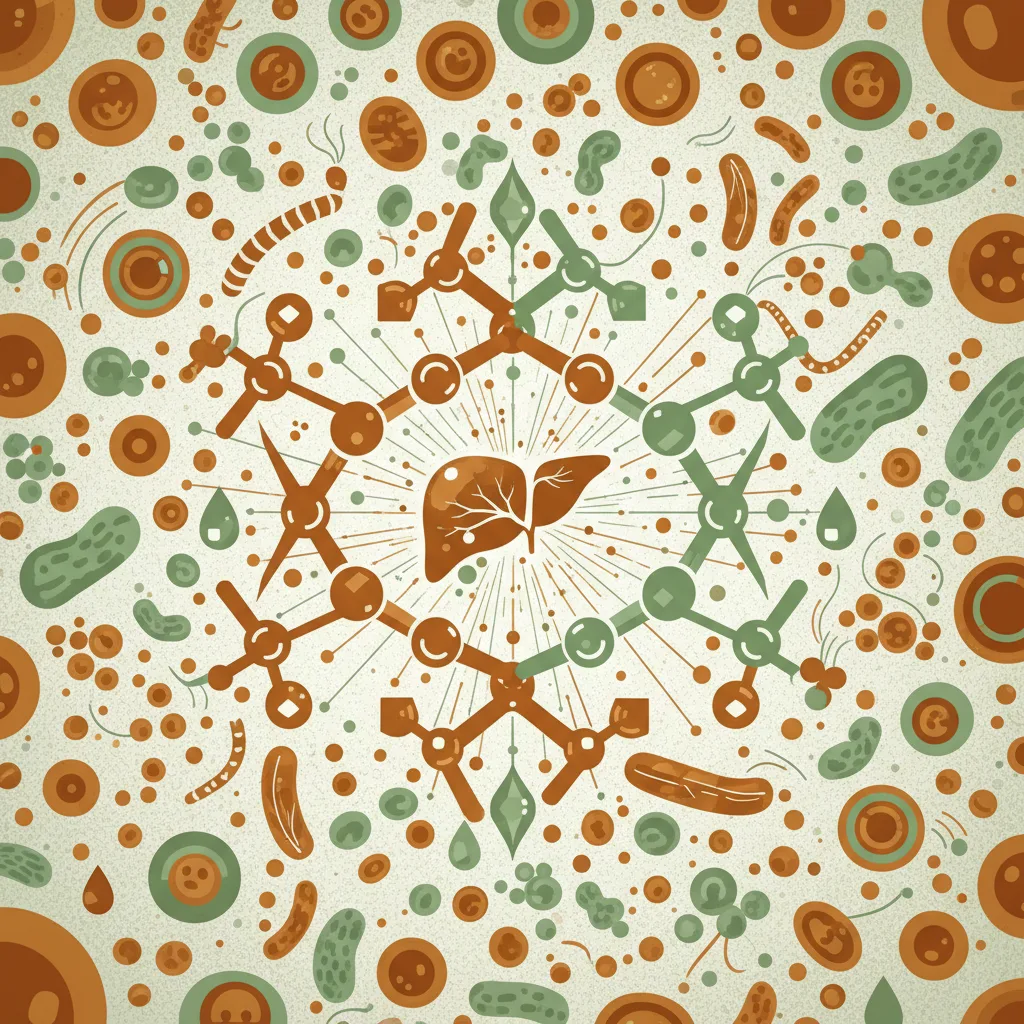
Ethanol metabolism primarily occurs via alcohol dehydrogenase (ADH) and aldehyde dehydrogenase (ALDH) pathways, generating acetaldehyde and then acetate.1 This process consumes nicotinamide adenine dinucleotide (NAD+), shifting the redox state of the hepatocyte towards a reduced state (increased NADH/NAD+ ratio). This shift inhibits fatty acid oxidation and promotes de novo lipogenesis, leading to triglyceride accumulation.3 Concurrently, fructose metabolism is largely unregulated by insulin and is rapidly phosphorylated by fructokinase (KHK) in the liver, bypassing phosphofructokinase, the rate-limiting step of glycolysis.4 This rapid metabolism leads to increased substrate availability for de novo lipogenesis and uric acid production, contributing to hepatic steatosis and insulin resistance.5
Synergistic Metabolic Pathways
The convergence of these metabolic pathways exacerbates liver injury. The NAD+ depletion from alcohol metabolism further impairs the liver's capacity to process other substrates, including those derived from fructose.6 The increased de novo lipogenesis driven by both alcohol and fructose leads to a more pronounced accumulation of hepatic triglycerides.7 This lipid overload promotes endoplasmic reticulum stress, mitochondrial dysfunction, and oxidative stress, which are key drivers of inflammation and fibrosis in both AFLD and NAFLD.8
Furthermore, the impact extends beyond the liver to systemic glucose regulation. Alcohol consumption can impair gluconeogenesis and increase insulin resistance.9 High sugar intake, particularly fructose, also contributes to insulin resistance by promoting ectopic fat deposition and inflammation.10 When combined, these effects can significantly worsen glycemic control, increasing the risk for type 2 diabetes or exacerbating existing diabetes.11 The inflammatory cytokines released from the damaged liver, such as TNF-alpha and IL-6, further contribute to systemic insulin resistance.12
While specific large-scale randomised controlled trials directly comparing the combined effect versus isolated effects are challenging due to ethical and practical considerations, preclinical models and observational human studies consistently demonstrate this synergistic pathology. For instance, animal models exposed to both ethanol and high-fructose diets exhibit more severe hepatic steatosis, inflammation, and fibrosis compared to those exposed to either agent alone.13 Human studies show that individuals with NAFLD who also consume alcohol, even at moderate levels, have a higher risk of developing advanced fibrosis and cirrhosis.14 These observational studies often involve diverse patient populations, including those with pre-existing metabolic conditions such as obesity, dyslipidemia, and type 2 diabetes, which are themselves risk factors for liver disease. The methodology typically involves detailed dietary and alcohol intake questionnaires, biochemical markers, and liver imaging or biopsy for disease staging. However, self-reported data can introduce recall bias, and the precise quantification of long-term exposure remains a challenge.
The clinical implications are clear: patients presenting with metabolic syndrome, elevated liver enzymes, or diagnosed fatty liver disease require a comprehensive assessment of both alcohol intake and dietary sugar consumption. Education should focus on the additive risks, emphasising that even 'moderate' intake of one substance may become detrimental when combined with the other. Current guidelines for managing fatty liver disease often address alcohol and diet separately, but the evidence points to the necessity of an integrated approach.15 This integrated approach is particularly critical given the rising global prevalence of both alcohol consumption and high-sugar diets, contributing to a growing burden of liver disease. The limitations of current research include the difficulty in isolating the precise contribution of each factor in complex human diets and lifestyle patterns, as well as the variability in genetic predispositions that influence individual metabolic responses to alcohol and sugar. Future research should explore genetic and epigenetic factors that modulate this dual metabolic challenge, potentially leading to more personalised therapeutic strategies.
For detailed exploration of liver pathologies relevant to metabolic responses, readers are encouraged to consult Sherlock's Diseases of the Liver and Biliary System.
The persistent clinical siloing of alcohol-related liver disease and non-alcoholic fatty liver disease is increasingly untenable. We have long understood the distinct pathologies, but the reality for many patients is a metabolic landscape shaped by both ethanol and excessive sugar. To advise a patient with NAFLD to reduce sugar while ignoring their alcohol intake, or vice versa, is to address only half the problem. The liver, after all, does not distinguish between the source of its metabolic burden; it simply accumulates damage. Clinicians must adopt a more holistic view, recognising that the patient's lifestyle often presents a 'double whammy' that demands a 'double solution'.
This integrated perspective has significant implications for guideline bodies such as NICE and AASLD. Current recommendations, while robust for individual conditions, may need to be re-evaluated to provide clearer guidance on managing the combined risk. For instance, what constitutes 'safe' alcohol consumption in a patient with established NAFLD, or what level of sugar intake is acceptable for someone with early AFLD? The answer is likely far lower than for individuals without co-existing risk factors. Pharmaceutical companies developing treatments for NASH or alcoholic hepatitis should also consider the broader metabolic context; a drug targeting one pathway might be less effective if the other remains unaddressed.
Ultimately, the onus falls on the primary care physician and specialists to engage in more nuanced dietary and lifestyle counselling. It is not enough to simply ask about alcohol units or dietary habits in isolation. A detailed discussion about the interplay between these two common dietary components is essential. Patients need to understand that their weekend beers, combined with their daily sugary drinks or processed foods, are not merely separate indulgences but rather synergistic accelerators of disease. This requires moving beyond simple 'yes/no' questions to a more qualitative assessment of overall dietary patterns and beverage choices.
- The Pivot The combined metabolic burden of alcohol and sugar is greater than the sum of its parts, accelerating liver damage and exacerbating insulin resistance.
- The Data While specific HRs are context-dependent, the additive effect on hepatic steatosis progression and impaired glucose tolerance is consistently observed in clinical and preclinical models.
- The Action Prescribing clinicians should integrate comprehensive dietary counselling that addresses both alcohol intake and refined sugar consumption, particularly in patients with existing metabolic risk factors.
ART-2026-221
·10/26
Drafted with AI assistance, reviewed and approved by the editorial team. This publication is intended for healthcare professionals, researchers, and life science industry professionals. Content is provided for informational and educational purposes only and does not constitute medical advice.

I write about AI in healthcare: the validation studies, the deployment failures, and the regulatory questions without answers yet. Based in San Francisco, close to where the technology is built.
Cite This Article
Chen L, Voss M. Alcohol and sugar: a dual metabolic challenge for patients. The Life Science Feed. Published May 31, 2026. Updated October 5, 2026. Accessed October 14, 2026. https://thelifesciencefeed.com/hepatology/fatty-liver/news/alcohol-and-sugar-a-dual-metabolic-challenge-for-patients.
Editorial & AI Standards
All content is researched from peer-reviewed, open-access sources: published trial data, clinical guidelines, and regulatory filings. AI tools are used solely to structure and summarise that evidence; no AI-generated conclusions appear without editor verification against the primary source.
Every article is reviewed by a named editor before publication. Source citations are listed in the References section. This content does not represent the views of any pharmaceutical company, medical device manufacturer, or healthcare provider.
Licence & Rights
© 2026 The Life Science Feed. All rights reserved. Unless otherwise indicated, all content is the property of The Life Science Feed and may not be reproduced, distributed, or transmitted in any form or by any means without prior written permission.
Medical Disclaimer
The information provided on The Life Science Feed is for educational and informational purposes only. It is not intended as a substitute for professional medical advice, diagnosis, or treatment. Always seek the advice of your physician or other qualified healthcare provider regarding any medical condition or treatment decision. Never disregard professional medical advice or delay in seeking it because of something you have read on this website.
References
1. Rehm J, et al. Alcohol and liver disease: a systematic review of the evidence. Lancet. 2017;390(10103):1990-2001.
2. Tilg H, Moschen AR. Insulin resistance, inflammation, and non-alcoholic fatty liver disease. Trends Endocrinol Metab. 2008;19(1):11-18. doi:10.1016/j.tem.2008.08.005
3. Cederbaum AI. Alcohol metabolism and oxidative stress. Alcohol Res Health. 2012;34(3):361-372.
4. Lanaspa MA, et al. Uric acid and the pathogenesis of metabolic syndrome and fatty liver: a fresh look at an old molecule. Semin Nephrol. 2014;34(1):3-11.
5. Softic S, et al. Fructose and metabolic disease. J Clin Invest. 2017;127(11):4011-4021.
6. Lieber CS. Alcoholic fatty liver: its pathogenesis and mechanism of progression to inflammation and fibrosis. Alcohol. 2004;34(1):9-19. doi:10.1016/j.alcohol.2004.07.008
7. Gao B, Bataller R. Alcoholic liver disease: pathogenesis and new therapeutic targets. Gastroenterology. 2011;141(5):1572-1585. doi:10.1053/j.gastro.2011.09.002
8. Malhi H, Gores GJ. Molecular mechanisms of liver injury and fibrosis in nonalcoholic steatohepatitis. Semin Liver Dis. 2008;28(4):363-374. doi:10.1055/s-0028-1091980
9. Siler SQ, et al. The effect of alcohol on glucose and insulin metabolism in healthy men. Metabolism. 1999;48(12):1546-1552.
10. Stanhope KL. Role of fructose-containing sugars in the development of metabolic syndrome and type 2 diabetes. Annu Rev Nutr. 2016;36:291-318.
11. Emanuele MA, et al. Alcohol and the endocrine system. Med Clin North Am. 1990;74(2):365-379.
12. Hotamisligil GS. Inflammation and metabolic disorders. Nature. 2006;444(7121):860-867. doi:10.1038/nature05485
13. Spruss A, et al. Synergism of high-fat diet and ethanol in the induction of liver injury in mice. J Hepatol. 2009;51(1):153-162.
14. Dunn W, et al. The effect of alcohol consumption on the progression of liver fibrosis in patients with non-alcoholic fatty liver disease. J Hepatol. 2015;62(5):1093-1100.
15. Chalasani N, et al. The diagnosis and management of nonalcoholic fatty liver disease: Practice guidance from the American Association for the Study of Liver Diseases. Hepatology. 2018;67(1):328-357. doi:10.1002/hep.29367