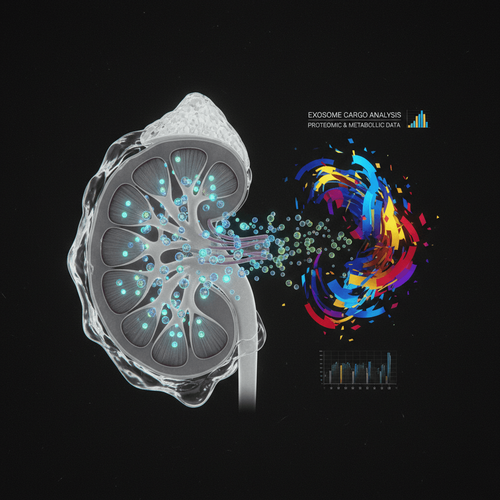
The allure of a non-invasive diagnostic test for kidney disease is undeniable. Urinary exosomes, nanoscale vesicles containing a cargo of proteins, lipids, and nucleic acids, have emerged as potential biomarkers. However, before we integrate exosome analysis into routine clinical practice, a dose of skepticism is warranted. Are we truly ready to stake clinical decisions on these tiny messengers?
A recent review highlights the potential of urinary exosomes in the diagnosis and prognosis of various kidney diseases. But it also underscores a critical gap: the lack of standardized protocols for exosome isolation, characterization, and analysis. This variability introduces a significant risk of irreproducibility and bias, threatening the reliability of any clinical interpretation.
Clinical Key Takeaways
lightbulb
- The PivotExosome research challenges the reliance on traditional markers like serum creatinine in early kidney disease detection.
- The DataLack of standardized exosome isolation techniques leads to high variability and potentially unreliable results across different studies.
- The ActionHold off on routine clinical use of urinary exosome assays until large-scale, multi-center validation studies confirm their reproducibility and clinical utility.
Guideline Context
Current guidelines, such as those from the Kidney Disease Improving Global Outcomes (KDIGO), primarily rely on estimated glomerular filtration rate (eGFR) and albuminuria to define and stage chronic kidney disease (CKD). These markers, while established, have limitations. eGFR can be affected by muscle mass and age, while albuminuria can fluctuate significantly depending on hydration status and blood pressure control. The promise of urinary exosomes lies in their potential to provide earlier and more specific diagnostic information, potentially identifying kidney damage before significant functional decline occurs. However, this approach is still far from being incorporated into existing guidelines.
Specifically, the 2021 KDIGO Clinical Practice Guideline for the Management of Glomerular Diseases makes no mention of exosome-based diagnostics. Any attempt to integrate exosome assays into clinical decision-making at this stage would therefore represent a significant departure from established best practices. The onus is on researchers to demonstrate, through rigorous prospective studies, that exosome-based markers offer a tangible improvement over existing diagnostic tools.
Methodological Challenges
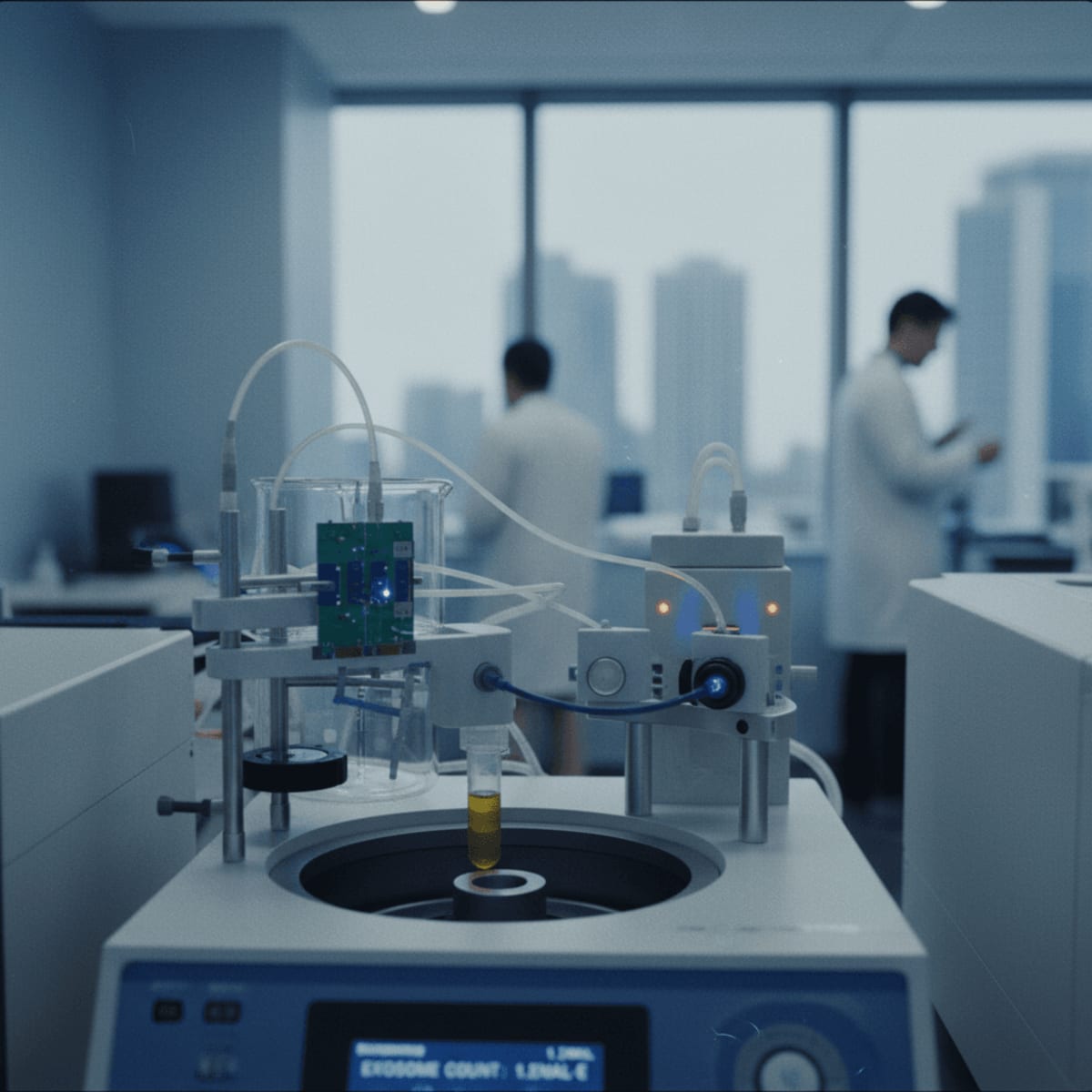
The biggest hurdle facing the field is the lack of standardized protocols. Exosome isolation methods vary widely, ranging from ultracentrifugation to polymer-based precipitation to immunoaffinity capture. Each method has its own biases, potentially enriching for different subpopulations of exosomes and affecting the composition of their cargo. Furthermore, the downstream analysis of exosomal contents (proteins, RNA, etc.) is also subject to variability, depending on the techniques used (e.g., mass spectrometry, PCR, ELISA). Without standardized protocols, it is difficult, if not impossible, to compare results across different studies and to validate findings in independent cohorts.
Think about it: If every lab uses a different 'recipe' for isolating and analyzing exosomes, how can we be confident that the biomarkers identified in one study are truly reproducible and generalizable? This is not merely a technical issue; it directly impacts the clinical utility of exosome-based diagnostics. Imagine ordering an exosome assay for a patient, only to find that the results are inconsistent with previous findings or with the patient's clinical presentation. This uncertainty undermines the very purpose of the test.
Study Limitations
Many studies investigating urinary exosomes in kidney disease are limited by small sample sizes, cross-sectional designs, and lack of appropriate control groups. Small sample sizes increase the risk of false-positive findings, while cross-sectional designs preclude the assessment of prognostic value. Furthermore, many studies fail to account for potential confounding factors, such as age, sex, race, and comorbidities, which can influence exosome composition and abundance.
Moreover, a significant portion of the literature focuses on biomarker discovery rather than validation. This means that many promising exosomal markers have been identified, but few have been rigorously tested in large, prospective cohorts to determine their sensitivity, specificity, and predictive value. Until such validation studies are completed, the clinical utility of these markers remains uncertain. Consider this a cautionary note regarding the premature enthusiasm for these novel markers; demonstrating a statistically significant association in a small pilot study is a far cry from demonstrating clinical utility in a real-world setting.
Economic Considerations
The cost of exosome isolation and analysis is another important factor to consider. Current methods are often labor-intensive and require specialized equipment, making them relatively expensive compared to traditional diagnostic tests. If exosome-based diagnostics are to be widely adopted, the cost must be reduced significantly. Furthermore, it is unclear whether insurance companies will reimburse for these tests, especially in the absence of robust evidence demonstrating their clinical utility. The challenge lies in balancing the potential benefits of exosome-based diagnostics with the economic realities of healthcare delivery.
Beyond the direct cost of the tests, we also need to consider the potential for downstream costs associated with false-positive results. A false-positive exosome assay could lead to unnecessary and invasive procedures, such as kidney biopsies, which carry their own risks and costs. A thorough cost-effectiveness analysis is therefore essential before exosome-based diagnostics are widely implemented. The focus should be on developing cost-effective assays that provide actionable clinical information and improve patient outcomes.
Even if urinary exosome assays prove to be clinically valid, practical implementation faces hurdles. Labs need standardized equipment. Technicians require specialized training. Clinicians must learn how to interpret the results in context.
Billing and reimbursement are also uncertain. Will payers cover these novel tests? What CPT codes apply?
Finally, patient anxiety is a factor. A positive exosome result could cause undue worry, even if the clinical significance is unclear. Clear communication is vital to avoid unnecessary distress and ensure informed decision-making.
LSF-2237579708 | December 2025

How to cite this article
O'Malley L. Urinary exosomes: proceed with caution in kidney disease. The Life Science Feed. Published January 26, 2026. Updated January 26, 2026. Accessed March 17, 2026. https://thelifesciencefeed.com/nephrology/diabetic-nephropathies/research/urinary-exosomes-proceed-with-caution-in-kidney-disease.
Copyright and license
© 2026 The Life Science Feed. All rights reserved. Unless otherwise indicated, all content is the property of The Life Science Feed and may not be reproduced, distributed, or transmitted in any form or by any means without prior written permission.
Fact-Checking & AI Transparency
This content was produced with the assistance of AI technology and has been rigorously reviewed and verified by our human editorial team to ensure accuracy and clinical relevance.
References
- Burgos Silva, M., Weber, J. A., Sielheimer, J., Vicencio, J. M., & Sanda, F. (2022). Urinary Exosomes in Nephrology: A New Frontier for Diagnosis and Prognosis of Kidney Diseases. Cells, 11(23), 3785.
- KDIGO. (2012). KDIGO 2012 Clinical Practice Guideline for the Evaluation and Management of Chronic Kidney Disease. Kidney International Supplements, 3(1), 1-150.
- KDIGO. (2021). KDIGO 2021 Clinical Practice Guideline for the Management of Glomerular Diseases. Kidney International, 100(4S), S1-S276.
Related Articles