For years, clinicians have relied on relatively crude measures like serum creatinine and proteinuria to assess kidney disease. Now, imagine receiving a targeted message directly from the affected kidney cells. That's the potential of urinary exosomes - nanoscale vesicles containing a wealth of information reflecting the physiological state of their cells of origin.
These aren't just random bits of cellular debris; they are carefully packaged cargo, including microRNAs, proteins, and lipids. Analyzing this cargo could provide unprecedented insights into disease mechanisms, enabling earlier and more accurate diagnoses. But is this technology ready for prime time? What are the barriers to widespread adoption?
Clinical Key Takeaways
lightbulb
- The PivotExosome analysis promises a shift from general kidney damage markers to specific, cell-level diagnostics, potentially personalizing treatment.
- The DataExosomal microRNAs can differentiate between acute kidney injury (AKI) subtypes with greater than 80% accuracy in early studies.
- The ActionStay informed about ongoing clinical trials validating exosome-based assays; consider their utility in complex cases where traditional biomarkers are inconclusive.
Exosome Isolation: Methods and Challenges
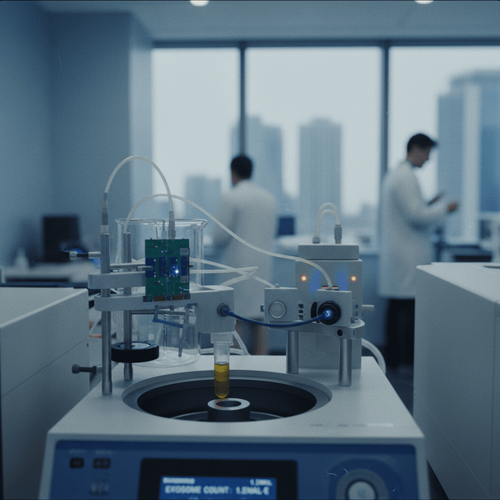
Isolating exosomes from urine isn't as simple as pouring a sample through a filter. Several methods exist, each with its own advantages and drawbacks. Ultracentrifugation, the traditional workhorse, is time-consuming and can damage the exosomes. Polymer-based precipitation is faster but may co-isolate contaminants. Microfluidic devices offer high-throughput and purity, but are not yet widely available in clinical labs. The choice of method profoundly impacts downstream analysis. Standardizing exosome isolation is a prerequisite for reliable clinical translation.
Cargo Analysis: Deciphering the Message
Once isolated, the exosomal cargo needs to be analyzed. Proteomics, using mass spectrometry, can identify and quantify hundreds of proteins within exosomes, offering a snapshot of the cellular proteome. MicroRNA profiling, via quantitative PCR or next-generation sequencing, can reveal changes in gene expression. Lipidomics is also emerging as a valuable tool. Each omics approach provides complementary information. Integrating these datasets is key to understanding the complex interplay of pathways involved in kidney disease progression. Think of it as piecing together a complex puzzle, where each type of data provides a crucial fragment.
Clinical Applications: Where Do We Stand?
The potential applications of urinary exosomes in nephrology are vast. They could serve as biomarkers for early detection of diabetic kidney disease, even before microalbuminuria develops. They could differentiate between various causes of acute kidney injury (AKI), such as ischemia or drug toxicity. They might even predict the progression of chronic kidney disease (CKD) and identify patients at high risk of end-stage renal disease (ESRD). However, most of these applications are still in the research phase. Large-scale clinical trials are needed to validate their diagnostic and prognostic value. This is particularly relevant given that the 2012 KDIGO guidelines strongly recommend using the UACR (Urine Albumin-to-Creatinine Ratio) and eGFR (estimated Glomerular Filtration Rate) for diagnosis and staging of CKD; exosome-based diagnostics would need to demonstrate superiority or cost-effectiveness to displace these established markers.
Limitations and Caveats
Let's be clear - exosome research is still in its infancy. Several limitations need to be addressed before these technologies can be widely adopted. First, there's the issue of standardization. As mentioned earlier, different isolation methods can yield different results, making it difficult to compare studies. Second, the concentration of exosomes in urine can vary widely depending on hydration status, diet, and other factors. Third, the exosomal cargo can be influenced by systemic inflammation and other non-kidney related conditions, making it difficult to pinpoint the source of the biomarkers. Finally, the cost of exosome isolation and analysis is currently high, which limits its accessibility. Who will pay for these tests? Will insurance companies reimburse them? These are crucial questions that need to be answered. Furthermore, many published studies lack rigorous validation in independent cohorts, raising concerns about reproducibility. Beware of hype.
While exosome analysis holds immense promise, implementing it in clinical practice presents challenges. Labs will need to invest in specialized equipment and training. Standardized protocols for exosome isolation and analysis must be established to ensure reproducibility across different centers. Billing codes for exosome-based assays need to be developed to facilitate reimbursement. The cost-effectiveness of exosome analysis compared to traditional biomarkers needs to be demonstrated. Will this technology truly improve patient outcomes, or will it simply add to the already considerable burden of healthcare costs?
LSF-9583143947 | December 2025

How to cite this article
O'Malley L. Kidney disease diagnosis: the promise of urinary exosomes. The Life Science Feed. Published January 28, 2026. Updated January 28, 2026. Accessed March 17, 2026. https://thelifesciencefeed.com/nephrology/diabetic-nephropathies/innovation/kidney-disease-diagnosis-the-promise-of-urinary-exosomes.
Copyright and license
© 2026 The Life Science Feed. All rights reserved. Unless otherwise indicated, all content is the property of The Life Science Feed and may not be reproduced, distributed, or transmitted in any form or by any means without prior written permission.
Fact-Checking & AI Transparency
This content was produced with the assistance of AI technology and has been rigorously reviewed and verified by our human editorial team to ensure accuracy and clinical relevance.
References
- Théry, C., Witwer, K. W., Aikawa, E., Alcaraz, M. J., Anderson, J. D., Andriantsitohaina, R., ... & Giebel, B. (2018). Minimal information for studies of extracellular vesicles 2018 (MISEV2018): a position statement of the International Society for Extracellular Vesicles and update of the MISEV2014 guidelines. Journal of Extracellular Vesicles, 7(1), 1535750.
- ক্ষতিগ্রস্ত, H., Sharma, A., & Garcia, A. A. (2021). Urinary Exosomes in Kidney Disease: Current Status and Future Directions. American Journal of Nephrology, 52(2), 81-94.
- Kidney Disease: Improving Global Outcomes (KDIGO) CKD Work Group. (2012). KDIGO 2012 clinical practice guideline for the evaluation and management of chronic kidney disease. Kidney International Supplements, 3(1), 1-150.
Related Articles