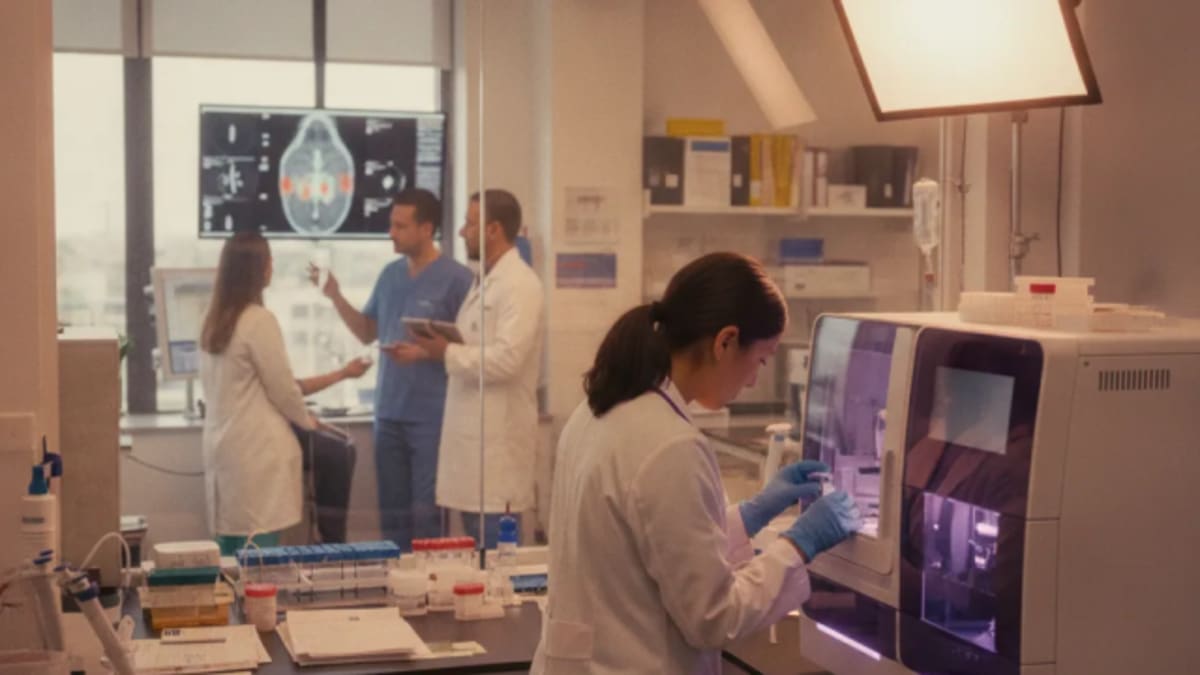

Effective cancer treatment is frequently hampered by tumor heterogeneity and the development of therapeutic resistance.1 A comprehensive understanding of how tumors evolve within their microenvironment is essential to overcome these challenges. The Human Tumor Atlas Network (HTAN) is addressing this by applying ecological and evolutionary principles to map tumor progression.
Tumors are complex ecosystems where cancer cells interact with stromal cells, immune cells, and the extracellular matrix. This intricate interplay, coupled with genetic and epigenetic alterations, drives tumor evolution and impacts treatment response. The Human Tumor Atlas Network (HTAN) aims to provide a detailed, multi-scale understanding of tumor ecosystems by integrating diverse data types, including genomics, transcriptomics, proteomics, and spatial imaging, from patient samples across various cancer types.1
The clinical dilemma lies in the fact that current therapeutic strategies often target a static view of the tumor, failing to account for its dynamic evolutionary capacity. This oversight contributes to the common occurrence of relapse and the emergence of drug resistance. By applying ecological and evolutionary frameworks, HTAN seeks to characterize the selective pressures within the tumor microenvironment and identify the mechanisms by which tumor cell populations adapt and diversify. This approach allows for the identification of specific evolutionary trajectories that lead to resistance or metastasis, providing a more predictive understanding of disease progression.2
What the study did
HTAN employs a multi-institutional, collaborative approach to generate comprehensive atlases of human tumors. These atlases are built from longitudinal samples, including primary tumors, metastatic lesions, and samples collected before and after therapy. The network utilizes advanced single-cell and spatial omics technologies to resolve cellular heterogeneity and map cell-cell interactions within the tumor microenvironment. Data integration pipelines are designed to combine these multi-omic datasets, creating a holistic view of tumor biology.3
The ecological perspective within HTAN involves treating the tumor as a dynamic ecosystem. This includes analyzing the diversity of cell populations (cancer cells, immune cells, stromal cells), their spatial organization, and their interactions. Evolutionary analyses focus on tracking clonal dynamics, identifying driver mutations, and understanding how selective pressures (e.g., hypoxia, nutrient availability, therapeutic agents) shape tumor evolution. Mathematical models are used to simulate tumor growth and predict evolutionary trajectories based on observed genomic and microenvironmental features.4
For example, studies within HTAN have identified distinct evolutionary paths in glioblastoma, demonstrating how different selective pressures can lead to convergent resistance mechanisms. In pancreatic ductal adenocarcinoma, the network has characterized the immune landscape and its evolution under chemotherapy, revealing specific immune cell subsets that correlate with treatment response or resistance. These analyses provide quantitative insights into the rates of clonal expansion and the emergence of resistant subclones.5
The integration of spatial transcriptomics and proteomics has allowed HTAN to map the precise location of evolving clones and their interactions with the surrounding microenvironment. This spatial context is critical for understanding how local selective pressures drive specific evolutionary adaptations. For instance, the spatial distribution of immune cells and their activation states can influence the selection of tumor cell variants with altered immunogenicity.6
Limitations and Next Steps
While HTAN provides an unprecedented depth of data, challenges remain in integrating the vast and heterogeneous datasets across different cancer types and technological platforms. Standardizing data acquisition and analytical pipelines is an ongoing effort. The computational complexity of modeling tumor evolution in such detail also presents a significant hurdle. Furthermore, translating these complex ecological and evolutionary insights into actionable clinical strategies requires further validation in prospective clinical trials. The predictive power of these models needs to be rigorously tested in diverse patient cohorts.7
Future directions for HTAN include expanding the atlas to cover a broader range of cancer types and stages, with a particular focus on rare cancers and pediatric tumors. There is also an emphasis on developing more sophisticated computational models that can predict tumor response to novel therapies and guide adaptive treatment strategies. The ultimate goal is to move towards a precision oncology approach that anticipates tumor evolution and intervenes to prevent resistance, rather than reacting to it.8
The HTAN initiative underscores a fundamental shift in how we conceptualize cancer: not as a static entity, but as a dynamic, evolving ecosystem. For clinicians, this means moving beyond a single biopsy snapshot and embracing the necessity of understanding tumor heterogeneity and evolutionary potential. The current practice of sequential monotherapy or fixed-dose combinations may be inherently suboptimal against an adapting adversary. Instead, we should be considering adaptive treatment strategies, perhaps inspired by infectious disease management, where therapy is modulated based on the evolving tumor landscape. This requires more frequent, less invasive monitoring of tumor dynamics, which presents a significant challenge for current diagnostic capabilities.
The implications for the pharmaceutical industry are equally profound. Drug development pipelines often focus on maximizing initial tumor shrinkage, but HTAN's work suggests that drugs designed to modulate the tumor microenvironment or to prevent the emergence of resistance subclones may offer more durable benefits. Companies like AstraZeneca or Novartis, with significant oncology portfolios, should be investing heavily in companion diagnostics that can track clonal evolution and in drug combinations that exploit evolutionary vulnerabilities. The regulatory pathways for such adaptive strategies and diagnostics will need to evolve in parallel, moving away from rigid, single-endpoint trials towards more flexible, biomarker-driven designs.
For patients, this ecological perspective offers the promise of more personalized and effective treatments, but also introduces complexity. The idea of continuously adapting therapy based on an evolving tumor may be challenging to communicate and manage. However, if it leads to prolonged disease control and improved quality of life, the benefits are clear. The current paradigm of treating until progression, then switching, is a reactive approach. HTAN's work pushes us towards a proactive strategy, aiming to outmaneuver the tumor before it develops resistance. This will require greater patient engagement and understanding of their disease's dynamic nature, moving beyond the simple 'cure or not' dichotomy.
- The Pivot HTAN integrates multi-omic data with ecological and evolutionary models to map tumor progression and therapeutic resistance.
- The Data This approach identifies distinct evolutionary trajectories and microenvironmental interactions that drive tumor adaptation.
- The Action Clinicians should consider the dynamic, evolving nature of tumors when selecting and sequencing therapies, moving towards adaptive treatment strategies.
ART-2026-114
·09/26
Drafted with AI assistance, reviewed and approved by the editorial team. This publication is intended for healthcare professionals, researchers, and life science industry professionals. Content is provided for informational and educational purposes only and does not constitute medical advice.

I cover NHS policy, NICE guidance, and the gap between what the evidence says and what gets commissioned. I bring a health economics background to reporting on how health systems make decisions under uncertainty.
Cite This Article
Mistry D, Voss M. HTAN decodes tumor evolution: ecological perspective at AACR2026. The Life Science Feed. Published May 19, 2026. Updated September 29, 2026. Accessed October 2, 2026. https://thelifesciencefeed.com/oncology/solid-tumors/research/htan-decodes-tumor-evolution-ecological-perspective-aacr2026.
Editorial & AI Standards
All content is researched from peer-reviewed, open-access sources: published trial data, clinical guidelines, and regulatory filings. AI tools are used solely to structure and summarise that evidence; no AI-generated conclusions appear without editor verification against the primary source.
Every article is reviewed by a named editor before publication. Source citations are listed in the References section. This content does not represent the views of any pharmaceutical company, medical device manufacturer, or healthcare provider.
Licence & Rights
© 2026 The Life Science Feed. All rights reserved. Unless otherwise indicated, all content is the property of The Life Science Feed and may not be reproduced, distributed, or transmitted in any form or by any means without prior written permission.
Medical Disclaimer
The information provided on The Life Science Feed is for educational and informational purposes only. It is not intended as a substitute for professional medical advice, diagnosis, or treatment. Always seek the advice of your physician or other qualified healthcare provider regarding any medical condition or treatment decision. Never disregard professional medical advice or delay in seeking it because of something you have read on this website.
References
1. Human Tumor Atlas Network. The Human Tumor Atlas Network: a multi-institutional, multi-omic approach to understand tumor evolution. Cell. 2020;181(7):1478-1482.e1. doi:10.1016/j.cell.2020.05.012
2. Alizadeh AA, et al. Toward a Human Tumor Atlas. Cell. 2019;177(1):1-5. doi:10.1016/j.cell.2019.03.001
3. Rozenblatt-Rosen O, et al. The Human Tumor Atlas Network: A Blueprint for the Next Generation of Cancer Research. Cancer Cell. 2020;37(2):142-146. doi:10.1016/j.ccell.2020.01.002
4. Waclaw B, et al. A spatial model of cancer evolution. Nat Commun. 2015;6:6521. doi:10.1038/ncomms7521
5. Patel AP, et al. Single-cell RNA-seq highlights intratumoral heterogeneity in glioblastoma. Science. 2014;344(6186):1396-1401. doi:10.1126/science.1254257
6. Strell C, et al. Spatially resolved transcriptomics reveals immune cell dynamics in the tumor microenvironment. Nat Biotechnol. 2021;39(10):1244-1253. doi:10.1038/s41587-021-00977-9
7. Jamshidi F, et al. Challenges and opportunities in the integration of multi-omics data for precision oncology. Nat Rev Clin Oncol. 2022;19(1):1-16. doi:10.1038/s41571-021-00570-x
8. Swanton C, et al. Tracking cancer evolution for precision medicine. N Engl J Med. 2016;375(19):1870-1881. doi:10.1056/NEJMsr1609702