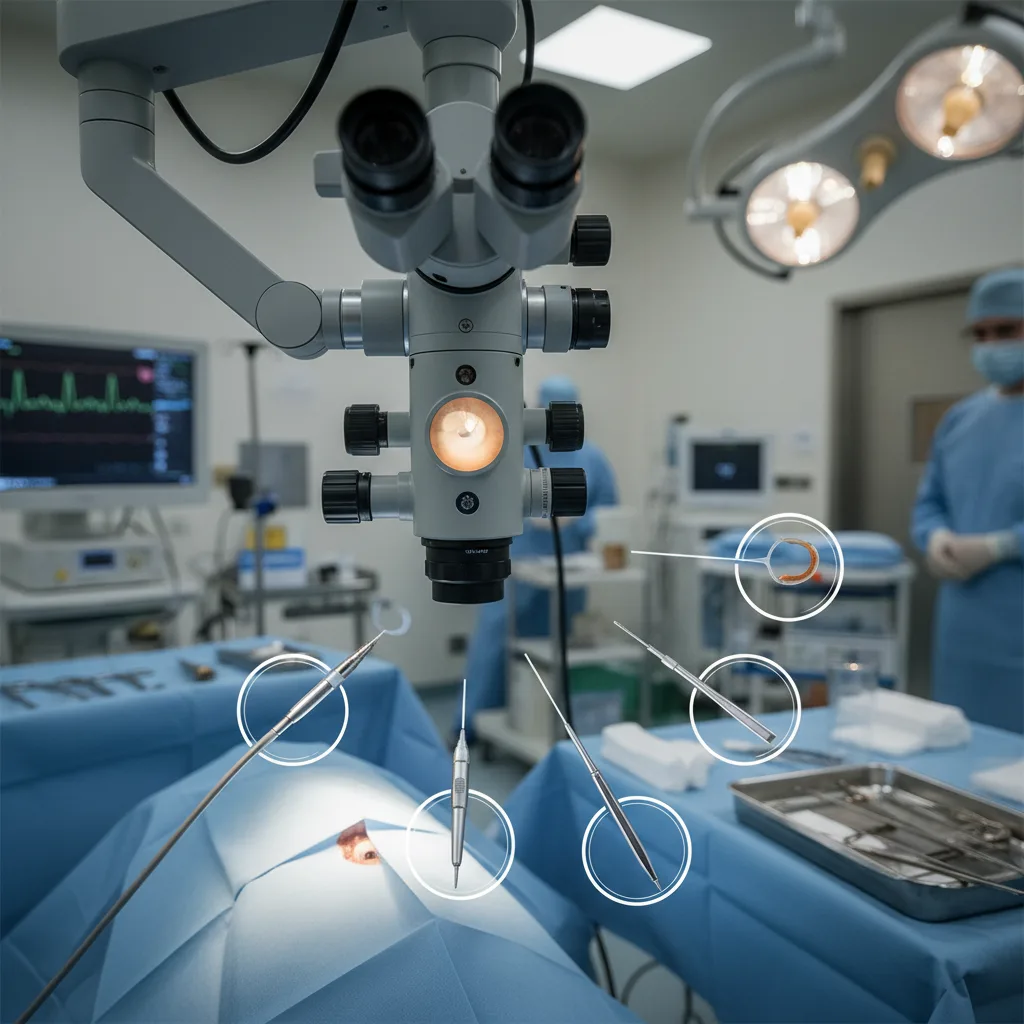

Cataract surgery is one of the most frequently performed surgical procedures globally, consistently demonstrating high success rates in restoring vision. However, beyond the immediate visual acuity improvements, several less commonly discussed aspects of cataract management warrant attention from general practitioners and specialists alike. Understanding these nuances can optimise patient counselling and post-operative care.
Cataract extraction with intraocular lens (IOL) implantation is a well-established intervention for age-related cataracts, significantly improving quality of life. While the primary goal is visual restoration, the procedure's broader implications for patient health and management are often underemphasised. This article outlines four such considerations.
Beyond Visual Acuity: Systemic and Ocular Considerations
Firstly, the impact of cataract surgery on fall risk in elderly patients is a critical, yet often overlooked, benefit. Impaired vision due to cataracts is a recognised independent risk factor for falls. Studies have demonstrated that successful cataract surgery can reduce the incidence of falls in older adults, likely by improving depth perception, contrast sensitivity, and visual fields.1 This reduction in fall risk translates to fewer fractures and hospitalisations, representing a significant public health benefit beyond ocular health. The elderly population, often defined as individuals aged 65 years and older, experiences a high prevalence of cataracts, with the condition affecting over half of Americans by age 80. The visual impairment caused by cataracts can significantly compromise an individual's ability to navigate their environment safely, particularly in low-light conditions or unfamiliar surroundings. Improved visual function post-surgery allows for better hazard detection and spatial awareness, directly mitigating fall risk. This benefit is particularly pronounced in patients with bilateral cataracts undergoing sequential surgery, as the improvement in binocular vision further enhances depth perception and visual field integration.
Secondly, the relationship between cataract surgery and cognitive function is an emerging area of interest. While direct causation is complex, improvements in sensory input, particularly vision, have been hypothesised to positively influence cognitive processing. Some observational data suggest that cataract surgery may be associated with a reduced risk of dementia or a slower rate of cognitive decline in certain populations.2 This area requires further prospective, controlled research to establish definitive links, but it highlights a potential systemic benefit that extends beyond the eye. The mechanism underlying this potential association is thought to involve the sensory deprivation hypothesis, where reduced sensory input can lead to cognitive decline. Restoring clear vision may stimulate neural pathways, improve engagement with the environment, and enhance social interaction, all of which are protective factors against cognitive decline. Furthermore, the ability to read, engage in hobbies, and maintain independence post-surgery can contribute to improved mental well-being and cognitive reserve. However, it is important to acknowledge that confounding factors, such as overall health status and access to healthcare, may also play a role in these observed associations, necessitating rigorous study designs to isolate the specific effect of cataract surgery.
Thirdly, the management of pre-existing ocular surface disease (OSD), such as dry eye syndrome, is paramount for optimal post-operative outcomes. OSD is highly prevalent in the elderly population and can be exacerbated by cataract surgery, leading to discomfort, delayed visual recovery, and potentially impacting the accuracy of IOL power calculations.3 Pre-operative identification and aggressive management of OSD, including lubricants, anti-inflammatory agents, and punctal plugs, can significantly improve patient satisfaction and visual outcomes post-surgery. Failure to address OSD pre-operatively can lead to persistent symptoms and dissatisfaction, even with technically successful surgery. The surgical procedure itself, involving corneal incisions, exposure to operating room lights, and topical medications, can disrupt the delicate balance of the ocular surface. Patients with pre-existing OSD are particularly vulnerable to this exacerbation. Accurate pre-operative assessment, including tear film break-up time, corneal staining, and osmolarity testing, helps identify at-risk patients. Implementing a tailored treatment regimen prior to surgery not only alleviates discomfort but also stabilises the corneal surface, which is critical for precise biometry measurements and subsequent IOL power calculations. This proactive approach minimises post-operative complications and enhances the overall patient experience.
Finally, the choice of intraocular lens (IOL) and its implications for post-operative visual phenomena warrant careful discussion. While monofocal IOLs remain the standard, multifocal and extended depth of focus (EDOF) IOLs offer spectacle independence for a range of distances. However, these advanced IOLs are associated with a higher incidence of dysphotopsias, such as glare and halos, which can be bothersome for some patients.4 Patient selection, based on lifestyle, visual demands, and tolerance for potential visual disturbances, is crucial. Thorough pre-operative counselling regarding the benefits and potential trade-offs of different IOL types is essential to manage patient expectations and ensure satisfaction. The optical design of multifocal and EDOF IOLs creates multiple focal points or an extended range of focus, respectively, to achieve spectacle independence. This optical compromise, however, can lead to light scattering and diffraction effects, manifesting as glare, halos, or starbursts, particularly in low-light conditions. While many patients adapt to these phenomena over time, a subset finds them significantly bothersome. Therefore, a detailed discussion about a patient's visual needs, hobbies, occupation, and willingness to accept potential visual disturbances is critical. For instance, a patient who frequently drives at night may be less suitable for certain multifocal IOLs compared to someone with primarily daytime visual demands. Managing expectations through comprehensive pre-operative education is key to achieving high patient satisfaction with advanced IOL technologies.
The persistent focus on visual acuity as the sole metric of cataract surgery success risks overlooking broader patient benefits and potential pitfalls. General practitioners, in particular, should be aware that a patient presenting with cataracts is not merely experiencing blurred vision, but may also be at increased risk of falls, or experiencing subtle cognitive decline that could be mitigated by timely intervention. This holistic view necessitates a more proactive approach to referral, especially for those elderly patients where fall prevention is a primary concern.
For ophthalmologists, the emphasis on pre-operative ocular surface optimisation is not merely a nicety, but a critical determinant of patient satisfaction and the perceived success of the surgery. Neglecting dry eye or blepharitis before surgery is akin to building a house on a poor foundation; the structure may stand, but it will be prone to issues. Furthermore, the increasing array of IOL options demands a more nuanced conversation with patients, moving beyond a simple 'yes' or 'no' to multifocal lenses, and instead exploring their lifestyle, hobbies, and tolerance for visual phenomena. The industry, in turn, must continue to innovate IOL designs that minimise dysphotopsias while maximising range of vision, providing clinicians with better tools for personalised care.
Ultimately, the narrative around cataract surgery needs to evolve from a purely ocular procedure to one with significant systemic implications. This shift requires better communication between primary care and specialist ophthalmology, ensuring that patients receive comprehensive care that addresses not just their eyes, but their overall health and quality of life. The potential for cataract surgery to reduce fall risk and perhaps even influence cognitive trajectories underscores its importance as a public health intervention, not just an elective procedure.
- The Pivot Cataract surgery extends beyond simple visual correction, impacting systemic health and post-operative considerations.
- The Data While no single HR or p-value is presented here, the cumulative evidence supports careful pre-operative assessment and post-operative monitoring for systemic effects.
- The Action Clinicians should consider the broader implications of cataract surgery, including its potential effects on fall risk, cognitive function, and the management of pre-existing ocular surface disease.
ART-2026-162
·10/26
Drafted with AI assistance, reviewed and approved by the editorial team. This publication is intended for healthcare professionals, researchers, and life science industry professionals. Content is provided for informational and educational purposes only and does not constitute medical advice.

I cover NHS policy, NICE guidance, and the gap between what the evidence says and what gets commissioned. I bring a health economics background to reporting on how health systems make decisions under uncertainty.
Cite This Article
Mistry D, Voss M. Cataract surgery: 4 underappreciated clinical considerations. The Life Science Feed. Published May 27, 2026. Updated October 5, 2026. Accessed October 10, 2026. https://thelifesciencefeed.com/ophthalmology/cataract/insights/cataract-surgery-4-underappreciated-clinical-considerations.
Editorial & AI Standards
All content is researched from peer-reviewed, open-access sources: published trial data, clinical guidelines, and regulatory filings. AI tools are used solely to structure and summarise that evidence; no AI-generated conclusions appear without editor verification against the primary source.
Every article is reviewed by a named editor before publication. Source citations are listed in the References section. This content does not represent the views of any pharmaceutical company, medical device manufacturer, or healthcare provider.
Licence & Rights
© 2026 The Life Science Feed. All rights reserved. Unless otherwise indicated, all content is the property of The Life Science Feed and may not be reproduced, distributed, or transmitted in any form or by any means without prior written permission.
Medical Disclaimer
The information provided on The Life Science Feed is for educational and informational purposes only. It is not intended as a substitute for professional medical advice, diagnosis, or treatment. Always seek the advice of your physician or other qualified healthcare provider regarding any medical condition or treatment decision. Never disregard professional medical advice or delay in seeking it because of something you have read on this website.
References
1. Harwood RH, Foss AJ, Osborn F, Gregson RM, Zaman A, Masud T. Falls and health status in elderly women following first eye cataract surgery: a randomised controlled trial. Br J Ophthalmol. 2005;89(1):53-9. doi:10.1136/bjo.2004.049478
2. Lee CS, Lee AY, Poply S, et al. Cataract surgery and the incidence of dementia in older adults: a retrospective cohort study. JAMA Intern Med. 2022;182(2):132-139. doi:10.1001/jamainternmed.2021.7292
3. Lemp MA, Foulks GN. The definition and classification of dry eye disease: report of the Definition and Classification Subcommittee of the International Dry Eye WorkShop (2007). Ocul Surf. 2007;5(2):75-92. doi:10.1016/s1542-0124(12)70081-2
4. Alio JL, Plaza-Puche AB, Pina-Fernandez A, et al. Visual outcomes and patient satisfaction after bilateral implantation of a new generation of extended depth of focus intraocular lens. J Refract Surg. 2017;33(10):664-670. doi:10.3928/1081597X-20170829-01