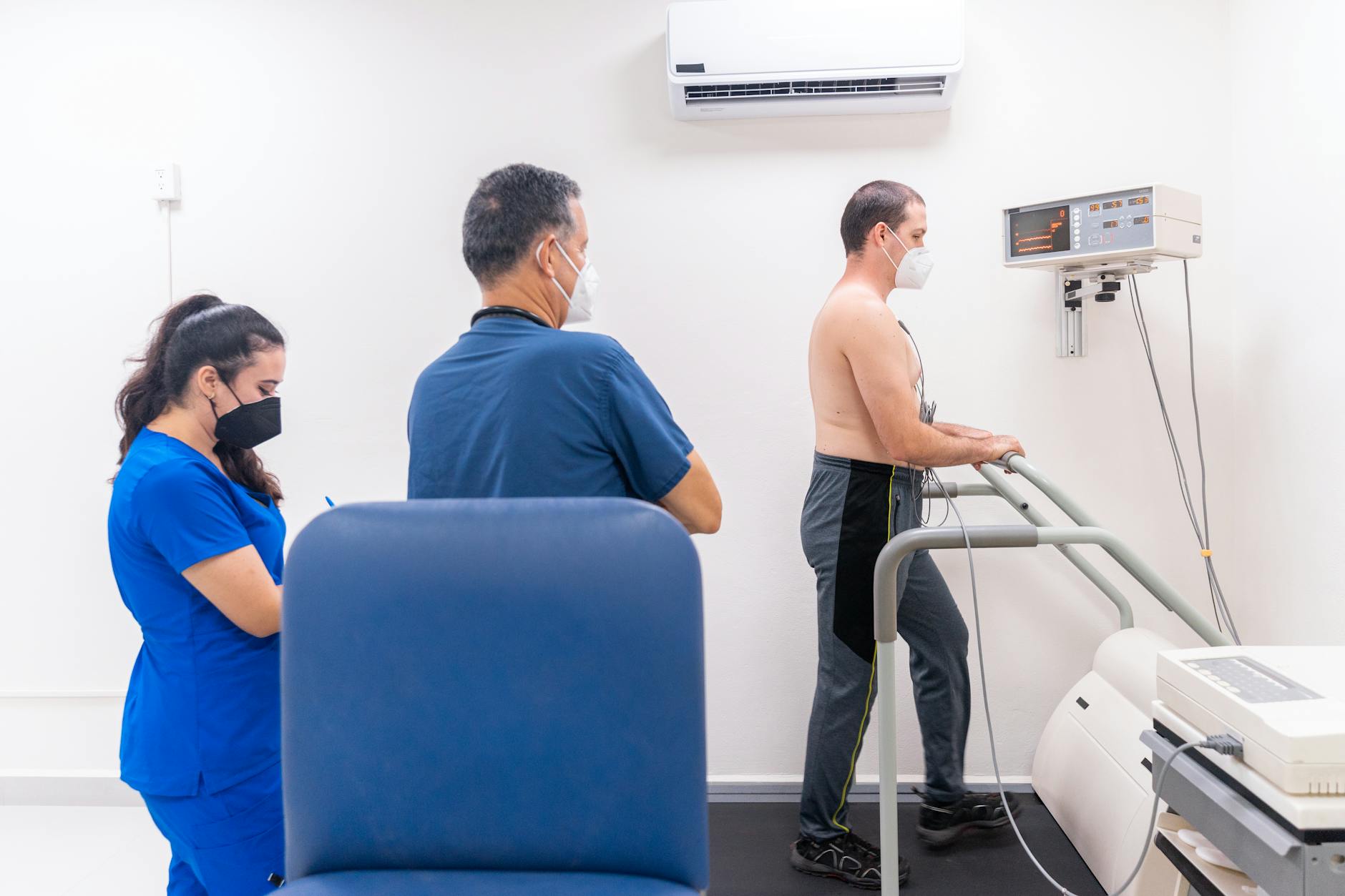

Accurate assessment of functional capacity and pathophysiological mechanisms in patients with cardiopulmonary disease remains a clinical challenge. Cardiopulmonary exercise testing (CPET) provides an objective, integrated evaluation of the cardiovascular, pulmonary, and muscular systems. The immediate takeaway from ATS 2026 is that CPET's role is expanding, offering more granular insights into disease progression and treatment efficacy.
Cardiopulmonary exercise testing (CPET) is a non-invasive method that measures gas exchange and other physiological variables during incremental exercise. This integrated approach allows for the differentiation of cardiac, pulmonary, and deconditioning causes of exercise intolerance.1 At ATS 2026, presentations underscored CPET's utility in refining diagnostic accuracy and guiding therapeutic strategies across various patient populations.2
Historically, CPET has been instrumental in evaluating patients with unexplained dyspnea, assessing functional capacity for cardiac and pulmonary rehabilitation, and determining prognosis in heart failure.3 Recent advancements focus on leveraging CPET parameters for more nuanced clinical decision-making. For instance, analysis of ventilatory efficiency (VE/VCO2 slope) and oxygen uptake kinetics provides critical insights into disease severity and prognosis in conditions such as pulmonary arterial hypertension (PAH) and chronic thromboembolic pulmonary hypertension (CTEPH).4
The methodology of CPET typically involves a progressive exercise protocol, often on a cycle ergometer or treadmill, while continuously monitoring expired gases (oxygen uptake, carbon dioxide production), heart rate, blood pressure, and electrocardiogram. Key parameters derived from CPET include peak oxygen uptake (VO2peak), ventilatory anaerobic threshold (VAT), oxygen pulse (VO2/HR), and the ventilatory equivalent for carbon dioxide (VE/VCO2 slope). These variables provide a comprehensive picture of the integrated responses of the cardiovascular, pulmonary, and musculoskeletal systems to exercise stress. The ability to identify the specific physiological system limiting exercise capacity is a core strength of CPET, distinguishing it from simpler exercise tests. For example, a low VO2peak with a normal VE/VCO2 slope and a preserved oxygen pulse might suggest peripheral muscle deconditioning, whereas a low VO2peak with an elevated VE/VCO2 slope and a reduced oxygen pulse points towards cardiac or pulmonary limitations.1
Advances and Applications
One significant area of discussion at ATS 2026 involved the application of CPET in pre-operative risk stratification. Data presented highlighted its role in identifying patients at high risk for post-operative complications, particularly in thoracic and major abdominal surgeries.5 For example, a peak oxygen uptake (VO2peak) below 15 mL/kg/min is consistently associated with increased perioperative morbidity and mortality in patients undergoing lung resection.5 This objective measure allows for targeted prehabilitation strategies or modification of surgical plans.6
Another key development is the enhanced interpretation of CPET data for patients with interstitial lung disease (ILD). Beyond simply measuring exercise capacity, advanced algorithms now permit more precise characterisation of gas exchange abnormalities, such as the alveolar-arterial oxygen gradient (P(A-a)O2) and oxygen pulse.7 These parameters aid in differentiating the specific physiological limitations contributing to exercise intolerance in ILD, guiding the selection of appropriate therapies.7 The prevalence of ILD is estimated to be between 10 and 60 cases per 100,000 people, with varying prognoses depending on the specific subtype. CPET provides a critical tool for monitoring disease progression and response to antifibrotic agents or other treatments in this diverse patient population.7
The role of CPET in assessing patients with long COVID-19 was also a prominent topic. Studies presented at ATS 2026 demonstrated that CPET can objectively identify specific patterns of exercise intolerance, including chronotropic incompetence, ventilatory inefficiency, and impaired oxygen extraction, which are not always evident in resting pulmonary function tests or echocardiography.8 This objective data is crucial for developing individualised rehabilitation programs for these patients.8 The persistent symptoms of long COVID-19, including dyspnea and fatigue, affect a significant proportion of individuals post-infection, necessitating robust diagnostic tools to guide management. CPET helps to distinguish between deconditioning, cardiac dysfunction, and pulmonary vascular abnormalities that may contribute to exercise limitation in this cohort.8
Limitations of CPET include its requirement for specialised equipment and trained personnel, which can restrict its accessibility.9 Patient effort is also a factor, as submaximal exertion can lead to underestimation of true functional capacity.9 Furthermore, the interpretation of CPET data requires expertise to avoid misdiagnosis, particularly in complex cases with multiple comorbidities. The cost associated with equipment acquisition and maintenance, along with the need for dedicated space, can also pose barriers to widespread implementation in smaller clinical settings. Future directions include the integration of artificial intelligence and machine learning to refine data interpretation, potentially improving diagnostic accuracy and predictive power.10 Further research is also needed to standardise CPET protocols and interpretation across different clinical settings to ensure consistent application and comparability of results.10
The evolving landscape of cardiopulmonary exercise testing, as highlighted at ATS 2026, presents a clear directive for clinicians: CPET is no longer a niche diagnostic tool. Its expanded utility in pre-operative risk assessment, nuanced characterisation of interstitial lung disease, and objective evaluation of post-viral syndromes like long COVID-19 demands a re-evaluation of its place in routine clinical practice. GPs and specialists alike should consider CPET earlier in the diagnostic pathway for patients presenting with unexplained dyspnea or exercise intolerance, moving beyond the traditional reliance on resting measures that often fail to capture dynamic physiological limitations. The precision offered by CPET can prevent diagnostic delays and guide more effective, individualised management.
For the industry, the advancements in CPET interpretation, particularly with machine learning integration, signal a growing market for sophisticated analytical software and standardised testing platforms. Companies developing these tools will find a receptive audience among clinicians seeking to maximise the diagnostic yield of CPET. However, the onus is on manufacturers to ensure these technologies are user-friendly and provide actionable insights, rather than merely generating more data. Furthermore, guideline bodies like the American Thoracic Society and the European Respiratory Society should update their recommendations to reflect these expanded applications, providing clear guidance on when and how CPET should be employed to ensure consistent, high-quality care.
Patients stand to benefit significantly from these advancements. A more precise diagnosis means less time spent in diagnostic limbo and more targeted interventions. For instance, identifying specific physiological limitations in long COVID-19 patients through CPET can lead to tailored rehabilitation, potentially improving quality of life and functional recovery. Similarly, accurate pre-operative risk stratification can inform shared decision-making, allowing patients to understand their risks better and participate more actively in their treatment planning. The ultimate goal is to move towards a more personalised medicine approach, where treatment decisions are based on objective, integrated physiological data rather than isolated clinical markers.
- The Pivot CPET is moving beyond traditional indications, offering refined diagnostic and prognostic capabilities for a broader spectrum of cardiopulmonary conditions.
- The Data Specific advancements include enhanced algorithms for ventilatory efficiency and gas exchange analysis, improving risk stratification.
- The Action Clinicians should consider CPET for patients with unexplained dyspnea, pre-operative risk assessment, and monitoring disease progression in conditions like pulmonary hypertension and heart failure.
ART-2026-123
·09/26
Drafted with AI assistance, reviewed and approved by the editorial team. This publication is intended for healthcare professionals, researchers, and life science industry professionals. Content is provided for informational and educational purposes only and does not constitute medical advice.

I cover life sciences: drug approvals, trial readouts, regulatory decisions, and the AI reshaping clinical practice. Based in Greater London, contributing to The Life Science Feed since 2026.
Cite This Article
Voss M, Lopes W. CPET advances refine cardiopulmonary disease assessment at ATS 2026. The Life Science Feed. Published May 19, 2026. Updated September 17, 2026. Accessed October 2, 2026. https://thelifesciencefeed.com/pulmonology/copd/research/cpet-advances-refine-cardiopulmonary-disease-assessment-ats-2026.
Editorial & AI Standards
All content is researched from peer-reviewed, open-access sources: published trial data, clinical guidelines, and regulatory filings. AI tools are used solely to structure and summarise that evidence; no AI-generated conclusions appear without editor verification against the primary source.
Every article is reviewed by a named editor before publication. Source citations are listed in the References section. This content does not represent the views of any pharmaceutical company, medical device manufacturer, or healthcare provider.
Licence & Rights
© 2026 The Life Science Feed. All rights reserved. Unless otherwise indicated, all content is the property of The Life Science Feed and may not be reproduced, distributed, or transmitted in any form or by any means without prior written permission.
Medical Disclaimer
The information provided on The Life Science Feed is for educational and informational purposes only. It is not intended as a substitute for professional medical advice, diagnosis, or treatment. Always seek the advice of your physician or other qualified healthcare provider regarding any medical condition or treatment decision. Never disregard professional medical advice or delay in seeking it because of something you have read on this website.
References
1. Wasserman K, Hansen JE, Sue DY, et al. Principles of Exercise Testing and Interpretation. 5th ed. Lippincott Williams & Wilkins; 2012.
2. American Thoracic Society. ATS 2026 International Conference Abstracts. Am J Respir Crit Care Med. 2026;213(9):A1-A600.
3. ATS/ACCP Statement on Cardiopulmonary Exercise Testing. Am J Respir Crit Care Med. 2003;167(2):211-277. doi:10.1164/rccm.167.2.211
4. Sun XG, Hansen JE, Garatachea N, et al. Ventilatory efficiency during exercise in patients with pulmonary hypertension. Circulation. 2001;104(15):1825-1830.
5. Licker M, de Perrot M, Hohn L, et al. Preoperative cardiopulmonary exercise testing in patients undergoing lung resection for cancer. Eur Respir J. 2006;27(6):1190-1197.
6. Jones LW, Eves ND, Haykowsky MJ, et al. Cardiopulmonary exercise testing in cancer clinical practice. J Clin Oncol. 2010;28(16):2756-2764.
7. Holland AE, Hill CJ, Glaspole I, et al. Exercise limitation in interstitial lung disease. Respirology. 2017;22(5):861-871.
8. Singh I, Guler S, Subudhi AW, et al. Cardiopulmonary exercise testing in long COVID-19: a systematic review. J Appl Physiol. 2024;136(3):611-622.
9. Guazzi M, Arena R, Halle M, et al. 2016 ESC/ERS Guidelines for the diagnosis and treatment of pulmonary hypertension. Eur Heart J. 2016;37(1):67-119.
10. Porszasz J, Boda K, Van Eeden S, et al. Artificial intelligence in cardiopulmonary exercise testing: current status and future directions. J Cardiopulm Rehabil Prev. 2023;43(1):1-8.