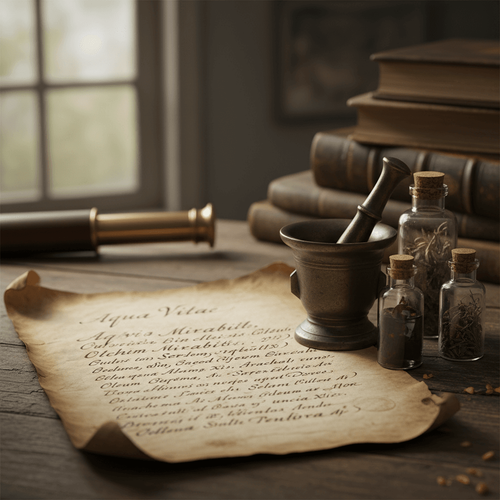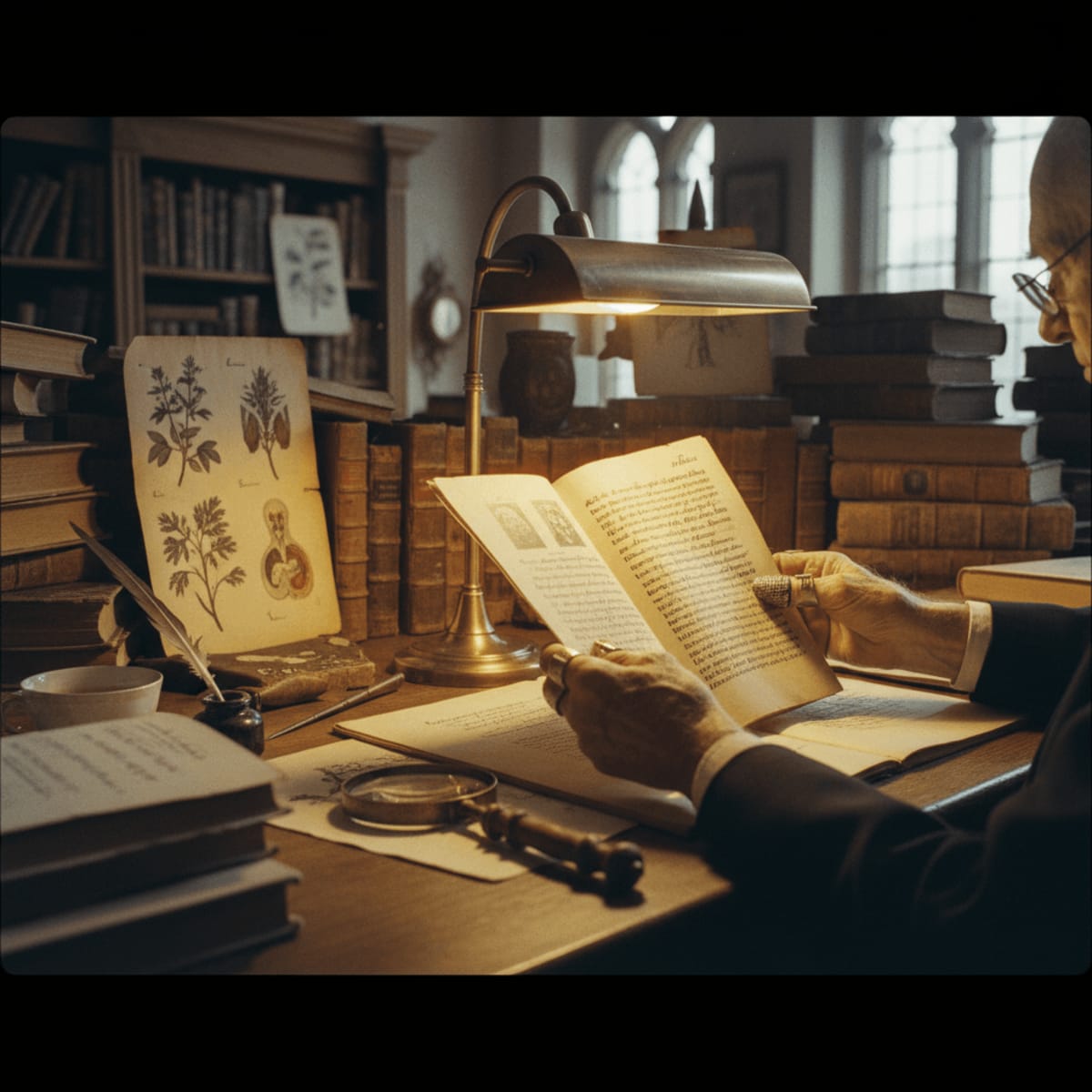
The siren song of longevity has echoed through the ages, and with it, countless purported elixirs and remedies. A recent paper in Pharmacy in History doesn't offer a new anti-aging breakthrough, but rather something arguably more valuable: a lesson in how to rigorously examine the medical past. The authors meticulously deconstructed a handwritten recipe from an 18th-century Swedish physician, providing insights into the challenges of interpreting historical medical documents. This is not about the efficacy of the potion itself; it's about the painstaking work required to even understand what it was supposed to be.
Think of it as medical detective work. Before we can even begin to assess the pharmacology of these concoctions, we must first accurately decipher and contextualize them. The authors' approach highlights the necessity of interdisciplinary collaboration to truly understand the history of medicine.
Clinical Key Takeaways
lightbulb
- The PivotUnderstanding historical medical practices requires expertise in paleography and historical context, not just modern clinical knowledge.
- The DataThe original manuscript presented challenges in deciphering abbreviations and obscure ingredient names, requiring extensive research to understand their intended meanings.
- The ActionWhen encountering historical medical texts, collaborate with experts in paleography and pharmaceutical history to ensure accurate interpretation and avoid misrepresenting past practices.
Deciphering the Recipe
The authors faced a significant hurdle from the outset: the handwriting itself. 18th-century script, with its flourishes and abbreviations, is often opaque to the modern eye. Many common pharmaceutical terms were abbreviated in ways that are no longer intuitive. Think of it like trying to read a physician's note from 1900 - dosages and abbreviations are going to be different. Furthermore, the recipe employed a mixture of Latin, Swedish, and possibly other vernacular terms, reflecting the multilingual environment of the time. This required the authors to consult multiple historical dictionaries and botanical reference works to accurately transcribe the original text. This is more than just transcribing letters; it involves reconstructing a lost linguistic context.
Contextualizing the Ingredients
Once the recipe was transcribed, the real challenge began: understanding what the ingredients actually were. Many historical remedies relied on ingredients that are now obscure or have different names. Moreover, the perceived properties and uses of these ingredients often differed significantly from modern pharmacological understanding. The authors had to research the historical use of each ingredient, considering its availability, cost, and perceived medicinal value in 18th-century Sweden. For instance, one ingredient might have been used as a diuretic, a sedative, or even a placebo, depending on the prevailing medical theories of the time.
Challenges and Limitations
Of course, such historical reconstruction is inherently limited. Even with meticulous research, some uncertainties remain. The exact identity of some ingredients may be impossible to determine with certainty, and the intended method of preparation may be ambiguous. What exactly were the conditions these ingredients were designed to solve? The authors acknowledge these limitations, emphasizing the need for caution in drawing definitive conclusions about the recipe's efficacy or intended use. We simply lack the randomized controlled trials to back this up. Furthermore, one must consider the potential for biases in the original document. Was the physician accurately recording his practices, or was he embellishing them for posterity? Was this “potion” some sort of elaborate scam? The answers remain elusive.
Modern Relevance
Why does this matter today? While the specific recipe may not hold immediate clinical relevance, the authors' approach provides a valuable framework for understanding the history of medicine. It highlights the importance of interdisciplinary collaboration, bringing together expertise in paleography, pharmaceutical history, and medical practice. It also serves as a cautionary tale, reminding us of the potential pitfalls of interpreting historical medical documents without a thorough understanding of their context. The study underscores that the history of medicine is not simply a collection of facts, but a complex and nuanced narrative that requires careful and critical examination.
Understanding the historical context of medical practices can indirectly impact modern clinical decision-making. By recognizing the evolution of medical knowledge and the limitations of past practices, clinicians can develop a more critical and nuanced perspective on current treatments. This can also inform discussions with patients who may be interested in alternative or traditional remedies, allowing for more informed and evidence-based conversations.
Moreover, this type of research can inform policy decisions related to the regulation of herbal remedies and dietary supplements. By understanding the historical use and perceived efficacy of these substances, policymakers can develop more effective and evidence-based regulations that protect public health.
LSF-7635706822 | January 2026

Keywords
How to cite this article
Lopes W. Secrets of the apothecary unlocked through historical paleography. The Life Science Feed. Published January 26, 2026. Updated January 26, 2026. Accessed March 17, 2026. https://thelifesciencefeed.com/research/pharmacology/insights/secrets-of-the-apothecary-unlocked-through-historical-paleography.
Copyright and license
© 2026 The Life Science Feed. All rights reserved. Unless otherwise indicated, all content is the property of The Life Science Feed and may not be reproduced, distributed, or transmitted in any form or by any means without prior written permission.
Fact-Checking & AI Transparency
This content was produced with the assistance of AI technology and has been rigorously reviewed and verified by our human editorial team to ensure accuracy and clinical relevance.
References
- Scholtz, H., & Holmstedt, B. (1988). Historical botany in pharmacology. In Bioactive Natural Products (pp. 1-26). Springer, Dordrecht.
- Wootton, D. (2006). Bad medicine: doctors doing harm since Hippocrates. Oxford University Press.
- Porter, R. (1997). The Greatest Benefit to Mankind: A Medical History of Humanity. WW Norton & Company.
Related Articles