
Hosted by James Carter & Sarah Mitchell

Transcription
Welcome to the debate. Imagine watching your own spine slowly fuse into a solid immovable block of bone, knowing that there's actually a drug out there that could stop it, but but your doctor hesitates to prescribe it because, well, they're worried about a hypothetical issue in your gut.
CO-HOST: Yeah, it sounds crazy when you put it like that.
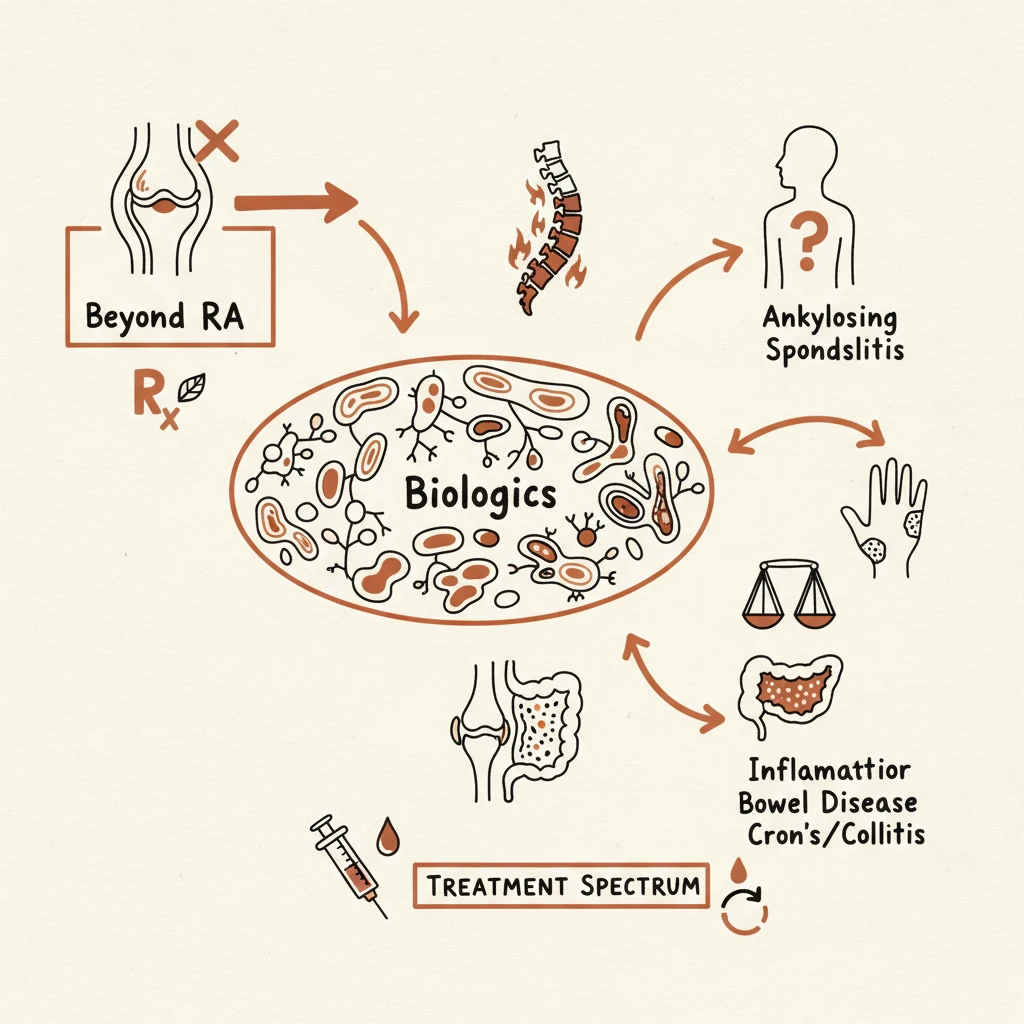
Right? But that's exactly what we're unpacking today. Today we are looking at the evolving and frankly, completely revolutionized therapeutic management of the spondyloarthropathy spectrum. So, specifically, we're focusing on axial spondyloarthropathy or axspa and psoriatic arthritis.
CO-HOST: Right. Two conditions that uh for a very long time were just sort of lumped together clinically.
Exactly. Luping them together because they share a pathophysiology, driven by the IL-17, IL-23, and TNF immune pathways. But, as the latest clinical trial data and the recent ULAR updates make abundantly clear, treating these conditions demands a fundamentally different biologic approach than what we use for say rheumatoid arthritis.
CO-HOST: Oh, entirely different.
Yeah.
So, the central clinical tension we are examining today is this. In selecting biologic therapies for spa, should the primary driver of treatment be the prevention of long-term structural damage, like that spinal fusion, or should that selection be dictated predominantly by the immediate presence and risk of extra-articular manifestations, things like inflammatory bowel disease and uveitis?
CO-HOST: It's the classic structural versus systemic debate.
Exactly. In my position is that prioritizing the prevention of irreversible structural damage, specifically using agents with proven radiographic modification, must be the absolute foundational principle of therapy.
CO-HOST: Well, and I'm coming at it from a completely different way. I mean, if the physical structure of a house is sound, but the internal wiring is actively catching fire and threatening the entire property right now, focusing solely on the foundation is, well, it's a failure of comprehensive management.
Okay, I see the analogy, but.
CO-HOST: Wait, just to lay out my side. The multi-system nature of the spondylo arthritis spectrum really dictates that preventing immediate, severe extra-articular complications, like permanent vision loss or debilitating bowel disease, has to supersede theoretical long-term structural gains.
Theoretical? I mean, to really understand why structural modification has to be the priority, we need to look at the profound implications of the pre-vent trial. And, you know, more importantly, the biology behind it.
CO-HOST: Sure. Let's talk about pre-vent.
Because for decades in rheumatology, there was this intense, often deeply frustrating debate over whether any drug could actually stop structural fusion in ankylosing spondylitis. I mean, we could manage the pain, right?
CO-HOST: Right, with NSAIDs and physical therapy.
Yeah, and we could lower the systemic inflammation, but that inexorable march toward structural ankylosis, you know, the spine literally bridging itself together with new bone formation, it just seemed inevitable. Patients would slowly, inevitably lose their mobility.
CO-HOST: It was a very bleak prognosis.
It really was. But then came the data on secukinumab, which is an IL-17 inhibitor. The Prevent trial demonstrated that secukinumab significantly reduced radiographic progression over two years compared to a placebo.
CO-HOST: And that was a milestone. Absolutely. I don't think anyone denies that.
A watershed moment. I mean, it provided the very first definitive evidence of structural modification in AS, because preventing spinal ankylosis is a permanent lifelong priority, especially, you know, when we are diagnosing younger patients in their 20s and 30s whose entire functional future is on the line.
CO-HOST: Right.
This structural modification elevates IL-17 inhibitors to the definitive first-line choice. We really have to understand how IL-17 works. It doesn't just cause inflammation, it directly stimulates osteoproliferation.
CO-HOST: New bone formation.
Exactly. The creation of new bone where it absolutely shouldn't be. So when you block IL-17, you don't just put out the fire. You stop the rogue construction workers from cementing the spine together. The disease-modifying decision must begin with the skeleton.
CO-HOST: Okay, look. I am not saying the radiographic data from the Prevent trial isn't a huge milestone. It is. I I do not dismiss the immense value of slowing syndesmophyte formation in the spine.
But?
CO-HOST: But if we fixate solely on the skeleton and we just ignore the fact that the patient's gut or their eyes are severely inflamed, we're completely missing the forest for the trees. Treating the joint or the spine, while ignoring or worse, actively exacerbating the gut or the eye is a fundamentally flawed clinical strategy.
Well, exacerbating is a strong word.
CO-HOST: It's the medically accurate word here. We aren't treating a skeleton in a vacuum. We are treating a holistic spa phenotype.
But those extra-articular features
CO-HOST: Let me just finish that thought. Because those extra-articular features, inflammatory bowel disease, skin psoriasis, anterior uveitis, they are not mere side effects of the disease. They are core to the pathology.
Okay, fair.
CO-HOST: Let's look at uveitis alone, right? This complication affects 25 to 30% of patients with ankylosing spondylitis. We are talking about painful, red eyes, severe photophobia, and if inadequately managed, it can cause permanent vision loss.
Which is serious, yes.
CO-HOST: Extremely serious. And IL-17 inhibitors lack established efficacy in preventing anterior uveitis. Furthermore, the data clearly shows that IL-17 inhibitors can actually exacerbate or even induce inflammatory bowel disease. Therefore, relying on monoclonal anti-TNFs or IL-23 inhibitors offers a safer, vastly more comprehensive systemic defense.
So you're saying that holistic shield must dictate the biologic selection.
CO-HOST: Exactly.
All right, let us examine the alternative you are proposing then, specifically the anti-TNFs. Historically, yes, anti-TNF therapy was the first biologic class proven to reduce inflammation in access PA. And that's supported by classic trials, uh, like Atlas with Adalimumab and Assert with Infliximab.
CO-HOST: Very robust data there.
They are undeniably effective at lowering inflammatory markers like CRP. I'm not arguing that, but their long-term ability to prevent radiographic progression, to actually stop that bone formation, remains actively debated within the literature.
CO-HOST: Well, it's complex.
It is. But we just do not have the same definitive structural victory that we see with IL-17 inhibition. Honestly, relying on an anti-TNF instead of an IL-17 inhibitor in a young ankylosing spondylitis patient is it's like putting a bucket under a leaky roof rather than fixing the shingles.
CO-HOST: Oh, come on.
No, really. You manage the immediate mess of inflammation, right? The water in the bucket, but the structural rot of new bone formation just continues right under your nose.
CO-HOST: I I have to jump in right there. I'm sorry, but I just don't buy that and that analogy completely minimizes what we are actually talking about here.
How so?
CO-HOST: Because the leak in your scenario isn't just a bit of water damage on the floor, it's a patient permanently losing their eyesight to uveitis. If the house remains standing perfectly straight, but the patient is blind and cannot see it, we have failed them.
I'm not discounting uveitis, but we have to look at the probabilities.
CO-HOST: But we also have to be highly precise when we discuss the mechanics of anti-TNFs because not all anti-TNFs are equal. You can't paint them with a broad brush.
You're talking about the molecular structure.
CO-HOST: Yes, think of it structurally. Etanercept, for example, is a fusion protein. Mechanically, it acts like a sticky trap, sort of floating around in the bloodstream, catching excess TNF inflammation. But it completely fails to protect against uveitis and must be actively avoided in patients with a history of uveitis or IBD.
Right, that's well established.
CO-HOST: But on the other hand, monoclonal anti-TNFs, specifically, adalimumab, infliximab, and certolizumab, they are different. They act like a highly specific key fitting perfectly into a lock on the cell surface, neutralizing the receptor itself.
Which changes the clinical profile.
CO-HOST: Dramatically. Because of that exact mechanism, they actively reduce uveitis flare rates. For a patient with a history of recurrent eye disease, a monoclonal anti-TNF is not a bucket. It is a highly engineered, essential shield protecting their optic health.
I see why you think that, and the mechanism of the monoclonal antibodies is a very fair point. But let me give you a slightly different perspective on how we evaluate risk versus reward, specifically when we move from the eye to the gut.
CO-HOST: Okay.
Because you brought up inflammatory bowel disease, and I agree, it is a severe complication. We know that in psoriatic arthritis patients who already have a known diagnosis of IBD, IL-17 inhibitors like secukinumab and ixekizumab are contraindicated. That is established clinical protocol.
CO-HOST: Good, we agree on that.
We do. And why? Because paradoxically, while IL-17 causes inflammation in the joints, it actually helps maintain the protective mucosal barrier in the gut. If you block it, the gut gets leaky and inflamed. I acknowledge that biology. However, my concern is the preemptive withholding of IL-17 inhibitors in patients who do not have a known IBD diagnosis.
CO-HOST: Well, it's about risk mitigation.
But at what cost? In psoriatic arthritis, IL-17 inhibitors offer vastly superior clearance for skin psoriasis, enthesitis, and dactylitis compared to older therapies. Are we really justifying withholding a highly effective, disease-modifying, skin-clearing therapy out of a fear of inducing IBD in a patient who currently only presents with severe joint and skin disease?
CO-HOST: It's a calculated decision.
But the actual rate of nuance at IBD in these trials is incredibly low. Avoiding the best structural drug for a phantom diagnosis seems like an over-correction, and one that directly punishes the patient's immediate quality of life.
CO-HOST: It is absolutely not an over-correction. It is responsible phenotype management. You are essentially arguing for treating individual symptoms in a vacuum, rolling the dice on their intestinal health to what, clear a plaque on their elbow?
It's more than just a plaque, and you know that.
CO-HOST: Of course, it is. But the elegant solution for the psoriatic arthritis and IBD overlap already exists, and it renders that IL-17 gamble completely unnecessary. We have the IL-23 inhibitors.
Which are excellent, but they have their own limitations.
CO-HOST: Look at the mechanism, though. When we say the IL-23 pathway is upstream of IL-17, think of IL-23 as the general giving the orders, and IL-17 as the foot soldiers actually causing the localized inflammation in the joint.
Right, the cascade.
CO-HOST: If you block IL-23, you stop the orders from ever being given. And crucially, blocking IL-23 doesn't disrupt that protective mucosal barrier in the gut the way blocking IL-17 does. Look at the data. Risankizumab is already approved for Crohn's disease.
True.
CO-HOST: Ustekinumab is backed by the highly positive Quasar Phase 3 trial in Crohn's. By targeting the upstream general IL-23, we can treat the peripheral arthritis, the skin, and the bowel simultaneously with a single drug. It proves that holistic phenotypic management is superior to focusing solely on the joint. We simply do not need to gamble with the gut to save the joint.
You know, the IL-23 inhibitors are indeed remarkable, and I actually want to follow that exact logic into the broader biologic hierarchy of psoriatic arthritis. Because this is where the treatment paradigm completely fractures from rheumatoid arthritis.
CO-HOST: Yes, thank goodness.
Right? If you are a rheumatologist listening to this, you might be screaming at your dashboard right now, saying, what about methotrexate? Because in rheumatoid arthritis, methotrexate is the golden rule.
CO-HOST: Exactly.
It significantly enhances biologic efficacy, particularly when combined with an anti-TNF. But here is the wild part about PSA, that hierarchy gets entirely thrown out the window.
CO-HOST: Entirely. The combination benefit is vastly different.
Right, because the pathophysiology is just fundamentally different. RA is an inside-out disease, starting in the synovial membrane. PSA is an outside-in disease, starting at the enthesis, where the tendon inserts into the bone.
CO-HOST: Mm.
When we look at the discover one and discover two trials, we see guselkumab, an IL-23 inhibitor, providing significant improvement in peripheral arthritis, that stubborn enthesitis, and PSI skin scores, entirely independently of methotrexate.
CO-HOST: The monotherapy data is very strong.
Guselkumab's efficacy in challenging patients who had already failed anti-TNF therapy. This proves my broader point. Structural and domain-specific efficacy treating the exact mechanical pathology in front of you must lead. PSA is not just RA with skin, and our reliance on legacy RA mindsets, like always defaulting to anti-TNFs first, is actively holding back patient care.
CO-HOST: Oh, I mean, we are in total agreement that PSA is not RA with skin. The domain-based approach you're describing is absolutely essential today. But, and this is a big but. I will fiercely defend the continued relevance of anti-TNF therapy for the right patient in that hierarchy.
Even with the newer agents available?
CO-HOST: Yes, if you have a patient with predominantly joint disease and minimal skin involvement, anti-TNFs remain highly effective, well understood, and structurally protective in those peripheral joints. And if you are talking about patients who have failed an anti-TNF, the landscape is even broader than just jumping straight to IL-23. We have to consider the JAK inhibitors.
Uh, I knew we would get to the JAK inhibitors eventually.
CO-HOST: Well, we have to. Upadacitinib, studied in the select PSA trials, has shown incredibly strong efficacy in psoriatic arthritis, explicitly in populations that have failed anti-TNF therapy. Tofacitinib is also licensed.
Sure, the oral options.
CO-HOST: Right. Unlike the biologics that work outside the cell, these are targeted synthetic D-MARDs that work intracellularly, blocking the signal pathways right at the nucleus. They offer a highly effective, fast-acting oral alternative that treats both the joints and the skin.
That's an interesting point, though I would frame it very differently, because the moment you introduce JAK inhibitors into the psoriatic arthritis conversation, you introduce the strict need for rigorous risk stratification.
CO-HOST: Well, of course.
You cannot mention Upadacitinib without immediately addressing the oral surveillance trials. I mean, we are talking about severe systemic risks here. Cardiovascular events, major adverse cardiovascular events or MACE, malignancies, venous thromboembolisms.
CO-HOST: The black box warnings.
Yes, and those black box warnings apply to PSA just as much as they do to RA. This reinforces exactly what I have been arguing all along, the need for precision and a foundational focus. When you pivot to a JAK inhibitor to get that broad systemic coverage you favor, you are taking on a vast array of systemic risks.
CO-HOST: I wouldn't say vast, but they are real.
They're significant enough. That is why anchoring our choices in highly specific, structurally focused biologic therapies, like IL-17 or IL-23 inhibitors, which do not carry that same black box baggage, is the far more rigorous and safe clinical path.
CO-HOST: Look, I completely acknowledge the black box warning, naturally. Risk stratification is an absolute necessity. We aren't giving JAK inhibitors to an 80-year-old smoker with a history of heart attacks and blood clots.
Obviously not.
CO-HOST: But it highlights the true complexity of the modern biologic era. As clinicians, we have to weigh cardiovascular risk, gut inflammation risk, uveitis risk, and joint destruction risk simultaneously. It is a massive balancing act.
Which brings us perfectly to perhaps the most critical battleground for this entire philosophy, non-radiographic axial spondyloarthropathy or NR-axSpA.
CO-HOST: Yes, a very tricky patient population.
Extremely, because for those mapping the disease course, this is the stage of the disease where the systemic inflammatory pathology is identical to ankylosing spondylitis, but the definitive irreversible structural changes, the actual bone fusions, they haven't yet shown up on an X-ray. You can only see the bone marrow edema on an MRI.
CO-HOST: Right, it's the invisible burning phase.
Exactly. The structural damage hasn't locked in yet. When we look at the rapid axspa and the Prevent trials, a very clear biomarker pattern emerges. Patients who have high MRI inflammation and elevated CRP, C-reactive protein in their blood, are the ones who respond best to biologic intervention.
CO-HOST: That's true. They showed the most dramatic improvement.
Right, so I'm just not convinced by a wait and see systemic approach here because this biomarker data absolutely demands aggressive early intervention with structural modifiers. We have a brief golden window of opportunity to deploy an IL-17 inhibitor to halt the disease before the first syndesmophyte ever forms. If we wait around to see if they develop extra-articular manifestations, we lose the spine forever.
CO-HOST: Okay, that is a very compelling argument for jumping in early. But have you considered what those exact same biomarkers are signaling to the rest of the body?
You mean the CRP?
CO-HOST: Yes. Elevated CRP and high baseline MRI inflammation do not just predict future spinal fusion. They are massive systemic alarms. They strongly correlate with severe, impending extra-articular flares.
So you view them as a systemic warning sign.
CO-HOST: Absolutely. A patient with a sky-high CRP is exactly the patient at the highest risk for a sudden, devastating bout of uveitis or an unmasking of latent inflammatory bowel disease. The urgency is entirely real, but the urgency points towards agents that protect the entire physiological system, not just the spine.
But using an anti-TNF.
CO-HOST: Right. Deploying a monoclonal anti-TNF in that high risk, high inflammation, and our axspa patient, puts a protective barrier over their eyes, their gut, and their peripheral joint, while still powerfully reducing the baseline inflammation that drives the spinal disease in the first place.
Well, it always comes back to whether we secure the foundation or the whole house, doesn't it?
CO-HOST: It really does.
To summarize my position in light of this exchange, the spondyloarthropathy spectrum is uniquely unforgiving when it comes to the skeleton. Whether we are discussing the painful enthesitis and dactylitis of psoriatic arthritis or the actual syndesmophyte formation in axial disease, the defining irreversible consequence of this pathology is structural joint and spinal damage.
CO-HOST: Which is a heavy burden for the patient.
It is. And the radiographic efficacy demonstrated by IL-17 inhibitors, particularly in breaking that decades-long deadlock on preventing spinal fusion, must be the logical anchor for our therapeutic selection. We must protect the structural foundation first, because once it fuses, no biologic in the world can undo it.
CO-HOST: And, you know, to summarize my stance, the spine spectrum is fundamentally a systemic, multi-system disease. It does not exist merely in the bone. Protecting the patient from devastating extra-articular complications, like the permanent vision loss of uveitis or the debilitating, life-altering reality of inflammatory bowel disease, must remain the primary driver of biologic choice.
Your holistic shield.
CO-HOST: Exactly. Monoclonal anti-TNFs and IL-23 inhibitors respect the holistic nature of the disease, ensuring we don't brilliantly save the patient's spine, only to cause them their sight or their gut.
You know, despite our different starting philosophies, I think there's a profound point of convergence here that we both agree on. Both of us acknowledge that the treatment of psoriatic arthritis and axial spa represents a total departure from the old rheumatoid arthritis paradigms.
CO-HOST: Oh, without a doubt.
The biologic hierarchy in Spa is vastly more complex. It requires an exact precision medicine approach based on individual patient domains, whether that is the skin, the gut, the eye, or the spine.
CO-HOST: Absolutely. We have moved entirely away from the one-size-fits-all era. The nuance of knowing exactly why a monoclonal works where a fusion protein fails, or or understanding the mechanism of why an upstream IL-23 works in the gut where a downstream IL-17 might cause harm, that is the new standard of care.
Right. As more long-term structural data emerges, and as we gain longer safety registries on those extra-articular manifestations, these paradigms will inevitably continue to evolve. The balance between structural preservation and systemic protection is really the defining challenge of modern rheumatology.
CO-HOST: It certainly keeps us on our toes.
It does, and we leave it to you to weigh the evidence. When evaluating the spondyloarthropathy spectrum, do you prioritize the concrete foundation or do you first ensure the house itself is safe from the fire?
Free Clinical Resources
Episode Infographic
Key data, mechanisms, and clinical takeaways distilled into a single shareable page. Save it for reference or use it in your next team discussion.
Clinical Flashcards
Core concepts from this episode in flashcard format, structured for spaced repetition, pre-consultation review, or CPD reflection with your team.
More from: Biologic Wars: Rheumatology Debate Series

The ORAL Surveillance JAK Inhibitor Controversy
ORAL Surveillance showed tofacitinib carried higher cardiovascular and malignancy risk than anti-TNF in high-risk RA patients - triggering a class-wide boxed warning. But was the signal overgeneralised? Sarah Mitchell and James Carter unpack the data, the controversy, and how to make the JAKi-vs-biologic decision in 2026.

Chasing Absolute Zero In Rheumatoid Arthritis
Treat-to-target transformed RA outcomes - not through new drugs but through rigorous measurement and escalation discipline. Sarah Mitchell and James Carter cover the evidence base, the disease activity tools, the window of opportunity in early RA, and when tapering biologics in sustained remission is safe.

Why Cheaper Humira Alternatives Face Resistance
Humira (adalimumab) biosimilar alternatives have cut NHS spend by over 50% while expanding treatment access. Evidence from NOR-SWITCH confirms switching is safe, yet resistance persists, driven by the nocebo effect and physician inertia.
- PsA biologic hierarchy differs from RA: IL-17 inhibitors (secukinumab, ixekizumab) and IL-23 inhibitors (guselkumab, risankizumab) are first-line for skin-dominant and enthesitis-predominant disease
- Avoid IL-17 inhibitors in PsA with IBD; prefer anti-TNF monoclonals or IL-23 inhibitors in that overlap
- In axSpA: IL-17 inhibitors show efficacy and potential structural modification - PREVENT showed secukinumab reduces syndesmophyte progression
- For uveitis: monoclonal anti-TNF (adalimumab, infliximab) preferred; etanercept and IL-17 inhibitors do not protect against uveitis
ART-2026-245
·08/26
Drafted with AI assistance, reviewed and approved by the editorial team. This publication is intended for healthcare professionals, researchers, and life science industry professionals. Content is provided for informational and educational purposes only and does not constitute medical advice.

Thirty years in health journalism, the last fifteen in life sciences. I have reported from every major medical congress and watched blockbuster drugs get revised after approval. I cover what the data says.
Cite This Podcast
Carter J, Mitchell S. Stopping spinal fusion or protecting the gut?. The Life Science Feed. Published June 1, 2026. Updated August 3, 2026. Accessed August 30, 2026. https://thelifesciencefeed.com/rheumatology/arthritis-rheumatoid/research/stopping-spinal-fusion-or-protecting-the-gut.
Editorial & AI Standards
All content is researched from peer-reviewed, open-access sources: published trial data, clinical guidelines, and regulatory filings. AI tools are used solely to structure and summarise that evidence; no AI-generated conclusions appear without editor verification against the primary source.
Every article is reviewed by a named editor before publication. Source citations are listed in the References section. This content does not represent the views of any pharmaceutical company, medical device manufacturer, or healthcare provider.
Licence & Rights
© 2026 The Life Science Feed. All rights reserved. Unless otherwise indicated, all content is the property of The Life Science Feed and may not be reproduced, distributed, or transmitted in any form or by any means without prior written permission.
Podcast Disclaimer
This podcast is produced for educational and informational purposes only. The conversation between hosts represents a discussion of published clinical evidence and is not intended as clinical advice, a substitute for professional medical judgment, or a recommendation for any specific treatment. Healthcare professionals should rely on their own clinical training, current guidelines, and individual patient assessment when making treatment decisions. The views expressed are those of the hosts and do not constitute endorsement of any specific therapy, product, or manufacturer.
References
Baeten D et al. MEASURE-1. N Engl J Med. 2015;373:2534-2548
Mease PJ et al. DISCOVER-1. Lancet. 2020;395:1115-1125
Ramiro S et al. PREVENT. Ann Rheum Dis. 2021;80:1200-1207
Smolen JS et al. EULAR PsA Recommendations. Ann Rheum Dis. 2020