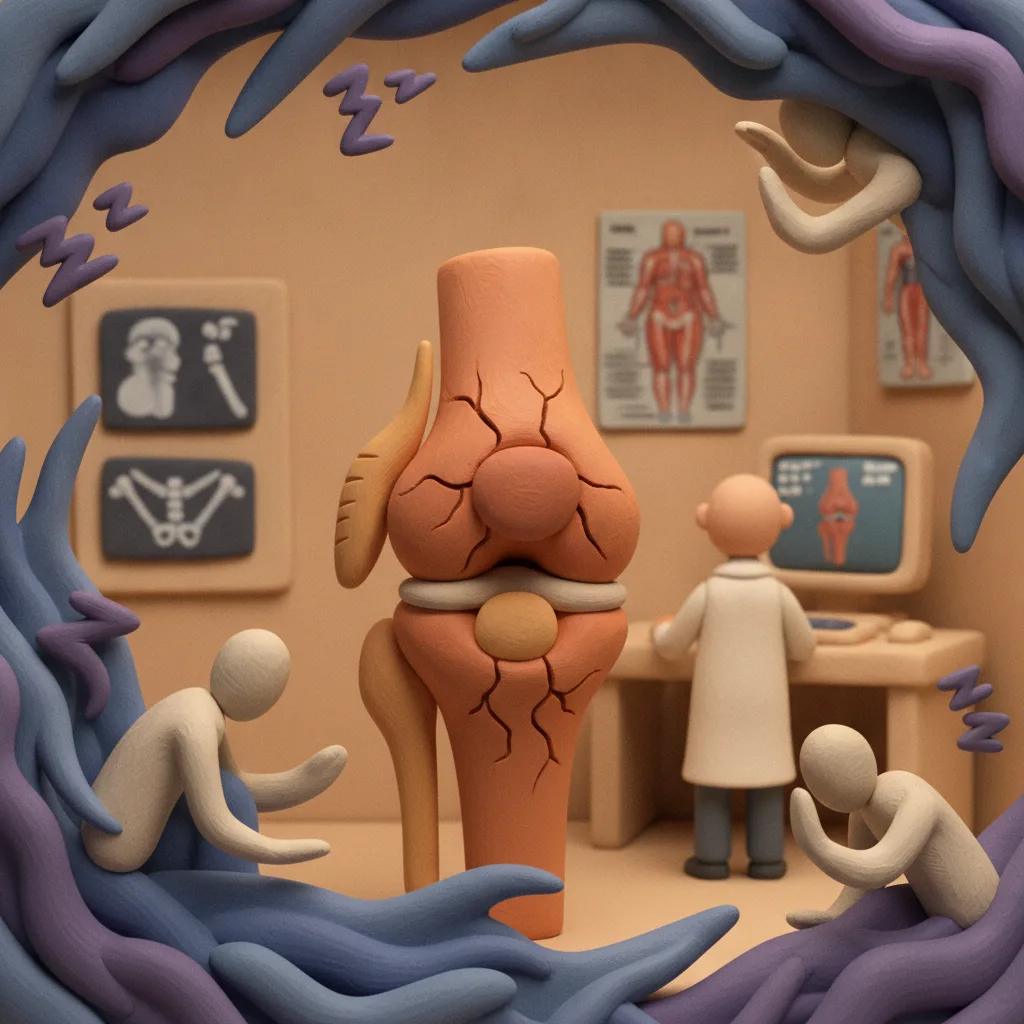

Chronic rheumatic pain presents a complex clinical challenge, frequently persisting despite targeted pharmacological and physical interventions. A key dilemma for general practitioners and specialists is identifying modifiable factors beyond direct inflammatory processes that contribute to pain chronicity. Immediate takeaway: disrupted sleep and fear-related psychological responses are critical, often under-recognised, drivers that require specific assessment and management in patients with rheumatic conditions.
The experience of chronic pain in rheumatic diseases extends beyond the direct nociceptive input from inflamed joints or tissues. A growing body of evidence indicates that central nervous system processing, sleep architecture, and psychological factors, particularly fear, play substantial roles in the perpetuation and amplification of pain. Understanding these hidden drivers is essential for developing comprehensive and effective management strategies for patients who often report persistent pain despite optimal disease-modifying antirheumatic drug (DMARD) therapy or biologic treatment.
Sleep is a fundamental physiological process, and its disruption is highly prevalent in individuals with chronic pain conditions, including rheumatoid arthritis (RA), osteoarthritis (OA), fibromyalgia, and systemic lupus erythematosus (SLE). Studies consistently report that between 50% and 70% of patients with chronic rheumatic diseases experience significant sleep disturbances, such as insomnia, poor sleep quality, and non-restorative sleep. This prevalence is considerably higher than in the general population, where sleep disorders affect approximately 10% to 15% of adults. The relationship between sleep and pain is bidirectional: pain can disrupt sleep, and conversely, poor sleep can exacerbate pain perception and lower pain thresholds. This creates a vicious cycle that is difficult to interrupt without targeted intervention.
At a neurobiological level, sleep deprivation, even partial, can lead to widespread changes in pain processing pathways. Functional magnetic resonance imaging (fMRI) studies have shown that sleep loss is associated with increased activity in brain regions involved in pain perception, such as the insula, anterior cingulate cortex, and thalamus. Concurrently, there is often reduced activity in descending pain inhibitory pathways, leading to an overall pro-nociceptive state. Specifically, the loss of slow-wave sleep (SWS), or deep sleep, is particularly detrimental. SWS is crucial for restorative processes, including the consolidation of memories and the clearance of metabolic waste products from the brain. Reduced SWS has been correlated with increased daytime fatigue, cognitive dysfunction, and heightened pain sensitivity in chronic pain populations. Furthermore, sleep fragmentation, characterised by frequent awakenings or shifts to lighter sleep stages, prevents the brain from achieving the sustained periods of deep sleep necessary for optimal pain modulation.
Beyond the direct neurophysiological impact, sleep deprivation can also influence systemic inflammation. Research indicates that chronic sleep restriction can elevate circulating levels of pro-inflammatory cytokines, such as interleukin-6 (IL-6) and tumour necrosis factor-alpha (TNF-α). While these cytokines are central to the pathophysiology of many rheumatic diseases, their sustained elevation due to poor sleep can contribute to a state of low-grade systemic inflammation, potentially exacerbating disease activity and pain perception. This suggests a complex interplay where sleep acts as a modulator of both central pain processing and peripheral inflammatory responses.
Fear, specifically fear of movement or re-injury (kinesiophobia), represents another powerful, often unaddressed, driver of chronic rheumatic pain. This psychological construct is particularly relevant in musculoskeletal pain conditions. Patients with chronic pain frequently develop maladaptive coping strategies, including avoidance behaviours, due to a perceived threat of pain or injury. This fear is not merely an emotional response; it has tangible neurophysiological consequences. The fear-avoidance model posits that individuals who catastrophise about pain and develop a fear of movement tend to avoid activities that they believe will exacerbate their pain. While initially a protective mechanism, this avoidance leads to deconditioning, muscle weakness, reduced functional capacity, and increased disability. The lack of physical activity further contributes to stiffness and pain, reinforcing the belief that movement is harmful.
The neural circuits underlying fear and pain are extensively interconnected. The amygdala, a key brain region involved in processing fear and emotional memory, plays a significant role in modulating pain perception. When an individual experiences pain, especially in the context of a perceived threat, the amygdala can amplify the pain signal, leading to a heightened subjective experience of pain. This process is further influenced by the prefrontal cortex, which is involved in cognitive appraisal and decision-making. In individuals with kinesiophobia, the prefrontal cortex may reinforce the avoidance behaviours, creating a self-perpetuating cycle of fear, inactivity, and pain. Moreover, chronic fear and stress can activate the hypothalamic-pituitary-adrenal (HPA) axis, leading to sustained elevations in cortisol and other stress hormones. These hormonal changes can influence inflammatory pathways and pain modulation, contributing to the chronicity of pain.
The interaction between sleep disruption and fear avoidance is also significant. Individuals experiencing chronic pain and poor sleep often report higher levels of anxiety and fear. Sleep deprivation can impair emotional regulation and increase reactivity to stressful stimuli, making individuals more susceptible to fear-related responses. Conversely, chronic fear and anxiety can interfere with sleep onset and maintenance, further exacerbating sleep disturbances. This bidirectional relationship underscores the need for integrated interventions that address both sleep and psychological factors.
Integrated Assessment and Management
Given the intricate interplay between sleep, fear, and chronic rheumatic pain, a comprehensive assessment should extend beyond traditional rheumatological evaluations. Clinicians should routinely screen for sleep disturbances using validated questionnaires such as the Pittsburgh Sleep Quality Index (PSQI) or the Epworth Sleepiness Scale (ESS). These tools can help identify patients who may benefit from further sleep evaluation or intervention. Similarly, fear avoidance beliefs can be assessed using instruments like the Fear-Avoidance Beliefs Questionnaire (FABQ) or the Tampa Scale for Kinesiophobia (TSK). These assessments provide valuable insights into the patient's psychological state and potential barriers to physical activity.
Management strategies should integrate non-pharmacological approaches alongside conventional medical treatments. For sleep disturbances, cognitive behavioural therapy for insomnia (CBT-I) is considered the first-line treatment. CBT-I addresses maladaptive thoughts and behaviours related to sleep, improves sleep hygiene, and helps regulate the sleep-wake cycle. Pharmacological interventions for sleep, such as hypnotics, should be used cautiously and for short durations due to potential side effects and dependency. Addressing underlying pain that disrupts sleep is also critical, ensuring that analgesic regimens are optimised.
For fear avoidance, graded exposure therapy and cognitive behavioural therapy (CBT) are highly effective. Graded exposure involves gradually reintroducing feared movements or activities in a controlled and supportive environment, helping patients to challenge their beliefs about pain and movement. CBT helps patients identify and modify maladaptive thoughts and behaviours related to pain, promoting more adaptive coping strategies. Physical therapy, guided by a therapist knowledgeable in pain science, can also play a crucial role in safely increasing activity levels and restoring function. Education about pain, explaining the neurobiology of chronic pain and the role of fear and sleep, can empower patients to engage more actively in their own management.
The integration of these approaches requires a multidisciplinary team, including rheumatologists, pain specialists, sleep physicians, psychologists, and physical therapists. Collaborative care models can ensure that all facets of chronic rheumatic pain are addressed, leading to improved pain outcomes, functional capacity, and quality of life for patients. Recognising sleep and fear as distinct, yet interconnected, drivers of chronic rheumatic pain represents a significant step towards more holistic and effective patient care.
The persistent focus on inflammation as the sole driver of rheumatic pain has left many patients underserved. It is evident that a significant proportion of individuals with chronic rheumatic conditions continue to experience debilitating pain despite achieving low disease activity or remission by conventional inflammatory markers. This disconnect highlights a critical gap in current clinical practice: the under-recognition and inadequate management of non-inflammatory pain drivers. General practitioners and specialists alike must expand their diagnostic lens to routinely screen for sleep disturbances and fear avoidance behaviours. Relying solely on ESR or CRP levels to gauge a patient's pain experience is insufficient and risks overlooking profound, modifiable contributors to their suffering. The data on sleep architecture and pain modulation is compelling; ignoring it is akin to treating hypertension without considering diet and exercise.
For the pharmaceutical industry, this evolving understanding presents both a challenge and an opportunity. While the development of novel anti-inflammatory biologics has revolutionised the treatment of many rheumatic diseases, these agents do not address the central sensitisation, sleep disruption, or psychological factors that perpetuate pain. There is a clear need for research into therapies that specifically target these non-inflammatory pathways. This could include novel sleep-promoting agents with favourable side-effect profiles for chronic use, or pharmacological interventions that modulate central pain processing without significant sedative effects. Furthermore, the industry should consider supporting the development and dissemination of integrated care models that combine pharmacological interventions with evidence-based non-pharmacological therapies like CBT-I and graded exposure. The market for comprehensive pain management solutions, beyond just anti-inflammatories, remains largely untapped.
Patients, often feeling dismissed when their pain persists despite 'successful' inflammatory control, stand to benefit immensely from this more holistic approach. Acknowledging that their pain is real, even if not solely driven by inflammation, can validate their experience and foster greater engagement in their care. Empowering patients with education about the interplay of sleep, fear, and pain can shift their perspective from passive recipients of treatment to active participants in their own recovery. This paradigm shift requires clinicians to move beyond a purely biomedical model and embrace a biopsychosocial framework, which, while more complex, offers a far more complete and ultimately more effective path to improving patient outcomes and quality of life.
- The Pivot The understanding of chronic rheumatic pain must expand beyond inflammation to include sleep architecture disruption and fear avoidance.
- The Data Patients with chronic pain frequently exhibit altered sleep patterns, including reduced slow-wave sleep and increased sleep fragmentation, which directly impact pain perception and central sensitisation.
- The Action Clinicians should routinely screen for sleep disturbances and fear avoidance in rheumatic pain patients, integrating non-pharmacological and psychological interventions alongside conventional treatments.
ART-2026-556
06/26
Cite This Article
Team TLSFE. Sleep disruption and fear drive chronic rheumatic pain. The Life Science Feed. Published June 30, 2026. Updated June 30, 2026. Accessed June 30, 2026. https://thelifesciencefeed.com/rheumatology/arthritis-rheumatoid/research/sleep-disruption-and-fear-drive-chronic-rheumatic-pain.
Editorial & AI Standards
All content is researched from peer-reviewed, open-access sources — published trial data, clinical guidelines, and regulatory filings. AI tools are used solely to structure and summarise that evidence; no AI-generated conclusions appear without editor verification against the primary source.
Every article is reviewed by a named editor before publication. Source citations are listed in the References section. This content does not represent the views of any pharmaceutical company, medical device manufacturer, or healthcare provider.
Licence & Rights
© 2026 The Life Science Feed. All rights reserved. Unless otherwise indicated, all content is the property of The Life Science Feed and may not be reproduced, distributed, or transmitted in any form or by any means without prior written permission.
Medical Disclaimer
The information provided on The Life Science Feed is for educational and informational purposes only. It is not intended as a substitute for professional medical advice, diagnosis, or treatment. Always seek the advice of your physician or other qualified healthcare provider regarding any medical condition or treatment decision. Never disregard professional medical advice or delay in seeking it because of something you have read on this website.