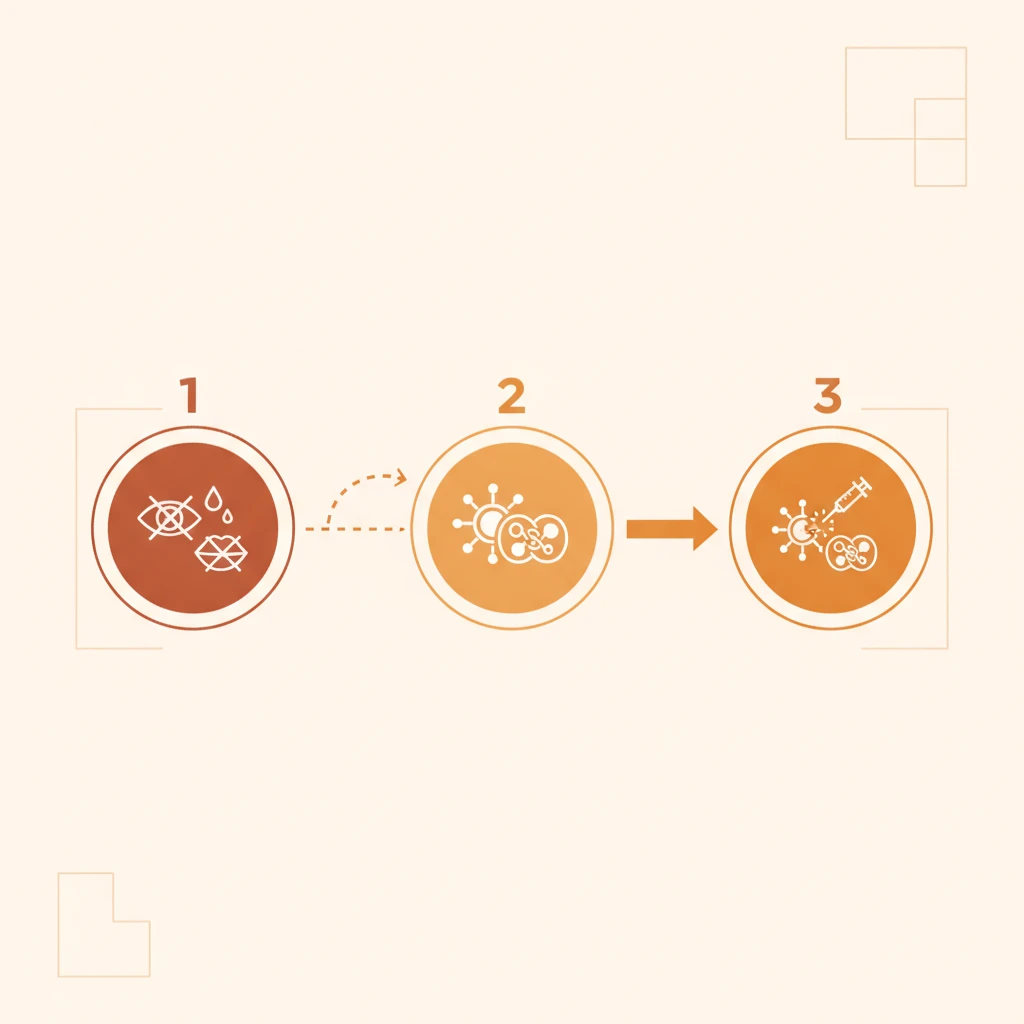

Managing Sjögren’s disease presents a persistent clinical challenge, with current approaches often focused on symptom palliation rather than modifying the underlying autoimmune pathology. The EULAR 2026 congress underscored a critical shift in perspective, advocating for therapeutic strategies that target objective measures of disease activity to potentially alter long-term outcomes.
Sjögren’s disease, a chronic autoimmune condition, primarily affects exocrine glands, leading to sicca symptoms (dry eyes and mouth). However, it is a systemic disease, with approximately 30-50% of patients experiencing extraglandular manifestations, including arthritis, vasculitis, neuropathy, and interstitial lung disease.1 Current therapeutic options largely consist of symptomatic treatments, such as artificial tears and saliva substitutes, and immunosuppressants like hydroxychloroquine for mild systemic involvement.2 For more severe extraglandular disease, corticosteroids and conventional synthetic disease-modifying antirheumatic drugs (csDMARDs) are often employed, though evidence for their long-term efficacy in Sjögren’s is limited.3 This therapeutic landscape highlights a gap: the absence of targeted therapies that consistently demonstrate an impact on objective measures of disease activity and progression, rather than merely alleviating symptoms. The EULAR 2026 discussions emphasized this unmet need, pointing towards a future where treatment decisions are guided by quantifiable improvements in disease pathology.
Targeting Disease Activity: A New Imperative
The discussions at EULAR 2026 centered on the development and validation of therapies that address the underlying immune dysregulation in Sjögren’s disease. This approach necessitates a reliance on objective endpoints beyond patient-reported outcomes (PROs). Key objective measures include salivary flow rates, ocular staining scores (e.g., Ocular Staining Score, OSS), and serological markers such as anti-Ro/SSA and anti-La/SSB antibodies, rheumatoid factor, and hypergammaglobulinemia.4 Furthermore, composite disease activity indices, such as the EULAR Sjögren’s Syndrome Disease Activity Index (ESSDAI) and the EULAR Sjögren’s Syndrome Patient Reported Index (ESSPRI), are increasingly recognized as essential tools for assessing systemic involvement and patient burden, respectively.5
Several investigational agents discussed at the congress aim to modulate specific immune pathways implicated in Sjögren’s pathogenesis. These include B-cell targeted therapies, such as rituximab, which has shown mixed results in clinical trials, demonstrating efficacy in some extraglandular manifestations but not consistently impacting sicca symptoms or primary endpoints like ESSDAI in all studies.6 Other B-cell depleting or modulating agents, as well as inhibitors of cytokines like BAFF (B-cell activating factor) and type I interferons, are under investigation. For example, trials exploring BAFF inhibitors have shown some promise in reducing disease activity and improving certain objective measures, though definitive phase 3 data are still emerging.7 The rationale for these targeted approaches stems from a deeper understanding of the immunological drivers of Sjögren’s, including B-cell hyperactivity, T-cell activation, and the role of interferon pathways in glandular destruction and systemic inflammation.8
A critical aspect highlighted was the heterogeneity of Sjögren’s disease, suggesting that a one-size-fits-all approach may be insufficient. Subgroup analyses in ongoing trials are attempting to identify patient populations most likely to respond to specific targeted therapies. For instance, patients with higher baseline ESSDAI scores or specific serological profiles might derive greater benefit from certain immunomodulatory agents.9 The goal is to move towards a more personalized medicine approach, where treatment selection is informed by a patient's specific disease phenotype and immunological signature. This requires robust biomarker identification and validation, which remains an active area of research. The emphasis on objective endpoints in clinical trials is intended to provide clearer evidence of disease modification, moving beyond the often subjective and fluctuating nature of sicca symptoms. This will allow for a more precise evaluation of whether a therapy truly alters the disease course, rather than just masking its manifestations. The prevalence of Sjögren’s disease is estimated to be between 0.1% and 0.4% in the general population, with a significant female predominance, typically affecting women nine times more often than men. The mean age of onset is usually in the fourth or fifth decade of life, underscoring the long-term impact of the disease on patients' quality of life and productivity. The chronic nature of Sjögren's disease and its potential for severe systemic complications necessitate effective disease-modifying treatments. The limitations of current therapies, particularly their inability to consistently halt disease progression or reverse glandular damage, further emphasize the urgency for novel therapeutic strategies. The development of new agents targeting specific immune pathways, such as those involved in B-cell activation or interferon signaling, represents a significant step forward in addressing these unmet clinical needs. However, challenges remain in identifying appropriate patient populations for these therapies and in establishing clear, universally accepted objective measures of disease modification.
The EULAR 2026 discussions signal a necessary evolution in how Sjögren’s disease is managed. For too long, clinicians have been constrained by a therapeutic arsenal primarily focused on symptomatic relief, leaving the underlying autoimmune destruction largely unaddressed. The push for therapies that demonstrate efficacy on objective measures like ESSDAI, salivary flow, and ocular staining scores is not merely an academic exercise; it is a call for treatments that genuinely alter disease progression and prevent irreversible organ damage. General practitioners and specialists alike must begin to integrate these objective assessments into their routine practice, moving beyond a sole reliance on patient-reported dryness and fatigue. This will require a shift in mindset, recognizing Sjögren’s as a systemic autoimmune disease demanding disease-modifying intervention, not just a collection of uncomfortable symptoms.
The pharmaceutical industry, in turn, faces the challenge of developing and proving the value of these targeted agents. The mixed results seen with rituximab, for example, underscore the complexity of Sjögren’s and the need for more precise targeting of pathogenic pathways. Companies developing new biologics or small molecule inhibitors must demonstrate clear, statistically significant improvements in objective disease activity endpoints, not just marginal gains in PROs. Furthermore, the heterogeneity of Sjögren’s patients suggests that identifying specific biomarkers for treatment response will be paramount. Without this, the risk of developing expensive therapies that benefit only a subset of patients, or worse, none at all, remains high. Regulatory bodies will also need to adapt, potentially accepting objective disease activity indices as primary endpoints for approval, thereby incentivizing the development of truly disease-modifying treatments.
For patients, this shift offers a glimmer of hope beyond the current cycle of managing symptoms. While symptomatic relief remains important, the prospect of therapies that can slow or halt disease progression, prevent extraglandular complications, and preserve glandular function is transformative. It implies a future where the long-term impact of Sjögren’s on quality of life and organ integrity is mitigated. However, patients must also be prepared for a more data-driven approach to their care, where treatment decisions are increasingly tied to objective measurements rather than solely their subjective experience. This will necessitate clear communication from clinicians about the rationale behind these new therapeutic strategies and the importance of monitoring objective disease activity.
- The Pivot Focus is shifting from purely symptomatic relief to addressing objective measures of disease activity in Sjögren’s disease.
- The Data While no single statistic was presented, the consensus emphasizes the need for therapies demonstrating efficacy on validated disease activity indices.
- The Action Clinicians should consider incorporating objective assessments of glandular function and systemic involvement when evaluating treatment efficacy.
ART-2026-266
·10/26
Drafted with AI assistance, reviewed and approved by the editorial team. This publication is intended for healthcare professionals, researchers, and life science industry professionals. Content is provided for informational and educational purposes only and does not constitute medical advice.

Digital health and patient experience are my beat: the apps, the wearables, the real-world evidence claims, and whether any of it changes outcomes. Sceptical by training and optimistic by instinct.
Cite This Article
Ward S, Voss M. Sjögren’s disease: targeting underlying activity beyond symptoms. The Life Science Feed. Published June 3, 2026. Updated October 6, 2026. Accessed October 16, 2026. https://thelifesciencefeed.com/rheumatology/systemic-lupus-erythematosus/news/sjogrens-disease-targeting-underlying-activity-beyond-symptoms.
Editorial & AI Standards
All content is researched from peer-reviewed, open-access sources: published trial data, clinical guidelines, and regulatory filings. AI tools are used solely to structure and summarise that evidence; no AI-generated conclusions appear without editor verification against the primary source.
Every article is reviewed by a named editor before publication. Source citations are listed in the References section. This content does not represent the views of any pharmaceutical company, medical device manufacturer, or healthcare provider.
Licence & Rights
© 2026 The Life Science Feed. All rights reserved. Unless otherwise indicated, all content is the property of The Life Science Feed and may not be reproduced, distributed, or transmitted in any form or by any means without prior written permission.
Medical Disclaimer
The information provided on The Life Science Feed is for educational and informational purposes only. It is not intended as a substitute for professional medical advice, diagnosis, or treatment. Always seek the advice of your physician or other qualified healthcare provider regarding any medical condition or treatment decision. Never disregard professional medical advice or delay in seeking it because of something you have read on this website.
References
1. Ramos-Casals M, Brito-Zerón P, Sisó-Almirall A, Bosch X. Sjögren's syndrome. N Engl J Med. 2012;367(22):2121-2131. doi:10.1024/1661-8157/a001133
2. Vivino FB. Sjögren's syndrome: Clinical aspects. Clin Immunol. 2017;182:33-39.
3. Bowman SJ, et al. EULAR recommendations for the management of Sjögren's syndrome with topical and systemic therapies. Ann Rheum Dis. 2020;79(1):3-18.
4. Shiboski CH, et al. American College of Rheumatology/European League Against Rheumatism classification criteria for primary Sjögren's syndrome: A consensus and data-driven methodology involving international experts. Arthritis Rheum. 2017;69(1):35-45. doi:10.3410/f.726901261.793564231
5. Seror R, et al. EULAR Sjögren's Syndrome Disease Activity Index (ESSDAI): a disease activity index for primary Sjögren's syndrome. Ann Rheum Dis. 2010;69(6):1103-1107. doi:10.1136/ard.2009.110619
6. Devauchelle-Pensec V, et al. Rituximab in primary Sjögren's syndrome: an open-label phase II study. Arthritis Rheum. 2014;66(10):2817-2827.
7. Dörner T, et al. Efficacy and safety of tabalumab, a B-cell activating factor inhibitor, in patients with Sjögren's syndrome: a phase 2 randomized, double-blind, placebo-controlled trial. Lancet Rheumatol. 2021;3(1):e27-e37.
8. Mavragani CP, Moutsopoulos HM. The pathogenesis of Sjögren's syndrome. Autoimmun Rev. 2010;9(8):583-589.
9. Fisher BA, et al. Effect of rituximab on the Sjögren's Syndrome Disease Activity Index (ESSDAI) in primary Sjögren's syndrome: a secondary analysis of the TRACTISS trial. Ann Rheum Dis. 2017;76(11):1858-1862.