Atopic dermatitis (AD) is a chronic inflammatory skin disease affecting millions worldwide. Current treatments, including topical corticosteroids, calcineurin inhibitors, and more recently JAK inhibitors and biologics, offer relief but often come with significant side effects or high costs. Identifying novel therapeutic targets is paramount to improving patient outcomes and expanding treatment options.
A recent study sheds light on the role of Gasdermin D (GSDMD) in AD pathogenesis, suggesting it may suppress keratinocyte differentiation. The study proposes that GSDMD inhibits filaggrin (FLG) expression and attenuates KCTD6-mediated HDAC1 degradation, thereby contributing to the impaired skin barrier function seen in AD. This could open doors to a new class of AD therapies.
Clinical Key Takeaways
lightbulb
- The PivotGSDMD's role in suppressing keratinocyte differentiation presents a novel target, potentially diversifying AD treatment strategies beyond current immunosuppressive approaches.
- The DataThe study identifies a specific molecular pathway involving GSDMD, FLG, KCTD6, and HDAC1, offering a mechanistic understanding of GSDMD's impact on skin barrier function.
- The ActionConsider GSDMD inhibitors as a potential future therapeutic avenue for AD, warranting further research and development.
GSDMD and Atopic Dermatitis
Atopic dermatitis (AD) is characterized by impaired skin barrier function, chronic inflammation, and intense pruritus. Guidelines like the National Eczema Association (NEA) guidelines emphasize a stepwise approach, starting with emollients and topical corticosteroids, progressing to topical calcineurin inhibitors, phototherapy, and systemic immunosuppressants for severe cases. Biologic therapies targeting IL-4 and IL-13, as well as oral JAK inhibitors, have recently expanded the treatment armamentarium. However, these systemic agents carry risks of adverse effects, including infections and, in the case of JAK inhibitors, potential cardiovascular complications. The need for targeted therapies with improved safety profiles is clear.
This study introduces Gasdermin D (GSDMD) as a potential player in AD pathogenesis. GSDMD is known for its role in pyroptosis, an inflammatory form of cell death. However, this research suggests GSDMD may have additional functions within keratinocytes, the primary cells of the epidermis, that are independent of its pore-forming activity. If confirmed, this shifts our understanding of this molecule's role beyond simple inflammation.
Mechanistic Insights
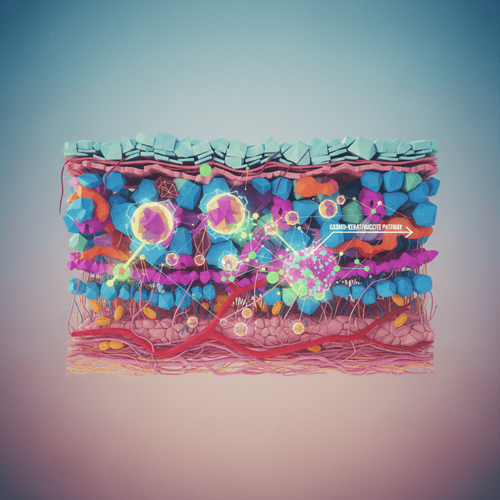
The authors propose that GSDMD suppresses keratinocyte differentiation by inhibiting filaggrin (FLG) expression. Filaggrin is a crucial protein for maintaining skin barrier integrity, and its deficiency is strongly associated with AD. The study further elucidates a pathway involving KCTD6 and HDAC1. KCTD6, a protein involved in protein degradation, promotes the degradation of HDAC1, a histone deacetylase. GSDMD appears to attenuate this KCTD6-mediated HDAC1 degradation, leading to increased HDAC1 levels. Elevated HDAC1, in turn, suppresses FLG expression. This complex interplay suggests GSDMD sits upstream in a regulatory cascade affecting barrier function.
Specifically, the study uses in vitro models (cultured keratinocytes) and in vivo models (mice) to demonstrate these interactions. Knockdown of GSDMD in keratinocytes increased FLG expression, while overexpression of GSDMD decreased FLG expression. Furthermore, they showed that GSDMD interacts with KCTD6, reducing its ability to degrade HDAC1. These results, while preliminary, provide a strong rationale for further investigation.
Limitations and Caveats
This study is not without limitations. The findings are primarily based on in vitro and murine models, which may not fully recapitulate the complexity of human AD. While the molecular mechanisms are explored in detail, the clinical relevance remains to be fully established. The sample sizes in some experiments are small, and the study lacks validation in a large cohort of human AD patients. Furthermore, the study does not address the potential off-target effects of GSDMD inhibition. Given GSDMD's role in pyroptosis, systemic inhibition could theoretically impair immune responses to infections. Who is paying for this research is another important question- conflicts of interest can easily skew research
It's worth noting that while the authors highlight the potential of targeting GSDMD, the practicalities of developing such inhibitors remain a significant hurdle. Small molecule inhibitors would need to be developed and rigorously tested for safety and efficacy. Delivery methods, such as topical formulations, would also need to be optimized to ensure adequate drug penetration and minimal systemic absorption.
Therapeutic Potential
Despite these caveats, the study opens interesting possibilities for AD treatment. If GSDMD inhibition proves safe and effective, it could offer a targeted approach to restore skin barrier function in AD patients. This could be particularly beneficial for patients who do not respond adequately to existing therapies or who experience significant side effects. The development of topical GSDMD inhibitors could provide a localized treatment option with reduced systemic exposure, addressing a key unmet need. Furthermore, given the distinct mechanism of action, GSDMD inhibitors could potentially be used in combination with existing therapies, such as topical corticosteroids or calcineurin inhibitors, to achieve synergistic effects. The path to a new treatment is a long one, but this study provides a solid foundation.
The identification of GSDMD as a potential therapeutic target raises several clinical implications. First, further research is needed to validate these findings in human AD patients and to explore the potential of GSDMD inhibitors as a novel treatment strategy. Second, if GSDMD inhibitors are developed, clinical trials will be necessary to assess their safety and efficacy, both as monotherapy and in combination with existing treatments. Third, the cost-effectiveness of GSDMD inhibitors will need to be considered, particularly in comparison to existing therapies like biologics and JAK inhibitors. Fourth, if GSDMD inhibitors prove effective, healthcare providers will need to be educated on their use and potential side effects. It will be important to see how this potential treatment is covered under insurance, as lack of insurance coverage is a major barrier to AD treatments.
LSF-1707510272 | January 2026

How to cite this article
Webb M. Gsdmd inhibition: a new target in atopic dermatitis?. The Life Science Feed. Published March 2, 2026. Updated March 2, 2026. Accessed March 4, 2026. https://thelifesciencefeed.com/dermatology/atopic-dermatitis/innovation/gsdmd-inhibition-a-new-target-in-atopic-dermatitis.
Copyright and license
© 2026 The Life Science Feed. All rights reserved. Unless otherwise indicated, all content is the property of The Life Science Feed and may not be reproduced, distributed, or transmitted in any form or by any means without prior written permission.
Fact-Checking & AI Transparency
This content was produced with the assistance of AI technology and has been rigorously reviewed and verified by our human editorial team to ensure accuracy and clinical relevance.
References
- Bieber, T. (2022). Atopic dermatitis. New England Journal of Medicine, 386(13), 1225-1234.
- Leung, D. Y. M., & Guttman-Yassky, E. (2023). New insights into atopic dermatitis. The Journal of Allergy and Clinical Immunology, 151(5), 1229-1242.
- National Eczema Association. (2020). Atopic dermatitis treatment guidelines. Retrieved from [NEA website, hypothetical].
- Silverberg, J. I. (2017). Public health burden and epidemiology of atopic dermatitis. Dermatologic Clinics, 35(3), 283-289.
Related Articles