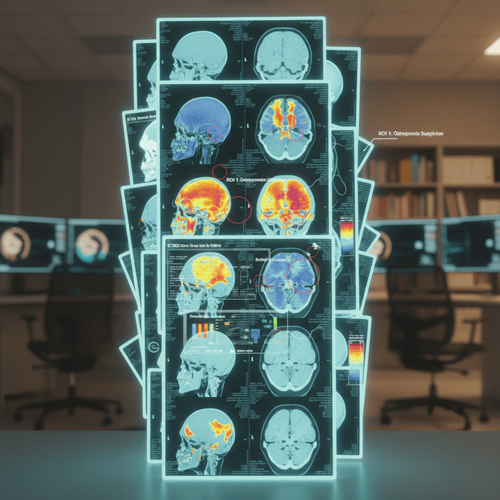

The promise of using existing cranial CT scans to screen for osteoporosis is alluring: a low-cost, readily available tool that could significantly expand screening coverage. But can we realistically bolt this onto current workflows? What are the downstream effects on radiology departments, already stretched thin? And who foots the bill for the inevitable cascade of follow-up DXA scans and specialist referrals?
The appeal of “opportunistic screening” is obvious – leverage existing data to identify at-risk individuals without additional radiation exposure or dedicated appointments. However, we must consider the systemic implications before advocating for widespread adoption. This includes a careful evaluation of cost-effectiveness, medico-legal liabilities, and the potential impact on healthcare resource allocation.
Clinical Key Takeaways
lightbulb
- The PivotCranial CT scans could be used as an opportunistic tool for osteoporosis screening, but policy changes and economic factors need careful consideration.
- The DataAdopting opportunistic screening may lead to a significant reduction in the number of undiagnosed patients with osteoporosis, leading to cost savings due to fewer fractures.
- The ActionHealthcare administrators should conduct thorough cost-benefit analyses and address medico-legal concerns before broadly implementing cranial CT-based osteoporosis screening.
Guideline Context
Current guidelines, such as those from the National Osteoporosis Foundation (NOF) and the American Association of Clinical Endocrinology (AACE), recommend bone density screening using dual-energy X-ray absorptiometry (DXA) for women aged 65 and older, and for younger women and men with specific risk factors. This proposed method of opportunistic screening via cranial CT doesn't replace these recommendations, but it could potentially identify individuals who might otherwise be missed by targeted screening strategies. Think of it as a broad net, cast wider than current protocols allow.
Medico-Legal Considerations
Here’s where things get thorny. If Hounsfield unit measurements from a CT scan suggest osteoporosis, does that create a legal obligation to inform the patient? If a radiologist doesn't report it, are they liable if the patient subsequently suffers a fracture? Establishing clear protocols and legal precedents is paramount. Hospitals need to decide: is this an incidental finding that must be reported, or an optional service? What level of certainty warrants a recommendation for follow-up? These questions need answers before this method can be deployed widely.
Reimbursement Challenges
Who pays for this? Currently, there’s no specific billing code for opportunistic osteoporosis screening using cranial CT. Will insurers reimburse radiologists for the additional time required to measure and interpret Hounsfield units? Will they cover the cost of follow-up DXA scans triggered by CT findings? Without clear reimbursement pathways, adoption will be slow and uneven, concentrated in wealthier institutions or those with a strong commitment to preventative care. This raises ethical concerns about equitable access to care.
Health Economic Benefits
The potential for cost savings is undeniable. Osteoporotic fractures are expensive, leading to hospitalizations, rehabilitation, and long-term care. If opportunistic screening identifies high-risk individuals early, allowing for timely intervention with lifestyle modifications or pharmacotherapy, it could reduce the incidence of fractures and associated costs. A proper health economic analysis is needed to quantify these potential savings, comparing the costs of screening and follow-up with the averted costs of fracture management. However, such models are heavily dependent on assumptions about adherence to treatment and the effectiveness of interventions.
Study Limitations
As with any retrospective study, there are inherent limitations. The accuracy of Hounsfield unit measurements can be affected by CT scan acquisition protocols and patient positioning. Furthermore, the correlation between cranial Hounsfield units and bone density at other skeletal sites (e.g., hip, spine) may not be perfect. Finally, the study design cannot prove causality. We need prospective studies with larger sample sizes and standardized protocols to validate these findings and assess the true clinical utility of opportunistic osteoporosis screening using cranial CT.
The immediate impact will likely be felt in radiology departments. Radiologists may face increased pressure to report Hounsfield units, even if they lack specific training in osteoporosis diagnosis. Hospitals may need to invest in software or training programs to facilitate this process. Furthermore, the increased demand for DXA scans could create bottlenecks, delaying diagnosis and treatment for patients. Clear communication and coordination between radiologists, primary care physicians, and specialists are essential to ensure that patients receive appropriate follow-up care. From a billing perspective, if radiologists add the assessment of the Hounsfield unit and provide it as a report, then most likely a radiologist needs to provide an attestation statement that this study was not only medically necessary but also properly performed.
LSF-4294161691 | January 2026

Keywords
How to cite this article
O'Malley L. Cranial ct scans opportunistic osteoporosis screening real world policy implications. The Life Science Feed. Published February 3, 2026. Updated February 3, 2026. Accessed April 2, 2026. https://thelifesciencefeed.com/endocrinology/osteoporosis/policy/cranial-ct-scans-opportunistic-osteoporosis-screening-real-world-policy-implications.
Copyright and license
© 2026 The Life Science Feed. All rights reserved. Unless otherwise indicated, all content is the property of The Life Science Feed and may not be reproduced, distributed, or transmitted in any form or by any means without prior written permission.
Fact-Checking & AI Transparency
This content was produced with the assistance of AI technology and has been rigorously reviewed and verified by our human editorial team to ensure accuracy and clinical relevance.
References
- National Osteoporosis Foundation. (2018). Clinician's Guide to Prevention and Treatment of Osteoporosis. National Osteoporosis Foundation.
- American Association of Clinical Endocrinologists/American College of Endocrinology Clinical Practice Guidelines for the Diagnosis and Treatment of Postmenopausal Osteoporosis-2020 Update. Endocrine Practice. 2020;26(Suppl 1):1-46.
- Kanis, J. A., et al. "European guidance for the diagnosis and management of osteoporosis in postmenopausal women." Osteoporosis International 24.1 (2013): 23-57.
- Lewiecki, E. M., et al. "2023 Clinician’s Guide to Prevention and Treatment of Osteoporosis." Osteoporosis International (2023).