Growing evidence indicates that metabolic perturbations precede symptomatic Crohn disease, implying a preclinical window in which pathobiology is already underway. By surveying small molecules in circulation, metabolomics can capture integrated readouts of inflammation, epithelial stress, and host-microbiome co-metabolism. When such patterns are detected in individuals who later manifest disease, they provide directional clues about processes that may be permissive, precipitating, or reflective of early immune activation.
This piece interprets recent metabolomic associations linked to future Crohn disease, with emphasis on lipid and inflammatory mediators, bile acid and amino acid axes, and microbiome-derived metabolites. We focus on biological plausibility, analytic caveats, and the translational implications for risk stratification, prevention, and therapeutic hypothesis generation. A central aim is to connect pathway-level signals to tractable questions for validation and eventual clinical utility.
Preclinical metabolomic signatures in Crohn disease
Preclinical molecular signatures that anticipate Crohn Disease provide a rare view into the earliest phases of intestinal inflammation. Circulating small molecules integrate signals from diet, host genetics, immune tone, barrier integrity, and the gut microbiota, making Metabolomics a useful lens on the disease process. Findings observed years before symptom onset support the idea that proximal pathways are in motion well before diagnosis. Consistent pathway-level associations across lipid mediators, bile acid pools, and amino acid catabolites strengthen biological plausibility. These observations also encourage the development of targeted biomarker panels that prioritize mechanistic coherence over single-analyte effects.
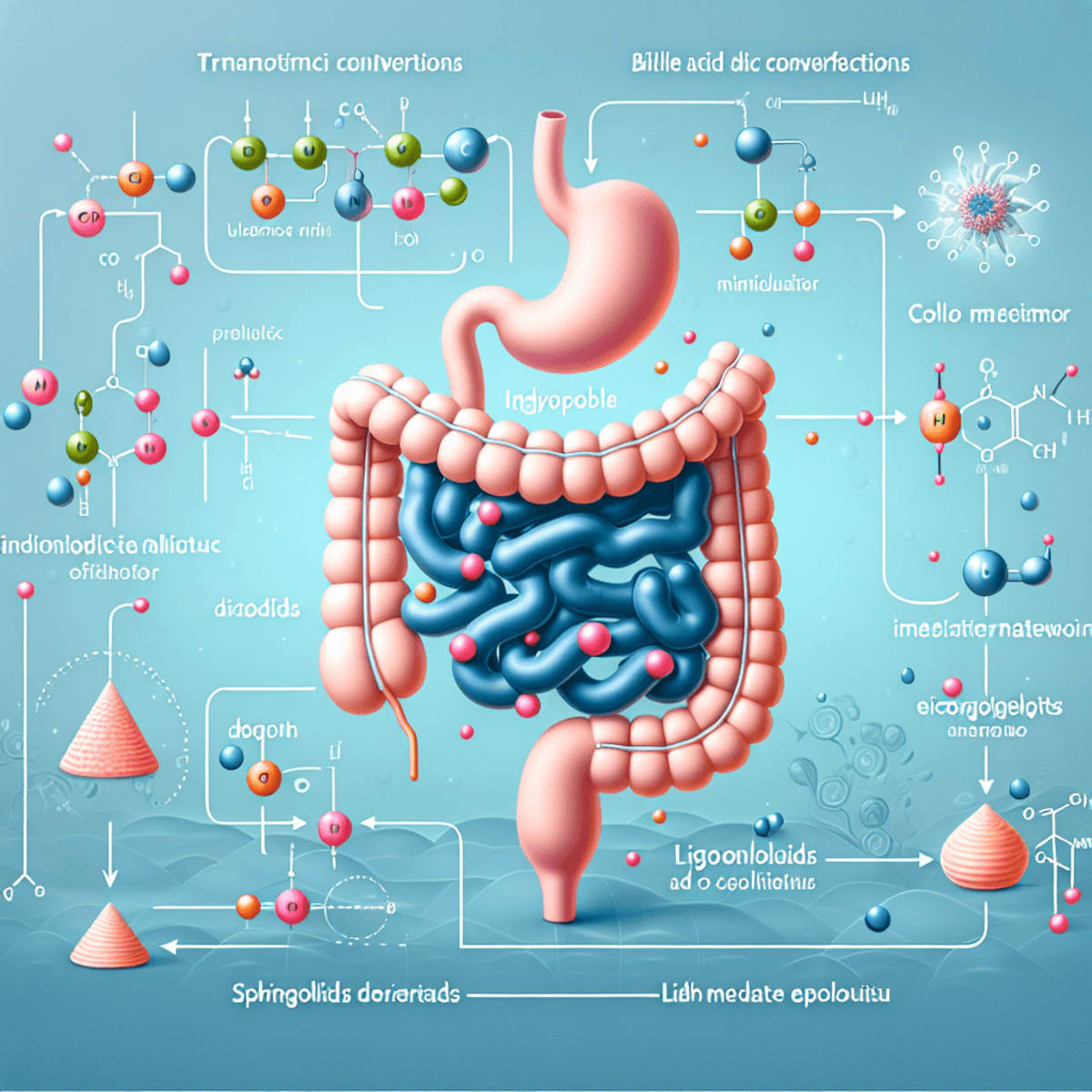
Several lines of evidence suggest that the intestinal ecosystem, including the Microbiome, is already reorganizing in the preclinical period. Microbial and host enzymes shape bile acid composition, generate indoles from tryptophan, and influence short-chain fatty acid levels, all of which regulate mucosal immunity and epithelial function. Lipid mediator networks, including eicosanoids and sphingolipids, link innate immune activation to barrier biology, hinting at integrated inflammation-metabolism feedback loops. When these axes shift together, they can reveal upstream coordination rather than isolated abnormalities. As a result, pathway-informed panels may offer more stable risk signals than any single metabolite.
Host microbiome co-metabolism
Host microbe co-metabolic pathways are central to mucosal homeostasis and are plausible early readouts of the Crohn disease trajectory. Microbial conversion of primary to secondary Bile Acids shapes epithelial and immune signaling through FXR and TGR5, influencing antimicrobial peptide secretion, barrier function, and inflammatory tone. Parallel changes in Tryptophan Metabolism, including indole derivatives that modulate the aryl hydrocarbon receptor, can recalibrate epithelial regeneration and IL-22 signaling. Reduced or imbalanced Short-Chain Fatty Acids may weaken regulatory T cell programs and tight junction fidelity. Such shifts, if present before diagnosis, imply an early reprogramming of mucosal set points that favors inflammation.
Dietary inputs, antibiotic exposures, and occult inflammation can each move these axes. However, the convergence of bile acid derivatives, indole metabolites, and fermentation products suggests a unifying signal of altered microbial ecology and host response. In a prediagnostic context, co-occurrence across these modules increases the odds that the signal is not an artifact of transient exposures. It also motivates analyses that consider network structure rather than independent features, including module eigengenes or pathway scores. Such approaches can offer better reproducibility across platforms and cohorts.
Lipid and inflammatory mediators
Lipid mediator biology is a plausible driver and reporter of early intestinal inflammation. Alterations in Sphingolipids can influence epithelial apoptosis, barrier integrity, and NKT cell function, while changes in phosphatidylcholines and lysophospholipids echo membrane remodeling under inflammatory stress. The balance of pro-inflammatory eicosanoids and specialized pro-resolving mediators can tilt innate responses toward persistence or resolution. When these pathways shift in tandem with bile acid and amino acid modules, they signal coordinated immune-metabolic rewiring. Pattern-level coherence across lipid families is more informative than a single outlier analyte.
Among upstream influences, diet and genetic variation in lipid enzymes can shape mediator availability, but immune activation itself remodels lipid metabolism. For instance, cytokine signaling drives phospholipase activation and oxylipin production, creating feedback loops that stabilize an inflammatory state. The detection of such loops before clinical onset suggests immune tone is already altered, even if tissue injury is still patchy and subclinical. Prioritizing composite indices that span eicosanoids, sphingolipids, and phospholipids could yield more robust early signatures. This may also help with cross-platform harmonization, given the differing coverage of targeted versus untargeted assays.
Amino acid and bile acid axes
Amino acid and bile acid metabolism converge on mucosal immune education and epithelial fitness. Perturbations in tryptophan catabolism can indicate altered microbial enzymatic activity and host kynurenine pathway flux, both of which influence T cell polarization and epithelial repair. Secondary bile acids modulate inflammasome activity and antimicrobial peptide expression, and their ratios to primary species are sensitive to microbial community structure. Together, these axes can amplify or dampen NF-kB signaling and barrier restitution dynamics. Their prediagnostic perturbation aligns with a mucosa primed for dysregulated responses to environmental triggers.
From a translational perspective, these axes are attractive because they are modifiable and measurable. Nutritional patterns, targeted prebiotics, or bile acid sequestration can reshape bile acid pools, and tryptophan-derived signaling can be indirectly tuned by diet and microbial interventions. Still, it is crucial to distinguish markers of upstream causality from those reflecting early, localized inflammation. Mechanistic experiments and longitudinal designs that map temporal ordering are essential to move from association to inference. Clinical readiness requires assay stability, effect durability, and evidence that modulation changes outcomes.
Analytical considerations and caveats
Interpreting prediagnostic metabolomics requires attention to sampling context and analytic rigor. Time-to-diagnosis windows, fasting status, storage conditions, and batch structure can each introduce variance that mimics biological signal. Covariates such as smoking, BMI, medication use, and recent infections must be carefully modeled to avoid confounding. Harmonized preprocessing, internal standards, and stringent quality control are prerequisites for cross-study comparison. The most durable insights will come from replication across independent cohorts and platforms, anchored in pathway-level concordance.
Pre diagnostic sampling and timing
Signals years before diagnosis may reflect stable predispositions, while signals months before diagnosis may reflect escalating subclinical inflammation. Stratifying analyses by lag time to diagnosis can help separate susceptibility markers from disease-activity proxies. Repeated sampling, when available, permits trajectory analysis that can distinguish gradual drift from acute shifts. Anchoring interpretations to the temporal axis guards against over-assigning causality to late-stage correlates. Pairing metabolite trajectories with clinical events, such as antibiotic prescriptions or gastrointestinal infections, adds interpretability.
Biobanks and longitudinal cohorts often span decades, mixing storage ages, tube types, and freeze-thaw histories. Documenting and modeling these variables, along with internal standard performance, reduces the risk of systematic bias. Platform differences between targeted and untargeted assays can also influence which pathways are visible and how they are quantified. Consequently, pathway-oriented scores may transfer better than individual metabolites across technologies. Meta-analytic frameworks that synthesize effect directions within pathways can enhance replicability.
Confounding and batch effects
Differences in diet, smoking, alcohol, and physical activity can move metabolite levels in directions similar to early inflammation. Rigorous covariate adjustment, sensitivity analyses, and negative control outcomes can help evaluate robustness. Batch effects can be strong in mass spectrometry data; therefore, randomized sample allocation, pooled QC samples, and empirical Bayes batch correction are advisable. Reporting batch structures and quality metrics promotes transparency and secondary reuse. Without explicit control of these factors, pathway signals risk being conflated with technical artifacts.
Another challenge is collider bias when selecting prediagnostic cases from clinical pathways that already enrich for prodromal symptoms. Careful design that avoids conditioning on health care utilization can mitigate this. Instrumental variable approaches and triangulation with genetics, when feasible, can further support causal inference. Finally, effect heterogeneity by age, sex, genetic risk, and environmental exposures should be expected and explored. Stratified analyses can reveal subgroup-specific biology that averages would otherwise obscure.
Biomarker validation and replication
Validating preclinical panels requires staged evidence: internal cross-validation, external replication, and calibration within clinically relevant subgroups. Beyond discrimination, calibration and net reclassification offer complementary insight into potential utility. Importantly, any incremental value should be benchmarked against accessible predictors such as family history, CRP, fecal calprotectin, or polygenic scores. Transparent reporting and open code facilitate independent verification and reuse. The goal is robust Biomarker Validation, not overfitting to a single cohort or platform.
Standardization of metabolite identifiers, units, and reporting is essential for reproducibility. Public reference materials and interlaboratory ring trials can anchor assay performance. Harmonized data models also support meta-analyses that stress test pathway-level findings across diverse populations. Pathway reproducibility across labs and populations is the strongest argument for clinical translation. When possible, blinded validation in prospectively accrued biobanks accelerates credibility.
Clinical and research implications
If stable, prediagnostic signatures could augment current approaches to identifying individuals at highest near-term risk. Candidate populations include first-degree relatives, individuals with high genetic risk, or those with persistent gastrointestinal symptoms and elevated inflammatory markers. In such settings, pathway-informed panels might refine triage for endoscopy or advanced imaging while avoiding broad population screening. Importantly, any application must demonstrate clinical utility, including impact on time to diagnosis and patient-centered outcomes. Early risk communication should be coupled with clear management pathways to prevent anxiety without actionability.
Risk stratification and screening
Composite scores that aggregate bile acid ratios, tryptophan derivatives, and lipid mediator modules may offer additive information beyond standard risk factors. Integrating such scores with clinical variables and genetics could enable tiered Risk Stratification within high-risk groups, potentially guiding surveillance intervals or preventive trials. Decision curve analysis can clarify thresholds at which testing becomes net beneficial. Health system implementation would also require cost analyses, assay turnaround time, and pathways for confirmatory testing. Utility must be demonstrated in pragmatic, prospective settings rather than inferred from retrospective performance.
Before any screening deployment, developers should specify intended-use populations, acceptable false-positive and false-negative trade-offs, and follow-up algorithms. Embedding metabolomics into existing care pathways, such as inflammatory marker clinics or family risk programs, can facilitate evaluation. Clear protocols for managing incidental findings and communicating risk are essential for ethical implementation. Real-world pilots should incorporate usability, equity, and accessibility considerations from the outset. Continuous monitoring of assay drift and recalibration is crucial as platforms evolve.
Therapeutic hypotheses
Pathway signals offer a scaffold for hypothesis-driven prevention and early intervention. If bile acid remodeling is a recurrent feature, dietary patterns that support beneficial microbial conversions or agents that alter bile pools could be tested in targeted subgroups. Similarly, if lipid mediator imbalance is an early hallmark, nutritional or pharmacologic approaches that favor resolution-phase mediators might be explored. Modulating tryptophan catabolism through diet or microbiota-focused strategies may also be plausible. These ideas warrant careful, phased evaluation to avoid premature clinical adoption.
Not all early markers will be safe or feasible targets for intervention, and some may be downstream consequences rather than drivers. Small mechanistic trials that track pathway-specific readouts can de-risk larger studies. Parallel preclinical models can support causal inference and inform dose ranges and timing. Therapeutic translation should privilege tractable, reversible levers with well-characterized safety profiles. Patient preferences and quality-of-life impacts should be integrated into trial design, especially in prevention settings.
Next steps for consortia and data sharing
Progress will hinge on multi-center consortia that harmonize sampling, assays, and analysis plans. Shared reference materials, centralized QC, and pre-registered protocols can minimize heterogeneity and selective reporting. Data repositories that host raw and processed metabolomics alongside clinical covariates enable independent validation and cross-cohort synthesis. Methodological challenges, including missingness, batch harmonization, and pathway scoring, benefit from community standards. Collaborative infrastructure accelerates the cycle from discovery to confirmation to application.
Combining metabolomics with proteomics, metagenomics, and immune phenotyping can deepen insight into early Crohn disease biology. Cross-modal integration is well suited to a Systems Biology framework that emphasizes network behavior over single nodes. This strategy can also identify convergent targets whose modulation produces outsized effects across pathways. Equally important is the development of transparent, fair models that avoid unintended bias when deployed in diverse populations. Ultimately, reproducible pathway signals, validated prospectively, will define what is fit for clinical purpose.
In sum, prediagnostic associations spanning bile acids, tryptophan derivatives, and lipid inflammatory networks suggest that metabolic and immune circuitry shifts well before Crohn disease is diagnosed. The biological coherence of these modules supports mechanistic relevance and motivates pathway-based panels for risk enrichment and early intervention trials. Key limitations include potential confounding, platform heterogeneity, and the need for multi-cohort replication with rigorous temporal analyses. With standardized assays, transparent validation, and careful clinical integration, metabolomic signals could help move detection and prevention upstream. The field now needs coordinated replication, prospective testing, and clear intended-use cases to translate promise into practice.
LSF-3932956855 | October 2025

How to cite this article
Team E. Metabolomic signals foreshadow crohn disease pathway shifts. The Life Science Feed. Published November 6, 2025. Updated November 6, 2025. Accessed January 31, 2026. .
Copyright and license
© 2026 The Life Science Feed. All rights reserved. Unless otherwise indicated, all content is the property of The Life Science Feed and may not be reproduced, distributed, or transmitted in any form or by any means without prior written permission.
Fact-Checking & AI Transparency
This summary was generated using advanced AI technology and reviewed by our editorial team for accuracy and clinical relevance.
References
- Metabolomics reveal distinct molecular pathways associated with future risk of Crohn's Disease. https://pubmed.ncbi.nlm.nih.gov/40910526/.
Related Articles