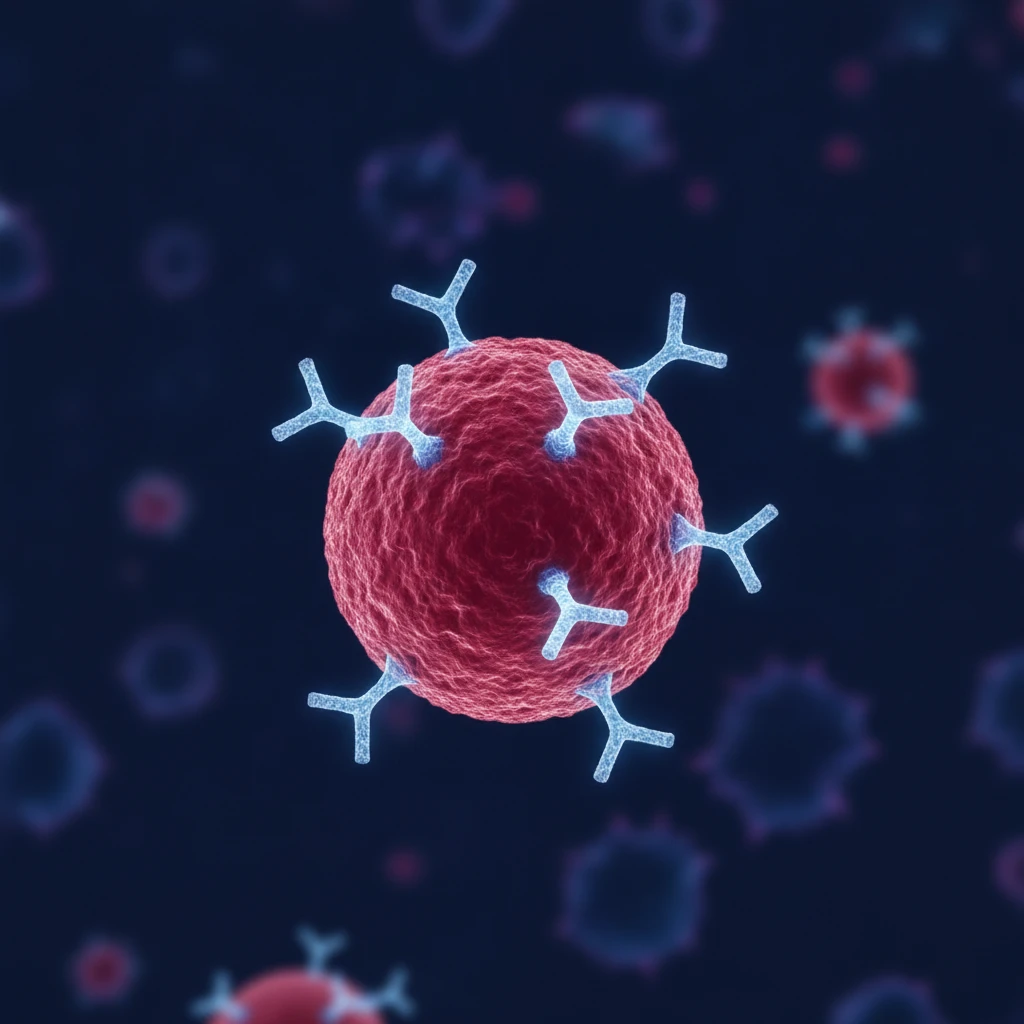

Managing diffuse large B-cell lymphoma (DLBCL) remains a clinical challenge, particularly for patients with relapsed or refractory disease. Current therapeutic strategies often yield suboptimal outcomes in these populations. The emergence of bispecific antibodies represents a significant development, offering a targeted mechanism of action that may improve patient prognosis.1
Diffuse Large B-Cell Lymphoma (DLBCL) is the most common aggressive non-Hodgkin lymphoma, accounting for approximately 30-40% of all adult non-Hodgkin lymphomas.1 While a significant proportion of patients achieve cure with frontline chemoimmunotherapy, typically R-CHOP (rituximab, cyclophosphamide, doxorubicin, vincristine, and prednisone), approximately 30-40% of patients will experience relapsed or refractory disease. For these patients the options narrow quickly and outcomes are poor. High-dose chemotherapy followed by autologous stem cell transplantation (ASCT) is a standard approach for eligible patients with relapsed DLBCL, but many patients are not candidates due to age, comorbidities, or refractory disease.2 The incidence of DLBCL increases with age, with a median age at diagnosis in the mid-60s, which further complicates the eligibility for intensive therapies like ASCT. Patients who relapse after ASCT, or who do not respond to initial salvage, have the worst outlook of all, and they are the population these agents were first tested in.
Bispecific Antibodies in DLBCL: Mechanism and Clinical Context
Bispecific antibodies turn the patient's own T cells against the lymphoma. These engineered immunotherapies simultaneously bind to a CD3 receptor on T-cells and a tumor-associated antigen, such as CD20 or CD19, on lymphoma cells. This dual binding mechanism brings T-cells into close proximity with the malignant B-cells, activating the T-cells to induce direct cytotoxicity against the tumor.3 That is the difference from a conventional monoclonal antibody such as rituximab, which marks the cell for destruction but does not recruit a T cell to do it. The resulting T-cell activation leads to the release of cytotoxic granules and pro-inflammatory cytokines, contributing to a potent anti-tumor effect while aiming to minimize off-target effects compared to traditional chemotherapy.
Clinical investigations have demonstrated the efficacy of several bispecific antibodies in relapsed or refractory DLBCL. Mosunetuzumab, a CD20xCD3 bispecific antibody, showed activity in heavily pretreated patients. A phase 1 dose-escalation study reported a best overall response rate of 34.9% and a complete response rate of 19.4% in patients with aggressive B-cell non-Hodgkin lymphoma, the group that includes DLBCL.4 Responses were substantially higher in indolent disease, at 66.2% and 48.5%, so the activity seen in follicular lymphoma does not carry over to DLBCL unchanged.4 Another CD20xCD3 bispecific antibody, glofitamab, has also yielded notable results. A phase 1/2 study of glofitamab in relapsed or refractory DLBCL documented an ORR of 51.6% and a CR rate of 39.4%.5 These response rates are significant given the advanced disease state and extensive prior treatments, including chemotherapy, rituximab, and in some cases, autologous stem cell transplantation or CAR T-cell therapy, among the enrolled patient populations.
The evidence is thinner than those response rates suggest. The mosunetuzumab data primarily derives from a phase 2 study in follicular lymphoma, with activity in DLBCL noted as "similar," rather than being the primary endpoint or a dedicated DLBCL cohort. Both mosunetuzumab and glofitamab data come from single-arm, open-label studies, meaning there is no direct comparator arm to assess their efficacy against existing standard-of-care treatments for relapsed or refractory DLBCL. These trials focus on objective response rates and complete response rates, which are important, but they are surrogate endpoints. The long-term durability of these responses, progression-free survival, and overall survival benefits require further investigation in larger, potentially randomized, studies. The patient populations in these studies were heavily pretreated, which highlights an unmet need, but it also means the applicability of these agents in earlier lines of therapy or in less heavily pretreated patients remains undefined.
In practice these agents are an option for patients who are not candidates for or have failed high-dose chemotherapy with ASCT, or who have relapsed after CAR T-cell therapy. The administration of these therapies requires careful patient selection and close monitoring for immune-related adverse events, particularly cytokine release syndrome (CRS) and neurological events, often referred to as immune effector cell-associated neurotoxicity syndrome (ICANS).4,5 CRS can range from mild to severe, manifesting as systemic inflammation, and necessitates prompt recognition and management with established protocols, including corticosteroids or tocilizumab. ICANS also requires immediate intervention. Clinicians should discuss with patients the potential for these toxicities and the need for inpatient monitoring during initial cycles. Future research will clarify the optimal sequencing of bispecific antibodies with other agents, including chemotherapy or other immunotherapies, and identify biomarkers to predict response and guide patient selection, which will be critical for integrating these therapies into broader DLBCL management algorithms.
The emergence of bispecific antibodies in DLBCL management represents a significant shift, particularly for patients with relapsed or refractory disease who have few remaining options. Clinicians will increasingly need to understand the nuances of these agents, including their specific targets, mechanisms of action, and unique toxicity profiles, especially cytokine release syndrome and neurotoxicity. The decision to use a bispecific antibody will require careful patient selection, considering prior therapies, disease burden, and patient comorbidities, moving beyond a one-size-fits-all approach to more personalized treatment strategies.
From an industry perspective, the development of bispecific antibodies, such as mosunetuzumab and glofitamab, signals a continued investment in targeted immunotherapies for hematological malignancies. This competition is beneficial, driving innovation and potentially leading to more accessible and effective treatments. However, the cost-effectiveness of these novel therapies will undoubtedly be a point of discussion, especially as they move into earlier lines of therapy. Payers and healthcare systems will need to evaluate the long-term benefits against the initial investment.
For patients, these therapies offer renewed hope where previously there was little. The prospect of achieving durable responses in a relapsed/refractory setting is transformative. However, patients must be thoroughly counselled on the potential side effects and the intensive monitoring required, particularly during the initial cycles of treatment. The EHA 2026 interactive session, by focusing on case-based learning, will be instrumental in disseminating practical knowledge to integrate these complex agents into routine clinical practice, ensuring that the benefits reach the patients who need them most.
- The Pivot Bispecific antibodies are gaining prominence as a therapeutic option for relapsed/refractory DLBCL.
- The Data While specific trial data are not provided, bispecific antibodies demonstrate a novel mechanism of action by engaging both T-cells and lymphoma cells.
- The Action Clinicians should consider the evolving landscape of bispecific antibody therapies for DLBCL, especially in patients with limited conventional options.
ART-2026-365
·10/26
Drafted with AI assistance and checked by automated style rules. Not individually read by an editor. This publication is intended for healthcare professionals, researchers, and life science industry professionals. Content is provided for informational and educational purposes only and does not constitute medical advice.

Digital health and patient experience are my beat: the apps, the wearables, the real-world evidence claims, and whether any of it changes outcomes. Sceptical by training and optimistic by instinct.
Cite This Article
Ward S, Voss M. DLBCL management: bispecific antibodies as emerging therapeutic option. The Life Science Feed. Published June 12, 2026. Updated October 5, 2026. Accessed October 25, 2026. https://thelifesciencefeed.com/haematology/lymphoma/case/dlbcl-management-bispecific-antibodies-emerging-therapeutic-option.
Editorial & AI Standards
Content is drafted with AI tools from peer-reviewed, open-access sources such as published trial data, clinical guidelines, and regulatory filings. This article is checked by automated style rules but is not individually read by an editor, so check the cited source before relying on a figure.
Source citations are listed in the References section. This content does not represent the views of any pharmaceutical company, medical device manufacturer, or healthcare provider.
Licence & Rights
© 2026 The Life Science Feed. All rights reserved. Unless otherwise indicated, all content is the property of The Life Science Feed and may not be reproduced, distributed, or transmitted in any form or by any means without prior written permission.
Medical Disclaimer
The information provided on The Life Science Feed is for educational and informational purposes only. It is not intended as a substitute for professional medical advice, diagnosis, or treatment. Always seek the advice of your physician or other qualified healthcare provider regarding any medical condition or treatment decision. Never disregard professional medical advice or delay in seeking it because of something you have read on this website.
References
- Sehn LH, Gascoyne RD. Diffuse large B-cell lymphoma: optimizing outcome in the context of clinical and biologic heterogeneity. Blood. 2015;125(1):22-32. doi:10.1182/blood-2014-05-577189
- Gisselbrecht C, et al. Salvage regimens with autologous transplantation for relapsed large B-cell lymphoma in the rituximab era. J Clin Oncol. 2010;28(27):4184-4190. doi:10.1200/jco.2010.28.1618
- Bacac M, Colombetti S, Herter S, et al. CD20-TCB with Obinutuzumab Pretreatment as Next-Generation Treatment of Hematologic Malignancies. Clin Cancer Res. 2018;24(19):4785-4797. doi:10.1158/1078-0432.CCR-18-0455
- Budde LE, Assouline S, Sehn LH, et al. Safety and Efficacy of Mosunetuzumab, a Bispecific Antibody, in Patients With Relapsed or Refractory B-Cell Lymphomas: A Phase 1 Dose-Escalation Study. J Clin Oncol. 2022;40(5):481-491. doi:10.1200/JCO.21.00931
- Dickinson MJ, Carlo-Stella C, Morschhauser F, et al. Glofitamab for Relapsed or Refractory Diffuse Large B-Cell Lymphoma. N Engl J Med. 2022;387(24):2220-2231. doi:10.1056/NEJMoa2206913