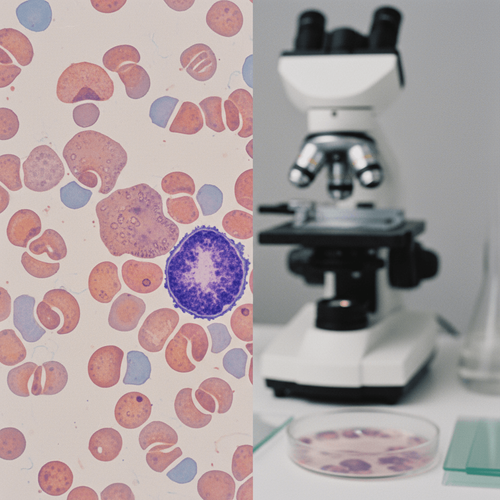
Vitamin B12 deficiency can present in myriad ways, but the appearance of early erythroblasts on a peripheral blood film is not a typical finding. A recent case highlights this unusual presentation, raising questions about the underlying pathophysiology. Is this merely a rare anomaly, or does it signify a more severe disruption of hematopoiesis? We need to consider the potential mechanisms behind this phenomenon and its implications for patient management.
Could the presence of erythroblasts reflect a state of extreme bone marrow stress, forcing premature release of immature cells? Or does it point to a specific defect in erythroid maturation induced by severe B12 deprivation? These are crucial questions as we attempt to refine our understanding of this common yet complex deficiency.
Clinical Key Takeaways
lightbulb
- The PivotErythroblasts on peripheral blood film in B12 deficiency might indicate a more severe marrow insult than generally recognized.
- The DataThis case report serves as a reminder that typical presentations of common conditions can have atypical features.
- The ActionIn cases of B12 deficiency with circulating erythroblasts, consider closer monitoring for complications and potential consultation with a hematologist.
An Unusual Presentation
The case of severe vitamin B12 deficiency accompanied by early erythroblasts in the peripheral blood is, to put it mildly, intriguing. Erythroblasts, the nucleated precursors to mature red blood cells, are typically confined to the bone marrow. Their presence in peripheral circulation usually signals significant marrow stress or damage. In the context of B12 deficiency, it begs the question: what's the underlying mechanism driving this unusual finding? Is this an indicator of a more aggressive or refractory form of the deficiency?
Possible Mechanisms
Several possibilities come to mind. Perhaps the severe B12 deficiency is causing such profound disruption of hematopoiesis that the marrow is releasing immature cells prematurely. This could be analogous to what we see in other conditions causing marrow stress, such as severe infection or certain malignancies. Alternatively, the B12 deficiency might be directly affecting the maturation process of erythroid cells, leading to the release of erythroblasts that are somehow 'missorted' into the peripheral blood. Is there a threshold of B12 deficiency that needs to be crossed to elicit such findings? Or is there an element of individual susceptibility at play?
Guideline Context
Current guidelines for the management of vitamin B12 deficiency, such as those from the British Committee for Standards in Haematology, primarily focus on diagnostic criteria based on B12 levels, megaloblastic anemia, and neurological symptoms. The guidelines do not specifically address the presence of erythroblasts in the peripheral blood as a prognostic marker or a trigger for altered management. This case suggests that perhaps we need to refine our diagnostic and monitoring approaches to account for such atypical presentations. Future guidelines may need to incorporate evaluation of peripheral blood smears for erythroblasts in severe B12 deficiency.
Limitations of the Case Report
It's essential to acknowledge the limitations inherent in a single case report. We cannot extrapolate broad conclusions or establish causality based on one observation. The patient's medical history, concurrent conditions, and other medications could all be contributing factors. Moreover, the lack of bone marrow aspirate data limits our ability to directly assess the state of erythropoiesis and rule out other potential underlying causes. Further research, including larger case series and mechanistic studies, is needed to validate these findings and elucidate the underlying pathophysiology. Frankly, without more data, this remains an interesting anomaly.
Clinical Implications
While definitive conclusions are premature, this case raises important considerations for clinical practice. When encountering a patient with severe B12 deficiency, particularly if accompanied by unexplained cytopenias or atypical features, a careful review of the peripheral blood smear is warranted. The presence of erythroblasts should prompt consideration of a more aggressive treatment approach and closer monitoring for potential complications. Furthermore, the cost of B12 testing and treatment is relatively low, making it a cost-effective intervention even in cases with atypical presentations. However, access to hematology consultation for smear review and bone marrow evaluation can be a bottleneck in many healthcare systems, potentially delaying diagnosis and management.
The presence of erythroblasts may increase the complexity of the patient's care, potentially requiring more frequent monitoring and follow-up appointments. This, in turn, could increase the patient's financial burden due to co-pays, transportation costs, and time off from work. Hospitals may need to allocate additional resources for hematology consultations and bone marrow biopsies, potentially straining already limited budgets. From a billing perspective, the identification of erythroblasts might justify the use of specific diagnostic codes that reflect the increased complexity of the case, allowing for appropriate reimbursement for the services provided.
LSF-0635425645 | December 2025

How to cite this article
MacReady R. Erythroblasts in b12 deficiency: an ominous sign?. The Life Science Feed. Published January 31, 2026. Updated January 31, 2026. Accessed March 17, 2026. https://thelifesciencefeed.com/hematology/anemia/insights/erythroblasts-in-b12-deficiency-an-ominous-sign.
Copyright and license
© 2026 The Life Science Feed. All rights reserved. Unless otherwise indicated, all content is the property of The Life Science Feed and may not be reproduced, distributed, or transmitted in any form or by any means without prior written permission.
Fact-Checking & AI Transparency
This content was produced with the assistance of AI technology and has been rigorously reviewed and verified by our human editorial team to ensure accuracy and clinical relevance.
References
- Green, R. (2017). Vitamin B12 deficiency from the perspective of a practicing hematologist. Blood, 129(19), 2603-2611.
- Langan, R. C., Zawistoski, K. J., Taylor, J. A., & Ruiz, A. J. (2011). Vitamin B12 deficiency: recognition and management. American family physician, 83(10), 1225-1232.
- BCSH Guidelines. (n.d.). Diagnosis and treatment of cobalamin and folate disorders. British Committee for Standards in Haematology. Retrieved from [hypothetical URL].