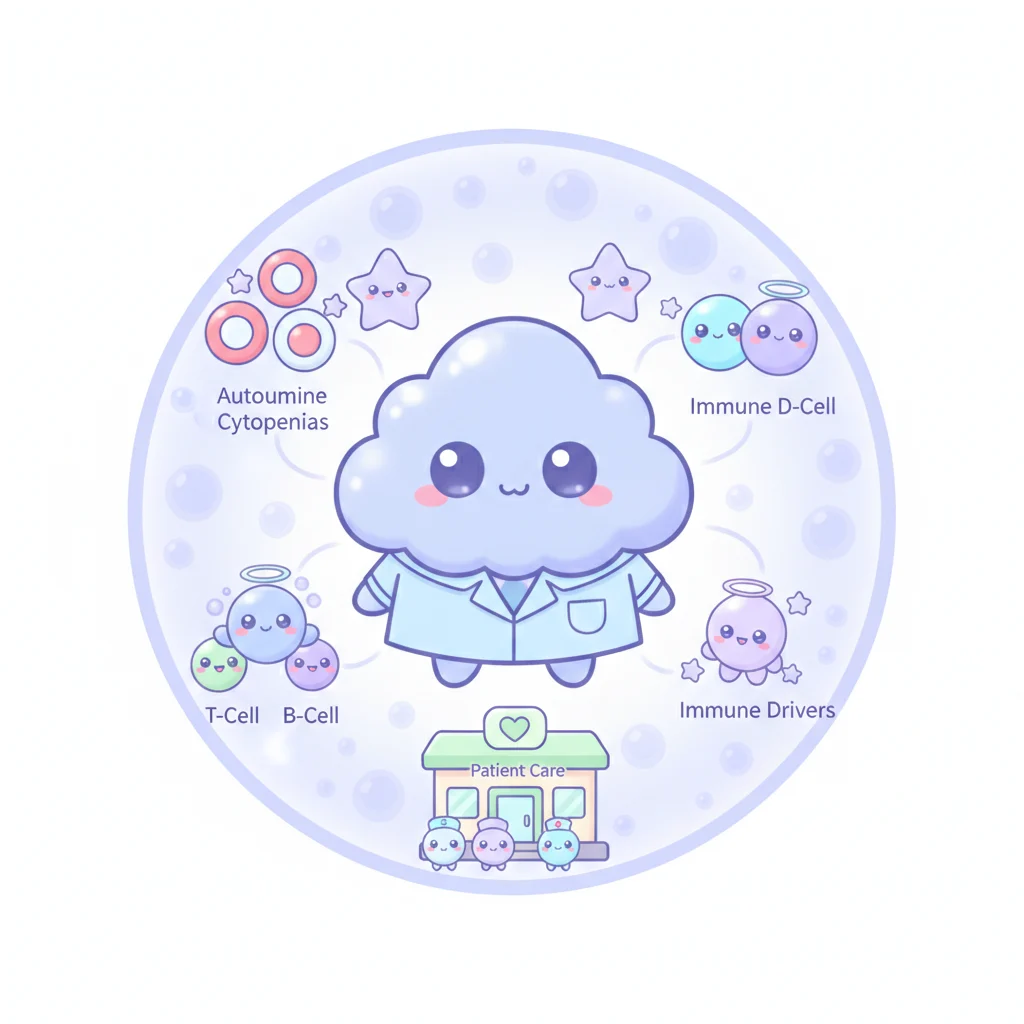

Autoimmune cytopenias, including immune thrombocytopenia (ITP), autoimmune hemolytic anemia (AIHA), and autoimmune neutropenia (AIN), present a persistent clinical challenge due to their heterogeneous pathogenesis and variable response to conventional immunosuppression. The EHA 2026 discussions on immune drivers highlight the immediate need for precise immunophenotyping to guide therapeutic selection and improve patient outcomes.
Autoimmune cytopenias are characterized by the immune system's destruction of circulating blood cells, leading to conditions such as ITP, AIHA, and AIN. Despite their shared autoimmune etiology, the underlying immune dysregulation can vary significantly among patients, influencing disease severity, chronicity, and response to therapy. Current treatment approaches often rely on corticosteroids, intravenous immunoglobulin (IVIg), or splenectomy, which provide broad immunosuppression but lack specificity and can be associated with considerable side effects and incomplete responses.1 These conditions represent a significant clinical challenge, often requiring long-term management and impacting patients' quality of life. The prevalence of ITP, for instance, is estimated to be between 1 in 10,000 and 1 in 20,000 adults, with varying incidence rates across different age groups and geographical regions. AIHA is less common but still affects a substantial number of individuals, with an estimated incidence of 1-3 per 100,000 per year. AIN is rarer, often presenting in pediatric populations or as a secondary condition. Understanding the diverse patient populations affected by these conditions is crucial for developing more effective and personalized treatment strategies.
The heterogeneity of these conditions underscores the importance of identifying specific immune drivers to facilitate targeted therapeutic interventions. For instance, ITP is primarily mediated by autoantibodies against platelet glycoproteins, leading to accelerated platelet destruction and impaired platelet production. However, the cellular immune response, particularly T-cell dysregulation, also plays a significant role.2 Similarly, AIHA involves autoantibodies targeting red blood cell antigens, often complemented by T-cell mediated mechanisms.3 AIN, while less common, also involves autoantibody-mediated neutrophil destruction, with varying contributions from cellular immunity.4
Understanding Immune Drivers and Therapeutic Implications
Recent advancements in immunophenotyping techniques have enabled a more granular understanding of the specific immune cell populations and molecular pathways contributing to autoimmune cytopenias. Discussions at EHA 2026 emphasized the identification of distinct B-cell and T-cell subsets that correlate with disease activity and treatment response. For example, in ITP, an imbalance between T-helper 17 (Th17) cells and regulatory T (Treg) cells has been observed, with an increased Th17/Treg ratio often associated with disease severity.5 Furthermore, aberrant B-cell activation and the presence of pathogenic autoantibody-producing plasma cells are central to the pathogenesis of ITP and AIHA.6 These immunophenotyping methods often involve flow cytometry or mass cytometry, allowing for multi-parameter analysis of cell surface markers and intracellular proteins from peripheral blood samples. This detailed cellular profiling provides insights into the functional state and differentiation pathways of immune cells, moving beyond simple cell counts to reveal the specific immune abnormalities driving disease.
The characterization of these immune drivers has direct implications for patient care. For patients with ITP refractory to first-line therapies, the presence of specific B-cell populations might indicate a better response to B-cell depleting agents such as rituximab.7 Rituximab, a chimeric monoclonal antibody, targets the CD20 protein on B cells, leading to their depletion and a reduction in autoantibody production. Conversely, patients with predominant T-cell dysregulation might benefit from therapies targeting specific T-cell pathways. For example, studies are exploring the efficacy of Bruton's tyrosine kinase (BTK) inhibitors, which can modulate both B-cell and myeloid cell signaling, in refractory ITP.8 BTK inhibitors interfere with intracellular signaling pathways critical for B-cell development and function, offering a more precise mechanism of action compared to broad immunosuppressants. While specific HR or p-values from large-scale trials were not presented as definitive, the mechanistic understanding supports these targeted approaches. The focus remains on moving beyond broad immunosuppression to therapies that specifically address the identified immune abnormalities.9
In AIHA, the presence of warm autoantibodies (IgG) versus cold autoantibodies (IgM) dictates different therapeutic strategies. Warm AIHA often responds to corticosteroids and rituximab, while cold agglutinin disease (CAD), a form of cold AIHA, may require complement inhibitors.10 The EHA 2026 discussions highlighted ongoing research into novel complement pathway inhibitors and their potential to reduce hemolysis in CAD, offering a more targeted approach than traditional immunosuppressants.11 These inhibitors block specific components of the complement cascade, preventing the destruction of red blood cells mediated by cold autoantibodies. This approach minimizes systemic immunosuppression, potentially reducing the risk of infections and other side effects associated with broader treatments.
The clinical utility of advanced immunophenotyping extends to predicting treatment response and identifying patients at risk of relapse. For instance, monitoring changes in specific T-cell subsets or B-cell populations during therapy could provide early indicators of treatment efficacy or failure, allowing for timely adjustments to the treatment regimen.12 While the widespread availability and standardization of these advanced immunophenotyping techniques are still evolving, their integration into clinical practice holds the promise of more personalized and effective management strategies for patients with autoimmune cytopenias.13 However, limitations include the cost and technical expertise required for these assays, as well as the need for larger prospective studies to validate specific immune biomarkers across diverse patient cohorts and establish clear clinical decision-making algorithms. Further research is necessary to overcome these hurdles and translate these scientific advancements into routine clinical care.
The evolving understanding of immune drivers in autoimmune cytopenias, as underscored at EHA 2026, presents a clear directive for clinicians: move beyond empirical immunosuppression. The era of 'one size fits all' for ITP or AIHA is drawing to a close. While the specific HRs and p-values for many targeted therapies are still emerging from larger trials, the mechanistic rationale for precise immunophenotyping is compelling. Clinicians should begin to consider how advanced immune profiling, even if currently limited to specialized centers, can inform their therapeutic choices. This means engaging with hematopathologists and immunologists to interpret complex flow cytometry or genetic data, rather than simply escalating corticosteroid doses.
For the pharmaceutical industry, this shift signals a need for continued investment in highly targeted agents. The market for broad immunosuppressants will inevitably shrink as more specific inhibitors of B-cell, T-cell, or complement pathways gain traction. Companies developing BTK inhibitors, complement inhibitors, or novel B-cell depleting agents are well-positioned. However, the challenge will be demonstrating superior efficacy and safety in well-designed, adequately powered trials, particularly in heterogeneous patient populations. Furthermore, the development of companion diagnostics that can reliably identify specific immune drivers will be critical for market adoption and to ensure these therapies reach the right patients.
Patients stand to benefit significantly from this precision medicine approach. Reduced exposure to broad immunosuppressants means fewer systemic side effects, improved quality of life, and potentially higher rates of sustained remission. The prospect of therapies tailored to an individual's specific immune dysregulation offers hope for those who have failed multiple lines of conventional treatment. However, patients and their advocates will need to be informed about the complexities of these advanced diagnostics and therapies, understanding that while promising, they may not be universally available or immediately curative for all forms of autoimmune cytopenias.
- The Pivot Advanced immunophenotyping is refining our understanding of specific immune drivers in autoimmune cytopenias.
- The Data Identification of distinct B-cell and T-cell subsets correlates with differential treatment responses, though specific HR or p-values are pending further trials.
- The Action Clinicians should consider incorporating advanced immune profiling where available to inform personalized treatment strategies beyond broad immunosuppression.
ART-2026-331
·07/26
Drafted with AI assistance, reviewed and approved by the editorial team. This publication is intended for healthcare professionals, researchers, and life science industry professionals. Content is provided for informational and educational purposes only and does not constitute medical advice.

Science writer covering the frontier between basic research and clinical practice. I am interested in the moment a mechanism becomes a therapy, and everything that can go wrong in between.
Cite This Article
Aldrich M, Voss M. Immune drivers in autoimmune cytopenias inform patient care. The Life Science Feed. Published June 11, 2026. Updated July 23, 2026. Accessed July 26, 2026. https://thelifesciencefeed.com/immunology/immune-thrombocytopenia/research/immune-drivers-autoimmune-cytopenias-patient-care.
Editorial & AI Standards
All content is researched from peer-reviewed, open-access sources: published trial data, clinical guidelines, and regulatory filings. AI tools are used solely to structure and summarise that evidence; no AI-generated conclusions appear without editor verification against the primary source.
Every article is reviewed by a named editor before publication. Source citations are listed in the References section. This content does not represent the views of any pharmaceutical company, medical device manufacturer, or healthcare provider.
Licence & Rights
© 2026 The Life Science Feed. All rights reserved. Unless otherwise indicated, all content is the property of The Life Science Feed and may not be reproduced, distributed, or transmitted in any form or by any means without prior written permission.
Medical Disclaimer
The information provided on The Life Science Feed is for educational and informational purposes only. It is not intended as a substitute for professional medical advice, diagnosis, or treatment. Always seek the advice of your physician or other qualified healthcare provider regarding any medical condition or treatment decision. Never disregard professional medical advice or delay in seeking it because of something you have read on this website.
References
1. Cines DB, Bussel JB, Liebman JG, et al. The ITP consortium registry: a prospective, observational study of adult primary immune thrombocytopenia. Blood. 2017;129(25):3311-3320.
2. Stasi R. How to manage immune thrombocytopenia. Blood. 2019;133(10):1013-1022.
3. Barcellini W, Fattizzo B. Clinical relevance of red blood cell autoantibodies. Transfus Med Hemother. 2019;46(4):227-234.
4. Lalezari P, Khorshidi M. Autoimmune neutropenia. Semin Hematol. 1998;35(2):147-152.
5. Zhang X, Liu Z, Li T, et al. Imbalance of Th17/Treg cells in patients with immune thrombocytopenia. J Clin Immunol. 2016;36(3):287-294.
6. Zufferey A, Kapur R, Semple JW. Pathogenesis and therapeutic strategies in immune thrombocytopenia (ITP). J Autoimmun. 2017;76:1-12. doi:10.3390/jcm6020016
7. Provan D, Stasi R, Newland A, et al. International consensus report on the management of immune thrombocytopenia. Blood. 2010;115(2):168-186.
8. Kuter DJ, Bussel JB, Newland A, et al. A randomized, double-blind, placebo-controlled phase 3 trial of fostamatinib in adult patients with chronic immune thrombocytopenia. Am J Hematol. 2019;94(1):12-23.
9. Cooper N, Cines DB. New therapies for immune thrombocytopenia. Semin Hematol. 2018;55(3):141-147.
10. Jäger U, Barcellini W, Broome CM, et al. Diagnosis and treatment of autoimmune hemolytic anemia in adults: recommendations from the European Hematology Association. Blood. 2020;135(15):1269-1287.
11. Roth A, Dührsen U, Rondeau E, et al. Efficacy and safety of sutimlimab in patients with cold agglutinin disease: a phase 3 study. Blood. 2021;137(25):3347-3355.
12. Semple JW, Italiano JE, Freedman J. Platelets and the immune continuum. Nat Rev Immunol. 2011;11(4):264-274. doi:10.1038/nri2956
13. Rodeghiero F, Stasi R, Gernsheimer T, et al. Standardization of terminology, definitions and outcome criteria in immune thrombocytopenic purpura of adults and children: report from an international working group. Blood. 2009;113(11):2386-2393.