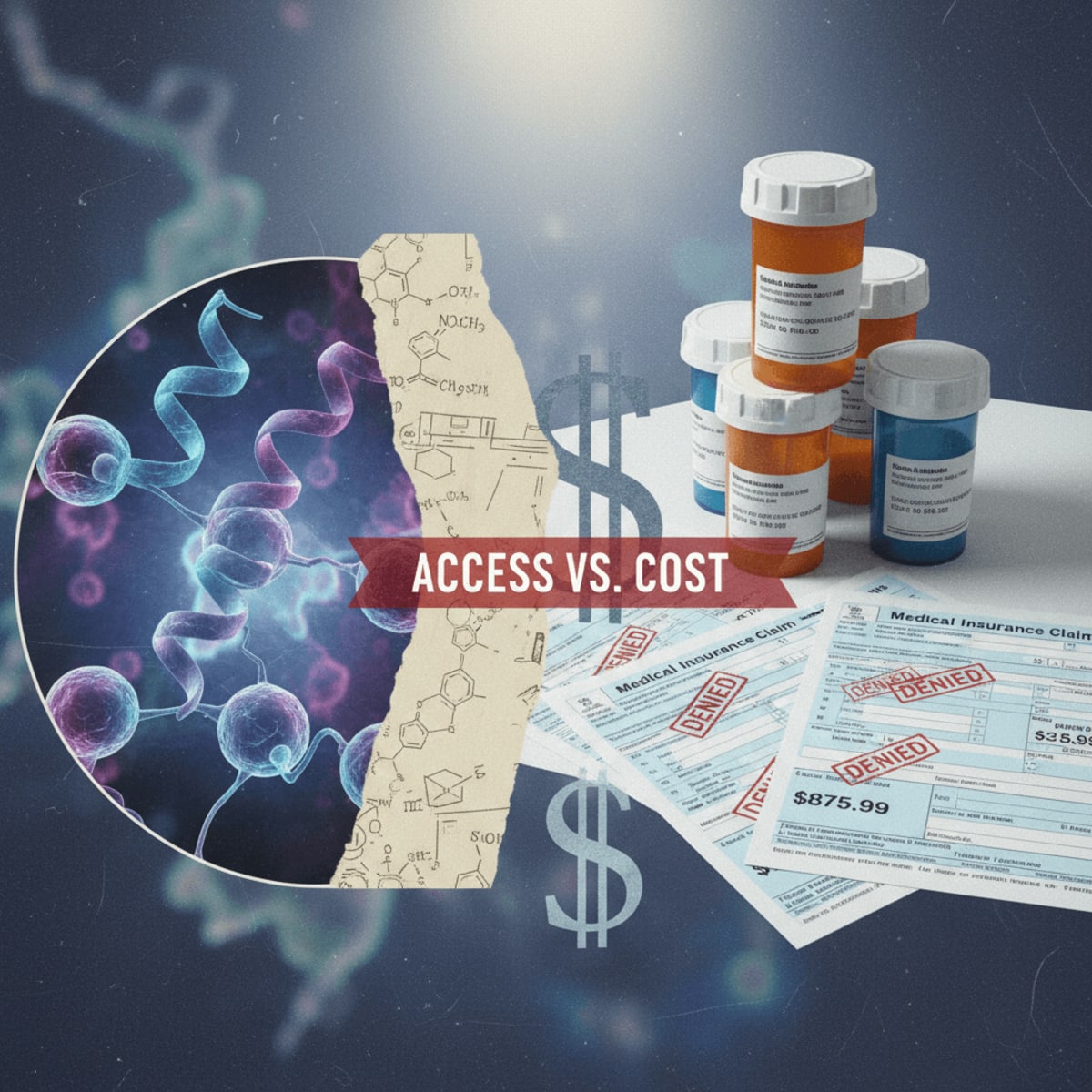
The price tags on orphan drugs are testing the limits of healthcare budgets. For hereditary angioedema (HAE), a rare and debilitating condition, newer prophylactic treatments like berotralstat and lanadelumab offer significant clinical benefits, but at a considerable cost. Payers are now wrestling with how to balance access to these therapies with the need for sustainable spending. This is where real-world safety data, often messier and less definitive than clinical trial results, starts to wield considerable influence.
A recent analysis of the safety profiles of berotralstat and lanadelumab, while not revealing any unexpected safety signals, underscores the challenge. Do small differences in adverse event rates, gleaned from post-market surveillance, justify preferential formulary tiering or stricter prior authorization criteria? It's a question of value, but also of equity. Are we willing to accept slightly higher risks in some patients to achieve broader access for others?
Clinical Key Takeaways
lightbulb
- The PivotReal-world evidence, even with its limitations, is becoming a key factor in payer decisions regarding HAE prophylaxis therapies.
- The DataMarginal differences in adverse event profiles between berotralstat and lanadelumab, as observed in post-market data, are being amplified in cost-effectiveness models.
- The ActionClinicians should proactively document and report all adverse events associated with HAE prophylaxis to contribute to more robust real-world safety data.
The HAE Treatment Landscape
Hereditary angioedema is characterized by recurrent episodes of severe swelling, affecting the face, limbs, gastrointestinal tract, and airway. Historically, treatment options were limited to attenuated androgens and C1-inhibitor concentrates for acute attacks. These approaches, while effective in some cases, carry their own burdens of side effects and logistical challenges. The advent of newer prophylactic therapies like berotralstat (an oral kallikrein inhibitor) and lanadelumab (a subcutaneous monoclonal antibody targeting prekallikrein) has revolutionized HAE management. These agents significantly reduce the frequency of attacks and improve patients' quality of life.
However, this progress comes at a steep price. Both berotralstat and lanadelumab are expensive, placing them firmly in the category of high-cost specialty drugs. This raises difficult questions for payers, who must balance the clear clinical benefits against the financial strain on healthcare systems. Unlike more common conditions, where generics and biosimilars offer cost-effective alternatives, HAE treatment remains heavily reliant on patented, brand-name products.
Current guidelines, such as those from the WAO (World Allergy Organization), recommend individualized treatment approaches based on disease severity and patient preferences. However, these guidelines offer little specific guidance on how to incorporate cost considerations into treatment decisions. This leaves a void for payers, who are increasingly turning to real-world data to inform their formulary management strategies.
Comparing Safety Profiles
The analysis of berotralstat and lanadelumab's safety profiles, while reassuring overall, highlights the subtle differences that payers may seize upon. Both drugs have been shown to be generally well-tolerated in clinical trials, but post-market surveillance provides a broader, albeit less controlled, view. Reports of gastrointestinal side effects (nausea, diarrhea) appear to be slightly more common with berotralstat, while injection-site reactions are, unsurprisingly, more frequent with lanadelumab. These are not major safety signals, but in the context of high drug costs, even small differences can be amplified in cost-effectiveness models.
The Payer Perspective
From a payer's standpoint, the decision of which HAE prophylaxis to cover, and at what tier, is driven by a complex interplay of factors. Clinical efficacy, safety, patient demographics, and of course, cost, all weigh heavily. In the absence of head-to-head clinical trials directly comparing berotralstat and lanadelumab, payers often rely on indirect comparisons and network meta-analyses. They also scrutinize real-world data for any signals that might differentiate the two drugs in terms of safety or adherence.
The goal is to identify the most cost-effective option for the covered population. This may involve strategies such as prior authorization requirements (e.g., requiring documentation of previous treatment failures), step therapy (e.g., starting with the less expensive option first), and preferred drug lists (e.g., placing one drug on a lower formulary tier than the other). The danger, of course, is that these strategies can create barriers to access for patients who might benefit most from a particular therapy.
Limitations of Real-World Data
It's crucial to acknowledge the inherent limitations of real-world data. Unlike randomized controlled trials, these data are often observational, retrospective, and subject to various biases. Reporting of adverse events may be incomplete or inconsistent, making it difficult to draw firm conclusions about comparative safety. Furthermore, patient populations in real-world studies may not be representative of the broader HAE population, limiting the generalizability of the findings.
Therefore, payers should exercise caution when using real-world data to inform formulary decisions. Over-reliance on these data, without considering the clinical context and the needs of individual patients, could lead to suboptimal outcomes. A more nuanced approach, incorporating clinical expertise and patient preferences, is essential.
Navigating the Formulary
For clinicians, navigating the formulary landscape for HAE prophylaxis can be frustrating. Prior authorization requirements and step therapy protocols often add administrative burden and delay access to appropriate treatment. It's important to be familiar with the specific requirements of each payer and to advocate for patients who may need a particular therapy that is not readily accessible.
Documenting the severity of HAE attacks, the impact on quality of life, and any previous treatment failures is crucial for securing coverage. Additionally, participating in post-market surveillance programs and reporting adverse events can help to improve the quality of real-world data and inform future formulary decisions. Ultimately, a collaborative approach, involving clinicians, payers, and patients, is needed to ensure that individuals with hereditary angioedema have access to the therapies they need, while also promoting responsible stewardship of healthcare resources.
The scrutiny of safety data and subsequent formulary restrictions add to the administrative burden on clinicians. Expect increased prior authorization denials requiring detailed documentation of disease severity and previous treatment failures. Patients may face higher out-of-pocket costs depending on formulary tiering, potentially leading to financial toxicity and reduced adherence. Streamlining adverse event reporting workflows within clinical practice becomes increasingly important to contribute to more reliable real-world evidence.
LSF-5828617864 | December 2025

How to cite this article
Webb M. Balancing cost and safety in hereditary angioedema prophylaxis. The Life Science Feed. Published December 29, 2025. Updated December 29, 2025. Accessed March 17, 2026. https://thelifesciencefeed.com/immunology/primary-immunodeficiency-diseases/policy/balancing-cost-and-safety-in-hereditary-angioedema-prophylaxis.
Copyright and license
© 2026 The Life Science Feed. All rights reserved. Unless otherwise indicated, all content is the property of The Life Science Feed and may not be reproduced, distributed, or transmitted in any form or by any means without prior written permission.
Fact-Checking & AI Transparency
This content was produced with the assistance of AI technology and has been rigorously reviewed and verified by our human editorial team to ensure accuracy and clinical relevance.
References
- Cicardi, M., Aberer, W., Banerji, A., Bas, M., Boccon-Gibod, I., Bork, K., ... & Zuraw, B. L. (2018). WAO guideline for the management of hereditary angioedema. World Allergy Organization Journal, 11(1), 1-28.
- Banerji, A., Davis, T., Bedard, J., Berger, W., Busse, P., Campion, M., ... & Riedl, M. (2021). Lanadelumab for the prophylactic treatment of hereditary angioedema: a systematic review and meta-analysis. Allergy, Asthma & Clinical Immunology, 17(1), 1-12.
- Zuraw, B. L., Bernstein, J. A., Lang, D. M., Craig, T., Busse, P. J., Kaplan, A. P., ... & Christiansen, S. C. (2013). Definition and classification of bradykinin-mediated angioedema. Journal of Allergy and Clinical Immunology, 131(6), 1551-1553.
Related Articles

Non-SCID T-Cell Lymphopenia Screening: System-Wide Cost Analysis