
Varicella zoster virus, commonly known as chickenpox, once represented a near-universal childhood rite of passage, marked by itchy lesions and weeks of isolation. The introduction of the varicella vaccine dramatically altered this landscape, reducing disease incidence and associated complications. Now, the Centers for Disease Control and Prevention (CDC) has issued a significant policy reversal, moving away from its long-standing recommendation for universal childhood vaccination.
For decades, the standard of care in the United States and many European nations involved routine varicella vaccination for all healthy children. This strategy, implemented following the vaccine's licensure in 1995, aimed to eradicate a highly contagious, but generally benign, childhood illness that nonetheless carried risks of severe complications, including pneumonia, encephalitis, and bacterial superinfections, particularly in immunocompromised individuals. The universal approach also sought to prevent outbreaks in schools and daycare settings, reducing the overall burden on public health systems.1
The CDC's initial recommendation for a two-dose schedule for all children at 12-15 months and 4-6 years of age significantly drove down varicella incidence. Before widespread vaccination, approximately 4 million cases occurred annually in the US, leading to 10,000 hospitalizations and 100 deaths. By 2019, incidence had plummeted by more than 90%, with hospitalizations and deaths seeing similar dramatic reductions. This public health success story was often cited as a testament to the power of routine immunization programs.2
Rethinking Universal Coverage
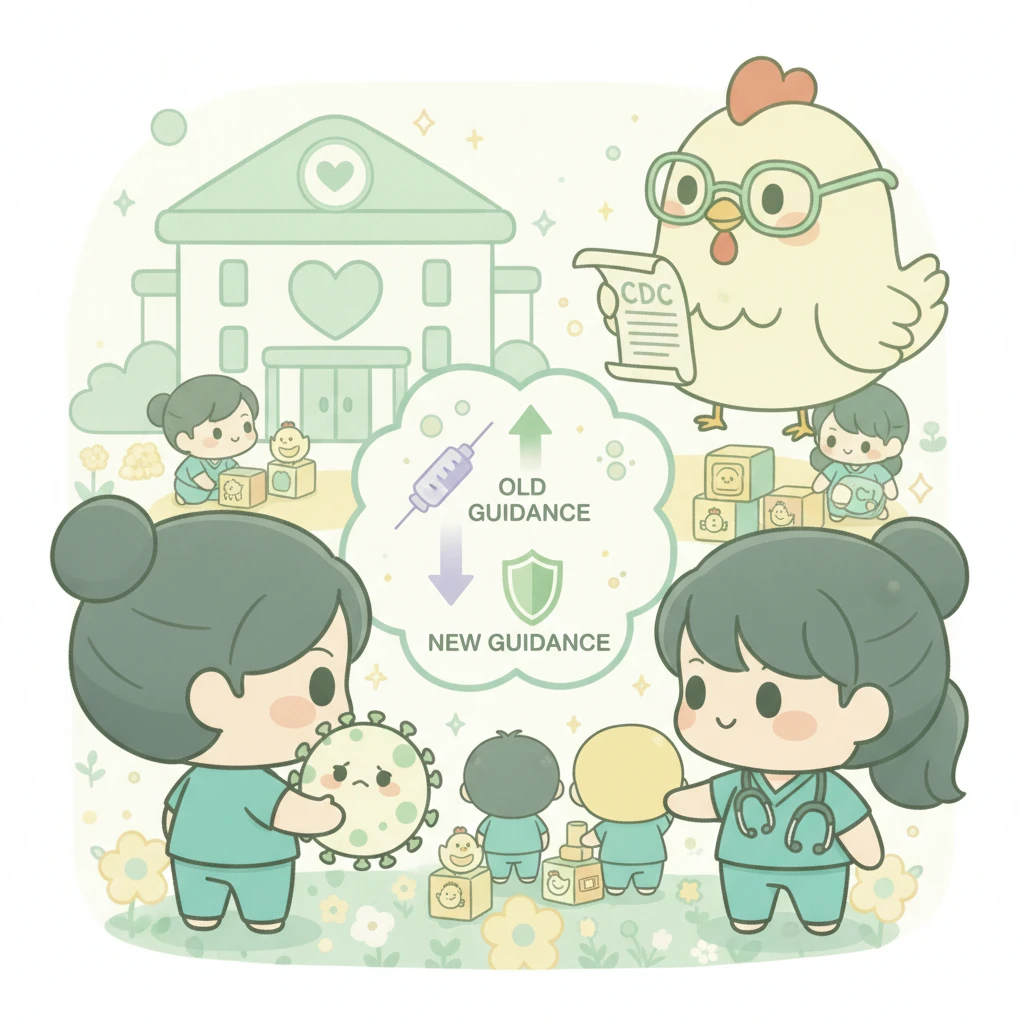
The CDC's revised guidance now recommends varicella vaccination primarily for individuals at high risk of severe disease or transmission. This includes healthcare personnel, immunocompromised individuals, non-immune adults in close contact with high-risk groups, and those in institutional settings where outbreaks pose a significant threat. The shift represents a fundamental re-evaluation of the vaccine's role in public health, moving from broad population protection to focused risk mitigation.3
This policy change stems from several factors. One consideration involves the evolving epidemiology of varicella. With fewer circulating wild-type virus strains due to high vaccination rates, the risk of natural boosting of immunity in vaccinated individuals has decreased. This phenomenon, sometimes referred to as 'waning immunity,' has led to a slight increase in breakthrough infections among vaccinated individuals, though these cases are typically milder than natural infections. The agency also considered the cost-effectiveness of universal vaccination in a landscape where the disease burden has already been substantially reduced.4
Another driver for the policy adjustment relates to the vaccine's efficacy and duration of protection. While highly effective, the varicella vaccine does not confer lifelong sterilizing immunity in all recipients. Studies have shown that vaccine effectiveness against any form of varicella is approximately 85% to 90% after two doses, but effectiveness against moderate to severe disease is higher, often exceeding 95%. The duration of protection has been a subject of ongoing research, with some data suggesting that immunity may wane over time, particularly in the absence of natural boosting.5
The agency also weighed the logistical complexities and potential for vaccine hesitancy associated with universal mandates. While not explicitly stated as a primary reason for the reversal, public health bodies often consider the broader societal context when formulating recommendations. Reducing the number of universally recommended vaccines could, in theory, alleviate some parental concerns about vaccine overload, though this remains a contentious point among public health advocates.
For pediatricians, the immediate impact is a significant change in their vaccination protocols. Instead of a straightforward two-dose schedule for all children, they must now assess each patient's individual risk factors, family history, and potential exposures to determine vaccine eligibility. This requires a more detailed patient history and a nuanced understanding of the revised guidelines, potentially increasing the time spent on vaccine counseling during well-child visits. The administrative burden of tracking which children meet the new criteria, and ensuring they receive the vaccine if eligible, will also increase.
Public health officials face the challenge of communicating this complex policy shift to both clinicians and the general public. The message that a vaccine previously deemed essential for all children is now only for specific groups could be misinterpreted, potentially leading to confusion or a perception that the vaccine is less important. This requires careful messaging to maintain public trust in vaccination programs while adapting to new scientific understanding and epidemiological trends. The risk of localized outbreaks in unvaccinated or under-vaccinated populations, particularly in communities with lower vaccine uptake, also becomes a more pressing concern.
The long-term implications for disease incidence are also a point of discussion. While the immediate impact on overall varicella rates might be minimal due to existing herd immunity, a sustained shift away from universal vaccination could, over time, lead to a resurgence of the disease in broader populations. This is particularly true if the targeted vaccination strategy fails to adequately capture all at-risk individuals or if compliance with the new guidelines is suboptimal. The potential for increased cases of shingles (herpes zoster) in adults, a sequela of natural varicella infection, also warrants consideration, as fewer childhood infections could mean fewer opportunities for natural boosting of immunity against zoster later in life.
For a deeper dive into the intricacies of varicella-zoster virus, its sequelae, and other related infections, consult the authoritative Oxford Handbook of Infectious Diseases and Microbiology.
The CDC's pivot on varicella vaccination forces clinicians to abandon a simple, universal approach for a more complex, risk-stratified one. This means more time spent on patient history and less on routine administration, a trade-off that will undoubtedly strain already busy pediatric practices. The ease of a blanket recommendation is gone.
For public health, the challenge lies in clear communication. Shifting a long-standing universal recommendation risks undermining public confidence in vaccines, especially if the rationale is not articulated precisely. Explaining why a vaccine once for everyone is now for some requires a delicate touch, or we risk a resurgence of preventable disease.
Industry will likely see a contraction in the broad pediatric varicella vaccine market, necessitating a re-focus on adult and high-risk formulations. This re-prioritization could influence future vaccine development and distribution strategies, moving away from mass production for childhood immunization programs.
Patients, particularly parents, will face increased confusion. The simplicity of a universal schedule provided clarity; now, they must navigate nuanced risk assessments. This could lead to lower uptake in eligible groups if the message is not clear, potentially exposing vulnerable populations to a disease we largely had under control.
- The Pivot The CDC has shifted from universal childhood varicella vaccination to a targeted approach for specific high-risk populations.
- The Data The previous universal vaccination strategy reduced varicella incidence by over 90% since its 1995 introduction.
- The Action Clinicians must now identify and vaccinate only those pediatric and adult patients who meet the revised risk criteria, potentially increasing administrative burden and requiring careful patient education.
ART-2026-765
·10/26
Drafted with AI assistance, reviewed and approved by the editorial team. This publication is intended for healthcare professionals, researchers, and life science industry professionals. Content is provided for informational and educational purposes only and does not constitute medical advice.

Thirty years in health journalism, the last fifteen in life sciences. I have reported from every major medical congress and watched blockbuster drugs get revised after approval. I cover what the data says.
Cite This Article
Carter J, Voss M. CDC reverses chickenpox vaccine guidance, impacting pediatricians and public health. The Life Science Feed. Published July 13, 2026. Updated October 5, 2026. Accessed October 11, 2026. https://thelifesciencefeed.com/infectious-diseases/syncytial-virus-infections/news/cdc-reverses-chickenpox-vaccine-guidance-impacting-pediatricians-and-public-health.
Editorial & AI Standards
All content is researched from peer-reviewed, open-access sources: published trial data, clinical guidelines, and regulatory filings. AI tools are used solely to structure and summarise that evidence; no AI-generated conclusions appear without editor verification against the primary source.
Every article is reviewed by a named editor before publication. Source citations are listed in the References section. This content does not represent the views of any pharmaceutical company, medical device manufacturer, or healthcare provider.
Licence & Rights
© 2026 The Life Science Feed. All rights reserved. Unless otherwise indicated, all content is the property of The Life Science Feed and may not be reproduced, distributed, or transmitted in any form or by any means without prior written permission.
Medical Disclaimer
The information provided on The Life Science Feed is for educational and informational purposes only. It is not intended as a substitute for professional medical advice, diagnosis, or treatment. Always seek the advice of your physician or other qualified healthcare provider regarding any medical condition or treatment decision. Never disregard professional medical advice or delay in seeking it because of something you have read on this website.
References
1. Klein NP, Fireman B, Yih WK, et al. Measles-mumps-rubella-varicella combination vaccine and the risk of febrile seizures. Pediatrics. 2010;126(1):e1-e8. doi:10.1542/peds.2010-0665
2. Marin M, Leung J, Anderson TC, Lopez AS. Monitoring Varicella Vaccine Impact on Varicella Incidence in the United States: Surveillance Challenges and Changing Epidemiology, 1995-2019. J Infect Dis. 2022;226(Suppl 4):S392-S399. doi:10.1093/infdis/jiac221
3. Shapiro ED, Marin M. Effectiveness of Varicella Vaccine: 25 Years of Postlicensure Experience in the United States. J Infect Dis. 2022;226(Suppl 4):S425-S430. doi:10.1093/infdis/jiac299
4. CDC. Epidemiology of Varicella During the 2-Dose Varicella Vaccination Program - United States, 2005-2014. MMWR Morb Mortal Wkly Rep. 2016;65(34):902-906. doi:10.15585/mmwr.mm6534a4
5. U.S. Department of Health and Human Services. ACIP Recommends Standalone Chickenpox Vaccination in Toddlers. October 2025. Available at: https://www.hhs.gov/press-room/acip-recommends-chickenpox-vaccine-for-toddlers.html