
Hosted by James Carter & Sarah Mitchell

Transcription
Welcome to the debate. Imagine trying to upgrade a computer's operating system, but instead of downloading a file, you have to physically rip out the hard drive.
CO-HOST: And mail it across the country.
Right, exactly. You mail it to a highly specialized lab, wait, you know, three or four weeks for them to reprogram it, and then just hope the computer hasn't completely crashed by the time you get it back.
CO-HOST: Which is a terrifying weight.
It really is. But for the last decade, I mean, that has been the miraculous, yet agonizing reality of treating blood cancer with autologous CAR T therapy. We extract a patient's own immune cells, engineer them to hunt cancer, and infuse them back.
CO-HOST: And look, it is arguably the most significant leap in the history of oncology. We are seeing these profound durable remissions in diseases that used to be a universal death sentence. But the delivery system is fundamentally broken.
Completely broken.
CO-HOST: Right, because the biology works beautifully, but the logistics are just a nightmare. You have a highly aggressive lymphoma or multiple myeloma that is actively multiplying, and the patient is put on a three-week waiting list.
Yeah, well, their custom cells are brood in a bioreactor.
CO-HOST: Exactly. And many patients simply do not survive that weight. Not to mention the specialized apheresis machines, the extreme cold chain shipping logistics, and a price tag that effectively limits this miracle to a handful of elite, globally concentrated academic medical centers.
Which means the entire field of immuno oncology is now racing toward off-the-shelf, immediately available solutions. We all know we have to move past this bespoke, patient-specific manufacturing.
CO-HOST: But how we actually do that is splitting the scientific community right down the middle.
It really is, and I take the position that our ultimate goal in oncology must be profound, durable, one-time treatment. We need to master living biology. That means doubling down on advanced cellular engineering.
CO-HOST: Taking healthy cells from donors, right?
Yes, mass producing them to create off-the-shelf allogeneic CAR T, or utilizing inherently safer platforms like CAR NK cells, and eventually, you know, moving to in vivo gene delivery. This is the true evolution of the living drug.
CO-HOST: Well, I look at the landscape and I see a much more practical, scalable path. I mean, complexity does not inherently equal clinical superiority. I contend that bispecific antibodies represent the actual immediate revolution in patient care.
Instead of cellular engineering?
CO-HOST: Right. Instead of relying on the biological volatility of transplanting foreign donor cells, or the unpredictable risks of gene editing, we can use conventional, scale manufactured molecules that physically bridge a patient's existing immune cells directly to their cancer cells. We really need to focus on elegant, off-the-shelf tools that we can deliver to patients globally right now, rather than chasing a science fiction vision of cellular engineering.
I hear the appeal of a simple chemical tool. I really do. But you're glossing over a massive difference in biological power here.
CO-HOST: Am I, though?
You are. Let's talk about what cellular therapies actually achieve inside the body. When we use an allogeneic CAR T platform, where we harvest T-cells from a healthy, young donor and engineer them in massive batches, we aren't just administering a static drug that degrades over time. We are deploying a dynamic biological agent.
CO-HOST: A living software update, essentially.
Precisely. These cells enter the patient's bloodstream, recognize the tumor antigen, and then they do something remarkable. They proliferate, they multiply, expanding their own ranks to match the size of the tumor burden.
CO-HOST: Right, mounting a targeted assault.
Yes, and leaving behind memory cells to guard against relapse.
CO-HOST: Which is the theoretical ideal. It sounds flawless on paper, but
It is happening in the clinic, though. If you look at the data from the ALLO 501 trials for relapsed and refractory diffuse large B-cell lymphoma, these off-the-shelf allogeneic cells are delivering early response rates that are remarkably comparable to the bespoke autologous products.
CO-HOST: Okay, but a conventional molecule.
And because it's a platform, if the initial cells exhaust, you can literally just pull another vial out of the freezer and re-dose the patient immediately. A conventional molecule cannot hunt, multiply, and adapt to a tumor the way a living cell can.
CO-HOST: Sure, but a conventional molecule doesn't trigger an all-out war with the host's immune system, either. You are painting allogeneic CAR T as this elegant, permanent strike team.
Because it is.
CO-HOST: But biologically, it has a massive Achilles heel: host versus graft rejection. Yes, the donor cells are heavily engineered, but they are still fundamentally foreign tissue.
Well, we use gene editing tools like CRISPR or TALEN, right? These highly precise molecular scissors knock out the specific receptors that cause the donor cells to attack the patient.
CO-HOST: You knock out the receptors to prevent graft versus host disease. Yes, but you haven't solved the reverse problem, the patient's own immune system recognizing your expensive, engineered donor cells as foreign invaders and aggressively eliminating them.
Which is a challenge, I admit.
CO-HOST: A massive challenge. Because of this host versus graft rejection, allogeneic CAR T cells inherently suffer from incredibly short persistence. I mean, if the patient's body deletes your living software in a matter of weeks, your entire one-time durable treatment advantage just vanishes completely.
Right, but we manage that by preparing the patient's immune system prior to the infusion.
CO-HOST: Come on. Preparing the immune system is a very polite way of describing lymphodepletion.
It is standard practice.
CO-HOST: Let's be clear about what that actually means for a human being. You are effectively carpet bombing a patient's bone marrow with incredibly harsh chemotherapies like fludarabine and cyclophosphamide. You have to wipe out their existing immune system just to create a temporary biological vacuum.
So the donor cells aren't destroyed immediately upon entering the bloodstream. Yes?
CO-HOST: Leaving them highly vulnerable to opportunistic infections in the process. In that context, the predictable continuous dosing of a bispecific antibody is a vastly more reliable and frankly, more humane clinical tool.
Wait, let me stop you there because framing bispecifics as the reliable humane alternative completely ignores the reality of chronic treatment. Bispecifics require continuous dosing.
CO-HOST: They do.
Yes.
You are asking a cancer patient to come into a clinic weekly or bi-weekly for an indefinite intravenous or subcutaneous infusion. Philosophically and biologically, asking patients to remain on a continuous treatment treadmill is a huge step backward from the curative promise of a single cellular infusion.
CO-HOST: But the lymphodepletion hurdle.
Well, lymphodepletion is intense, it is a finite hurdle. Once you clear it, the potential is a cure.
CO-HOST: But the hurdle of host versus graft rejection remains the limiting factor for allogeneic cells. Why force a foreign cell into the body when you don't have to? Let's actually talk about the mechanism of bispecifics, because it's brilliant in its simplicity.
The microscopic handcuffs.
CO-HOST: Exactly. A bispecific antibody has two binding domains. Picture a microscopic pair of handcuffs. One side grabs a specific tumor antigen on the cancer cell like BCMA in multiple myeloma or CD20 in lymphoma.
And the other side?
CO-HOST: The other side grabs CD3, which is an activation receptor on the surface of the patient's own existing T-cells. It physically drags the T-cell to the cancer cell and forcefully pulls the trigger. We are utilizing the patient's endogenous immune system without needing to extract it, edit it in a lab, or worry about foreign tissue rejection.
I completely understand the microscopic handcuffs concept. It is a fantastic visualization. But biologically, here's where I get really stumped.
CO-HOST: Where's that?
Well, by relying on the patient's endogenous T-cells, you are relying on an immune system that has already failed to stop the cancer in the first place. These are patients who have been battered by multiple rounds of prior chemotherapy.
CO-HOST: True, their immune systems have been through a lot.
A lot. Their tumor microenvironment is incredibly immunosuppressive. The T-cells in a heavily pre-treated multiple myeloma patient are physically exhausted. They often lack the cytotoxic granules, the actual chemical weapons needed to kill a cancer cell.
CO-HOST: So you're saying they're bringing an unarmed soldier?
Yes, you can use your microscopic handcuffs to physically drag an exhausted T-cell to a tumor, but aren't you just bringing a completely exhausted, unarmed soldier to the front line? How does that actually result in a kill?
CO-HOST: It results in a kill because the data proves the endogenous system still has incredible teeth, even after multiple lines of therapy. You are assuming the patient's immune system is entirely depleted, but the clinical reality tells a completely different story. I mean, the response rates are there, but
CO-HOST: They are staggering. We are taking patients whose cancers have resisted three entirely different classes of drugs. Patients who have been told to get their affairs in order because there are literally no options left. And when we give them a bispecific like teclistamab, we are seeing a 63% overall response rate.
Which is impressive.
CO-HOST: Nearly 40% achieve a complete response, meaning no detectable cancer. With talquetamab, we are seeing response rates over 70%. In lymphoma, mosunetuzumab is delivering almost a 40% complete response rate.
From a conventional pharmacy drug?
CO-HOST: Yes, we are doing this with a vial pulled out of a standard pharmacy freezer. The sheer, undeniable efficacy in heavily pre-treated populations directly challenges your assumption that we must manufacture fresh donor cells to get profound results.
Look, I'll give you that. Those response rates are absolutely commendable for an off-the-shelf product. But we cannot just ignore the toxicity profile.
CO-HOST: Every effective therapy has a toxicity profile.
Right, but you mentioned earlier that bispecifics don't trigger the war of host versus graft rejection. But they trigger their own severe biological consequences. Because they forcefully engage the immune system, bispecifics carry a very real risk of cytokine release syndrome or CRS.
CO-HOST: Yes, CRS is a known factor.
A dangerous one. The T-cells release a massive storm of inflammatory proteins that can send a patient into the ICU with crashing blood pressure and soaring fevers. You also see neurotoxicity.
CO-HOST: Which is entirely manageable, I have to point out. The peak toxicity of bispecifics is generally much lower and far more predictable than the severe CRS we see with traditional CAR T therapy. Oncologists are becoming highly adept at managing these side effects with step-up dosing and mitigating drugs like tocilizumab.
But what if we didn't have to manage it at all?
CO-HOST: Not manage it at all? How is that realistic?
This is where the cellular engineering paradigm is so exciting, because we don't look at toxicity as an unavoidable cost of doing business. We look at it as an engineering challenge. If the problem is that foreign T-cells trigger immune rejection, or that hyperactivated T-cells cause severe CRS and brain inflammation, we just engineer a different type of cell. Enter CAR NK cells.
CO-HOST: Natural killer cells, the innate immune system.
Exactly. T-cells are part of the adaptive immune system. They require hyper-specific antigen matching to recognize a target, which is exactly why they are so prone to causing graft versus host disease when transplanted into a new body.
CO-HOST: Right, they have to be perfectly matched.
But natural killer cells operate under a totally different mechanism. Think of NK cells as the bouncers of the immune system. They don't check for specific ID matching.
CO-HOST: They just look for trouble.
Precisely. They look for general signs of cellular stress, infection, or malignant transformation. Because they don't rely on that hyper-specific HLA matching, they inherently do not cause graft versus host disease. We can harvest incredibly potent, healthy NK cells from cord blood or healthy donors.
CO-HOST: And then equip them with a chimeric antigen receptor.
Yes, to give them guided precision against a cancer and infuse them into a patient.
CO-HOST: Look, I am familiar with the early data on NK platforms, and it's interesting, but the persistence of NK cells is notoriously short. They don't engraft and survive long-term the way T-cells do.
Maybe not as long, but look at the clinical impact while they are active. In the landmark MD Anderson trial targeting CD19 and relapsed B-cell malignancies, we saw a 73% response rate.
CO-HOST: A solid number.
But here is the most important part. There were absolutely zero cases of cytokine release syndrome, zero cases of ICANS, meaning none of the terrifying brain inflammation and neurotoxicity where patients temporarily lose the ability to speak or write their own names.
CO-HOST: And zero graft versus host disease.
Zero. We are proving that through advanced biological engineering, we can completely decouple profound cancer killing efficacy from severe, life-threatening toxicity.
CO-HOST: I will readily admit that seeing a 73% response with zero CRS or neurotoxicity is a massively forward. It's beautiful science, but who is actually going to get this therapy?
What do you mean? Patients with these malignancies?
CO-HOST: You are still talking about living cells, though. You are still talking about complex manufacturing facilities, rigorous cryopreservation protocols, and highly specialized handling by cellular therapy labs.
That requires infrastructure. Yes.
CO-HOST: You're talking about boutique science. Well, I have patients in community hospitals right now who desperately need help.
The infrastructure for cellular therapy is expanding rapidly. It's not going to be boutique forever.
CO-HOST: But it will never match the footprint of conventional medicine. The biggest crisis in immuno-oncology right now isn't the science, it's the access. This is where the bispecific approach comprehensively triumphs over the cellular paradigm.
By relying on mass manufacturing.
CO-HOST: Yes. Bispecifics represent the ultimate democratization of immunotherapy. These are conventional antibodies. The global pharmaceutical industry has spent 50 years perfecting how to manufacture antibodies at massive worldwide scale. They are shipped in standard refrigerated supply chains.
They just sit in a pharmacy.
CO-HOST: They sit in the standard freezer in a regional hospital pharmacy in rural areas or in developing healthcare systems. When a patient's myeloma relapses on a Tuesday, the oncologist writes an order and the pharmacy dispenses the bispecific that afternoon. You do not need a multi-million dollar cell processing facility. You don't need complex chain of custody logistics.
Okay, you're making a really strong case for the convenience of bispecifics. I'll concede that. But your argument assumes that cellular therapy is completely static.
CO-HOST: How so?
You are comparing the mature standardized bispecifics of today against the first-generation logistics of cellular therapies. If we want to really talk about democratizing access, let's talk about the absolute frontier of this field, which eliminates the manufacturing facility entirely. In vivo CAR T.
CO-HOST: Manufacturing the CAR T cells inside the patient's own body.
Precisely. We stop taking the cells out of the patient altogether. Instead, we use lipid nanoparticles. Very similar to the technology used to deliver the MRNA COVID vaccines.
CO-HOST: But targeted.
Right. The surface of the nanoparticle is studded with targeting molecules, like CD8 antibodies, that specifically seek out the patient's circulating T-cells. Inside the nanoparticle are the genetic instructions for the chimeric antigen receptor.
CO-HOST: And you just inject this?
We inject this directly into the patient's bloodstream. The nanoparticle finds the T-cell, fuses with it, and delivers the instructions. The patient's own body becomes the bioreactor. The T-cell translates the code and physically sprouts the cancer hunting receptor right on its surface.
CO-HOST: It is conceptually brilliant. I won't deny that. But the biological risks are absolutely staggering.
Companies are rapidly advancing this technology. If we can manufacture the CAR T inside the patient, we reduce the cost to a fraction of current prices.
CO-HOST: If it works safely.
We create an infinitely scalable, genuinely off-the-shelf therapy that delivers a permanent genetic update in a single simple infusion. It completely erases the access advantage of bispecifics.
CO-HOST: That is a very dangerous assumption, because it vastly understates the massive hurdle of specificity. When you inject millions of lipid nanoparticles carrying permanent gene editing machinery directly into the chaotic, high-pressure environments of the human circulatory system, how do you guarantee they only fuse with T-cells?
As I mentioned, the targeting ligands on the surface of the nanoparticles are highly specific to the receptors on T-cells.
CO-HOST: Highly specific in a controlled laboratory petri dish is very different from perfectly specific in a human being.
Well, obviously there are challenges.
CO-HOST: Lipid nanoparticles have a natural biological tendency to accumulate in the liver. What happens if these nanoparticles enter hepatocytes, liver cells, and deliver the genetic instructions there. You could have a patient's liver suddenly expressing a chimeric antigen receptor.
Leading the immune system to attack the liver?
CO-HOST: In a catastrophic wave of autoimmune hepatitis. What if they edit stem cells or neurons? The risk of off-target gene editing in vivo is just immense.
Which is exactly why the current preclinical and early clinical trials are moving so carefully. They're optimizing the targeting ligands and limiting the payload expression exclusively to hematopoietic lineages. The safety switch is being engineered into these genetic payloads ensure that if off-target editing occurs, the cells can be selectively turned off.
CO-HOST: But listen to the timeline you are implicitly describing here.
It's an emerging technology.
CO-HOST: We are talking about optimizing ligands and preclinical safety switches. We are looking at a minimum of five to seven years before in vivo CAR T might safely reach a human clinic in any widely applicable way.
Science takes time.
CO-HOST: But millions of patients with multiple myeloma, follicular lymphoma, and DLBCL do not have five years to wait. We cannot base our global access strategy on a hypothetical biological future when bispecific antibodies, drugs like teclistamab, glofitamab, and epcoritamab are thoroughly validated, FDA approved, and saving lives right now.
Look, I do not deny the immediate utility of bispecifics. They are an incredibly elegant, essential bridge for patients who need treatment today.
CO-HOST: A bridge that works very well.
But we must be very careful not to mistake a bridge for the final destination. My position remains that the true future of curative oncology cannot be realized by simply temporarily chemically tethering an exhausted T-cell to a tumor. We have to master living biology.
CO-HOST: Even with all the complexity.
Yes, whether through the refined gene editing of allogeneic cells, the inherently safer profile of CAR NK bouncers, or the revolutionary promise of in vivo gene delivery, engineered cells offer a depth, adaptability, and durability of response that chronic treatments can never match.
CO-HOST: That's a strong vision.
We are literally learning how to program the human immune system to remember and actively hunt disease. That is the only path required to turn previously incurable blood cancers into a thing of the past.
CO-HOST: And my counter is that we don't always need to reinvent the wheel, or in this case, rebuild the immune system from scratch to achieve spectacular clinical results.
You prefer the simpler approach?
CO-HOST: We have found a way to achieve the exact same primary mechanism of action, redirecting T-cells to recognize and kill cancer. But we are doing it without the immense friction, the manufacturing delays, the exorbitant costs, the grueling lymphodepletion, or the biological rejection risks of cellular engineering.
By using standard molecules?
CO-HOST: Exactly. Bispecific antibodies harness the undeniable power of immunotherapy through the scalable, proven science of molecular manufacturing. They offer the most realistic, immediate, and equitable path to widespread global access. We give the endogenous immune system the right tools to do its job, and it works.
It is a genuinely fascinating tension in the field right now. What I think we absolutely agree on is that the first generation of immunotherapy, relying solely on highly individualized autologous CAR T therapy is reaching its natural limit.
CO-HOST: We are completely aligned on that. The entire discipline is moving decisively toward scalable off-the-shelf solutions.
Right. And the best part of this debate is that we won't have to rely on theoretical arguments for much longer. The clinical trials running right now are going to give us the hard empirical data we need.
CO-HOST: Like CARTITUDE-6?
Yes, head-to-head studies like CARTITUDE-6, which is taking the highly potent cilta-cel CAR T therapy and comparing it directly against a bispecific adjacent regimen in multiple myeloma. The data will ultimately tell us which approach offers the superior balance of safety, efficacy, and durable access for the patient.
CO-HOST: We will see the data soon enough. And when you step back and look at the sheer pace of innovation, it is profoundly inspiring. To think that blood cancers that were universally fatal just a few decades ago, now have multiple, distinct, highly sophisticated pathways to adorable remission. This science is moving at breathtaking speed.
CO-HOST: It really is. And regardless of which modality ultimately dominates the clinic, the clear winners of this scientific race will be the patients.
Absolutely. We leave you with this to ponder. As we move beyond the first generation of immunotherapy, what will the future of medicine look like? Will it be something we manufacture by the millions in massive pharmaceutical vats, chemically bridging the gap?
CO-HOST: Or will it be living software that we program directly into the cells of the human immune system, turning the body into its own cure?
Thank you for joining us on the debate.
Free Clinical Resources
Episode Infographic
Key data, mechanisms, and clinical takeaways distilled into a single shareable page. Save it for reference or use it in your next team discussion.
Clinical Flashcards
Core concepts from this episode in flashcard format, structured for spaced repetition, pre-consultation review, or CPD reflection with your team.
More from: CAR-T & the Future of Blood Cancer Debate Series

CAR-T Masterstroke Or Biological Chaos?
In 2012, a 6-year-old with relapsed ALL became the first child successfully treated with CAR-T cell therapy. That case launched a revolution. Sarah Mitchell and James Carter explain how chimeric antigen receptor T cells are engineered, why CD19 was the first target, and why CRS and ICANS are the price of their potency.

Moving CAR-T To Earlier Myeloma Lines
Ciltacabtagene autoleucel achieved a 97% overall response rate and 67% complete response in triple-class refractory multiple myeloma - numbers not thought achievable a decade ago. CARTITUDE-4 has now moved it to the second line. Sarah Mitchell and James Carter cover the BCMA story, the new targets, and the resistance mechanisms driving the next generation.
Small Molecules VS CAR-T In CLL
By the time CAR-T arrived in CLL, the disease had already been transformed by BTK inhibitors and venetoclax. TRANSCEND CLL 004 showed 18% CR in BTKi/venetoclax-refractory disease. Sarah Mitchell and James Carter explore why CLL is harder for CAR-T, where it still has a role - especially in Richter's transformation - and why timing of T cell collection matters.
- Allogeneic off-the-shelf CAR-T eliminates manufacturing delays and enables redosing - shorter persistence remains the key challenge vs autologous
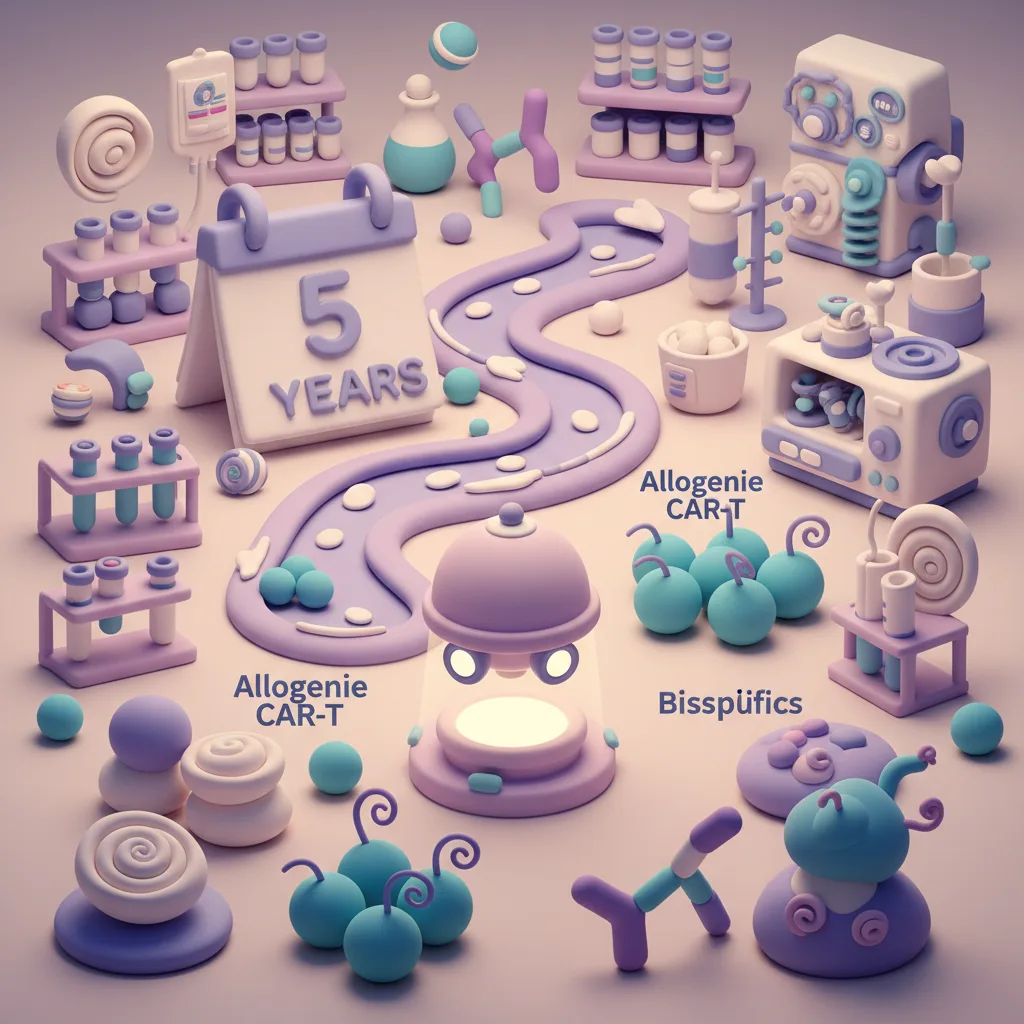
- In vivo CAR-T (gene delivery directly to T cells via nanoparticles) is in early clinical development - potentially transformative for access within 5 years
- Bispecific antibodies (teclistamab, glofitamab, mosunetuzumab): off-the-shelf, impressive ORR/CR in relapsed disease, lower barrier to access - likely complementary to CAR-T, not competitive
- CAR-NK cells: early data shows activity without GVHD, CRS, or ICANS - next frontier for off-the-shelf immune cell therapy
ART-2026-250
·08/26
Drafted with AI assistance, reviewed and approved by the editorial team. This publication is intended for healthcare professionals, researchers, and life science industry professionals. Content is provided for informational and educational purposes only and does not constitute medical advice.

Thirty years in health journalism, the last fifteen in life sciences. I have reported from every major medical congress and watched blockbuster drugs get revised after approval. I cover what the data says.
Cite This Podcast
Carter J, Mitchell S. CAR-T therapy versus bispecific antibodies. The Life Science Feed. Published June 1, 2026. Updated August 3, 2026. Accessed August 31, 2026. https://thelifesciencefeed.com/oncology/melanoma/innovation/car-t-therapy-versus-bispecific-antibodies.
Editorial & AI Standards
All content is researched from peer-reviewed, open-access sources: published trial data, clinical guidelines, and regulatory filings. AI tools are used solely to structure and summarise that evidence; no AI-generated conclusions appear without editor verification against the primary source.
Every article is reviewed by a named editor before publication. Source citations are listed in the References section. This content does not represent the views of any pharmaceutical company, medical device manufacturer, or healthcare provider.
Licence & Rights
© 2026 The Life Science Feed. All rights reserved. Unless otherwise indicated, all content is the property of The Life Science Feed and may not be reproduced, distributed, or transmitted in any form or by any means without prior written permission.
Podcast Disclaimer
This podcast is produced for educational and informational purposes only. The conversation between hosts represents a discussion of published clinical evidence and is not intended as clinical advice, a substitute for professional medical judgment, or a recommendation for any specific treatment. Healthcare professionals should rely on their own clinical training, current guidelines, and individual patient assessment when making treatment decisions. The views expressed are those of the hosts and do not constitute endorsement of any specific therapy, product, or manufacturer.
References
Linton K et al. CELESTIMO. Lancet Oncol. 2023
Liu E et al. CAR-NK. N Engl J Med. 2020;382:545-553
Mailankody S et al. ALLO-501. J Clin Oncol. 2023
Moreau P et al. MajesTEC-1. N Engl J Med. 2022;387:495-505