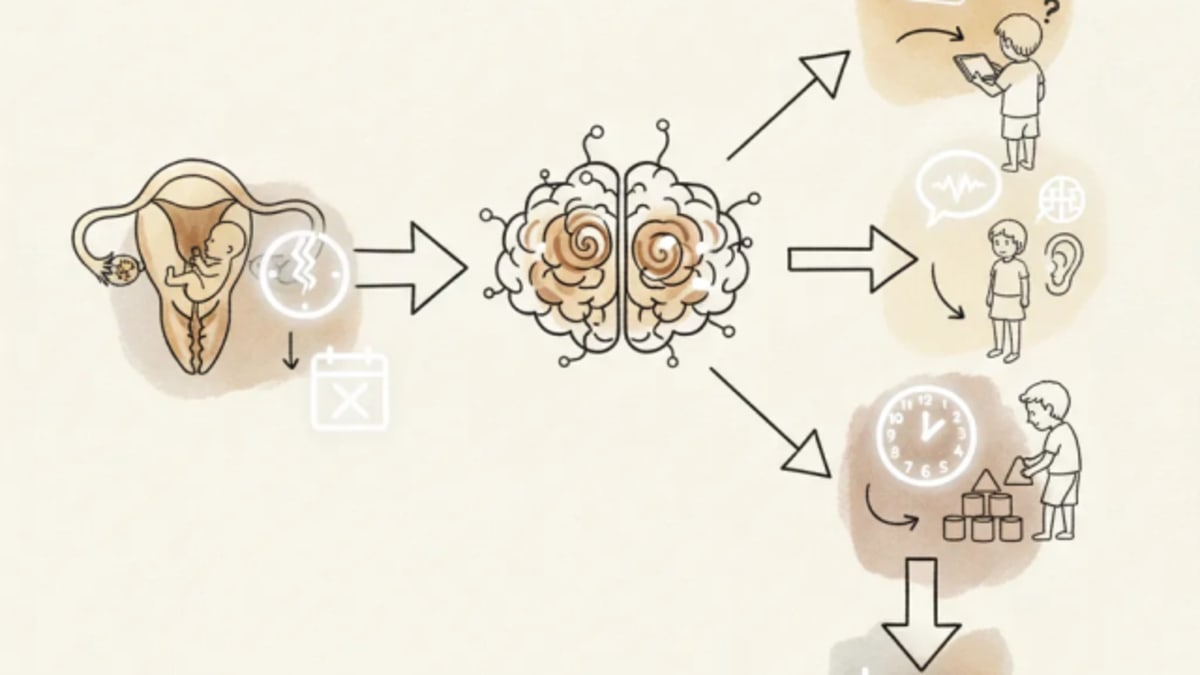

Managing attention deficit/hyperactivity disorder (ADHD) in children and adolescents presents a clinical challenge due to its heterogeneity and chronic, fluctuating nature. A recent review synthesizes evidence from 2019 to 2025, affirming a multimodal, pragmatic approach to care aligned with current international guidelines.1
ADHD in children and adolescents is characterized by heterogeneity, developmental fluctuation, and frequent comorbidity.1 It is a chronic, fluctuating condition, necessitating sustained and individualized care.1 Diagnostic strategies favor semi-structured interviews over rating scales.1 Neuroimaging or biological tests offer limited diagnostic utility, while neuropsychological testing helps situate symptoms within broader cognitive developmental profiles.1
Interventions and Efficacy
Psychosocial interventions, specifically behavioral parent training, school-focused interventions, and cognitive behavioral therapy, produce small but meaningful improvements in functioning.1 Outcomes from these interventions are strongly shaped by rater, expectancy, and context.1 Lifestyle interventions targeting physical activity and sleep show modest adjunctive benefits.1 Cognitive training does not generalize beyond trained tasks, and effects on neurofeedback are predominantly non-specific and contextual.1 Digital tools are expanding, but few are rigorously validated.1
Pharmacological treatment remains central to ADHD management.1 Stimulants show robust short-term efficacy, and non-stimulants provide effective second-line options.1 Advances in titration strategies, formulation design, and pharmacogenetics support movement towards precision-oriented and personalized prescribing.1 The overall evidence supports a multimodal, pragmatic approach to care, consistent with current international guidelines.1
While the efficacy of pharmacological interventions is well-established, optimizing their use requires careful consideration of individual patient profiles. Stimulants, primarily methylphenidate and amphetamines, exert their effects by increasing dopamine and norepinephrine availability in the prefrontal cortex, crucial for executive functions. Their rapid onset of action and significant effect sizes make them first-line choices for many patients. However, potential side effects such as appetite suppression, sleep disturbances, and cardiovascular effects necessitate thorough pre-treatment screening and ongoing monitoring. Non-stimulants, including atomoxetine, guanfacine, and clonidine, offer alternatives for patients who do not respond to stimulants, experience intolerable side effects, or have co-occurring conditions like anxiety or tic disorders. These agents typically have a slower onset of action but provide sustained symptom control without the same risk of abuse potential as stimulants.
Precision Prescribing: Moving Beyond Trial and Error
The concept of precision prescribing in ADHD management is gaining traction, aiming to move beyond a "one-size-fits-all" approach. This involves leveraging various data points to predict individual responses to treatment and minimize adverse effects. Advances in pharmacogenetics, though still in their nascent stages for widespread clinical application in ADHD, hold promise. Research is exploring genetic polymorphisms that may influence drug metabolism (e.g., CYP2D6 for atomoxetine) or receptor sensitivity, potentially guiding medication selection and dosage. However, the complex polygenic nature of ADHD and drug response means that a single genetic marker is unlikely to be solely predictive. Instead, a panel of genetic markers, combined with clinical factors, may offer more robust guidance.
Beyond genetics, other factors contributing to precision prescribing include:
- Formulation Design: The availability of various extended-release and long-acting formulations allows for individualized dosing schedules, improving adherence and reducing the need for multiple daily doses. This is particularly beneficial for school-aged children and adolescents, ensuring consistent symptom control throughout the day.
- Titration Strategies: Meticulous titration, starting with low doses and gradually increasing to the optimal therapeutic dose, is crucial. This minimizes side effects and allows clinicians to identify the lowest effective dose, balancing efficacy with tolerability.
- Comorbidity Assessment: The high rates of comorbidity with ADHD (e.g., anxiety disorders, depression, learning disabilities) significantly impact treatment selection and outcomes. A comprehensive assessment of co-occurring conditions is essential, as some medications may treat both ADHD and a comorbid condition, while others may exacerbate one or the other. For instance, certain non-stimulants may be preferred in patients with co-occurring anxiety.
- Patient Preferences and Context: Incorporating patient and family preferences, lifestyle, and daily routines into treatment decisions is paramount for long-term adherence and success. This includes considering factors like medication administration schedules, potential impact on sleep, and perceived stigma.
Limitations and Future Directions
Despite significant progress, several limitations and areas for future research remain. The long-term efficacy and safety data for many ADHD interventions, particularly digital tools and novel pharmacological agents, require further robust investigation. Real-world effectiveness studies, which account for the complexities of clinical practice and patient heterogeneity, are also crucial to complement controlled clinical trials. Furthermore, research into the underlying neurobiological mechanisms of ADHD continues to evolve, potentially leading to the development of novel therapeutic targets beyond the monoaminergic systems. The integration of advanced neuroimaging techniques with clinical data may also provide biomarkers for treatment response, further enhancing precision prescribing. Finally, addressing disparities in access to care and ensuring equitable implementation of multimodal treatment strategies across diverse populations remains a critical public health priority.
The continued emphasis on a multimodal approach to ADHD management underscores the complexity of the condition and the need for individualized treatment plans. General practitioners and specialists alike must recognize that while pharmacotherapy, particularly stimulants, remains a cornerstone, psychosocial interventions are not merely supplementary; they contribute meaningful improvements in functioning. The evidence suggests that a singular focus on medication without addressing behavioral and contextual factors will yield suboptimal outcomes.
The move towards precision-oriented and personalized prescribing, driven by advances in titration, formulation, and pharmacogenetics, represents a significant step forward. This evolution demands a more nuanced understanding from clinicians regarding drug selection and dosage, moving beyond a one-size-fits-all mentality. It also implies a greater need for ongoing education and familiarity with newer formulations and genetic considerations that may influence treatment response and tolerability.
For patients and their families, this review reinforces the chronic nature of ADHD and the necessity of sustained engagement with care. The limited utility of neuroimaging or biological tests for diagnosis should temper expectations regarding 'definitive' biological markers, emphasizing instead the importance of thorough clinical assessment via semi-structured interviews. The expansion of digital tools, while promising, requires careful scrutiny; clinicians should prioritize rigorously validated options to avoid interventions with unproven efficacy.
- The Pivot ADHD is understood as a dimensional, pleiotropic condition requiring sustained, individualized care.
- The Data Stimulants demonstrate robust short-term efficacy, with non-stimulants serving as effective second-line options.1
- The Action Clinicians should prioritize semi-structured interviews for diagnosis and integrate psychosocial interventions with pharmacotherapy, moving towards precision-oriented prescribing.
ART-2026-513
06/26
Cite This Article
Team TLSFE. Adhd management: multimodal care, precision prescribing supported. The Life Science Feed. Updated June 26, 2026. Accessed June 27, 2026. https://thelifesciencefeed.com/pediatrics/adhd/insights/adhd-management-multimodal-care-precision-prescribing-supported.
Editorial & AI Standards
All content is researched from peer-reviewed, open-access sources — published trial data, clinical guidelines, and regulatory filings. AI tools are used solely to structure and summarise that evidence; no AI-generated conclusions appear without editor verification against the primary source.
Every article is reviewed by a named editor before publication. Source citations are listed in the References section. This content does not represent the views of any pharmaceutical company, medical device manufacturer, or healthcare provider.
Licence & Rights
© 2026 The Life Science Feed. All rights reserved. Unless otherwise indicated, all content is the property of The Life Science Feed and may not be reproduced, distributed, or transmitted in any form or by any means without prior written permission.
Medical Disclaimer
The information provided on The Life Science Feed is for educational and informational purposes only. It is not intended as a substitute for professional medical advice, diagnosis, or treatment. Always seek the advice of your physician or other qualified healthcare provider regarding any medical condition or treatment decision. Never disregard professional medical advice or delay in seeking it because of something you have read on this website.
References
1. Robaey P, Rogers MA, Schachar RJ. Advances in the management of ADHD in children and adolescents. BMJ. 2026.