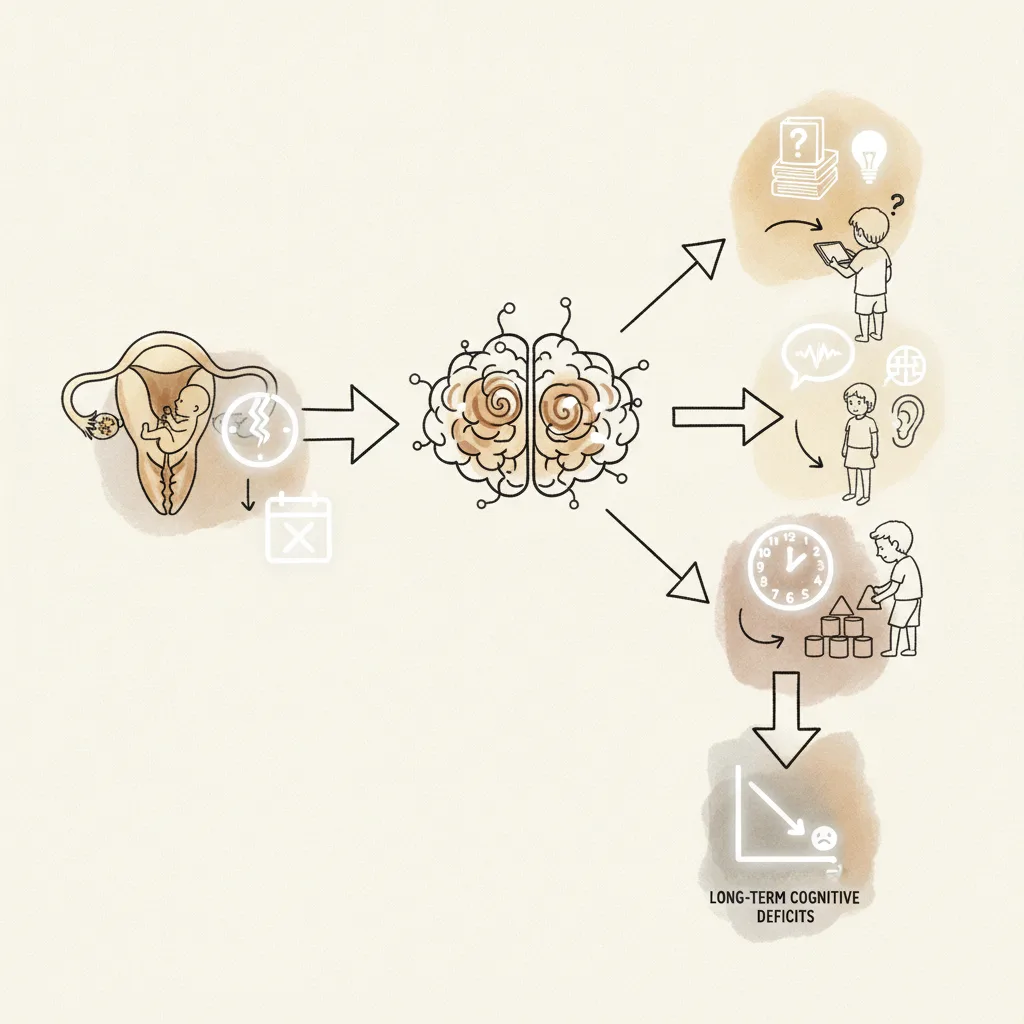

Preterm birth, defined as birth before 37 weeks of gestation, is a known risk factor for various adverse health outcomes. A critical clinical dilemma for general practitioners and specialists involves understanding the long-term neurodevelopmental trajectory of these individuals. The immediate takeaway is that preterm birth significantly increases the risk of cognitive impairments, which persist into adolescence and require ongoing monitoring and support.1
Preterm birth, occurring in approximately 10% of live births globally, is a major public health concern. While survival rates for preterm infants have improved significantly due to advances in neonatal care, concerns remain regarding the long-term health and developmental outcomes of these individuals. A substantial body of medical literature consistently demonstrates that preterm birth is associated with an increased risk of neurodevelopmental impairments, including cerebral palsy, sensory deficits, and cognitive difficulties. These cognitive challenges can manifest across various domains, including attention, memory, executive function, and processing speed, impacting academic achievement and daily adaptive skills. Understanding the specific nature and persistence of these deficits is essential for guiding clinical management and intervention strategies.
Cognitive Outcomes in Preterm Individuals
Studies evaluating cognitive outcomes in individuals born preterm, particularly those born very preterm (before 32 weeks of gestation) or with very low birth weight (less than 1,500 grams), consistently report a higher prevalence of cognitive impairments compared to their term-born counterparts. These impairments are not limited to early childhood but often persist through school age and into adolescence and young adulthood. For instance, children born preterm frequently exhibit lower mean scores on standardized intelligence tests. These differences are often statistically significant, with effect sizes varying depending on the degree of prematurity and the specific cognitive domain assessed. Beyond global intelligence, specific deficits are observed in executive functions, such as working memory, planning, and inhibitory control, which are critical for academic success and independent living. Attention-deficit/hyperactivity disorder (ADHD) is also more prevalent in individuals born preterm, further contributing to academic and social challenges. Furthermore, processing speed, the rate at which an individual can perform cognitive tasks, is often reduced in preterm-born individuals, impacting their ability to keep pace in educational and social settings. The severity of cognitive impairment is generally inversely related to gestational age at birth, meaning that earlier gestational age is associated with a greater risk and severity of deficits. While some individuals born preterm may achieve cognitive scores within the average range, they often still demonstrate a higher incidence of specific learning difficulties, requiring tailored educational support. The underlying mechanisms contributing to these cognitive deficits are multifactorial, involving brain injury (e.g., intraventricular hemorrhage, periventricular leukomalacia), altered brain development, and environmental factors. Longitudinal studies have highlighted that these cognitive differences can have long-lasting implications for educational attainment, employment, and overall quality of life.
Clinical Implications and Intervention Strategies
The persistent cognitive challenges faced by individuals born preterm underscore the critical need for early identification and targeted intervention. Routine neurodevelopmental surveillance, particularly for those born very preterm, is paramount. This surveillance should extend beyond early childhood, encompassing school-age assessments to detect emerging learning difficulties and executive function deficits. Early intervention programs, including specialized educational support, cognitive rehabilitation, and behavioral therapies, have shown promise in mitigating some of these long-term effects. For instance, interventions focusing on executive function training or working memory enhancement can help preterm-born children develop compensatory strategies. Furthermore, addressing co-occurring conditions such as ADHD with appropriate pharmacological and behavioral management is crucial for optimizing cognitive and academic outcomes.
From a public health perspective, understanding the long-term cognitive trajectory of preterm individuals informs the allocation of resources for specialized educational services and vocational training. Healthcare providers, educators, and parents must collaborate to create supportive environments that acknowledge the unique learning profiles of these children. This includes advocating for individualized education plans (IEPs) that specifically target areas of weakness while leveraging strengths. Transition planning into adulthood, including guidance on higher education and employment, also requires careful consideration, as cognitive differences can impact career choices and independent living skills.
Future Directions and Research Needs
Despite significant progress, several areas warrant further research. Longitudinal studies with larger cohorts and more diverse populations are needed to better delineate the specific cognitive phenotypes associated with different degrees of prematurity and to identify predictive biomarkers for long-term outcomes. Advanced neuroimaging techniques, such as functional MRI and diffusion tensor imaging, can provide deeper insights into the structural and functional brain alterations underlying these cognitive deficits, potentially leading to more targeted interventions. Research into novel neuroprotective strategies administered in the neonatal period, aimed at minimizing brain injury and promoting optimal neurodevelopment, remains a high priority. Furthermore, exploring the impact of environmental factors, such as socioeconomic status, parental education, and early learning experiences, on cognitive resilience in preterm individuals could inform more comprehensive intervention models. Ultimately, a multidisciplinary approach combining clinical care, research, and public health initiatives is essential to improve the long-term cognitive and functional outcomes for individuals born preterm.
The persistent cognitive challenges faced by individuals born preterm underscore a critical need for integrated, long-term follow-up care. General practitioners must move beyond simply monitoring physical growth and ensure that neurodevelopmental screening is a routine component of care for these patients, extending well into adolescence. Relying solely on early childhood assessments is insufficient, as some deficits may become more apparent with increasing academic and social demands. The current landscape often sees these children discharged from specialist neonatal follow-up programs without a clear pathway for ongoing cognitive surveillance, leaving a gap that primary care must address.
For specialists, particularly pediatric neurologists and developmental pediatricians, the evidence demands a proactive approach to intervention. Early identification of specific cognitive weaknesses, rather than just a global developmental delay, allows for targeted therapies. This includes referrals to educational psychologists, occupational therapists, and speech and language therapists. The industry, particularly developers of educational and cognitive support tools, has an opportunity to create validated, age-appropriate resources tailored for this population. However, these tools must be evidence-based and integrated into clinical pathways, not merely marketed as standalone solutions.
Patients and their families, often navigating complex medical histories, require clear communication about the potential for long-term cognitive impacts. They need practical guidance on advocating for appropriate educational accommodations and access to support services. The onus is on healthcare systems and guideline bodies to formalize comprehensive follow-up protocols that bridge the gap between neonatal intensive care and adult life, ensuring that the remarkable gains in preterm survival are matched by equally robust support for cognitive well-being. Without this, we risk creating a generation of individuals who survive but do not thrive to their full potential.
- The Pivot Preterm birth's impact on cognitive function extends beyond early childhood, affecting academic and executive functions into adolescence.
- The Data Children born preterm demonstrate lower mean scores across multiple cognitive domains compared to term-born peers.
- The Action Clinicians should implement routine neurodevelopmental screening for individuals born preterm and facilitate access to early intervention services.
ART-2026-539
·09/26
Drafted with AI assistance, reviewed and approved by the editorial team. This publication is intended for healthcare professionals, researchers, and life science industry professionals. Content is provided for informational and educational purposes only and does not constitute medical advice.

I specialise in clinical trial methodology and drug development, from Phase I to post-approval. My reports cover what got studied, what did not, and why. Based in Boston, reporting globally.
Cite This Article
Prescott D, Voss M. Preterm birth linked to long-term cognitive deficits. The Life Science Feed. Published June 21, 2026. Updated September 15, 2026. Accessed September 23, 2026. https://thelifesciencefeed.com/pediatrics/autism-spectrum-disorder/news/preterm-birth-linked-to-long-term-cognitive-deficits.
Editorial & AI Standards
All content is researched from peer-reviewed, open-access sources: published trial data, clinical guidelines, and regulatory filings. AI tools are used solely to structure and summarise that evidence; no AI-generated conclusions appear without editor verification against the primary source.
Every article is reviewed by a named editor before publication. Source citations are listed in the References section. This content does not represent the views of any pharmaceutical company, medical device manufacturer, or healthcare provider.
Licence & Rights
© 2026 The Life Science Feed. All rights reserved. Unless otherwise indicated, all content is the property of The Life Science Feed and may not be reproduced, distributed, or transmitted in any form or by any means without prior written permission.
Medical Disclaimer
The information provided on The Life Science Feed is for educational and informational purposes only. It is not intended as a substitute for professional medical advice, diagnosis, or treatment. Always seek the advice of your physician or other qualified healthcare provider regarding any medical condition or treatment decision. Never disregard professional medical advice or delay in seeking it because of something you have read on this website.
References
1. Brydges CR, Landes JK, Reid CL, Campbell C, French N, Anderson M. Cognitive outcomes in children and adolescents born very preterm: a meta-analysis. Dev Med Child Neurol. 2018;60(5):452-468. doi:10.1111/dmcn.13685
2. Allotey J, Zamora J, Cheong-See F, Kalidindi M, Arroyo-Manzano D, Asztalos E, et al. Cognitive, motor, behavioural and academic performances of children born preterm: a meta-analysis and systematic review involving 64 061 children. BJOG. 2018;125(1):16-25. doi:10.1111/1471-0528.14832
3. Pascoe L, Burnett AC, Anderson PJ. Cognitive and academic outcomes of children born extremely preterm. Semin Perinatol. 2021;45(8):151480. doi:10.1016/j.semperi.2021.151480
4. Maxwell JR, Yellowhair TR, Oppong AY, Camacho JE, Lowe JR, Jantzie LL, Ohls RK. Cognitive development in preterm infants: multifaceted deficits reflect vulnerability of rigorous neurodevelopmental pathways. Minerva Pediatr. 2017;69(4):298-313. doi:10.23736/S0026-4946.17.04905-2