
Attending EASD 2026?
Get our free prep guide: key sessions by day, satellite symposia listings, and recommended spots near the venue.
Free. No spam. Unsubscribe anytime.
Official Registration
Visit Official Website ↗Strategic Context
Attend to stay updated on the latest developments in diabetes research and care, network with international experts, and contribute to discussions shaping the future of diabetes science. The event offers a comprehensive scientific program covering basic science, clinical research, and cutting-edge technology.
Who Attends
Healthcare Professionals, Researchers, Scientists, Clinicians, Students
Coverage from EASD 2026

Early type 2 diabetes: Is remission the new normal for young adults?
A low-energy diet paired with structured exercise achieved diabetes remission in 54% of adults with early-onset type 2 diabetes, versus 4% with usual care.

Oral GLP-1: Is it time to rethink insulin glargine for T2D?
Orforglipron matched insulin glargine on cardiovascular safety and beat it on weight, HbA1c and hypoglycaemia, ACHIEVE-4 trial data show.

Low-carb diets in kids with type 1 diabetes: safe, but not standard?
In 45,569 children, very low carbohydrate diets were not linked to poorer growth, severe hypoglycaemia or ketoacidosis, though the evidence remains observational.

Type 1 diabetes screening: Why one protocol worked across 8 nations
EDENT1FI tested 140,568 young people and found early-stage type 1 diabetes in about 1 in 45 with a relative and 1 in 350 without, across 8 countries.

Rotavirus vaccine and T1D: Is an 11% rise cause for alarm?
Type 1 diabetes incidence in Norwegian children rose 11% after rotavirus vaccination began, but similar rises followed unrelated vaccine changes.

CBL-514: Is visceral fat reduction the real story?
CBL-514 reduced visceral fat volume by 10.45% versus a 11.76% rise on placebo in a 40-person MRI subgroup, but the weight regain claim rests on rat data.

Amylin plus tirzepatide: Is 23% weight loss the new benchmark?
Eloralintide combined with tirzepatide cut body weight by up to 23.3% at 48 weeks in adults with obesity and type 2 diabetes, phase 2b data show.

Diabetes prevalence: Is your diagnostic method missing the truth?
Four decades of gold-standard glucose tolerance testing show Mauritius is the first country to document a sustained fall in type 2 diabetes prevalence.

GLP-1 weight loss: Is muscle loss inevitable?
Adding trevogrumab to semaglutide cut lean mass loss roughly in half and preserved up to 72% of thigh muscle volume, phase 2 data show.

GLP-1s for young T2D: Are we underestimating their real-world impact?
Real-world registry data from Germany, Austria and Luxembourg show GLP-1 drug use in young people with type 2 diabetes rose from 6.3% to 27.2% between 2019 and 2025, with real improvements in weight and glucose control.
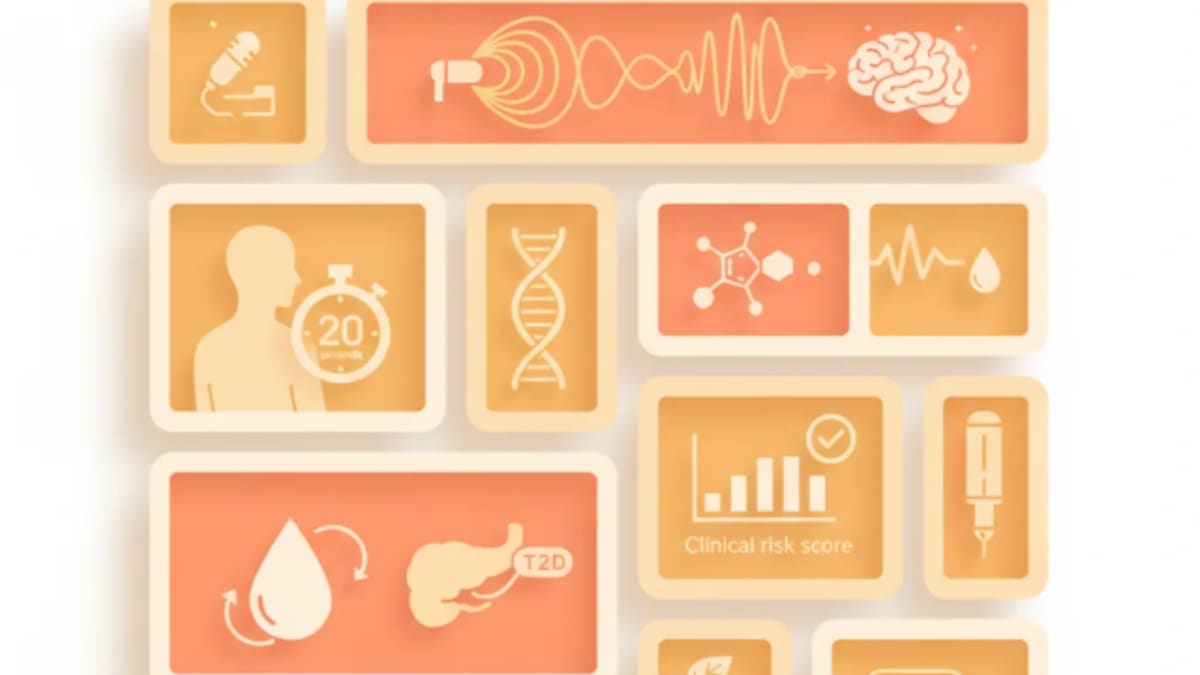
Can a 20-second voice recording really flag type 2 diabetes?
A validation study of more than 7,000 UK adults finds an AI model trained on 20-second speech recordings detects type 2 diabetes with accuracy approaching QDiabetes, and the model's risk scores tracked real HbA1c blood results.
Why diabetes risk isn't just lifestyle, but where you live
Canadian researchers tracking almost 2 million adults over up to 21 years find people who moved from a high-poverty to a lower-poverty neighbourhood developed type 2 diabetes at a 57% lower rate than those who stayed put.

Why are women who switch birth control more likely to start semaglutide?
Danish women who used three or more types of hormonal contraception were about twice as likely to later start semaglutide, a 250,000-person study finds.

Why stable blood pressure isn't always stable: A hidden stroke risk?
A UK Biobank study of 57,611 people finds visit-to-visit blood pressure variability predicts mortality and stroke even after accounting for average blood pressure, and the combination of high variability and type 2 diabetes carries close to three times the mortality risk.

GLP-1 intolerance: Petrelintide offers a new path to weight loss?
Weekly petrelintide produced up to 10.7% weight loss with 20% nausea, well below the rates typically seen with GLP-1 drugs, phase 2 data show.

GLP-1s in pregnancy: Reassuring data, one unresolved signal
A meta-analysis of over 43,000 women found no rise in birth defects or preterm birth with first-trimester GLP-1 exposure, but a pregnancy-loss signal remains unresolved.

GLP-1 drugs work better for women, yet most can't get them. Why?
Women lose more weight than men on GLP-1 drugs, but 80% of eligible adults live in countries where retail prices put treatment out of reach.

Semaglutide and pancreatic cancer: Is the risk real?
A regulator-mandated safety study using nationwide registry data from Denmark, Sweden and Norway found no increased pancreatic cancer risk with semaglutide compared to other glucose-lowering drugs, with no dose or duration effect.

Retatrutide: Why diabetes patients may finally match weight loss
Retatrutide cut body weight by up to 18.8% and HbA1c by 1.45 points in adults with type 2 diabetes and obesity, phase 3 data show.

Orforglipron: Does menopausal status really matter for weight loss?
A post-hoc subgroup analysis of the ATTAIN-1 and ATTAIN-2 trials finds orforglipron's weight-loss and waist-circumference benefits held up whether women were pre-, peri- or post-menopausal.

Type 2 diabetes: Gut bugs predict risk before blood sugar rises?
A study of more than 200,000 people identifies 789 gut bacterial species linked to type 2 diabetes, with the same signature detectable in people with normal blood sugar who show early signs of insulin resistance after meals.

Ultra-processed foods: Exercise can cut type 2 diabetes risk
A UK Biobank analysis combining diet records, wearable activity data and genetic risk scores finds that meeting WHO activity guidelines meaningfully lowers type 2 diabetes risk, even for people with high genetic susceptibility and high ultra-processed food intake.

Type 2 diabetes: CGM cuts mortality, but how?
A target trial emulation of nearly 28,000 US patients finds people with type 2 diabetes on basal insulin who started continuous glucose monitoring had 44% lower one-year mortality and fewer cardiovascular events than matched non-users.

After T2D, CKD and HF aren't separate risks. Here's why
A 1.6 million-patient analysis maps how chronic kidney disease and heart failure actually unfold after a type 2 diabetes diagnosis, and what happens once the first complication has already arrived.

GLP-1s: Is eligibility missing half your high-risk patients?
A 313,000-person Danish and UK analysis finds people with a BMI of 25-26.9, currently ineligible for GLP-1 receptor agonists, have coronary heart disease risk matching those who do qualify, if they also carry elevated remnant cholesterol or inflammation.

Not all red meat is equal for type 2 diabetes risk
A 90,000-person French cohort study finds Neu5Gc, a non-human sugar concentrated in red meat, is linked to a 63% higher type 2 diabetes risk at the highest versus lowest intake, with a dose-response pattern and only partial mediation through weight gain.

Exam stress, blood sugar: a clinical paradox?
A small continuous-glucose-monitoring study of 22 healthy medical students finds glucose levels rose in the days before an exam and peaked on exam day, raising questions about the cumulative metabolic cost of repeated academic stress.

Neurodiversity in type 2 diabetes isn't evenly spread by age
A cross-sectional analysis of 3.4 million matched pairs finds neurodiversity prevalence in type 2 diabetes is heavily concentrated in the youngest patients, with autism four times more common and ADHD twice as common at the earliest ages of diagnosis.

MASH: Why diabetes management now demands a liver-first approach?
Emerging liver-directed approaches for moderate to advanced MASH are reshaping treatment paradigms, with significant implications for diabetes specialists managing metabolic dysfunction.

Rethinking GLP-1s: Beyond diabetes, a new cardiometabolic role
GLP-1-based therapies are redefining the management of chronic metabolic diseases, moving beyond glucose control to address broader cardiometabolic risk.

Amylin analogues: The missing piece in cardiometabolic care?
Amylin analogues are emerging as a potential new class of therapy for cardiometabolic disease, building on established physiological roles in glucose homeostasis and satiety.

Type 2 diabetes: What if insulin only needed to be weekly?
Insulin efsitora alfa represents a shift towards once-weekly basal insulin, aiming to simplify regimens and improve adherence for patients with type 2 diabetes.

Metformin for prediabetes: Is early use the new standard?
Early initiation of metformin can delay the onset of type 2 diabetes in high-risk individuals, reducing the long-term burden of metabolic disease. This strategy aligns with established guidelines for prediabetes management.

Automated insulin delivery: Why pregnancy makes glucose control harder
Automated insulin delivery systems offer improved glucose control, but pregnancy and menstrual cycle variations present unique challenges for optimal management.

Is your diabetes care missing the full metabolic picture?
New technologies are moving beyond simple glucose monitoring to integrate additional biomarkers, offering a more comprehensive view of metabolic health in diabetes management.
Predictive CGM: Stop chasing nocturnal lows, prevent them
Predictive continuous glucose monitoring (CGM) technology offers a new approach to managing nocturnal hypoglycaemia, providing real-time alerts that allow for proactive intervention. This technology aims to reduce the fear and clinical burden associated with overnight glucose fluctuations in patients with diabetes.

Semaglutide: Beyond weight loss, what's the real reason it works?
Semaglutide, a GLP-1 RA, shows promise beyond obesity and diabetes, with emerging data suggesting roles in orthopedics and heart failure with preserved ejection fraction.

Beyond HbA1c: What integrated diabetes care really means for organs
Managing diabetes extends beyond glucose control, requiring a holistic approach to prevent heart, kidney, and liver complications.

Lipohypertrophy: It's not just cosmetic for GLP-1 patients
Suboptimal injection practices contribute to lipohypertrophy, impairing drug absorption and glycemic control in patients using insulin and GLP-1 injectables. Correct technique is essential for therapeutic efficacy.

Beyond statins: The counterintuitive path to cutting pancreatitis risk
ApoC-III inhibition with plozasiran reduced triglycerides by 53%-58% and showed a borderline 17% reduction in pancreatitis events in severe hypertriglyceridemia.

CKD, T2D: Why RAASi isn't enough for cardiorenal protection?
Non-steroidal mineralocorticoid receptor antagonists offer a new therapeutic avenue for cardiorenal protection, particularly in patients with chronic kidney disease and type 2 diabetes. These agents mitigate inflammation and fibrosis, addressing residual risk beyond traditional renin-angiotensin-aldosterone system inhibition.

Type 1 diabetes: Why managing insulin isn't enough anymore
Teplizumab represents a significant step in autoimmune type 1 diabetes management, moving beyond insulin replacement to target disease progression itself. Its mechanism offers a new approach to preserving beta-cell function.

Type 1 diabetes: Beyond insulin, what are we missing?
Early-stage type 1 diabetes care extends beyond insulin, requiring a comprehensive approach to manage glycaemia, prevent complications, and support patient well-being.

Type 2 diabetes: Is early control a cancer shield or a red herring?
Poor glycaemic control soon after type 2 diabetes diagnosis correlates with increased cancer risk, particularly for pancreatic and colorectal cancers.

Metabolic health: Why weight loss isn't enough for your patients
Metabolic health extends beyond simple weight loss, requiring a focus on underlying biological mechanisms that drive dysfunction. Effective interventions target insulin resistance, inflammation, and adipocyte function.

Why CGM readings drift during a marathon in type 1 diabetes
In a real marathon, CGM error reached 36.6% to 43.1%, several times the figures seen in short laboratory exercise tests. Runners with type 1 diabetes finished as fast as controls, but a fingerstick still earns its place.

Sex and hypoglycaemia in type 1 diabetes: what CGM data now show
Across 110 events in 12 adults with type 1 diabetes, sexual intercourse caused no clinically significant hypoglycaemia. Glucose moved in both directions, shaped by the starting level, body mass index and time of day.
The enduring puzzle of diabetes remission after bariatric surgery
Bariatric surgery often leads to diabetes remission, but the mechanisms are complex and not solely due to weight loss. Understanding these pathways is essential for optimising patient outcomes.


