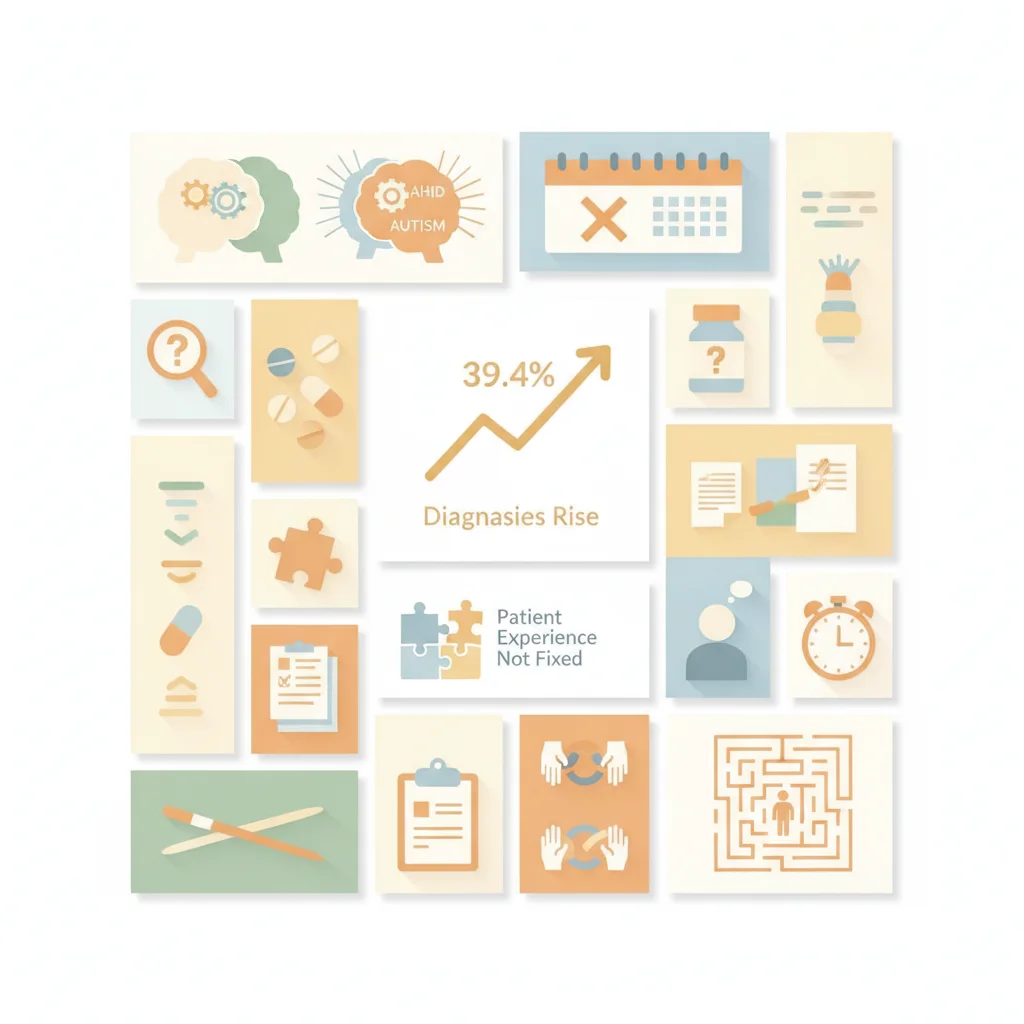
The increasing prevalence of autism spectrum disorder (ASD) and attention-deficit/hyperactivity disorder (ADHD) diagnoses presents a clinical dilemma: while identification improves, the variability in patient experience and access to consistent, evidence-based support remains a significant challenge for clinicians. The immediate takeaway is that a diagnosis alone does not guarantee a uniform care pathway or predictable patient outcomes.
The documented rise in diagnoses of autism spectrum disorder (ASD) and attention-deficit/hyperactivity disorder (ADHD) over the past two decades reflects a complex interplay of factors, primarily enhanced diagnostic criteria, increased public and professional awareness, and improved access to diagnostic services. This trend is not necessarily indicative of a true increase in the underlying biological prevalence of these neurodevelopmental conditions. Instead, it suggests a greater capacity within healthcare systems to identify individuals who meet established diagnostic thresholds. For example, the expansion of diagnostic criteria for ASD in the DSM-5 to include a broader spectrum of presentations has contributed to higher identification rates. Similarly, increased understanding of ADHD presentations in adults and females has led to more diagnoses in previously under-recognised populations.
The Diagnostic Landscape and Patient Heterogeneity
Despite the improved diagnostic capture, the patient experience following an ASD or ADHD diagnosis is not fixed or uniform. The heterogeneity of these conditions means that two individuals with the same diagnosis may present with vastly different symptom profiles, functional impairments, and support needs. For instance, an individual diagnosed with ASD may exhibit significant language delays and intellectual disability, requiring intensive educational and therapeutic interventions, while another may have intact cognitive abilities but struggle with social communication and sensory sensitivities, necessitating different forms of support. Similarly, ADHD manifests with varying degrees of inattention, hyperactivity, and impulsivity, impacting academic, occupational, and social functioning differently across individuals. The variability extends to co-occurring conditions, which are common in both ASD and ADHD. Anxiety disorders, depression, learning disabilities, and sleep disturbances frequently co-exist, further complicating clinical presentation and management. These co-occurring conditions often have a greater impact on daily functioning and quality of life than the primary neurodevelopmental diagnosis itself, necessitating a comprehensive and integrated approach to care.
The current challenge for healthcare systems is to move beyond mere diagnosis towards providing consistent, evidence-based, and individualised support. This involves not only pharmacological interventions, where appropriate, but also a range of non-pharmacological strategies, including behavioural therapies, educational accommodations, occupational therapy, and psychological support. The efficacy of these interventions is often highly dependent on their tailoring to the specific needs and strengths of the individual. For example, stimulant medication for ADHD has demonstrated efficacy in reducing core symptoms in a significant proportion of patients, but its effectiveness varies, and it does not address all associated challenges. Behavioural interventions, such as parent training for younger children with ADHD or social skills training for individuals with ASD, are critical components of comprehensive care, yet access to these specialised services remains inconsistent across geographical regions and socioeconomic strata. The lack of a fixed patient experience post-diagnosis underscores the need for ongoing assessment and adaptation of support strategies throughout an individual's lifespan, recognising that needs evolve with age and life circumstances.
Despite the advancements in diagnostic clarity and accessibility, significant disparities persist in post-diagnostic support. Many individuals, particularly adults diagnosed later in life, report feeling adrift after receiving a diagnosis, with limited guidance on navigating available resources or understanding their condition's long-term implications. This "diagnostic orphan" phenomenon highlights a critical gap in the continuum of care, where the focus often remains on identification rather than sustained support.
Bridging the Gap: Towards Integrated and Lifespan-Oriented Care
Addressing the inconsistent patient experience requires a paradigm shift towards integrated, lifespan-oriented care models. This involves not only improving access to specialised therapies but also fostering better coordination between primary care, mental health services, and educational/vocational support systems. Digital health solutions, such as telehealth platforms and AI-powered diagnostic aids, hold promise in expanding reach and personalising interventions, particularly in underserved areas. However, their implementation must be accompanied by robust evidence of efficacy and equitable access.
Furthermore, a greater emphasis on patient and family education is crucial. Empowering individuals and their caregivers with knowledge about ASD and ADHD, including self-management strategies and advocacy skills, can significantly improve outcomes and quality of life. Future research should focus not only on refining diagnostic tools and interventions but also on understanding the long-term trajectories of individuals with these conditions, identifying predictors of positive outcomes, and developing scalable models of integrated care that truly fix the patient experience beyond diagnosis.
The persistent rise in autism and ADHD diagnoses, while a positive step in identification, highlights a critical disconnect in the care pathway. Clinicians are increasingly adept at recognising these conditions, yet the subsequent support infrastructure often fails to match the complexity and heterogeneity of patient needs. It is insufficient to simply label a patient; the real work begins in navigating the highly variable landscape of post-diagnostic care. We must move beyond a 'diagnosis-as-destination' mindset to one where diagnosis is merely the entry point to a dynamic, individualised support system.
The pharmaceutical industry, while providing essential symptomatic treatments for ADHD, must acknowledge that medication alone is rarely a complete solution. Investment in research for non-pharmacological interventions, and indeed, in understanding the diverse biological underpinnings of these conditions, remains comparatively thin. Guideline bodies, such as NICE in the UK or the American Academy of Pediatrics, provide frameworks, but their implementation is often hampered by resource limitations and a lack of integrated care models. The current system frequently places the burden of coordinating fragmented services squarely on the patient and their family, leading to significant disparities in outcomes based on socioeconomic status and geographical location.
For patients, the journey post-diagnosis can be a frustrating exercise in self-advocacy, often involving long waiting lists for specialist therapies and a postcode lottery for access to support. This variability in patient experience is not merely an inconvenience; it can profoundly impact long-term functional outcomes, mental health, and quality of life. Until healthcare systems can reliably provide consistent, multidisciplinary, and individualised care plans that extend beyond the initial diagnostic appointment, the increasing diagnostic rates will continue to expose, rather than resolve, the fundamental challenges in supporting neurodivergent individuals.
- The Pivot The observed rise in autism and ADHD diagnoses reflects improved diagnostic criteria and awareness, rather than a sudden increase in underlying prevalence.
- The Data While specific prevalence rates vary by region and diagnostic criteria, a general upward trend in diagnoses has been noted across multiple jurisdictions over the past two decades.
- The Action Clinicians should focus on individualised care plans post-diagnosis, addressing the heterogeneity of patient needs rather than relying on a 'one-size-fits-all' approach based solely on diagnostic labels.
ART-2026-11
·09/26
Drafted with AI assistance, reviewed and approved by the editorial team. This publication is intended for healthcare professionals, researchers, and life science industry professionals. Content is provided for informational and educational purposes only and does not constitute medical advice.

I cover life sciences: drug approvals, trial readouts, regulatory decisions, and the AI reshaping clinical practice. Based in Greater London, contributing to The Life Science Feed since 2026.
Cite This Article
Voss M, Lopes W. Autism & ADHD diagnoses rise: patient experience not fixed. The Life Science Feed. Published June 21, 2026. Updated September 15, 2026. Accessed September 25, 2026. https://thelifesciencefeed.com/pediatrics/autism-spectrum-disorder/insights/autism-adhd-diagnoses-rise-patient-experience-not-fixed.
Editorial & AI Standards
All content is researched from peer-reviewed, open-access sources: published trial data, clinical guidelines, and regulatory filings. AI tools are used solely to structure and summarise that evidence; no AI-generated conclusions appear without editor verification against the primary source.
Every article is reviewed by a named editor before publication. Source citations are listed in the References section. This content does not represent the views of any pharmaceutical company, medical device manufacturer, or healthcare provider.
Licence & Rights
© 2026 The Life Science Feed. All rights reserved. Unless otherwise indicated, all content is the property of The Life Science Feed and may not be reproduced, distributed, or transmitted in any form or by any means without prior written permission.
Medical Disclaimer
The information provided on The Life Science Feed is for educational and informational purposes only. It is not intended as a substitute for professional medical advice, diagnosis, or treatment. Always seek the advice of your physician or other qualified healthcare provider regarding any medical condition or treatment decision. Never disregard professional medical advice or delay in seeking it because of something you have read on this website.
References
1. Grosvenor LP, Croen LA, Lynch FL, Marafino BJ, Maye M, Penfold RB, Simon GE, Ames JL, et al. Autism Diagnosis Among US Children and Adults, 2011-2022. JAMA Netw Open. 2024;7(10):e2442218. doi:10.1001/jamanetworkopen.2024.42218
2. Danielson ML, Claussen AH, Bitsko RH, Katz SM, Newsome K, Blumberg SJ, Kogan MD, Ghandour R. ADHD Prevalence Among U.S. Children and Adolescents in 2022: Diagnosis, Severity, Co-Occurring Disorders, and Treatment. J Clin Child Adolesc Psychol. 2024;53(3):343-360. doi:10.1080/15374416.2024.2335625
3. Yang KG, Flores MW, Carson NJ, Cook BL. Racial and Ethnic Disparities in Childhood ADHD Treatment Access and Utilization: Results From a National Study. Psychiatr Serv. 2022;73(12):1338-1345. doi:10.1176/appi.ps.202100578
4. Hendren RL, Widjaja F. Editorial: Improving outcomes in autism spectrum disorders for adults. Front Psychiatry. 2025;16:1615757. doi:10.3389/fpsyt.2025.1615757