

Hosted by Sarah Mitchell & James Carter

Show Notes
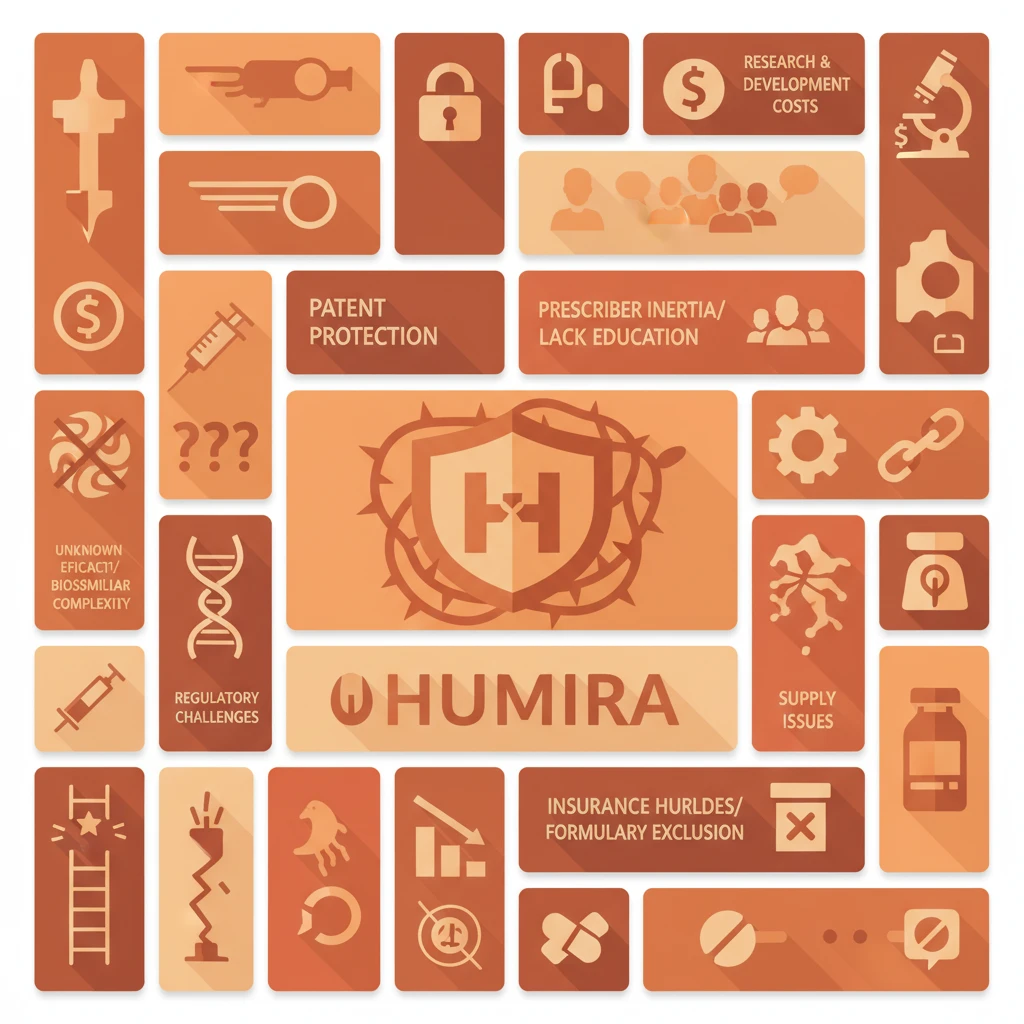
Humira (adalimumab) biosimilar alternatives have cut NHS spend by over 50% while expanding treatment access. Evidence from NOR-SWITCH confirms switching is safe, yet resistance persists, driven by the nocebo effect and physician inertia.
Transcription
Welcome to the debate. Um, what if I told you that a life-changing blockbuster medical treatment could drop in price by like 80%. But because of the bizarre way our healthcare system is wired, that massive discount could actually make it harder for some patients to get their medicine.
CO-HOST: Yeah, it sounds like a glitch in the matrix, honestly.
Right?
CO-HOST: We are so conditioned to believe that when a monopoly ends, prices plummet and access universally expands. I mean, we like that narrative because, well, it makes economic systems feel rational. But as we know, healthcare economics rarely behave like a standard textbook market.
Which brings us to the core of our discussion today. We are stepping into the world of biologic medicines andology. Um specifically looking at the end of the line for Adab, a drug many know globally as Humira.
CO-HOST: A massive drug.
Oh, absolutely. For years, it was one of the highest grossing pharmaceutical products on earth. But now we are in the era of biosimilar. So today we are analyzing the emergence of these biosimilar and the profound financial and clinical impacts they are having on healthcare systems. And, you know, this discussion emerges directly from recent analysis on the biosimilar dividend, the clinical switching evidence and the reality of patient access inology.
CO-HOST: And it forces a very difficult, very practical question. Does this transition actually represent a sustainable, transformative dividend that secures long-term access to these life-changing therapies? Or, you know, are we looking at a localized precarious financial shift? One that is fundamentally undermined by market friction, patient experience challenges, and the relentless staggering cost of newer patented therapies.
Exactly. So, to lay our cards on the table, I take the position that the biosimilar dividend is a highly successful evidence-based mechanism. It fundamentally restructures healthcare economics to expand patient access.
CO-HOST: Okay.
I mean, when it is adopted systematically, it works exactly as intended, bridging the financial gap and allowing systems to treat more people.
CO-HOST: Right. And I argue that the concept of a universal dividend is, frankly, overly optimistic. It is severely limited by structural market barriers, the very real clinical friction of something called the Nocebo effect, and the inherently finite nature of these savings when pitted against the rising costs of novel therapies.
Well, to really understand this, we have to start with the foundation of what a biosimilar actually is, because this is where my perspective is really rooted. The introduction of biosimilar is frankly an unmitigated triumph of regulatory science.
CO-HOST: It is impressive science. I'll give you that.
It really is. We have to remember, we are not talking about small molecule generics. Like, when you take a generic aspirin, it is an exact chemical copy. You can synthesize it in a lab with absolute precision.
CO-HOST: Right.
Biologics are entirely different. They are large, highly complex proteins produced by living cells. They are brood, essentially, in living organisms.
CO-HOST: Right. And because of that, the manufacturing process itself shapes the final product. I mean, no two manufacturing processes produce exactly the same molecule. Not even batch to batch of the original reference drug.
Exactly. Yet the FDA and the EMA have established these rigorous comparability exercises to ensure safety and efficacy. They look at analytical characterization, they look at pharmacokinetic equivalence,
CO-HOST: Which is a huge hurdle.
Massive. Meaning, you know, does the human body absorb the new version and clear it from the bloodstream at the exact same rate? They look at clinical efficacy and safety data. An approved biosimilar is highly similar and held to an incredibly high bar. It is not a lesser or watered down drug.
CO-HOST: No, nobody is saying it's watered down.
Right. And the clinical evidence from the source material bears this out perfectly.
CO-HOST: Look, the regulatory science is undeniably impressive. But achieving biological equivalence in a lab, or even in a carefully controlled clinical trial, does not automatically translate into a systemic economic triumph in the real world.
But it has translated into economic triumph. I mean, if we look at the landmark 2017 Lancet Nor Switch trial, the science proved that switching from a reference biologic, in that case Infliximab, to a biosimilar is completely safe and maintains disease remission.
CO-HOST: In a trial setting, yes.
But economically too. The UK's National Health Service stands as the ultimate proof of concept here. By aggressively adopting biosimilar, the NHS took a 400 million pound annual Adab spend and reduced it by over 50%.
CO-HOST: Wow.
Yeah. They treated more patients and they explicitly used those savings to fund access to new high-cost biologics. That is a working sustainable model of a dividend in action.
CO-HOST: I acknowledge the biological equivalence and I acknowledge the NHS success story. But I come at it from a different way. The systemic dividend you are talking about is in many contexts a fragile mirage.
A mirage?
CO-HOST: Yes, a mirage. If you look outside the centralized structure of the UK, particularly at the US market, the reality is entirely different. We are talking about a system where the original manufacturer built a literal patent thicket. They filed over 100 patents to trap the market, delaying competition for years.
Which is frustrating, I agree.
CO-HOST: And even when biosimilar finally arrived, they hit a brick wall built by middlemen called pharmacy benefit managers.
Ah, the PBMs.
CO-HOST: Yes, the PBMs. They are perversely incentivized to favor higher priced drugs, choking off the savings before they ever reach the patient. And furthermore, you cannot ignore the clinical friction in the exam room. The nocebo effect turns what should be a seamless economic lever into a highly burdensome, time-consuming clinical process.
Okay, let's dig right into that clinical friction, because I hear this argument a lot, but the evidence on switching is just so robust. The Nor Switch trial wasn't just a small sample.
CO-HOST: True.
It randomized nearly 500 patients who were stable on the reference biologic across various inflammatory conditions. They tracked them for a full 52 weeks. The result was definitive. There was no significant difference in disease worsening between those who stayed on the reference drug and those who switched to the biosimilar.
CO-HOST: Right, the data is there.
And subsequent Adab studies, like the Planetos trial and the massive real-world data from the Dan Bio registry, consistently show that switching to a biosimilar is non-inferior. It does not spike immunogenicity, meaning the body's immune system doesn't suddenly start attacking the drug.
CO-HOST: Nobody is debating the biology.
So the clinical equivalence is settled. So why are we treating the patient experience as a fundamental flaw in the economics?
CO-HOST: Because human beings are not data points in a registry. Biological equivalence on paper does not negate the psychological and physical friction that happens at the pharmacy counter. You mentioned the nocebo effect, but we really need to explain how disruptive it actually is. It isn't just patients being difficult or stubborn.
It is the inverse of the placebo effect, right?
CO-HOST: Precisely. With the placebo effect, positive expectations yield positive health outcomes. With the nocebo effect, negative expectations trigger an actual perceived and sometimes physiological worsening of symptoms.
Right.
CO-HOST: Imagine a patient who has suffered from severe rheumatoid arthritis. They have been taking a specific brand name drug for five years. It gave them their life back. You know, it allowed them to hold their grandchildren. They walk into the pharmacy, and the pharmacist hands them a different box they've never seen before, produced by a different company.
It's jarring.
CO-HOST: Exactly. Their heart rate spikes. Their anxiety skyrockets. They believe they're being given a cheaper, inferior product simply to save the insurance company money.
And that anxiety manifests physically.
CO-HOST: Yes, exactly. In rheumatology, stress and anxiety can trigger actual inflammatory flare-ups. So the patient takes the biosimilar, they experience a stress-induced flare, and they conclude the new drug has failed.
What happens next?
CO-HOST: They stop taking it.
Real drug discontinuation. The transition fails. To prevent this, rheumatologists and their clinical staff have to engage in profound, time-consuming patient counseling. They have to sit down, transparently communicate the regulatory equivalence, walk the patient through the pharmacokinetic data, and manage that intense psychological transition.
CO-HOST: Sure.
That requires a massive amount of clinical time. It is a hidden cost and a massive clinical burden that your clean, mathematical economic model entirely ignores.
Okay. I see why you think that, and I don't deny the reality of the patient's anxiety. But let me give you a different perspective. If we treat the nocebo effect as a permanent insurmountable barrier to biosimilar, aren't we just allowing correctable communication failures to hold healthcare economics hostage?
CO-HOST: Hostage is a strong word.
But it's accurate. Think about it like a physical transition. It is exactly like refusing to use a highly efficient, entirely safe new engine in a fleet of vehicles because the drivers haven't been given the five-minute tutorial on how to push the new ignition button.
CO-HOST: Okay, are we really comparing chronic pain patients to fleet vehicle drivers?
You know what I mean. Yes, counseling takes time. But the source material makes it clear that transparent communication is simply a clinical skill that matters in biosimilar transitions. Once that skill is deployed, the nocebo effect heavily mitigates.
CO-HOST: Right, but who pays for that time?
The overall system saves money. The Danbio registry showed us that when patients are properly educated, retention rates on biosimilar are excellent. We shouldn't abandon a structural multi-million dollar economic dividend just because the transition requires better bedside communication.
CO-HOST: I'm not suggesting we abandon it. I am saying we must accurately price in the friction. But let's look at the financial dividend itself because this is where the theory really hits a wall. You brought up the UK's NHS as your shining example of success.
Yes, where Adab prices fell 80 to 90% in some centralized tenders. That is a staggering success for public health.
CO-HOST: I'm sorry, but I just don't buy that. Let me tell you why. You are using the NHS as your primary proof of concept, but the UK is an absolute outlier globally.
It's a model, not an outlier.
CO-HOST: It has a uniquely structured single payer health system with centralized procurement. They buy drugs for an entire nation at once. When we look at the United States, which is the largest pharmaceutical market in the world, the realization of this dividend is actively blocked.
Blocked by the pharmacy benefit managers?
CO-HOST: Yes. Let's explain how our rebate wall actually works mechanically, because it is fascinating and deeply frustrating. The US operates on a complex system where pharmacy benefit managers or PBMs negotiate with drug manufacturers to decide which drugs get covered by insurance. The PBM's profit margin is often tied to the size of the rebate they can secure from the drug maker.
Right. So a higher list price is actually better for the middleman.
CO-HOST: Exactly. A high-price reference biologic like Humira can offer a massive multi-million dollar rebate to the PBM. A significantly cheaper biosimilar cannot, because it simply doesn't have the margin. So if a biosimilar company offers their drug at an 80% discount, you would think the system would jump at it.
Right. It seems obvious.
CO-HOST: sure entire portfolio.
Creating a wall.
CO-HOST: A massive wall. The PBMs have a perverse incentive to keep the expensive reference drug covered and actively block the biosimilar. The savings are aggressively muted by the very structure of the market.
Wait, but what about the FDA's interchangeable designation?
CO-HOST: What about it?
Well, the whole point of that was to bypass this kind of friction. The FDA grants this higher status to certain biosimilar to allow pharmacists to substitute them for the reference biologic right at the pharmacy counter without having to call the doctor for permission. Doesn't that solve the problem?
CO-HOST: It solves prescriber friction, sure. I mean, the pharmacist doesn't have to play phone tag with the rheumatologist. But what good is removing prescriber friction at the counter if the systemic profit motives of the PBMs mean the biosimilar isn't covered by the patient's insurance plan in the first place?
Well, if the insurance rejects the claim because the PBM prefers the high rebate original drug, the interchangeable designation is essentially useless. The drug stays on the shelf.
CO-HOST: Okay, that's an interesting point. Though I would frame it differently. You are looking at a snapshot in time and declaring the entire system broken. The US system's delay in realizing the biosimilar dividend for Adab wasn't a failure of the biosimilar concept itself. It was primarily a legal issue. It was the patent thicket.
The thicket is a huge part of the story, yes.
CO-HOST: Let's talk about how unbelievable that thicket was.
AbV, the maker of Humira, didn't just patent the active molecule. When that patent was running out, they filed over 100 secondary patents.
CO-HOST: Over 100?
Yeah. They patented the specific buffer solution the drug sits in. They patented the shape of the button on the auto-injector pen. They patented the specific cell line used to brew it. They legally trapped the market. Which is why European patients got Humira biosimilar in 2018, and American patients had to wait until July 2023. That was an exploitation of patent law, not an economic failure of biosimilar.
CO-HOST: But the exploitation of patent law is the economic reality. You can't just separate the two.
But that thicket finally cleared. I mean, as of late 2023 and early 2024, multiple competitors entered the US market. And guess what? Prices are beginning to shift, formularies are beginning to adapt, because the pressure from employers and payers to reduce premiums is immense. Aren't we simply seeing a delayed dividend rather than a denied dividend?
CO-HOST: A delayed dividend means years of lost savings.
But the mechanism still works. It just took longer to break through the legal and structural red tape.
CO-HOST: In healthcare economics, time is literally money that could have been spent treating other conditions or expanding access. But let's accept your premise for a moment. Let's say the US market stabilizes, the PBM rebate walls crumble under employer pressure, and we achieve the cost savings you envision. We run into an even larger wall.
Which is?
CO-HOST: That's a compelling argument. But have you considered the finite nature of these savings versus the pipeline of new drugs? This is the biggest flaw in the dividend theory. Biosimilar by definition only exist for older biologics. They are inherently backward-looking. You are saving money on yesterday's science.
Yesterday's science that still works incredibly well.
CO-HOST: Sure. But meanwhile, the pipeline of novel therapies is relentless. In rheumatology, we are looking at IL-17 inhibitors, IL-23 inhibitors, newer targeted jack inhibitors and bi-specific antibodies.
Right. The next generation of precision medicine. These are highly targeted immune system blockers that can achieve incredible remission rates for patients who fail on older drugs like Adab.
CO-HOST: Exactly. And because they are new, they are entirely on patent, and they are astronomically expensive. So you have a strictly finite pool of savings generated by a handful of patent expirations, going up against an infinite recurring wave of new premium price drugs.
But that is precisely why the biosimilar dividend is so critical. It functions as a necessary cyclical ecosystem. It isn't backward-looking. It is the engine that funds the future. Let's go back to the source material's point about systems with rigorous health technology assessments or HTA. In systems like nice in the UK, they explicitly use the savings generated from older biologics to fund the adoption of newer therapies.
CO-HOST: Right. If they have the discipline to ring fence the money.
Exactly. When Adab spend dropped by 50%, that money didn't just vanish into a void. Nice explicitly authorized that budget had room to approve and pay for those very IL-17 and IL-23 inhibitors you just mentioned. The dividend allows patients who have failed on older drugs to access the cutting edge standard of care without bankrupting the system.
CO-HOST: Okay, but have you considered what happens in systems that entirely lack that explicit disciplined HTA reinvestment structure? In the vast majority of healthcare environments, including the US, there is no centralized mechanism ensuring that a dollar saved on an Adab biosimilar is earmarked for a new Jack inhibitor.
I admit it's fragmented.
CO-HOST: It's worse than fragmented. Instead, those savings are simply swallowed into general budgets. They go toward offsetting broader administrative bloat, or worse, they turn into payer profits. The dividend evaporates before it reaches the innovation pipeline. So, the biosimilar savings will inevitably be dwarfed by the new costs. The new drugs problem remains entirely unsolved.
I'm not convinced by that line of reasoning, because you're demanding a permanent structural solution from a transitional tool.
CO-HOST: How's it transitional?
Because the biosimilar dividend was never meant to be a magic wand that permanently solves the rising cost of all medical innovation. It is an economic bridge. Isn't the point of a dividend to be reinvested specifically to bridge the financial gap until those new drugs also face their own patent expirations?
CO-HOST: A bridge to nowhere if the money isn't tracked.
But the cycle is the point. It creates a sustainable life cycle. The breakthrough drug commands a premium, it funds initial innovation, the patent expires, the biosimilar arrive, the price drops, and those savings fund the next wave of breakthroughs. If the specific healthcare system fails to allocate those savings correctly, if it lets the money bleed into administrative bloat, we should fix the allocation process of that system, not condemn the biosimilar ecosystem itself. The biological science works, the health economics, when applied correctly, work brilliantly.
CO-HOST: The problem is that the phrase when applied correctly is doing an enormous amount of heavy lifting in your argument.
Is it?
CO-HOST: Yes. You are relying on an idealized model of healthcare economics. It requires perfect communication by overworked doctors to avoid the nocebo effect. It requires perfect market conditions to bypass PBM rebate walls and patent thickets, and it requires perfect governmental foresight to ring fence savings for future innovations. My argument is that the friction is the reality.
I hear you.
CO-HOST: The biology of these drugs is incredibly sophisticated, but the human and economic systems delivering them are highly flawed. The biosimilar dividend is a localized victory. It is real in certain places, like the NHS, under certain strict conditions. But as a universal systemic cure for access to biologics, it is precarious and it is entirely reliant on the structural integrity of the market it enters.
Well, I think we have illuminated some vital complexities here. It is clear that we have major points of convergence, even if we view the final outcome differently. I think we both absolutely recognize the incredible achievement of the biological science itself.
CO-HOST: Absolutely.
Biosimilar are highly effective, safe alternatives. And the comparability exercises demanded by regulators ensure they meet an extraordinary standard.
CO-HOST: Agreed. The science has delivered on its promise. It is the implementation that remains fraught. Looking at this through multiple lenses is essential. We have to appreciate the immense potential of the clinical science while remaining sharply vigilant about the structural pitfalls of health economics, patent law, and patient psychology.
Right.
CO-HOST: It gives us a much clearer, much more honest picture of what is actually happening in the exam rooms and boardrooms.
And we both acknowledge that the absolute ideal scenario relies on explicit, well-managed reinvestment of the savings they generate to expand patient access. There is still much more to explore in this material as the landscape shifts. I mean, we will need to keep a close eye on the future of pharmacist substitution policies, how the interchangeable designation evolves, and how healthcare systems will adapt as those newer, hyper-targeted therapeutic options eventually face their own patent cliffs.
CO-HOST: The cycle will continue. The patent clock is always ticking.
It always does. You know, at the beginning of our discussion, we pictured a massive drop in price making a drug harder to get, which is a true economic paradox. Perhaps the lesson here is that expiring a patent and introducing competition is only the first step. You still have to engineer the economic plumbing, align the incentives and guide the savings exactly where they need to go. Otherwise, the money just leaks into the floorboards, leaving the patient as thirsty as they were before. Thank you for joining us on the debate.
Free Clinical Resources
Episode Infographic
Key data, mechanisms, and clinical takeaways distilled into a single shareable page. Save it for reference or use it in your next team discussion.
Clinical Flashcards
Core concepts from this episode in flashcard format, structured for spaced repetition, pre-consultation review, or CPD reflection with your team.
ART-2026-246
·09/26
This podcast episode is produced with AI assistance, reviewed and approved by the editorial team. This publication is intended for healthcare professionals, researchers, and life science industry professionals. Content is provided for informational and educational purposes only and does not constitute medical advice.
I cover women's health, reproductive medicine, and the persistent gaps in how conditions that primarily affect women get studied and funded. The evidence base is thinner than it should be. I write about why.
Cite This Podcast
Mitchell S, Carter J. Why cheaper humira alternatives face resistance. The Life Science Feed. Published June 1, 2026. Updated September 13, 2026. Accessed October 15, 2026. https://thelifesciencefeed.com/podcast/2026-06-01/why-cheaper-humira-alternatives-face-resistance.
Editorial & AI Standards
All content is researched from peer-reviewed, open-access sources: published trial data, clinical guidelines, and regulatory filings. AI tools are used solely to structure and summarise that evidence; no AI-generated conclusions appear without editor verification against the primary source.
Every article is reviewed by a named editor before publication. Source citations are listed in the References section. This content does not represent the views of any pharmaceutical company, medical device manufacturer, or healthcare provider.
Licence & Rights
© 2026 The Life Science Feed. All rights reserved. Unless otherwise indicated, all content is the property of The Life Science Feed and may not be reproduced, distributed, or transmitted in any form or by any means without prior written permission.
Podcast Disclaimer
This podcast is produced for educational and informational purposes only. The conversation between hosts represents a discussion of published clinical evidence and is not intended as clinical advice, a substitute for professional medical judgment, or a recommendation for any specific treatment. Healthcare professionals should rely on their own clinical training, current guidelines, and individual patient assessment when making treatment decisions. The views expressed are those of the hosts and do not constitute endorsement of any specific therapy, product, or manufacturer.
References
Jorgensen KK et al. NOR-SWITCH. Lancet. 2017;389:2304-2316
Kay J et al. Ann Rheum Dis. 2018;77:1658-1665
NHS England. Biosimilar medicines: a guide for primary care. 2022
Smolen JS et al. EULAR RA Recommendations 2023. Ann Rheum Dis. 2023

Rheumatology's 'Difficult-to-Treat' Patients Need More Than Just Drugs
A new perspective on 'difficult-to-treat' rheumatology patients highlights the need for comprehensive, multidisciplinary care beyond pathology-driven interventions.

The Oral-Systemic Link: How Gut Dysbiosis Connects RA and Periodontitis
Subgingival microbial dysbiosis acts as a pathophysiological link between rheumatoid arthritis and periodontitis, driving systemic inflammation, according to a new review.
More from: Biologic Wars: Rheumatology Debate Series

ORAL Surveillance showed tofacitinib carried higher cardiovascular and malignancy risk than anti-TNF in high-risk RA patients - triggering a class-wide boxed warning. But was the signal overgeneralised? Sarah Mitchell and James Carter unpack the data, the controversy, and how to make the JAKi-vs-biologic decision in 2026.
Sarah Mitchell & James Carter

Treat-to-target transformed RA outcomes - not through new drugs but through rigorous measurement and escalation discipline. Sarah Mitchell and James Carter cover the evidence base, the disease activity tools, the window of opportunity in early RA, and when tapering biologics in sustained remission is safe.
James Carter & Sarah Mitchell

PsA is not RA with skin, and axSpA is not RA in the spine. The biologic hierarchy shifts significantly across the spondyloarthropathy spectrum - IL-17 and IL-23 inhibitors dominate, anti-TNF has uveitis caveats, and IBD comorbidity changes everything. Sarah Mitchell and James Carter explain how EULAR 2026 data shapes the choices.
James Carter & Sarah Mitchell





