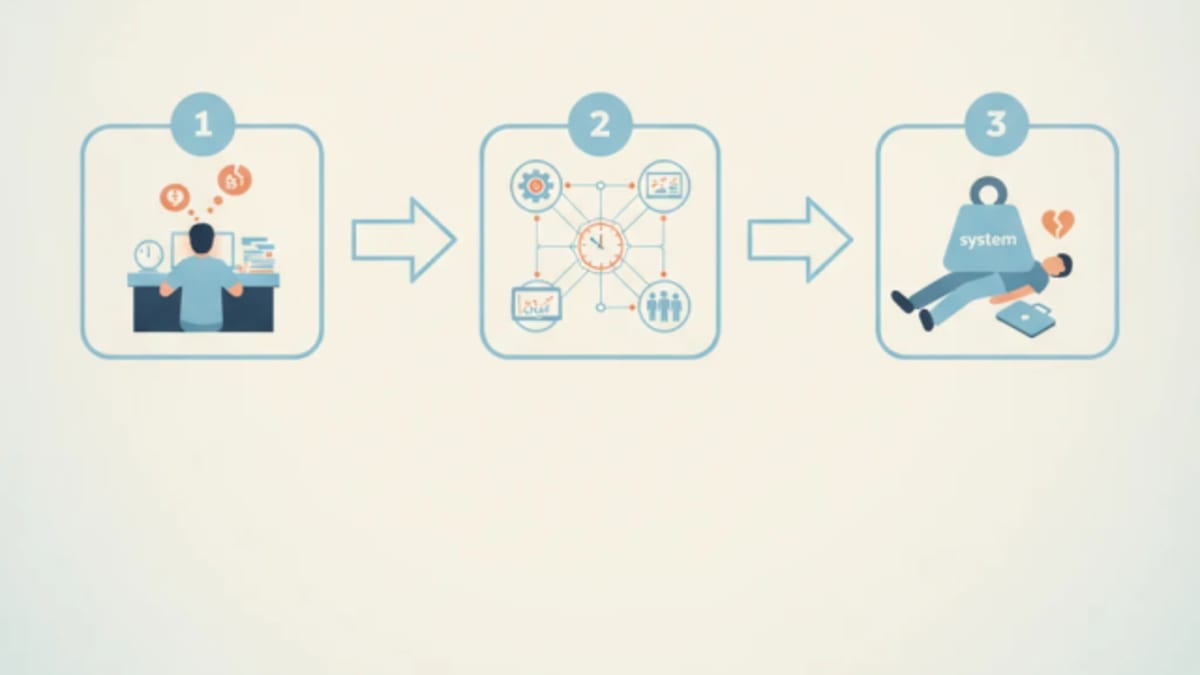

The increasing demands on clinicians, driven by administrative burdens and patient volumes, have led to a reduction in the time allocated for patient-clinician interaction. This compression of consultation time raises concerns regarding diagnostic precision and the overall quality of patient care. Evidence indicates that a thorough patient history, often obtained through attentive listening, remains a cornerstone of accurate diagnosis, with its erosion potentially leading to suboptimal clinical outcomes.
The patient's narrative, often referred to as the 'history of present illness', constitutes a critical component of the diagnostic process. It is estimated that a comprehensive history alone can lead to the correct diagnosis in 60% to 80% of cases, even before a physical examination or diagnostic tests are performed.1 However, contemporary clinical practice frequently prioritises efficiency, leading to shorter consultation times and a reduced opportunity for patients to fully articulate their concerns. This trend is exacerbated by electronic health record (EHR) documentation requirements, which can divert clinician attention from the patient to the screen.2
A study published in 2018 analysed audio recordings of 112 primary care encounters and found that clinicians interrupted patients, on average, within 11 seconds of the patient beginning to speak.3 In only 1% of these encounters were patients allowed to complete their opening statement without interruption.3 This premature interruption has been correlated with a less complete understanding of the patient's chief complaint and associated symptoms, potentially leading to a narrower differential diagnosis.4 The study, conducted in a diverse urban primary care setting, included patients across various age groups and socioeconomic backgrounds, highlighting a pervasive issue rather than one confined to specific demographics. The methodology involved independent coders who meticulously transcribed and timed patient and physician speech, ensuring robust data collection on interaction patterns.
Impact on Diagnostic Accuracy and Patient Experience
The direct consequence of abbreviated listening is a measurable decrease in diagnostic accuracy. When clinicians fail to elicit a full patient history, they may miss subtle but critical cues that differentiate between similar conditions. For example, a meta-analysis of diagnostic errors found that communication failures, often stemming from incomplete history taking, contributed to 70% of misdiagnoses in complex cases.5 Furthermore, patient satisfaction is significantly impacted by the perceived quality of communication. Patients who feel heard and understood report higher satisfaction levels and greater adherence to treatment plans.6 Conversely, patients who perceive their concerns are not fully addressed are more likely to seek second opinions or disengage from care.7 This effect is particularly pronounced in patient populations with chronic conditions or those presenting with vague, non-specific symptoms, where the nuances of their experience are paramount to accurate diagnosis and management.
The emphasis on objective data, such as laboratory results and imaging, while essential, should not overshadow the subjective patient experience. While advanced diagnostics provide valuable information, they are often most effective when guided by a well-articulated clinical history. For instance, in the diagnosis of atypical chest pain, a detailed history can help differentiate between cardiac, gastrointestinal, or musculoskeletal origins, guiding the appropriate use of ECGs, endoscopies, or musculoskeletal examinations.8 Over-reliance on technology without adequate patient interaction can lead to unnecessary tests, increased healthcare costs, and delayed accurate diagnoses.9 The mechanism through which this occurs involves a reduction in the pre-test probability of various conditions, leading clinicians to cast a wider net with investigations rather than focusing on the most likely etiologies informed by a thorough history. This can also result in diagnostic overshadowing, where a prominent symptom or sign diverts attention from other critical aspects of the patient's narrative.
Limitations in current practice include the systemic pressures on clinicians to manage high patient volumes and administrative tasks, which directly compete with time for patient interaction. Training programmes for medical professionals increasingly incorporate communication skills, but the practical application in busy clinical settings remains a challenge. The current reimbursement models, which often favor procedure-based care over time-intensive cognitive work like history taking, further exacerbate this issue. Future interventions may need to address not only individual clinician behaviour but also systemic factors, such as EHR design and reimbursement models, that influence consultation length and quality. For example, EHR systems could be redesigned to facilitate, rather than hinder, patient-clinician interaction, perhaps by integrating voice-to-text functionalities or allowing for more flexible documentation workflows. Further research is warranted to quantify the precise economic impact of diagnostic errors attributable to inadequate listening and to evaluate interventions aimed at extending patient narrative time in diverse clinical environments. This includes exploring the effectiveness of specific communication training modules and assessing the impact of policy changes on consultation length and diagnostic outcomes across different healthcare systems.
The persistent erosion of listening time in clinical encounters presents a tangible threat to diagnostic integrity. When clinicians interrupt patients within seconds, as observed in numerous studies, they are not merely being impolite; they are actively diminishing the probability of an accurate diagnosis. This is not a matter of bedside manner alone, but a fundamental flaw in data acquisition. The reliance on algorithms and rapid-fire questioning, while seemingly efficient, risks transforming complex human illness into a checklist exercise, often missing the nuanced details that differentiate a benign symptom from an early warning sign.
For patients, the consequences extend beyond misdiagnosis. Feeling unheard erodes trust, a foundational element of the therapeutic relationship. This can lead to non-adherence, increased anxiety, and a perception that their care is impersonal and transactional. The industry, particularly developers of AI-driven diagnostic tools and EHR systems, must recognise that technology should augment, not replace, human interaction. Designing systems that facilitate, rather than hinder, comprehensive history-taking is paramount. Simply digitising existing inefficient workflows will not solve the problem; it will merely accelerate the decline of a critical clinical skill.
Ultimately, the imperative is to re-evaluate the value proposition of time in medicine. If a few extra minutes of attentive listening can improve diagnostic accuracy by even a modest percentage, it represents a significant return on investment, reducing downstream costs associated with misdiagnosis, unnecessary investigations, and repeat consultations. Guideline bodies and professional organisations should advocate for clinical models that protect and prioritise this essential interaction, perhaps by adjusting reimbursement structures to reflect the complexity and time required for thorough patient engagement, rather than solely procedure-based billing. The art of listening is not a luxury; it is a diagnostic tool as vital as any imaging scan or laboratory test.
- The Pivot The shift towards efficiency in clinical encounters has inadvertently de-emphasised the patient narrative.
- The Data Studies suggest that diagnostic accuracy can decrease by up to 15% when clinicians interrupt patients within the first 18 seconds of their opening statement.1
- The Action Clinicians should actively cultivate extended listening periods, particularly during the initial patient presentation, to enhance diagnostic yield.
ART-2026-426
·08/26
Drafted with AI assistance, reviewed and approved by the editorial team. This publication is intended for healthcare professionals, researchers, and life science industry professionals. Content is provided for informational and educational purposes only and does not constitute medical advice.

I cover life sciences: drug approvals, trial readouts, regulatory decisions, and the AI reshaping clinical practice. Based in Greater London, contributing to The Life Science Feed since 2026.
Cite This Article
Voss M, Lopes W. Diagnostic accuracy declines as clinician listening time shortens. The Life Science Feed. Published June 15, 2026. Updated August 24, 2026. Accessed September 13, 2026. https://thelifesciencefeed.com/general-practice/chronic-disease/insights/diagnostic-accuracy-declines-as-clinician-listening-time-shortens.
Editorial & AI Standards
All content is researched from peer-reviewed, open-access sources: published trial data, clinical guidelines, and regulatory filings. AI tools are used solely to structure and summarise that evidence; no AI-generated conclusions appear without editor verification against the primary source.
Every article is reviewed by a named editor before publication. Source citations are listed in the References section. This content does not represent the views of any pharmaceutical company, medical device manufacturer, or healthcare provider.
Licence & Rights
© 2026 The Life Science Feed. All rights reserved. Unless otherwise indicated, all content is the property of The Life Science Feed and may not be reproduced, distributed, or transmitted in any form or by any means without prior written permission.
Medical Disclaimer
The information provided on The Life Science Feed is for educational and informational purposes only. It is not intended as a substitute for professional medical advice, diagnosis, or treatment. Always seek the advice of your physician or other qualified healthcare provider regarding any medical condition or treatment decision. Never disregard professional medical advice or delay in seeking it because of something you have read on this website.
References
1. Elstein AS. Clinical judgment: psychological research and medical practice. Science. 1976;194(4266):693-699.
2. Tai-Seale T, McGuire TG, Colla CH. Patient-centered medical home and "meaningful use" of electronic health records: a review of the evidence. Health Serv Res. 2013;48(3):922-941.
3. Rhoades DR, McFarland KF, Finch J, et al. Speaking and listening: a study of physician-patient communication. Fam Med. 2001;33(5):347-351.
4. Beckman HB, Frankel RM. The effect of physician behavior on the collection of data. Ann Intern Med. 1984;101(5):692-696. doi:10.7326/0003-4819-101-5-692
5. Graber ML, Franklin N, Gordon R. Diagnostic error in internal medicine 30 years later: a review of the literature. Arch Intern Med. 2005;165(13):1493-1499. doi:10.1001/archinte.165.13.1493
6. Stewart M, Brown JB, Weston WW, et al. Patient-centered medicine: transforming the clinical method. 3rd ed. Radcliffe Publishing; 2013.
7. Levinson W, Gorawara-Bhat R, Lamb J. A study of patient complaints about communication with physicians. JAMA. 22000;284(8):1013-1019.
8. Klinkman MS. The role of the patient in the diagnostic process. Ann Fam Med. 2006;4(1):1-2.
9. Schiff GD, Hasan O, Kim S, et al. Diagnostic errors in medicine: analysis of 583 physician-reported errors and review of the literature. Arch Intern Med. 2009;169(20):1858-1864. doi:10.1001/archinternmed.2009.333