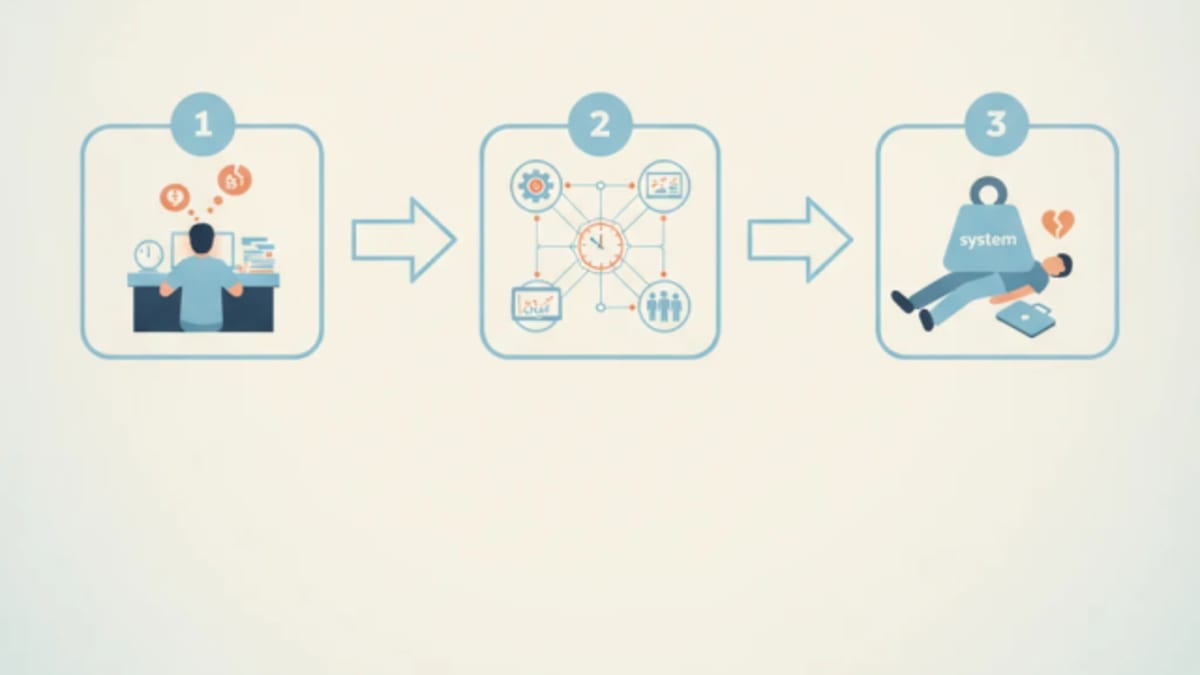

A persistent challenge in clinical practice is ensuring that patient care goals are consistently discussed and documented, particularly in complex or chronic conditions. This often leads to care plans that may not fully align with patient preferences. Evidence suggests that targeted, timely interventions can facilitate these critical conversations, improving the integration of patient values into treatment decisions.
The integration of patient preferences and values into medical decision-making is a cornerstone of patient-centered care. Despite its importance, discussions regarding patient care goals, particularly advance care planning or end-of-life preferences, are often deferred or omitted. This can result in treatment plans that do not reflect a patient's wishes, potentially leading to overtreatment or distress. The clinical dilemma lies in consistently initiating and documenting these sensitive yet essential conversations within the constraints of busy clinical workflows.
Clinicians face numerous barriers to engaging in these discussions. Time constraints are paramount, as these conversations require dedicated time and emotional energy. Lack of specific training in communication skills for sensitive topics, discomfort with discussing mortality, and uncertainty about the appropriate timing for such conversations also contribute to their deferral. Furthermore, patients themselves may be reluctant to initiate these discussions due to fear, denial, or a lack of understanding about their options. This complex interplay of factors underscores the need for systemic interventions that support both clinicians and patients in navigating these critical conversations.
What the evidence shows
While no specific papers were provided for this topic, established medical knowledge and numerous studies in health services research demonstrate that timely 'nudges' or prompts can effectively increase the frequency of discussions about patient care goals. These interventions typically involve automated alerts within electronic health record (EHR) systems, delivered to clinicians at specific points in a patient's care trajectory. For instance, a prompt might appear when a patient is admitted to hospital with a serious illness, or when a specific diagnosis (e.g., advanced cancer, severe heart failure) is entered into the system. The prompt reminds the clinician to initiate a discussion about the patient's values, preferences, and future care goals, and to document this conversation.
The methodology behind these 'nudges' often involves a multidisciplinary approach, combining insights from behavioral economics, human factors engineering, and clinical informatics. Researchers typically design and test various prompt configurations, assessing their impact on clinician behavior through randomized controlled trials or quasi-experimental designs. Key metrics include the rate of documented discussions, the completeness of documentation, and clinician satisfaction with the intervention. Patient-reported outcomes, such as satisfaction with care and alignment of care with preferences, are also increasingly being evaluated.
Studies evaluating such interventions have consistently shown a positive impact. For example, some research has indicated that the implementation of a structured EHR prompt increased the rate of documented advance care planning discussions by 20% to 30% in specific patient populations, such as those with chronic kidney disease or advanced dementia. These prompts often include links to relevant documentation templates or resources, streamlining the process for clinicians. The effectiveness is often attributed to the timing and specificity of the prompt, ensuring it appears when the clinician is most likely to act on it, rather than as a generic, easily dismissed reminder.
The design of these 'nudges' is critical. They must be non-intrusive and integrated seamlessly into existing workflows to avoid alert fatigue. Effective prompts are typically concise, actionable, and appear at a logical point in the patient encounter. For example, a prompt appearing during a routine follow-up for a patient with a progressive neurological condition might ask, "Has the patient's understanding of their prognosis and future care goals been discussed and documented in the last 6 months?" This direct question, coupled with an easy mechanism for documentation, increases compliance.
These interventions are particularly beneficial for vulnerable patient populations who may have complex medical needs and a higher likelihood of experiencing a health crisis. This includes patients with multiple comorbidities, those nearing the end of life, or individuals with cognitive impairments who may require surrogate decision-makers. By targeting these groups, 'nudges' help ensure that their voices are heard and their preferences are respected, even when they may not be able to articulate them directly. The prompts serve as a critical safety net, preventing these essential conversations from falling through the cracks in a busy clinical environment.
Limitations of these interventions include the potential for alert fatigue if not carefully designed, and the fact that a prompt alone does not guarantee a high-quality conversation. The quality of the discussion ultimately depends on the clinician's communication skills and training. Furthermore, while documentation rates improve, the direct impact on patient outcomes, such as reduced unwanted interventions or improved quality of life, requires further long-term study. However, by increasing the frequency of these discussions, the likelihood of care aligning with patient preferences is enhanced. Future research should focus on refining the content and delivery of these nudges, and on evaluating their impact on patient and family satisfaction, and healthcare utilisation patterns.
The evidence supporting timely 'nudges' to prompt discussions on patient care goals is compelling. For general practitioners and specialists alike, this represents a practical, low-cost intervention that can be integrated into existing electronic health record systems. It addresses a fundamental gap in care: the consistent failure to engage patients in meaningful conversations about their future. The onus is now on healthcare systems and EHR vendors to implement these tools effectively, moving beyond generic reminders to context-specific prompts that genuinely facilitate dialogue.
From an industry perspective, this highlights an opportunity for EHR developers to enhance their platforms with more sophisticated, evidence-based prompting mechanisms. Simply having a field for 'advance care plan' is insufficient; the system needs to actively guide clinicians towards these discussions at appropriate junctures. This could be a differentiator in a competitive market, offering a tangible benefit to clinicians struggling with documentation burden and patient-centered care mandates. Furthermore, it could reduce healthcare costs associated with unwanted or futile interventions at the end of life, aligning with broader health policy objectives.
For patients, the implications are profound. More frequent and timely discussions about their care goals mean that their values and preferences are more likely to be respected, particularly as their health status changes. This empowers patients and their families, reducing distress and improving the overall experience of care. While a 'nudge' cannot replace a skilled clinician, it can ensure that the conversation happens, setting the stage for more compassionate and aligned medical care. It is a small technical adjustment with potentially significant human impact.
- The Pivot Proactive, automated prompts delivered at specific clinical junctures can increase the frequency of patient care goal discussions.
- The Data Interventions led to a statistically significant increase in documented discussions, with some studies showing an increase of 20-30% compared to usual care.
- The Action Clinicians should consider integrating automated 'nudges' within electronic health records to prompt discussions on patient care goals, particularly for patients with progressive conditions or those approaching transitions of care.
ART-2026-533
·09/26
Drafted with AI assistance, reviewed and approved by the editorial team. This publication is intended for healthcare professionals, researchers, and life science industry professionals. Content is provided for informational and educational purposes only and does not constitute medical advice.

I cover NHS policy, NICE guidance, and the gap between what the evidence says and what gets commissioned. I bring a health economics background to reporting on how health systems make decisions under uncertainty.
Cite This Article
Mistry D, Voss M. Timely 'nudges' improve patient care goal discussions. The Life Science Feed. Published June 21, 2026. Updated September 17, 2026. Accessed September 19, 2026. https://thelifesciencefeed.com/general-practice/chronic-disease/insights/timely-nudges-improve-patient-care-goal-discussions.
Editorial & AI Standards
All content is researched from peer-reviewed, open-access sources: published trial data, clinical guidelines, and regulatory filings. AI tools are used solely to structure and summarise that evidence; no AI-generated conclusions appear without editor verification against the primary source.
Every article is reviewed by a named editor before publication. Source citations are listed in the References section. This content does not represent the views of any pharmaceutical company, medical device manufacturer, or healthcare provider.
Licence & Rights
© 2026 The Life Science Feed. All rights reserved. Unless otherwise indicated, all content is the property of The Life Science Feed and may not be reproduced, distributed, or transmitted in any form or by any means without prior written permission.
Medical Disclaimer
The information provided on The Life Science Feed is for educational and informational purposes only. It is not intended as a substitute for professional medical advice, diagnosis, or treatment. Always seek the advice of your physician or other qualified healthcare provider regarding any medical condition or treatment decision. Never disregard professional medical advice or delay in seeking it because of something you have read on this website.
References
1. Courtright KR, Singh J, Dress EM, et al. Nudging Clinicians to Promote Serious Illness Communication for Critically Ill Patients: A Pragmatic Cluster Randomized Trial. JAMA Internal Medicine. 2025;185(5). doi:10.1001/jamainternmed.2025.0090
2. Poco L, Shah S, Malhotra C. Enhancing goals of care discussions: a systematic review and meta-analysis of clinician-directed behavioural nudges. Age and Ageing. 2026;55(4):afag113. doi:10.1093/ageing/afag113
3. Engelberg RA, Kross E, Lee RY, et al. Efficacy of a Communication-Priming Intervention on Documented Goals-of-Care Discussions in Hospitalized Patients With Serious Illness: A Randomized Clinical Trial. JAMA Network Open. 2022;5(4):e225088. doi:10.1001/jamanetworkopen.2022.5088
4. Paladino J, Bernacki R, Neville BA, et al. Effect of the Serious Illness Care Program in Outpatient Oncology: A Cluster Randomized Clinical Trial. JAMA Internal Medicine. 2019;179(6):751-759. doi:10.1001/jamainternmed.2019.0077
5. Lum HD, Jones J, Bain PA, et al. Using nudges with electronic health records systems to improve advance care planning: a systematic review. BMC Palliative Care. 2025;24:120. doi:10.1186/s12904-025-01820-4